

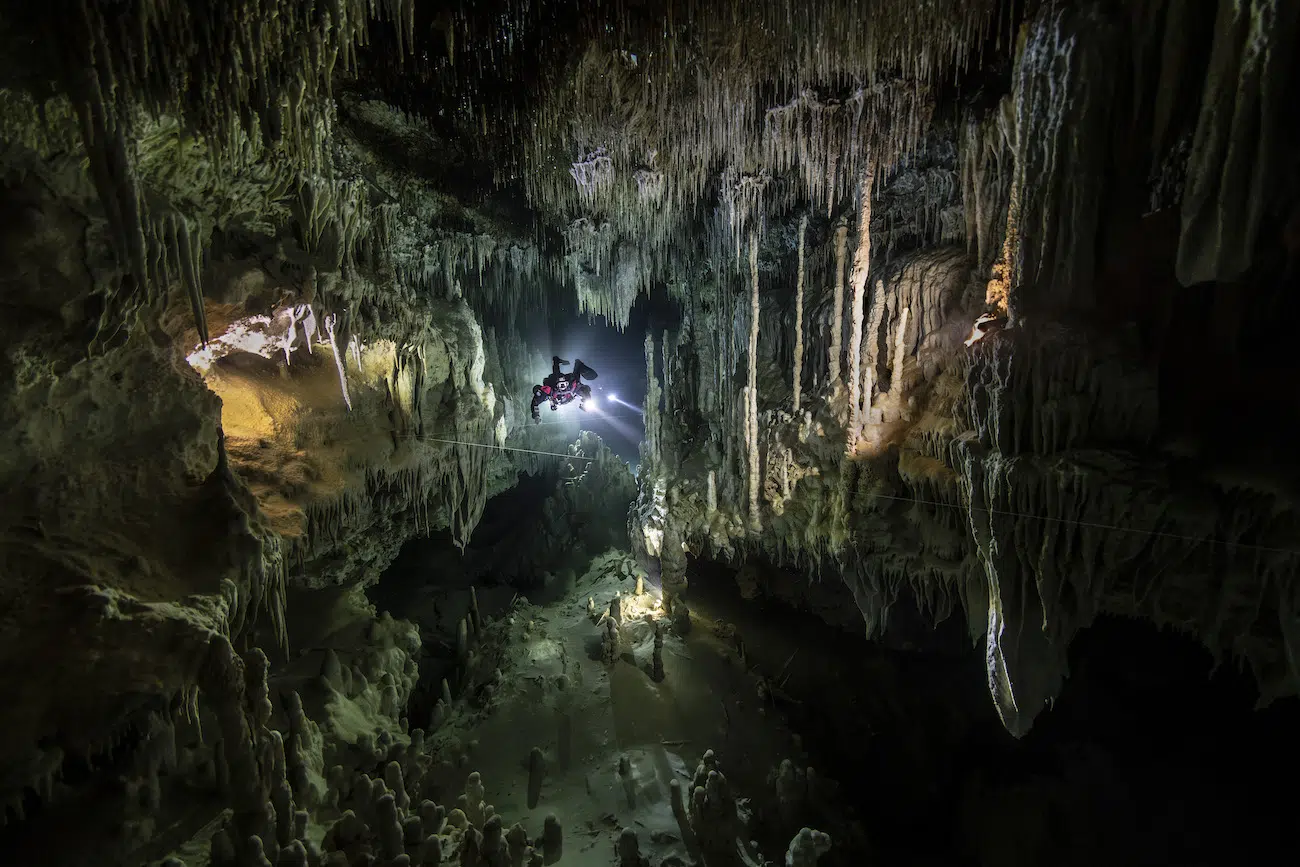
1st Place, Valentina Cucchiara (Italy)
“Suspended in the pristine darkness of Cenote Nariz, a diver illuminates a breathtaking ancient underwater world formed drop by drop over millennia. This vast subterranean aquifer serves as the vital heart of Mexico’s Yucatán Peninsula, acting as the primary source of fresh water that sustains its sprawling jungles, diverse wildlife, and human communities. Known to the Maya as “Suhuy Ja’” — or sacred water — these submerged networks represent an interconnected ancestral legacy that has nurtured life across countless generations. Tragically, this irreplaceable geological marvel is currently under serious threat. We have a profound obligation to protect this fragile ecosystem from destruction so these sacred subterranean rivers may continue to support future generations.
Every year, photographers from around the world capture extraordinary moments that reveal the beauty, diversity, and importance of our oceans. On June 8, 2026, the United Nations celebrated World Oceans Day by announcing the winners of its annual eponymous photo competition during an event at United Nations Headquarters in New York City. Organized by DivePhotoGuide in partnership with the United Nations Division for Ocean Affairs and the Law of the Sea, the Intergovernmental Oceanographic Commission of UNESCO, and Nausicaá, the contest encourages photographers to spotlight the ecosystems, wildlife, and communities that depend on healthy oceans.
Now in its 13th year, the competition recognizes exceptional imagery across four categories: Connecting Oceans, Big and Small Underwater Faces, Underwater Seascapes, and Above Water Seascapes. Underwater and wildlife photographer Ellen Cuylaerts curated the contest, while underwater photographers Ipah Uid Lynn, William Tan, and Jane Morgan joined DivePhotoGuide founder Dave Alexander on the judging panel.
The winning photographs span the globe, transporting viewers from flooded cave systems in Mexico and Tonga to the icy waters of Lake Huron and the rugged coastline of Alaska. This year’s selections include a diver suspended among ancient cave formations, a curious gray whale calf meeting a camera lens, hundreds of devil rays gliding through the Sea of Cortez, and seaweed farms off Indonesia that resemble an abstract painting when viewed from above.
Together, the images showcase both the wonder of the ocean and the growing need to protect it. They reveal ecosystems that sustain wildlife and human communities alike while offering rare glimpses into places few people will ever experience firsthand.
Scroll down to see all of the winning photographs from the 2026 UN World Oceans Day Photo Competition.
On June 8, 2026, the United Nations celebrated World Oceans Day by announcing the winners of its annual eponymous photo competition.
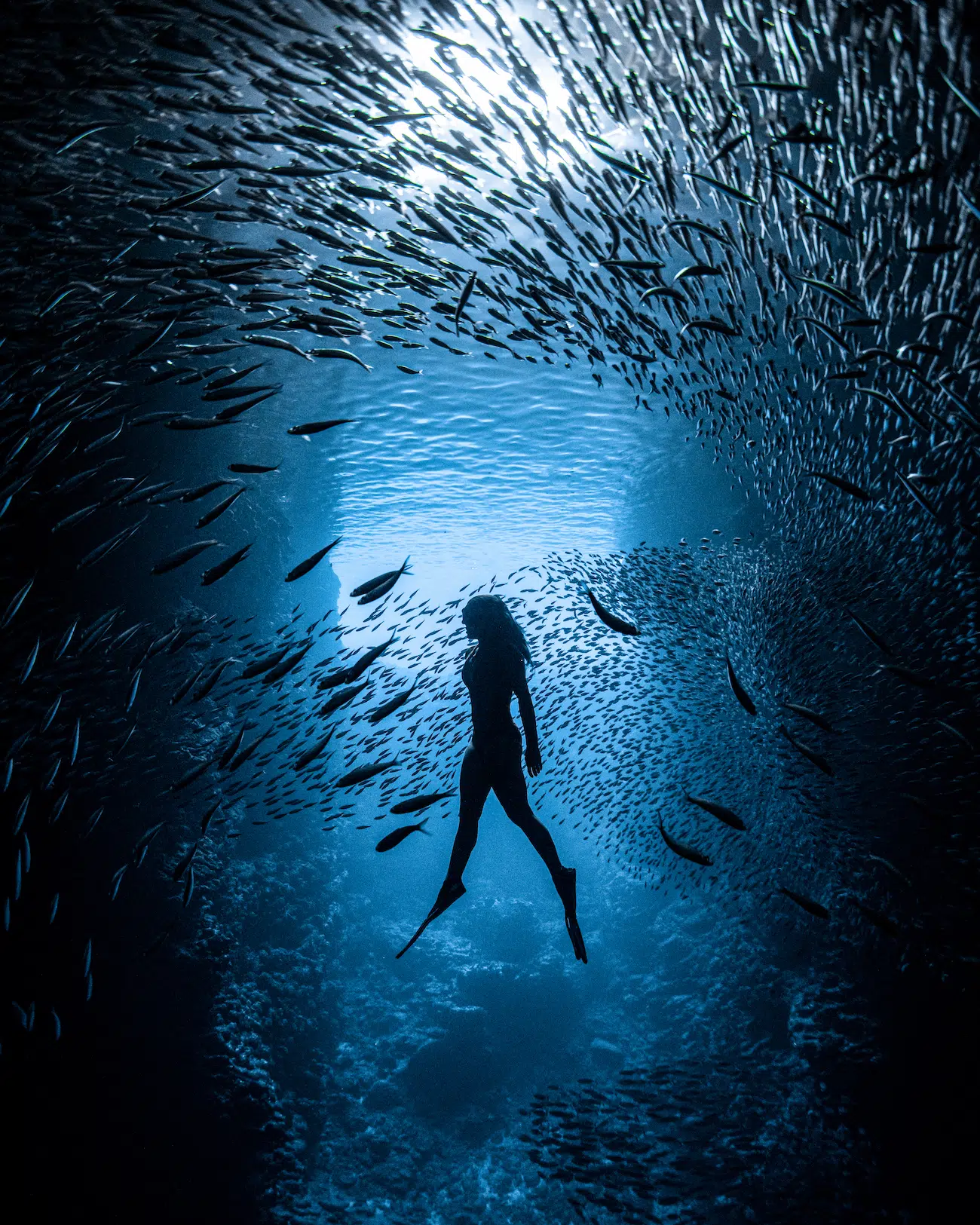
2nd Place, James Ferrara (USA)
“While diving inside a cave in the Kingdom of Tonga, I watched as a freediver was surrounded by a swirling school of baitfish. Sunlight pouring in from the cave’s entrance created a striking silhouette, perfectly framing the diver and fish in a fleeting moment of harmony between shadow and motion.”
The lauded images begin with the newly introduced Connecting Oceans category. Divers navigate underwater caves in Mexico, Tonga, and beneath the ice of Lake Huron, highlighting the interconnected ecosystems that sustain life above and below the surface.
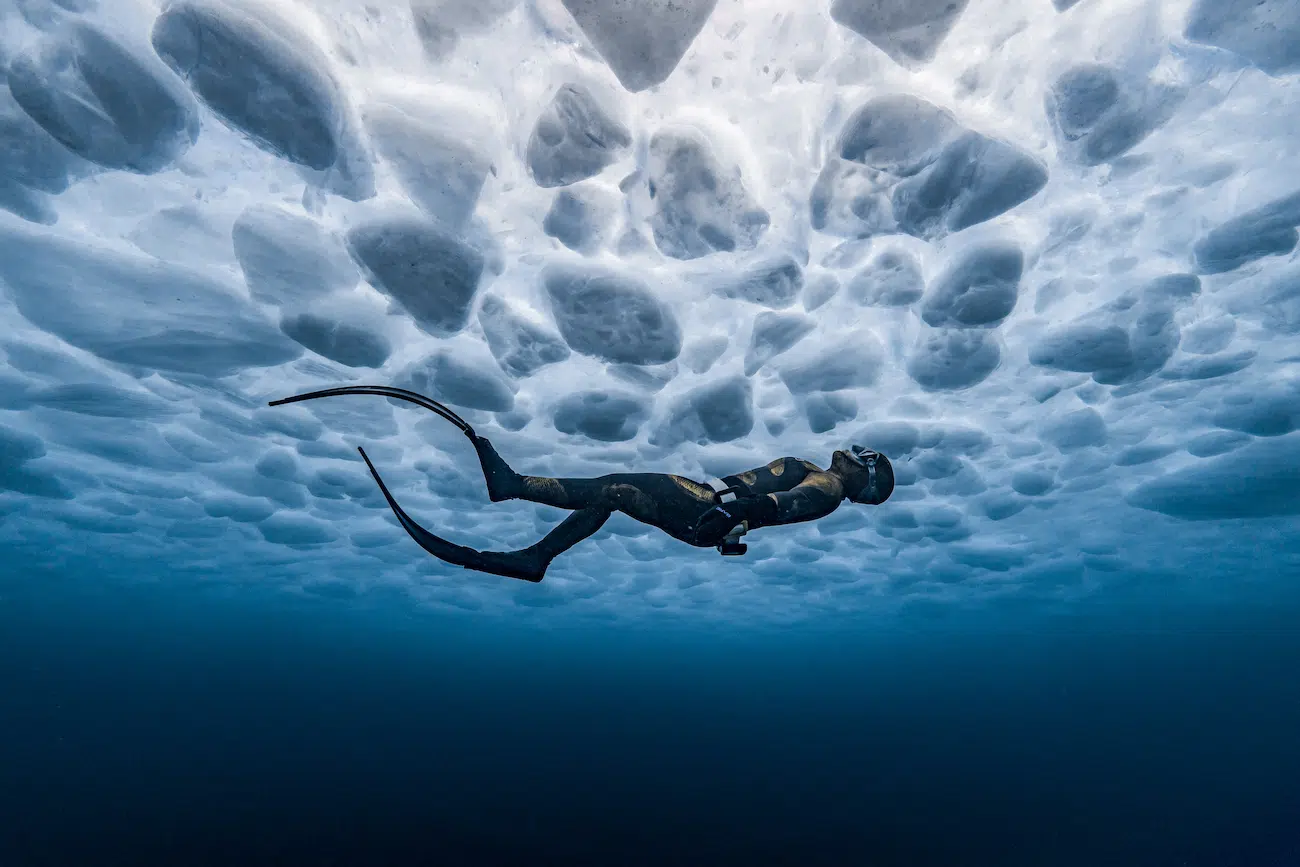
3rd Place, James Ferrara (USA)
“A freediver glides beneath the frozen surface of North America’s Lake Huron, suspended in a silent and surreal world. The view from below reveals intricate patterns in the ice, sculpted by weather and waves. Experiencing a scene like this makes braving the elements more than worthwhile.”
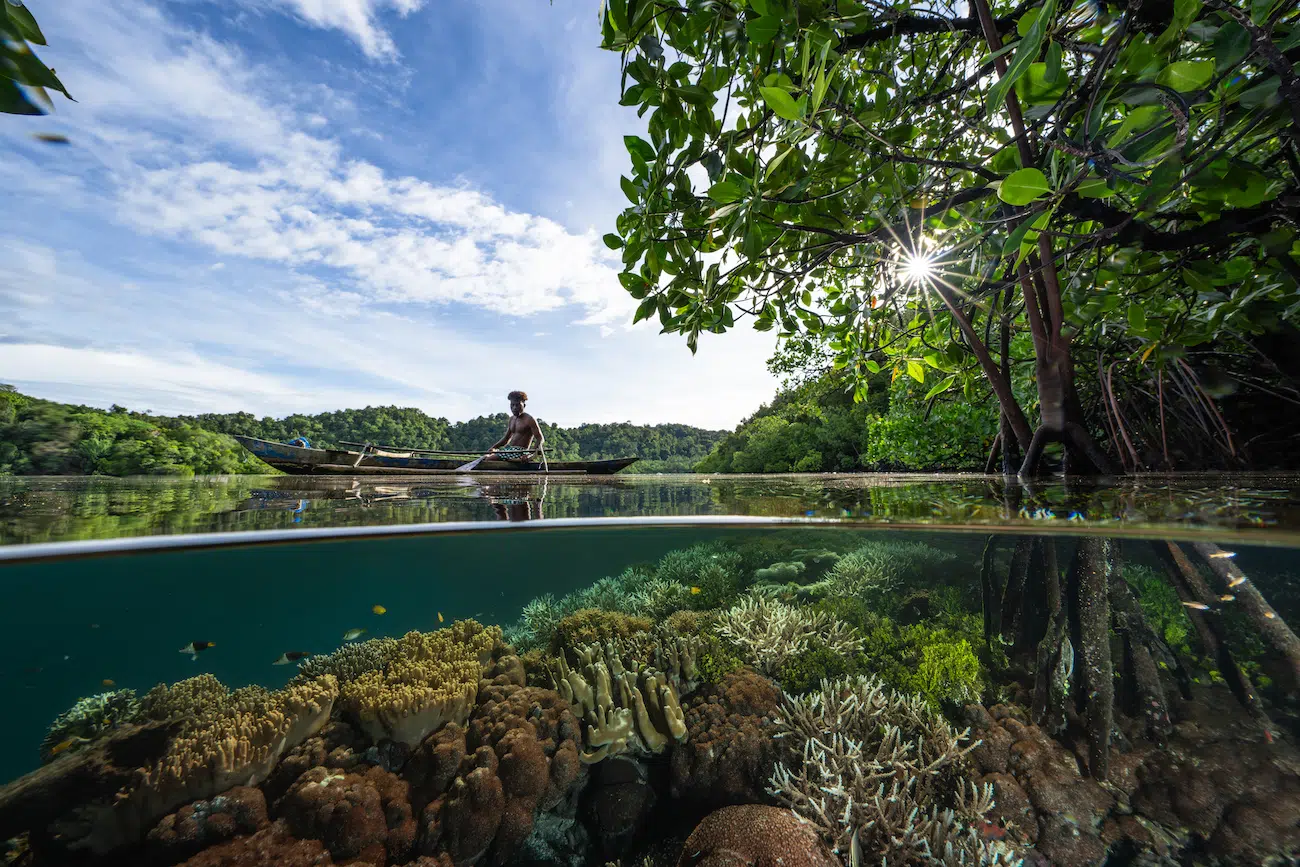
Honorable Mention, Wendy Mitchell (Australia)
“There has never been a more critical time to take action to protect the places we love. Globally, coral reefs are being lost at an alarming rate, largely driven by the relentless impacts of burning fossil fuels. The release of carbon dioxide trapped in coal, oil, and gas is the leading contributor to climate change, driving ocean temperatures to extreme levels. Yet, hope remains through awareness and responsible leadership. A brighter future is possible if we champion local initiatives and cast our votes for those committed to protecting these critical ecosystems. This photo is a window into two worlds, a reminder of the interconnectedness of every element of our planet. The image was captured in the blue-water mangroves of Raja Ampat, West Papua, Indonesia, where communities rely heavily on the health of their reefs for sustenance and economic benefits from tourism.”
Big and Small Underwater Faces highlights close encounters with marine life, including a curious gray whale calf in Baja California Sur, a moray eel in the Philippines, and a bobtail squid photographed during a night dive in South Korea.
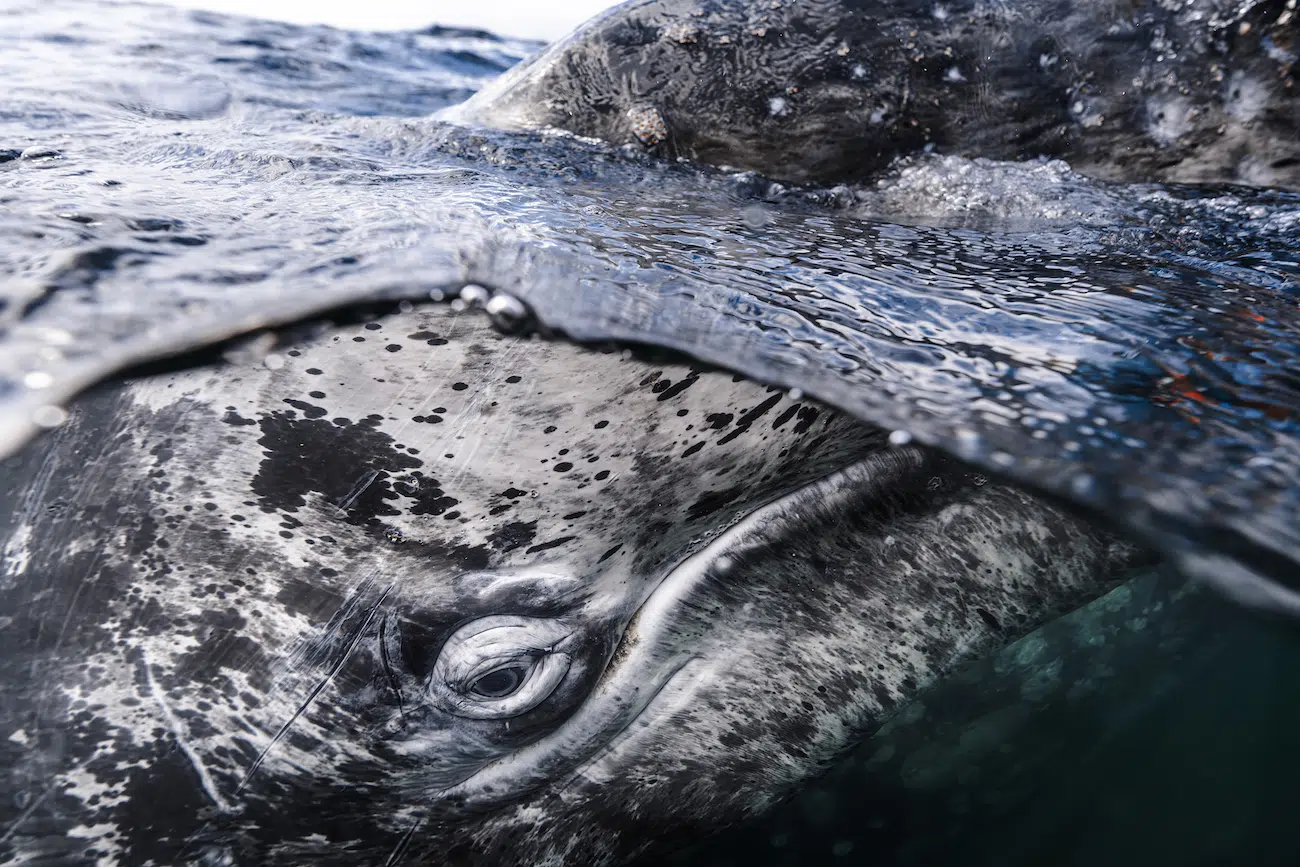
1st Place, Kaushiik Subramaniam (UK)
“A curious juvenile gray whale approaches our boat in a lagoon in Baja California Sur, Mexico. This was an incredibly special encounter, as the whale spent over an hour with us, coming in close enough for me to dip my camera into the water and capture this image. These whales are known for their friendly and inquisitive nature, and seem to genuinely enjoy interacting with humans.”
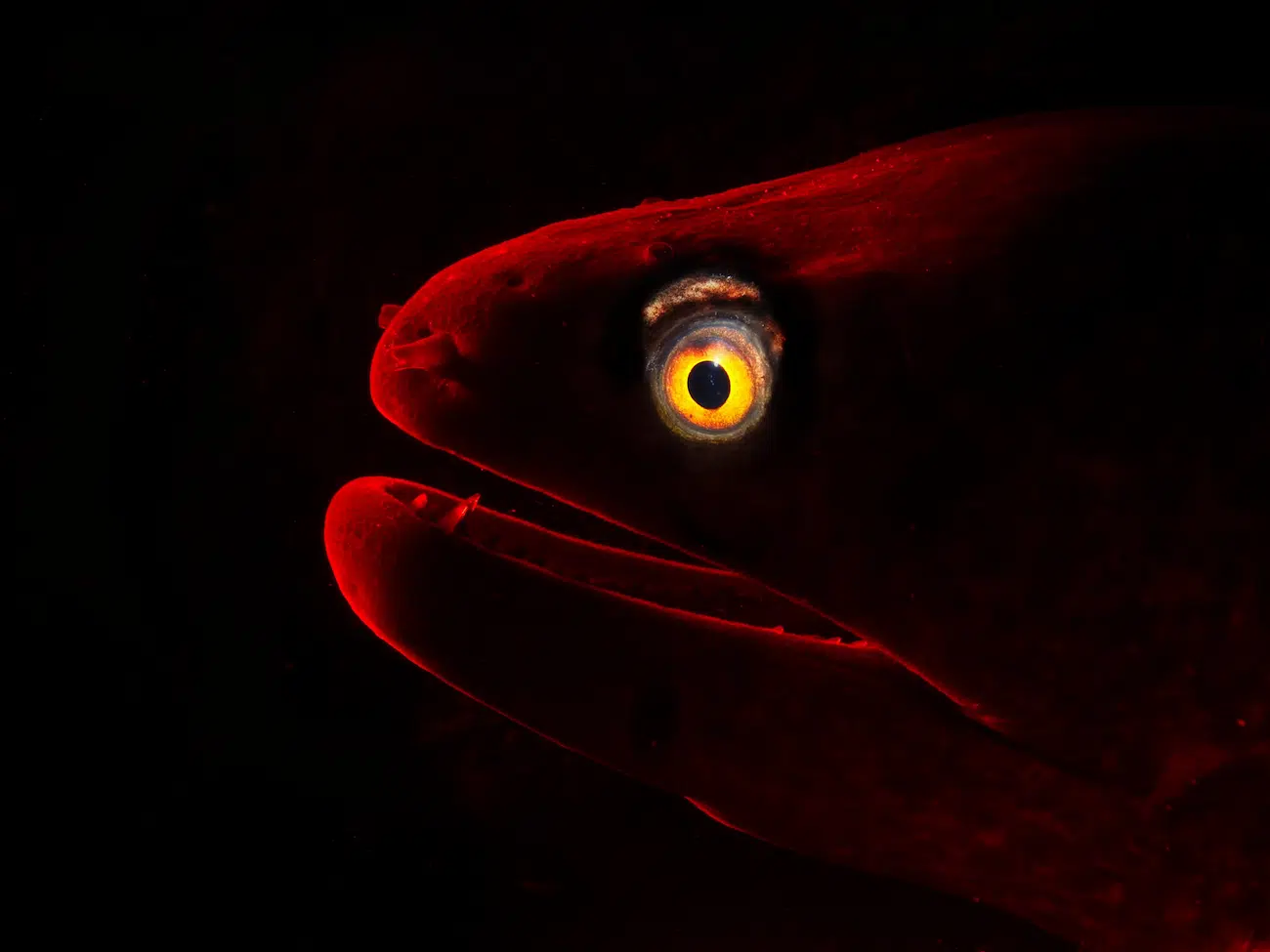
2nd Place, Verona Chadwick (Australia)
“In Anilao in the Philippines, this moray eel was hiding in a hole in a reef wall, popping its head out intermittently. A snooted flash with a color filter was set up behind the subject to create the red rim light — which wasn’t easy because the eel kept moving around. I used a second snooted flash to focus a narrow white beam on the eye. It took many attempts to get everything aligned to capture this shot.”
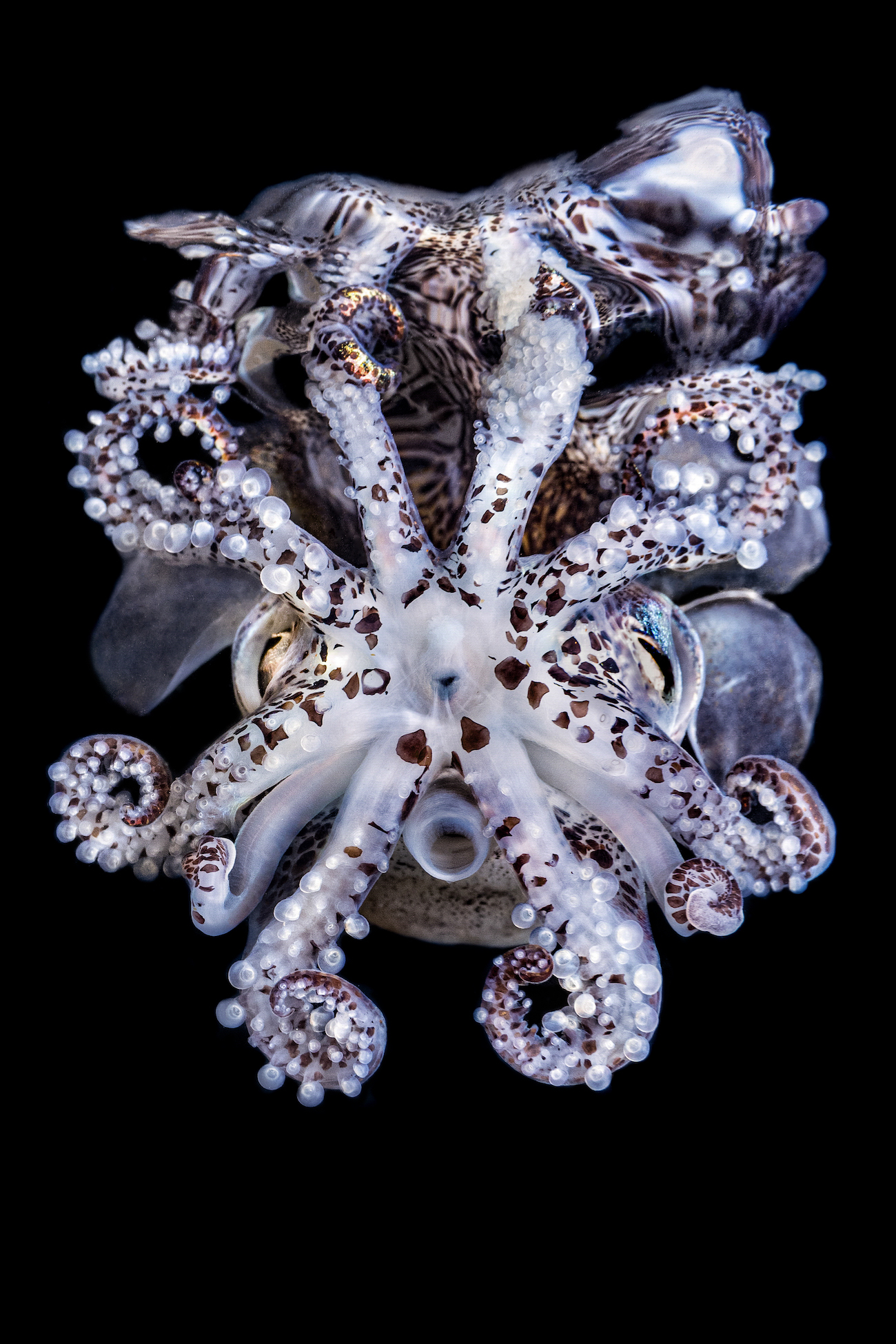
3rd Place, Jeon Min-seok (South Korea)
“This bobtail squid was encountered during a night dive off Tongyeong Beach on Korea’s southern coast. As the cephalopod swam upwards, its arms opening wide, I managed to capture this picture, with the animal’s reflection on the surface.”
Underwater Seascapes expands the view to entire ecosystems, from luminous cenotes filled with aquatic plants in Mexico to vast schools of Munk’s devil rays moving through the Sea of Cortez.
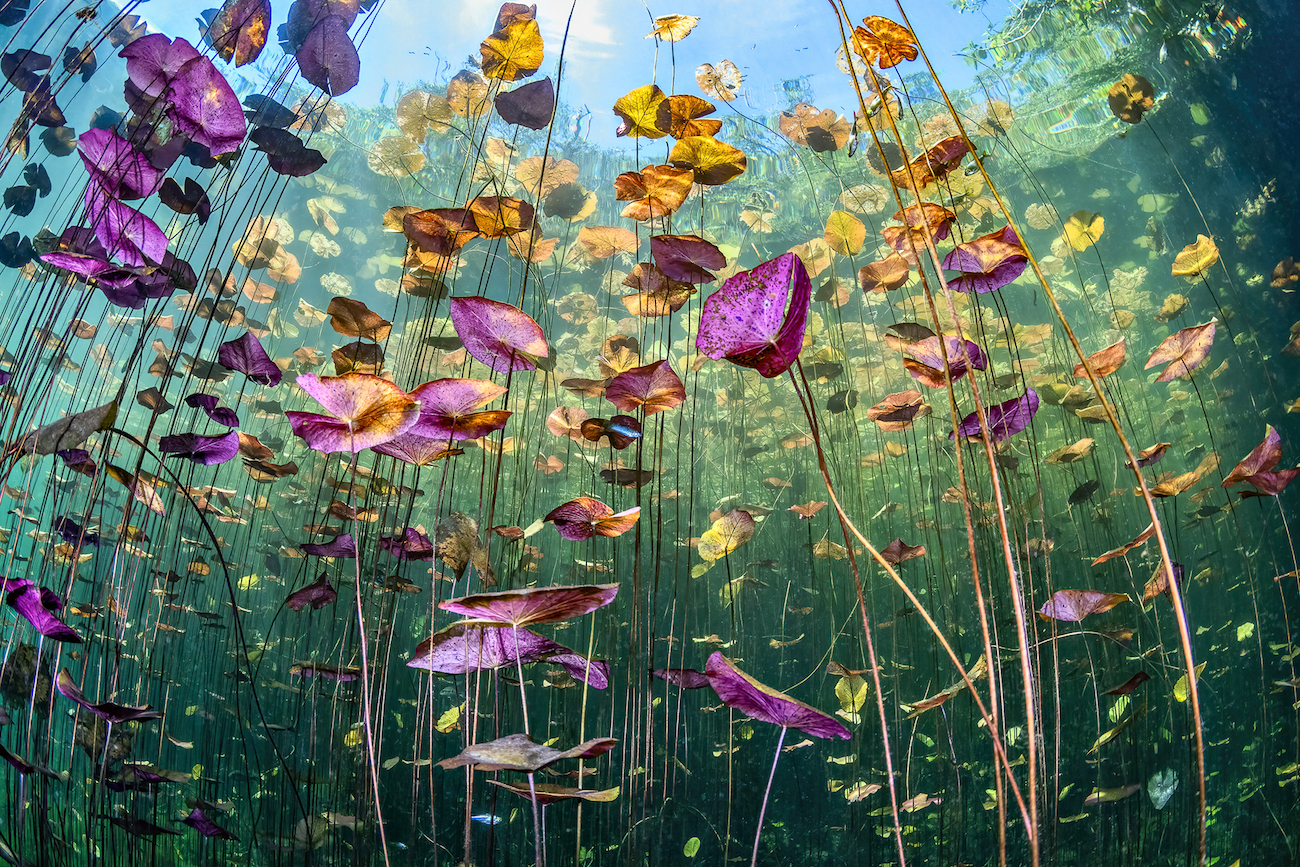
1st Place, Ysabela Coll (Dominican Republic)
“Emerging from the darkness of a Mexican cenote, we entered this underwater garden teeming with colorful water lilies and small fish. The sudden contrast transformed the scene into a dreamlike world, where light, color, and life replaced the silence of the cave. Cenotes are vital freshwater reservoirs that sustain biodiversity and surrounding communities, yet pollution and climate change increasingly threaten their fragile balance. This moment of beauty is a reminder of our responsibility to protect these hidden ecosystems, where life depends on the purity and clarity of the water.”
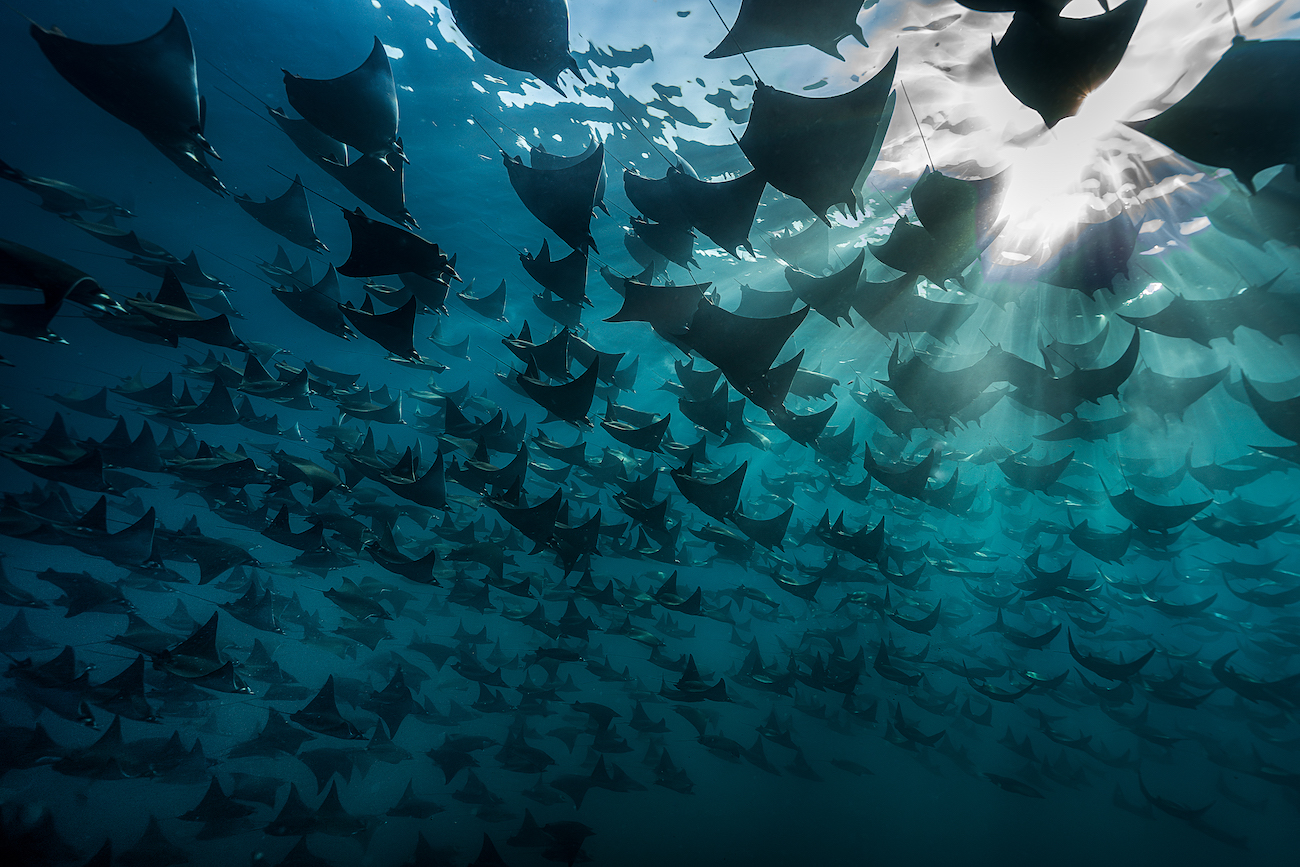
2nd Place, Bingqian Gao (UK/China)
“This expansive seascape captures one of the ocean’s most awe-inspiring spectacles: a “fever” of Munk’s devil rays (Mobula munkiana) gliding in unison in the Sea of Cortez, Mexico. Bathed in the ethereal glow of the sun rays piercing the surface, the scene feels more celestial than aquatic. These vast migrations continuing to flourish beneath the surface remind us that protecting the ocean means safeguarding the ecosystems that depend on it. Listed as “Vulnerable” on the IUCN Red List, these rays now receive CITES Appendix I protection, a crucial lifeline for the species and a promising sign for their recovery.”
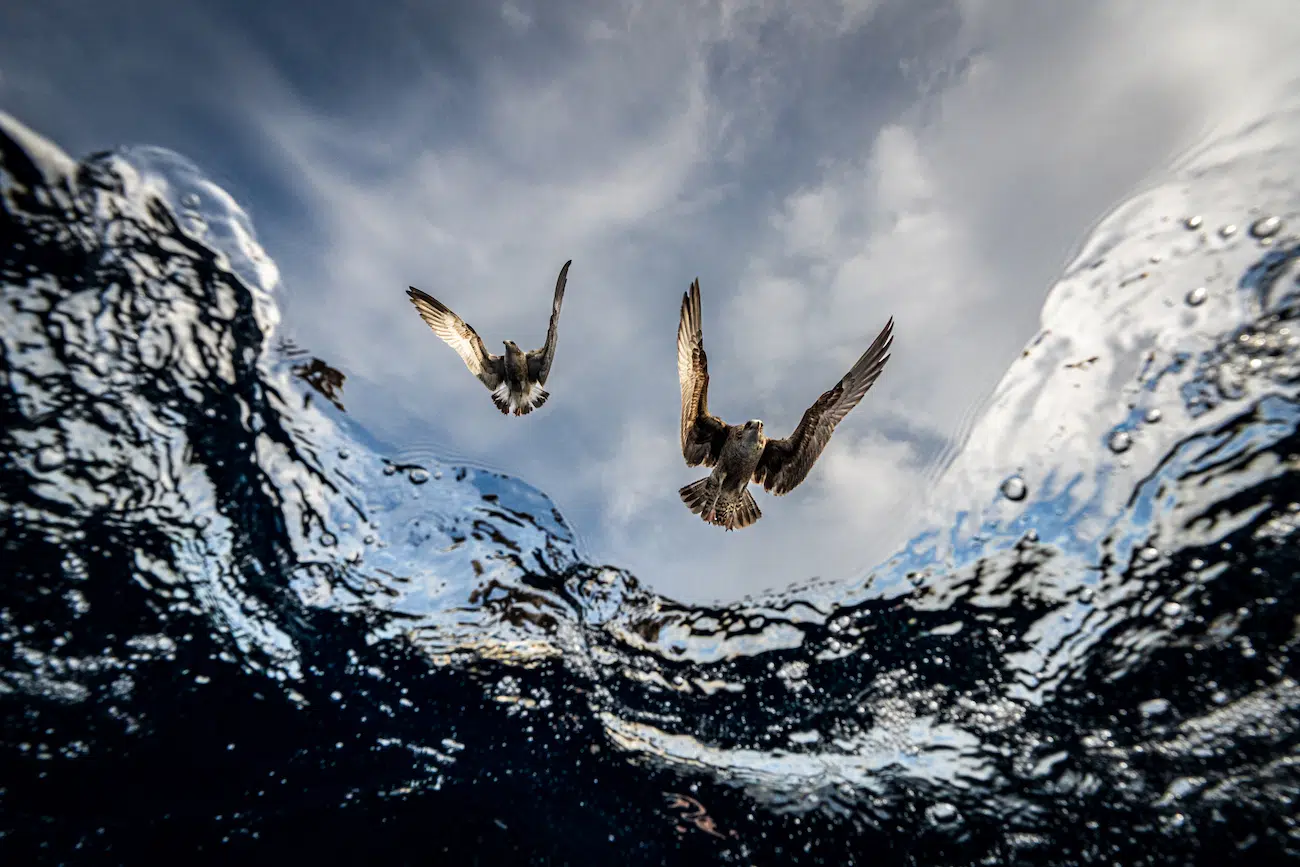
3rd Place, Eduardo Carrasco (Chile)
“I fought the buoyancy of my 12-inch dome to capture the split second when these Heermann’s gulls, on the lookout for a meal, shattered the silvered surface. This view from below highlights the raw, dynamic boundary between the worlds above and below the water’s surface, illustrating a profound interdependence where the life in the sky is irrevocably tied to the health of the deep.”
Above Water Seascapes shifts to land and sky, where grizzly bear cubs in Alaska, a Florida cypress beneath the Milky Way, and seaweed farms in Indonesia reflect the ocean’s reach far beyond the shoreline.
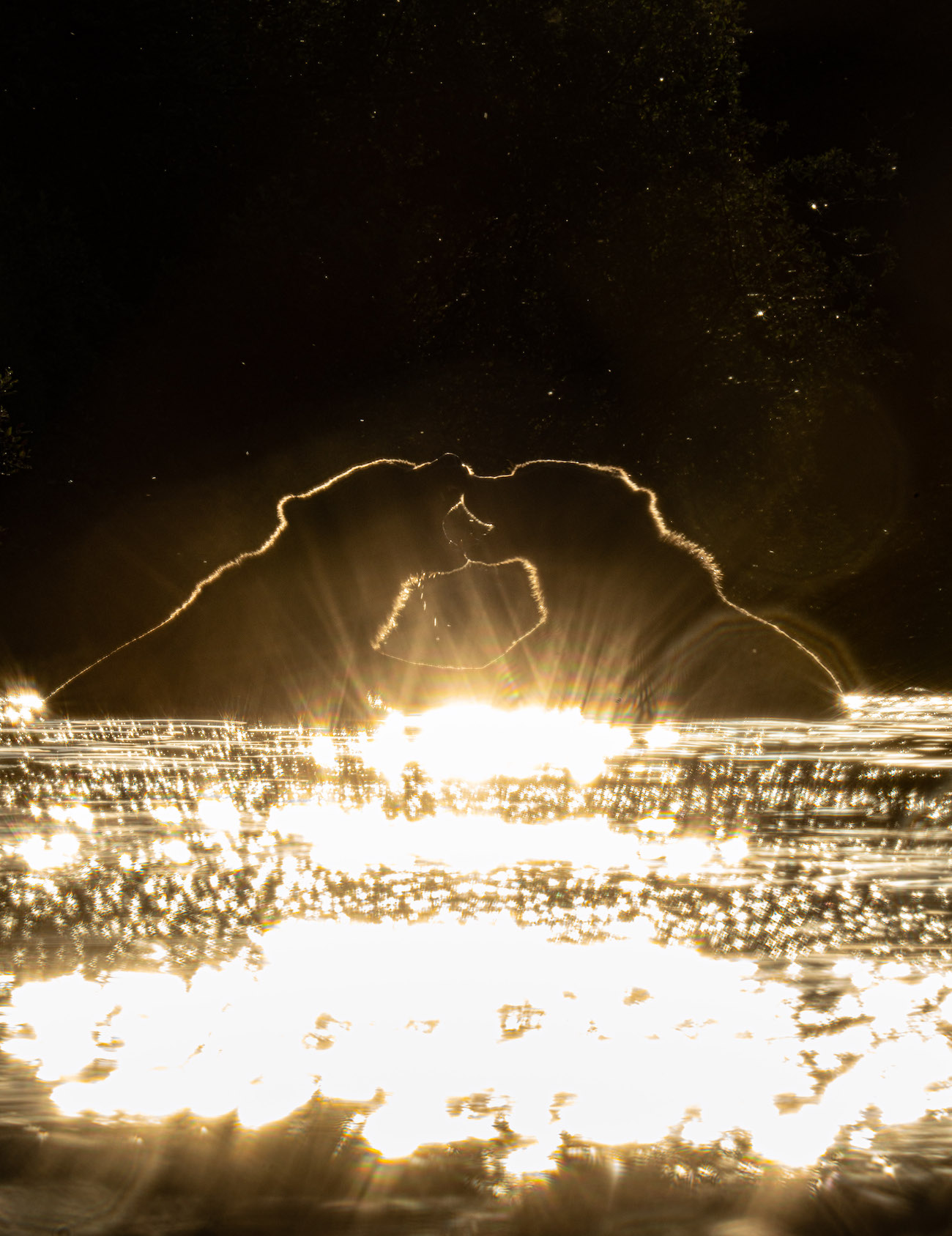
1st Place, Bruce Sudweeks
“The life of a grizzly bear cub on Alaska’s Kodiak Island consists of eating, playing, and napping. These two cubs have started their day at sunrise, frolicking in the river that provides their meals. The river is full of salmon heading upstream to spawn as their last mortal act. The bear cubs will effortlessly select a few salmon to eat, thereby denying the fish the opportunity to reproduce.”
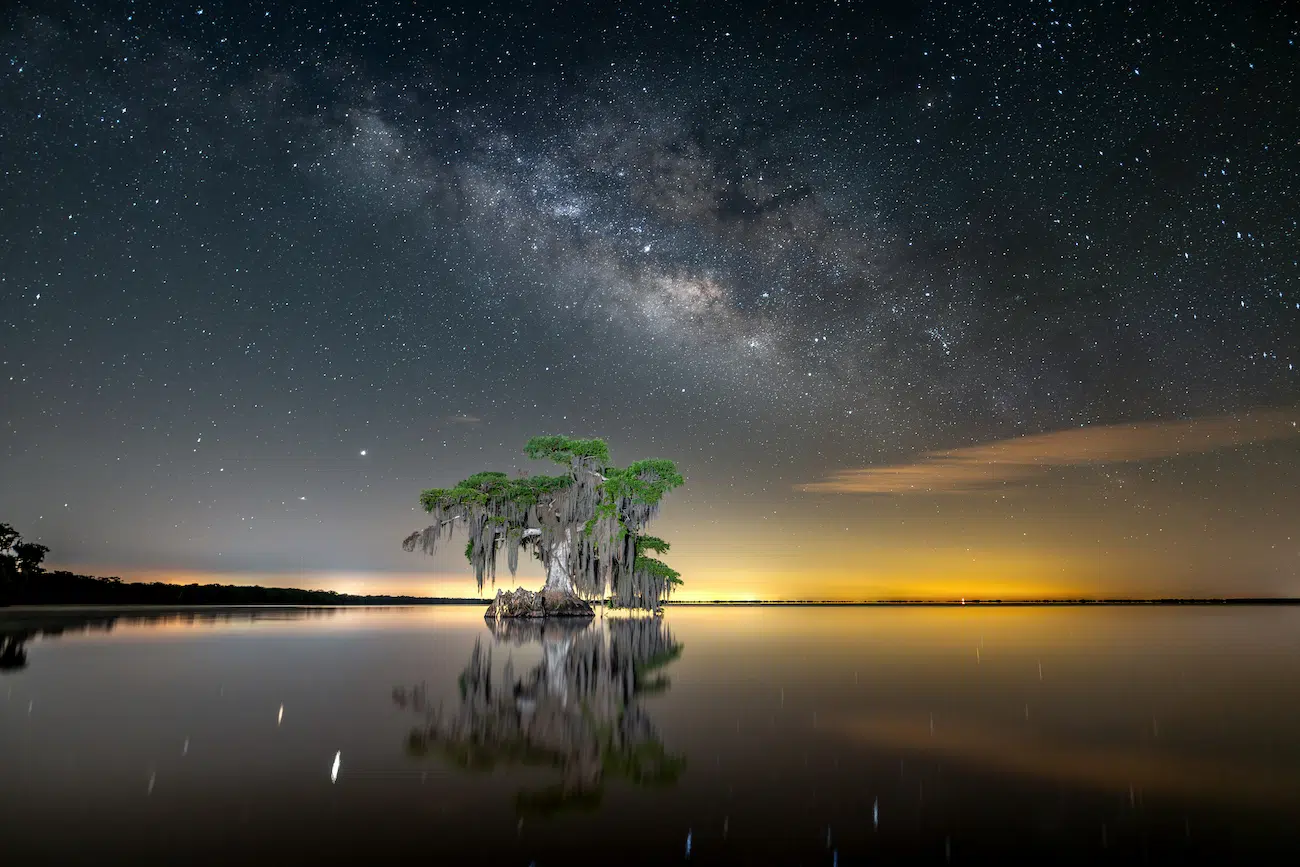
2nd Place, James Ferrara (USA)
“This single long-exposure image was taken at Blue Cypress Lake in my home state of Florida. After careful planning and a short boat ride in the middle of the night, I used a tripod in the water and light painting techniques to illuminate the cypress tree beneath the Milky Way above. Rapid population growth has transformed much of Florida’s once-pristine landscape into a patchwork of development and concrete, yet pockets of untouched wilderness still remain beyond the reach of urban sprawl and light pollution. This image is a tribute to the Florida that once was and still exists in fragments today. It serves as both a celebration and a reminder that these natural spaces are fragile, and their future depends on the care and responsibility we choose to take.”
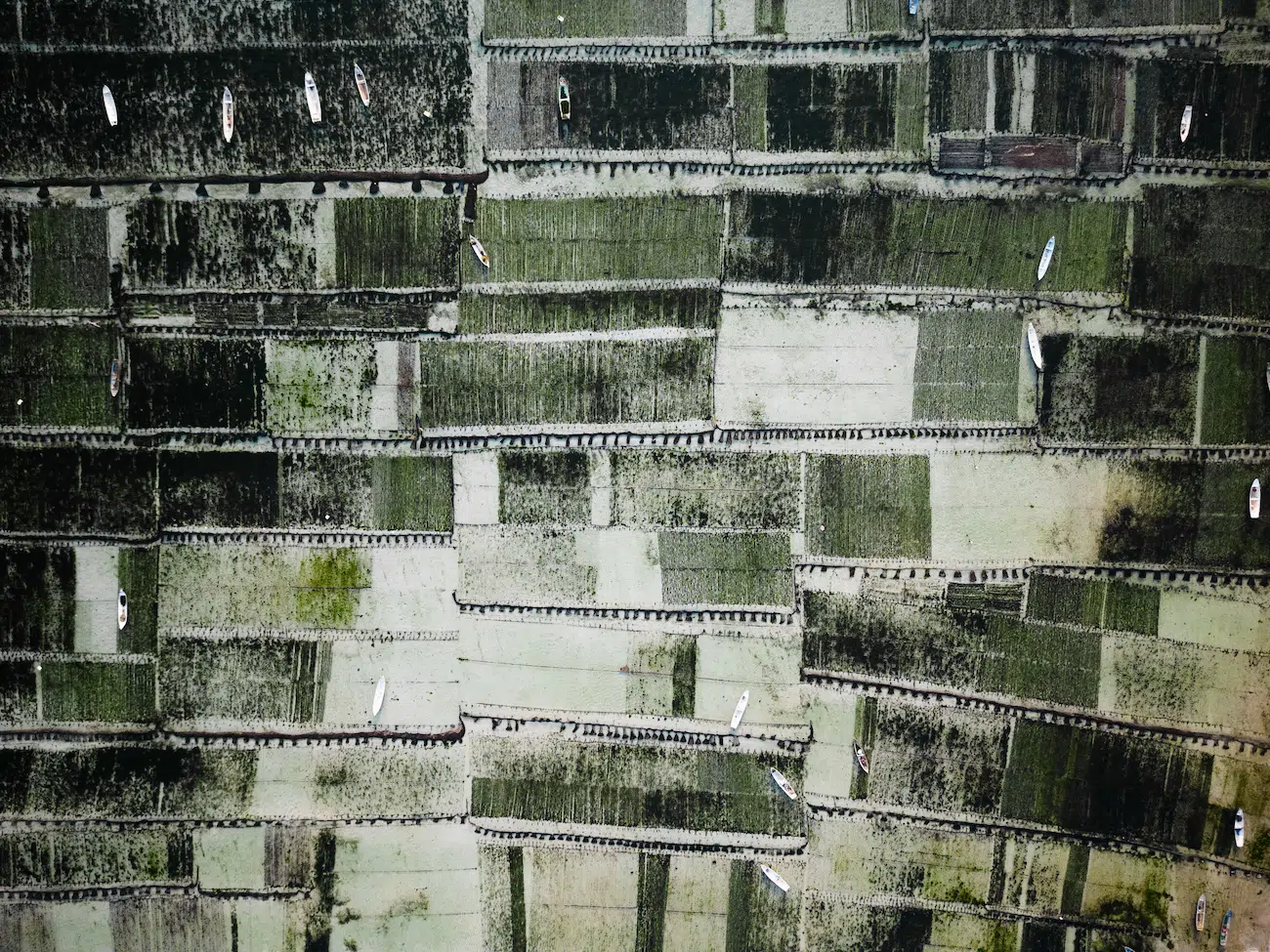
3rd Place, Miesa Grobbelaar (South Africa/Australia)
“The seaweed farms of Nusa Lembongan and Ceningan, southeast of Bali, stretch across the water in rows of green. From above, I noticed how naturally the locals moved through them, not controlling the ocean but working in tune with it, with a sense of unity and collaboration, as if they were one with the sea. From the sky, it resembles a woven, living tapestry across the water, where human hands and nature are threaded together.”