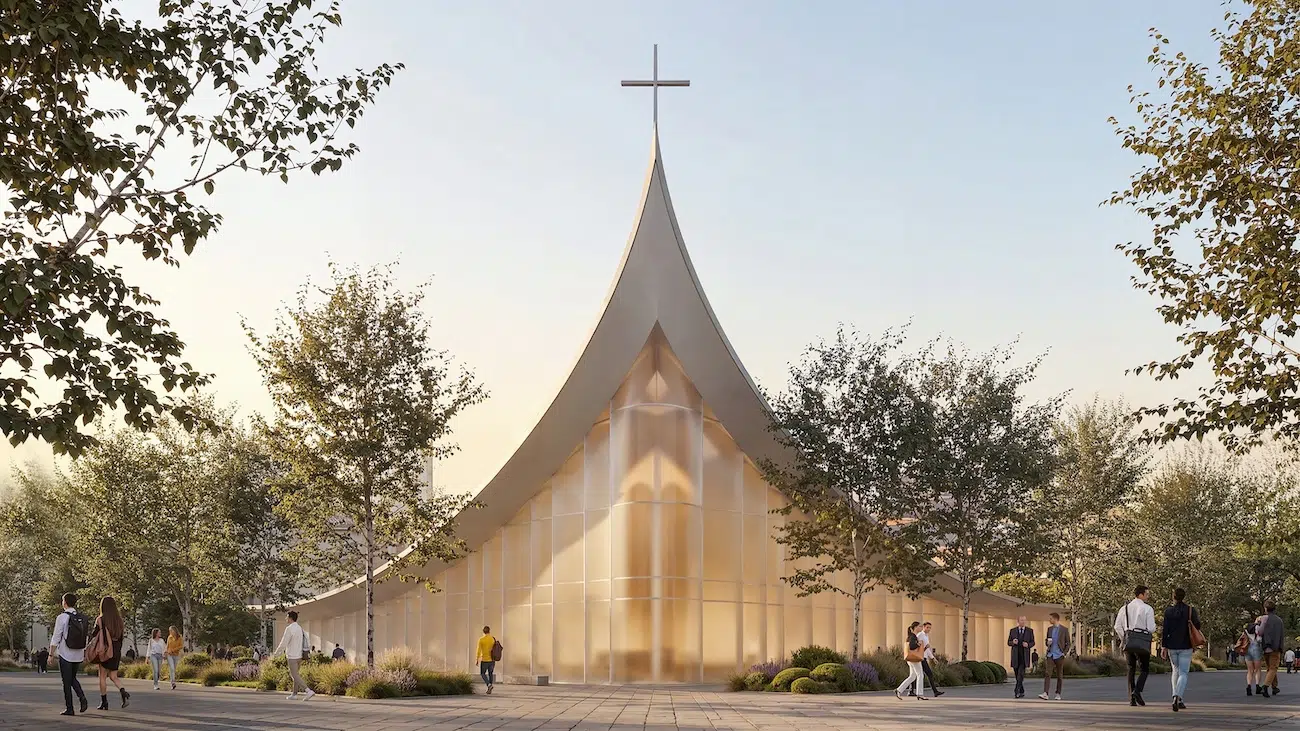

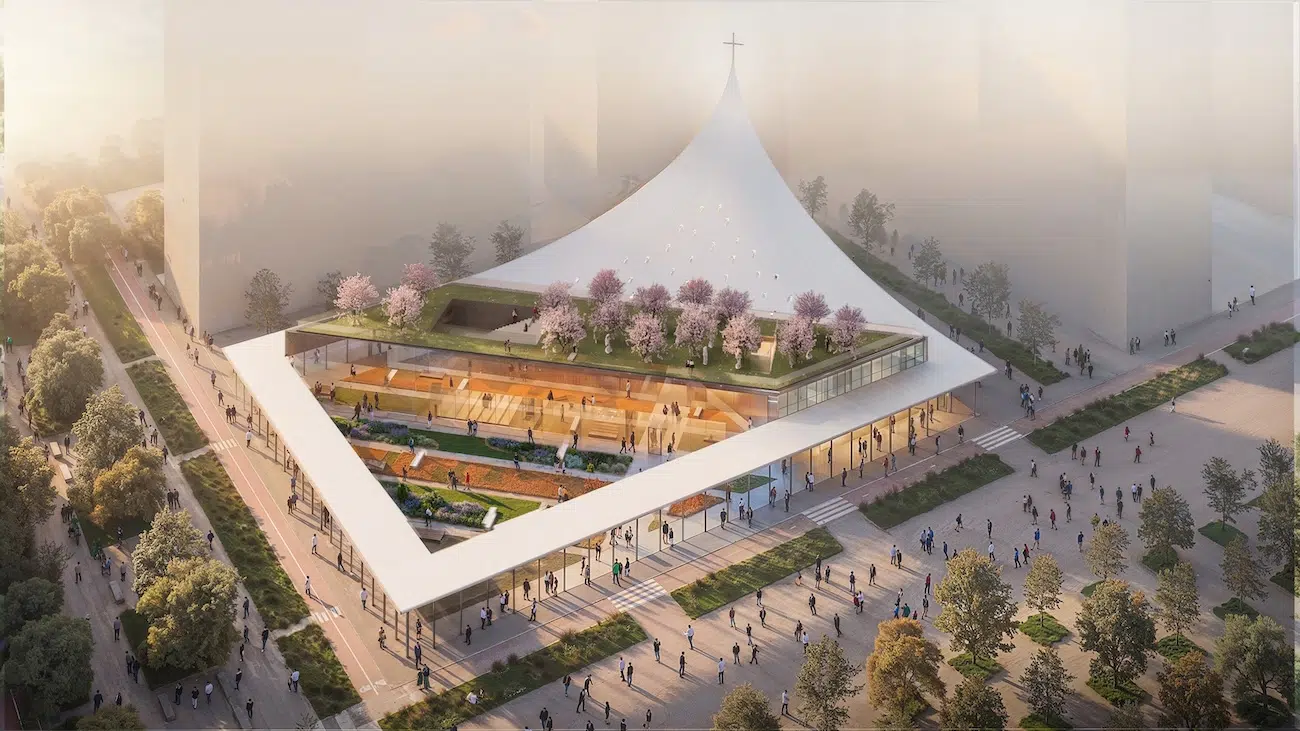
At the intersection of history and innovation is Stefano Boeri’s new Ambrosian Monastery in Milan, Italy. This monastery was commissioned by the Archdiocese of Milan and will cover an area of 2,700 square meters (about 29,062 square feet), serving as a center for worshippers who live in the Milano Innovation District (MIND), a recently developed area at the forefront of design and sustainability, as well as the larger Milan metropolitan area.
MIND is a large-scale regeneration project spanning more than 1 million square meters (about 10.8 million square feet), focused on smart urban living and creating “a city within a city” with the goal of uniting the community through more sustainable and integrated lifestyles. Boeri is an Italian urban planner and architect whose work predominantly focuses on integrating greenery into urban spaces in creative ways. One of his most well-known projects is the Vertical Forest, which began in 2007 and consists of two residential towers in Milan’s Porta Nuovo district. The buildings are covered in the equivalent of two hectares of parkland and host more than 800 trees, 4,500 shrubs, and 20,000 plants. The relationship between architecture, biodiversity, and daily life is at the center of Boeri’s work—and Ambrosial Monastery is no different. It brings together religion, nature, and community.
For the architect’s latest project, a total of 1,100 square meters (about 11,840 square feet) will be allocated to open spaces, including a rooftop planted with cherry trees and sculptures selected from the storage collections of the Veneranda Fabbrica del Duomo. Boeri’s goal with the monastery is to rethink the function of the cloister, seeing it as a space inspired by the Christian monastic tradition while opening it up, both symbolically and literally, to the outside world. His team describes it as “an introverted yet permeable space, articulated around three fundamental dimensions—care, dialogue, and spiritual inquiry.”
Within the monastery will be study rooms, multipurpose spaces, an open-air amphitheater, and a section dedicated to pastoral care that includes five attached residences. Together, these spaces will serve as a gathering place for worshippers and local residents alike. The cloister includes a trigonal-plan church with a curved roof reminiscent of a sail on a boat. It is designed to accommodate 300 to 350 people.
To stay up to date on the works of this architect, you can follow Stefano Boeri on Instagram.
Architect Stefano Boeri is designing a monastery in the Milano Innovation District (MIND), a recently developed area at the forefront of design and sustainability.
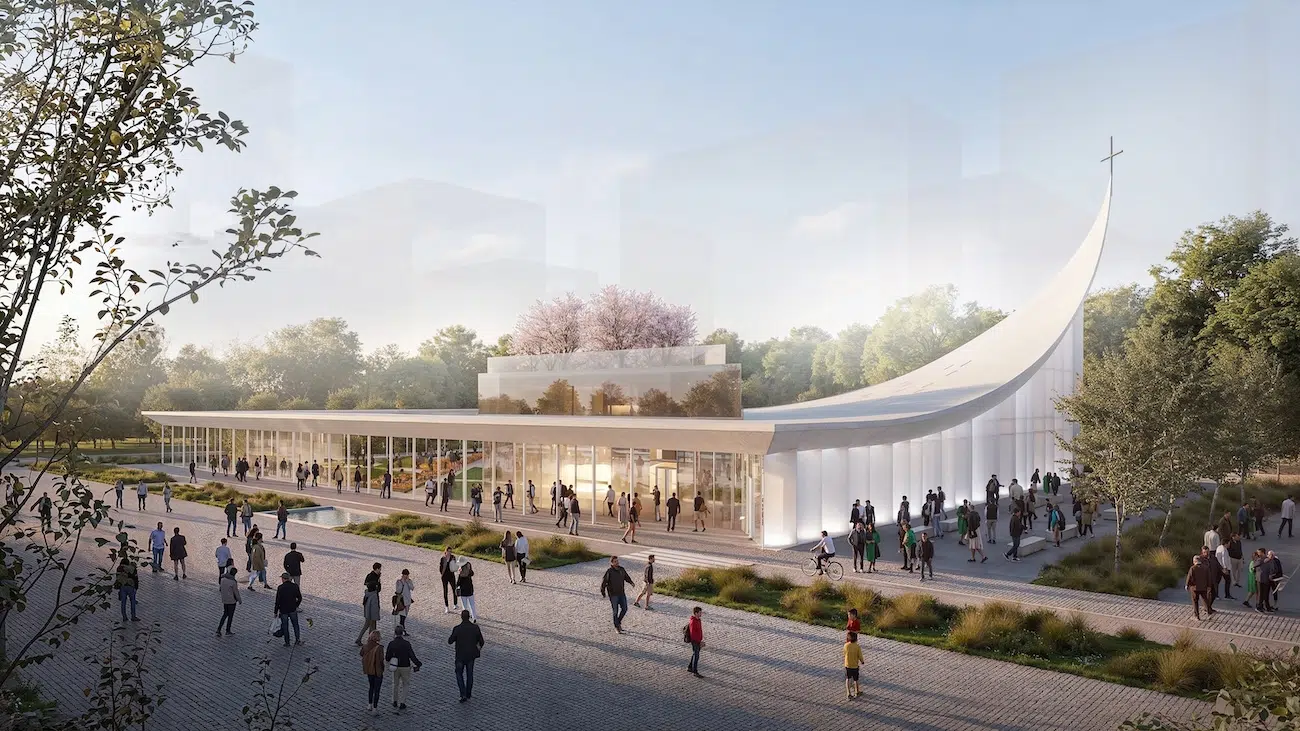
The monastery seeks to bring together religion, nature, and community, with a total of 1,100 square meters being allocated to open spaces, including a rooftop planted with cherry trees and sculptures selected from the storage collections of the Veneranda Fabbrica del Duomo.
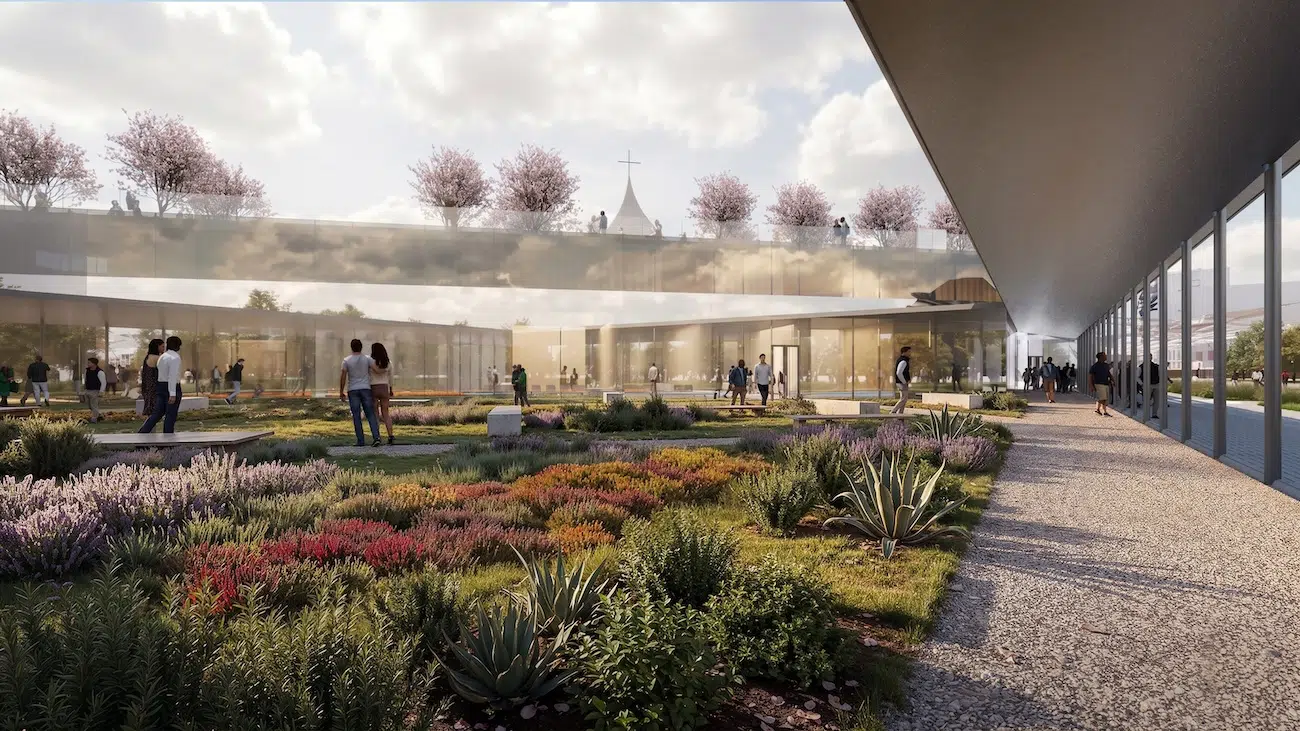
Boeri’s goal with this project was to rethink the function of the cloister: as a space inspired by the Christian monastic tradition while opening it up to the outside world.