

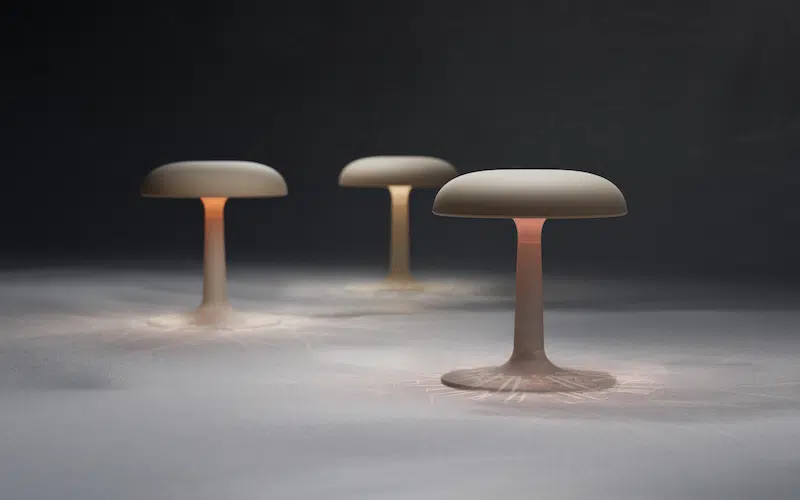
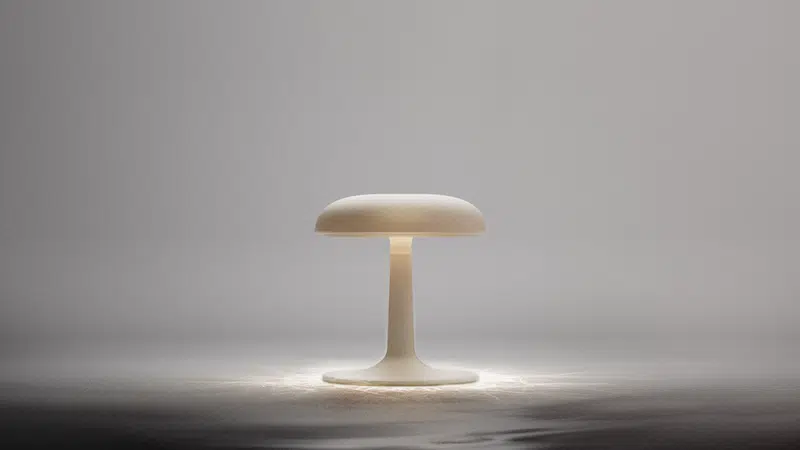
Public seating rarely asks anything of the people who use it. A bench holds bodies. A stool supports weight. Neither one acknowledges the person sitting on it, let alone the stranger sitting nearby. Industrial design student Bahar Aryana imagined something more interactive with Spore, a series of mushroom-inspired stools that illuminate when they sense people sharing similar body language.
At first glance, each rounded stool resembles a soft mushroom emerging from the forest floor. Beneath its translucent cap, however, pressure and capacitive touch sensors monitor how someone sits. As a person settles into the seat, a warm glow gradually spreads through the stool, reflecting the quiet rhythm of the body coming to rest. Rather than demanding attention with screens or notifications, Spore communicates through subtle changes in light.
Aryana found inspiration in mycelium, the vast underground fungal networks that connect forests by transferring nutrients and signals between trees. Just as mushrooms act as visible extensions of those hidden systems, each Spore stool functions as part of an invisible digital network.
When two people adopt similar postures, whether leaning forward in concentration, relaxing into the seat, or perching near the edge, their stools recognize the shared physical state and synchronize their amber illumination. The result creates a quiet visual connection between strangers occupying the same public space.
The project transforms ordinary seating into an experience of shared awareness without requiring conversation or interaction. Instead of encouraging people to look at another screen, Spore invites them to notice the subtle presence of those around them.
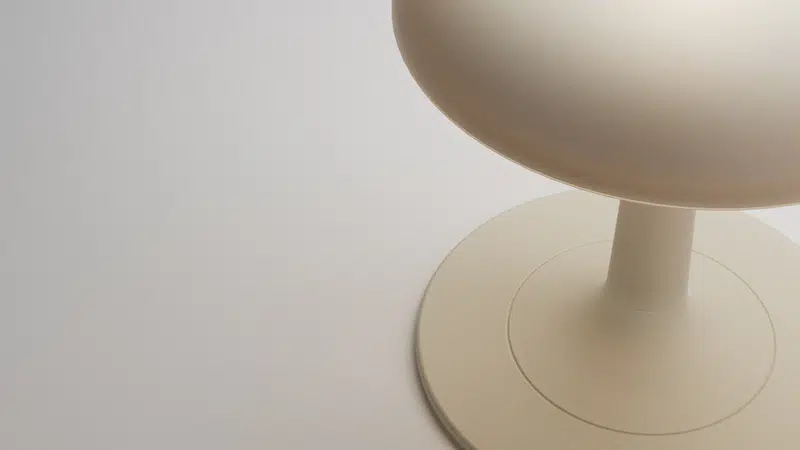
Aryana reinforced that approachable experience through the furniture’s organic form. Early concepts featured more mechanical shapes, but the final design embraces rounded silhouettes inspired by fungi. The soft-touch, semi-transparent shell diffuses high-quality LED lighting into an even glow, making the illumination feel warm and natural rather than overtly technological. Every design decision supports the project’s central idea that technology can quietly enrich everyday experiences instead of dominating them.
As cities grow denser, public spaces often bring people physically closer while leaving them socially disconnected. Spore explores how thoughtful design can bridge that gap through small moments of shared recognition.
Aryana developed the concept for Spore at the University of Illinois Chicago, and it recently earned Student Notable honors in the Furniture & Lighting category of the 2026 Core77 Design Awards. Although the project remains a concept, it demonstrates how furniture can become more than a functional object. It can encourage awareness, foster empathy, and reveal the invisible connections that already exist between the people who share a space.
Inspired by underground mycelium networks, Bahar Aryana designed a series of mushroom-shaped stools called Spore.
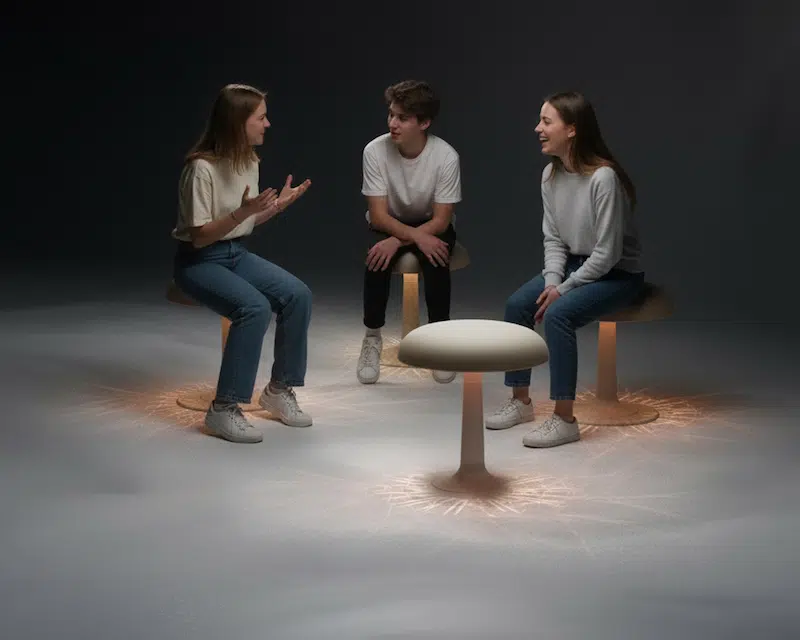
Pressure and capacitive touch sensors detect how each person sits, causing the stools to glow and synchronize when similar postures appear.
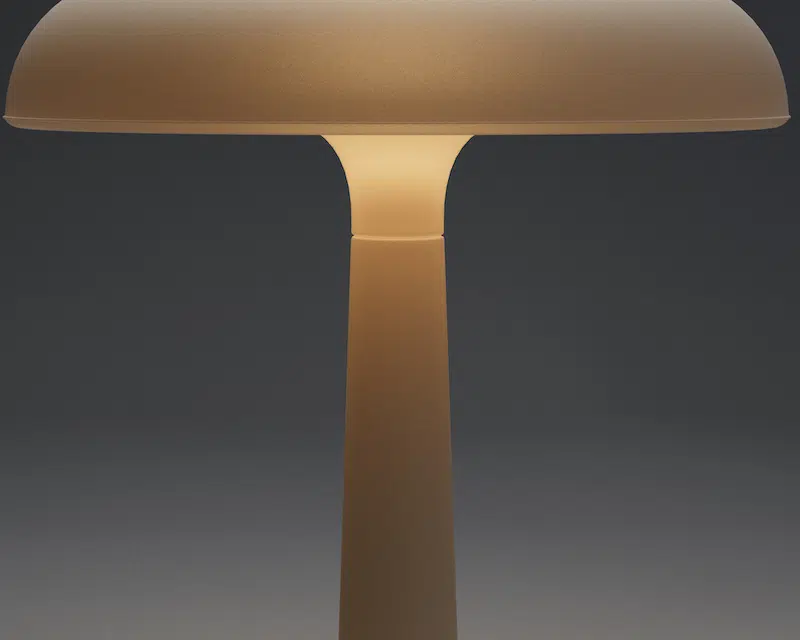
This interactive element creates subtle connections between strangers with shared body language.

Winner of a 2026 Core77 Student Notable Award, Spore reimagines public seating as interactive furniture that encourages awareness and quiet human connection.
Bahar Aryana: LinkedIn
My Modern Met granted permission to feature photos by Bahar Aryana.
Related Articles:
Colorful Cat Tree Inspired by a “Blob” Is the Answer to Ugly Feline Furniture
This “Pixelated” Furniture Will Make You Feel Like You’re Living in Tetris or Minecraft
Frank Lloyd Wright’s Furniture Design Is Front and Center in Pioneering Chair Exhibition