

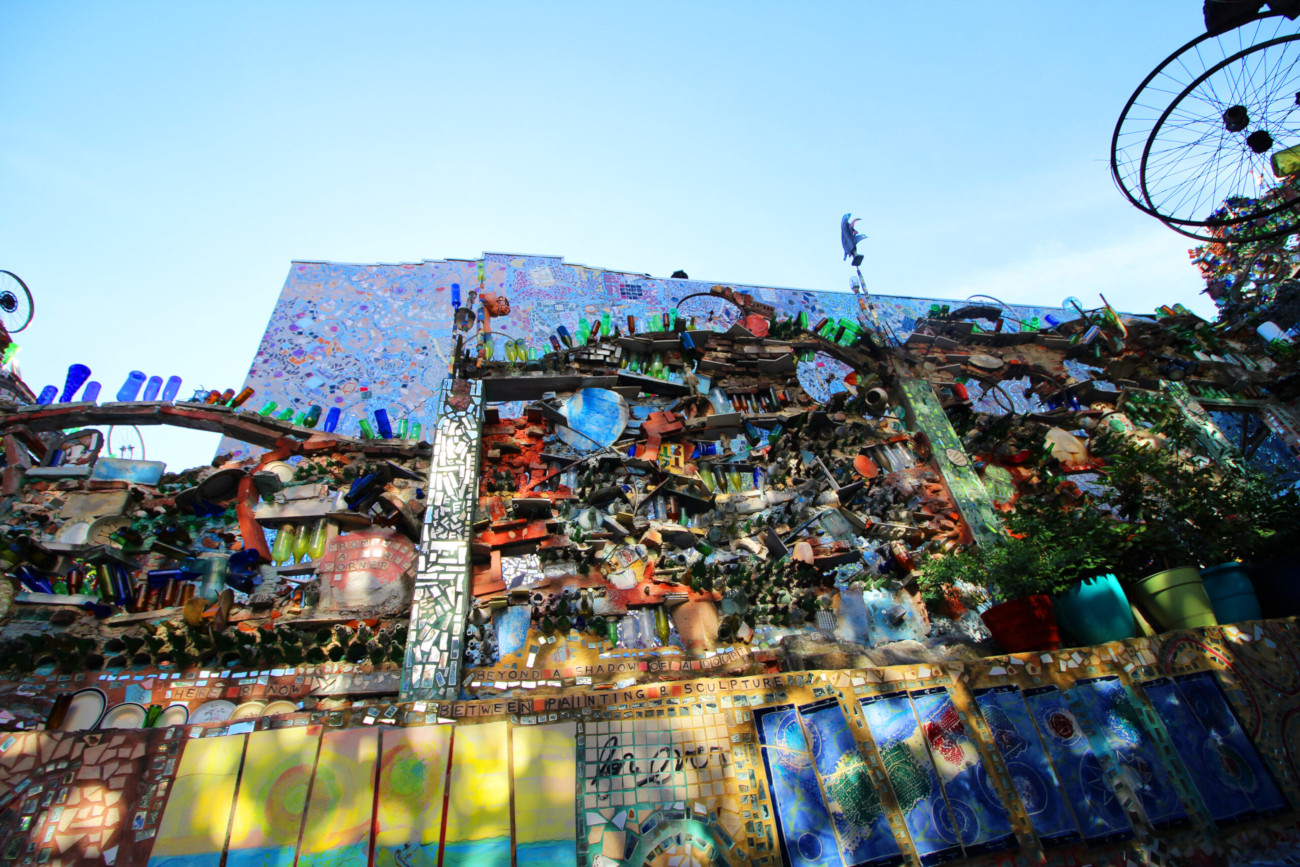
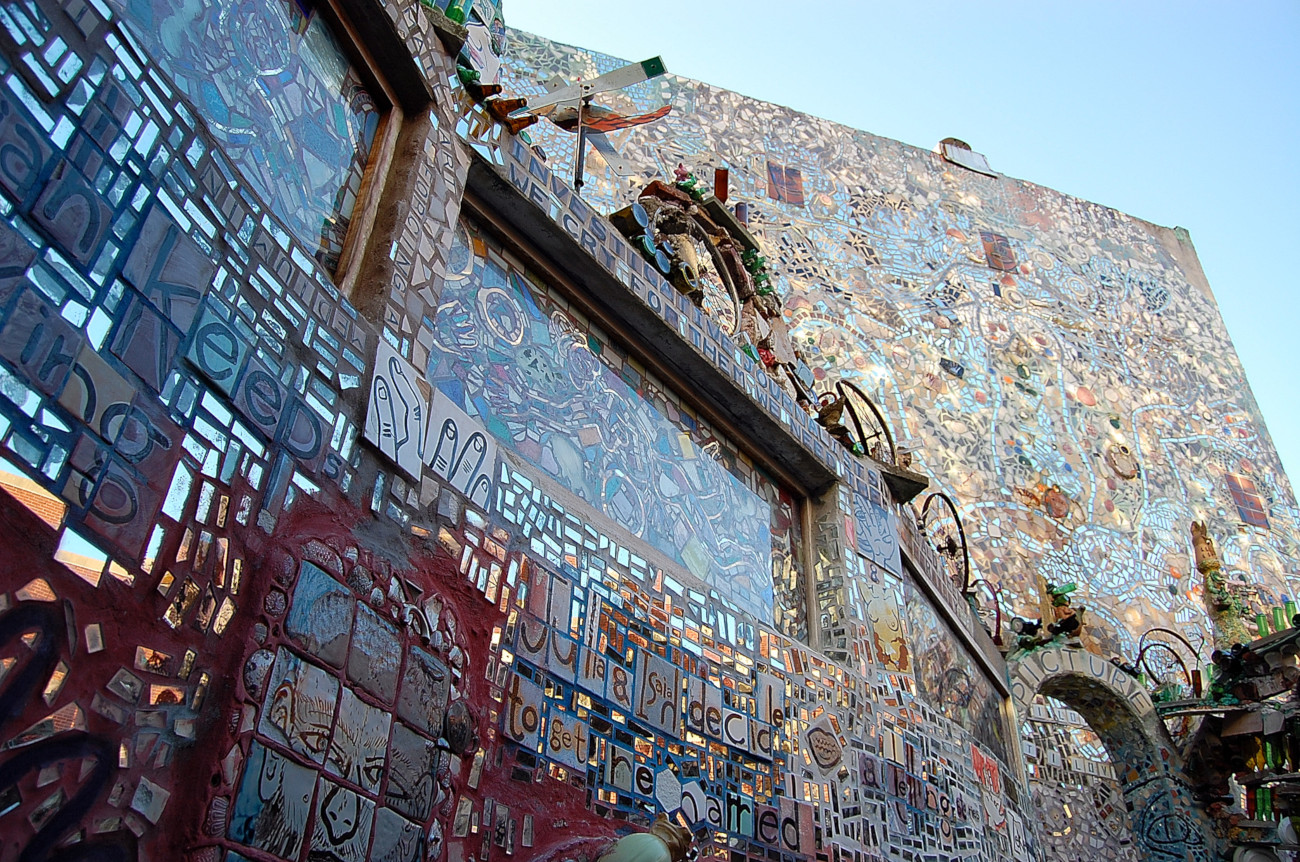
Philadelphia is known for its scrappy, authentic spirit. And out of its many cultural institutions, no place captures it quite like Philadelphia’s Magic Gardens. Created by artist Isaiah Zagar, this unique space is a sprawling environment covered in a myriad of mosaics, blurring the line between museum and artwork. With roughly 150,000 visitors per year, Philadelphia’s Magic Gardens has grown into one of the city’s main cultural attractions.
Beyond stunning visitors with its colors and details, Philadelphia’s Magic Gardens are also a source of pride to the City of Brotherly Love. After all, its very existence symbolizes a community rallying together for the greater good. What started as a passion project in a forgotten space was soon endangered by individuals who put profits before art. Luckily, it was then saved by local art lovers who took action after realizing a one-of-a-kind treasure was at stake—championing the underdog, in true Philly style.
Zagar’s work on this unique museum has drawn comparisons to Antoni Gaudí’s trencadis, a decorative technique based on broken mosaics. However, while Barcelona has made it part of its brand, the Magic Gardens were first and foremost a guerrilla art project, speaking to an alternative facet of culture. Today, it continues to elevate emerging and innovative creatives, offering workshops and hosting temporary exhibitions.
We had a chance to talk to Allison Boyle, Events Manager at Philadelphia’s Magic Gardens, about its origins, its connections to the city, and what the team hopes visitors take away from this place. Read on for My Modern Met’s exclusive interview.
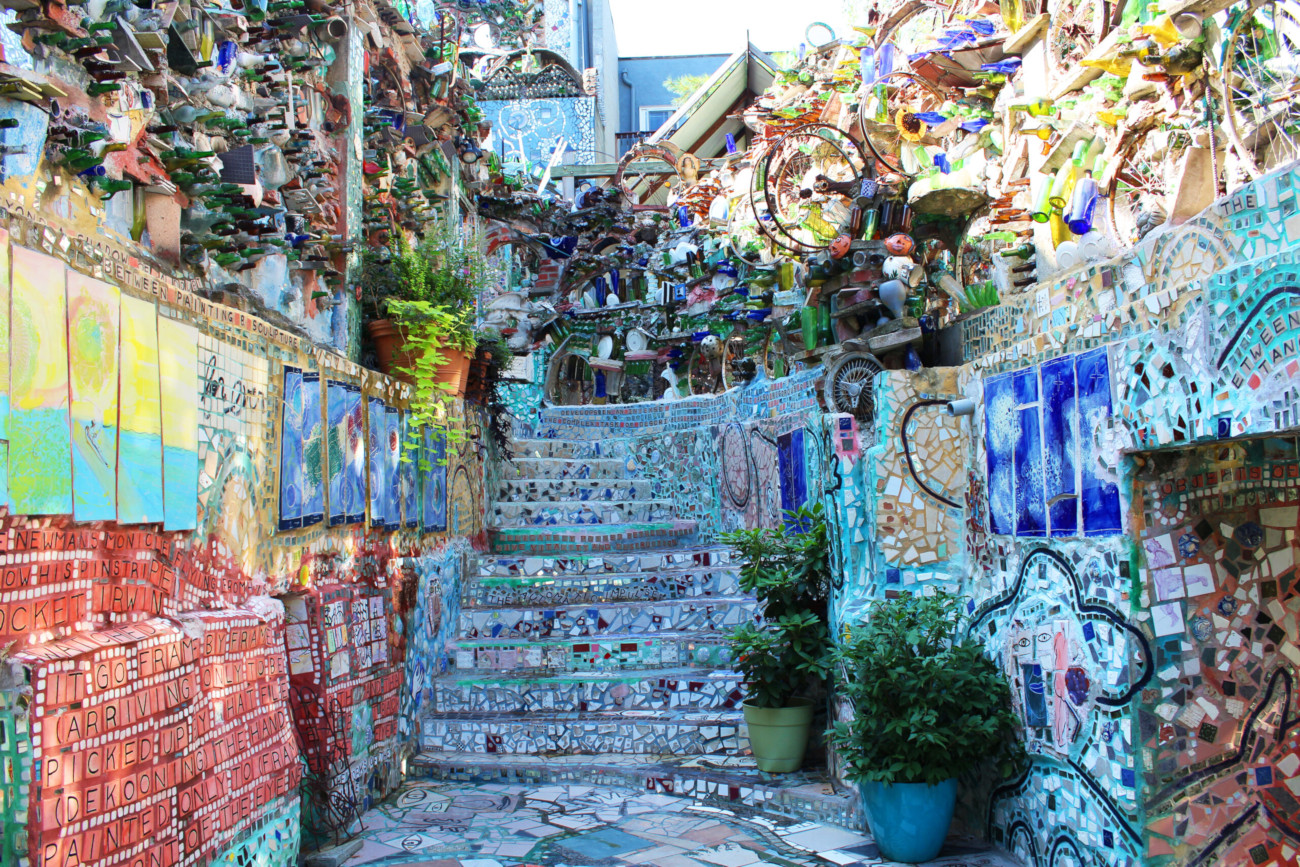
How did the Magic Gardens come to be?
The origin of Philadelphia’s Magic Gardens dates back to 1986, when Isaiah Zagar purchased a building at 1003 Kater Street in the South Street neighborhood as a studio space (currently the Magic Gardens Museum’s back gallery and office). The property where the sculpture garden is now located was previously an abandoned space owned by a group of Boston businessmen who had no intention of developing it.
Zagar received permission from the owners’ agent in Philadelphia to beautify the space and started doing his own guerrilla art project. In 1991, he started working on the vacant lots located near his studio at 1020 South Street and first mosaicked the buildings on either side of the property. Zagar spent years sculpting multilayered walls from found objects and, in 1995, expanded his property to include 1020-22 South Street (now the front of PMG and the neighboring courtyard). By the early 2000s, however, the neighborhood had become much more desirable.
In 2004, the original owners of the vacant lots decided to sell the land, but discovered Zagar’s mosaicked murals and called for the work to be dismantled. Unwilling to witness the destruction of the now-beloved neighborhood art environment, the community rushed to support the artist. Zagar’s creation, the now internationally known Magic Gardens Museum, quickly became protected and incorporated as a nonprofit organization. The non-profit, PMG, was then able to formally purchase the property in October 2004.
The organization took on the work of preserving his artwork—both at the site and throughout Philadelphia. Magic Gardens Museum was volunteer-run for many years before formally opening to the public with tours in May 2008. In December 2023, Isaiah and Julia Zagar donated the massive studio to PMG to be preserved and maintained by the nonprofit. Now known as Magic Gardens Studio (the Studio), the space opened to the public for limited tours, workshops, and programming on select dates in August 2024.
What are some of the materials that make up the mosaics in the gardens, and what are their origins?
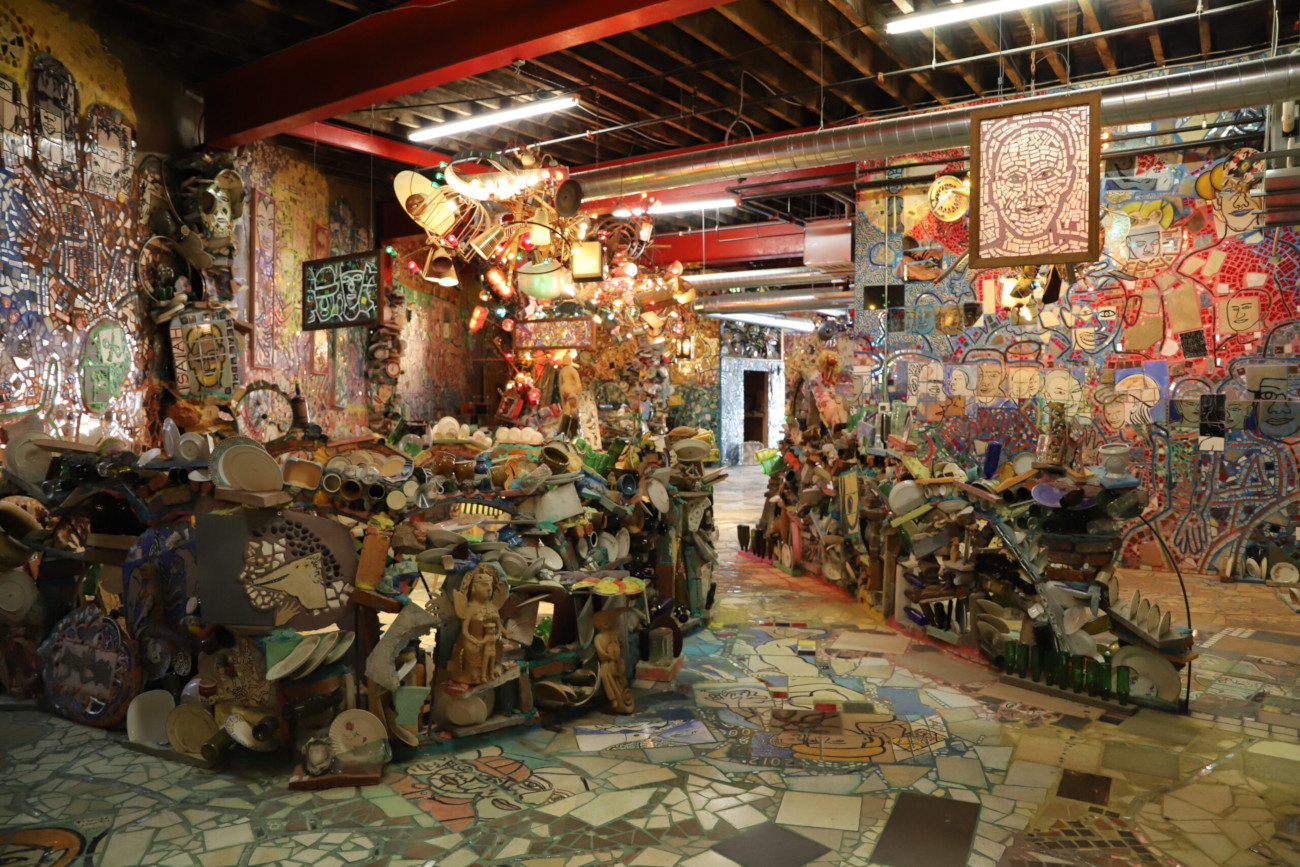
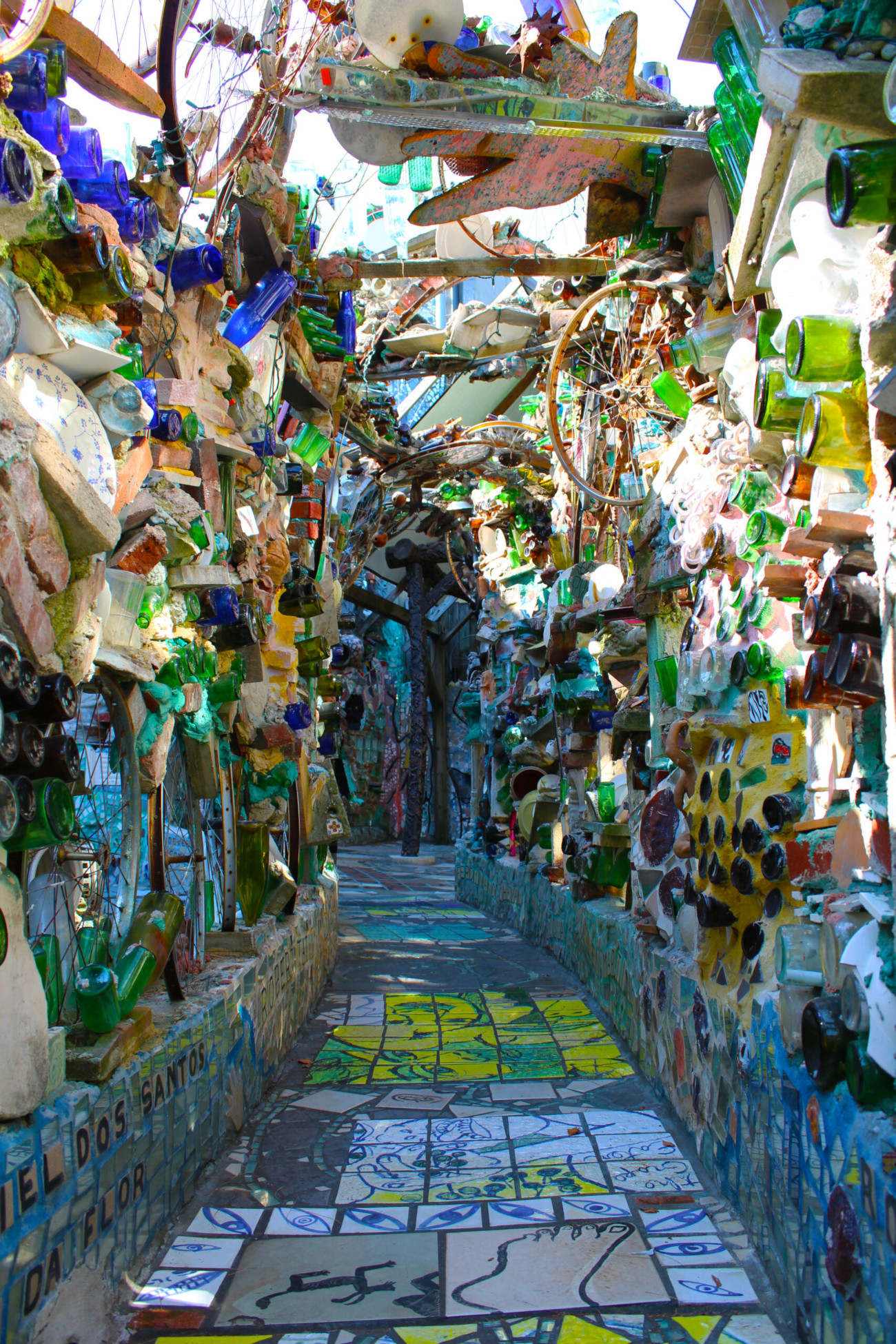
Isaiah generally obtained things in one of three ways: by donation, he made it himself, or he got it from other artists. Isaiah got many tiles and other objects from the local community. Isaiah had relationships with many tile companies and a mirror supplier who gave him things they couldn’t use or discounts on large quantities of materials, and now our Preservation Team continues these relationships. These tiles are often discontinued or defective in some way. As long as tiles have not already been used and are free of glue, they can be used to create mosaics.
People now bring lots of donations to PMG. When someone renovates their bathroom or kitchen and has extra tiles, they’ll often drop them off here for the PMG Preservation Team to use. Isaiah would often use these tiles to paint with glaze, refire, and then put into mosaics—which is a practice now continued by the Preservation Team.
One of Isaiah’s signature tiles that he would create himself are what he called “doily tiles.” He would make these by taking balls of clay and smashing them flat with his hand or throwing them down on the table. He then would press lace doilies into them to create pattern and texture. Isaiah also made variations of doily tiles by pressing other things into the clay. He had an extensive stamp collection that he will often use to make impressions. Many of the stamps were made especially for him from his drawings. He also has made molds of different objects to press the clay into. Examples of things he has made molds of include hands and feet, screws, and buttons.
Isaiah also incorporated donated or found objects, such as bicycle wheels he obtained from a bike shop called Via Bicycle off South Street, and glass bottles he either took from recycling cans or received as donations.
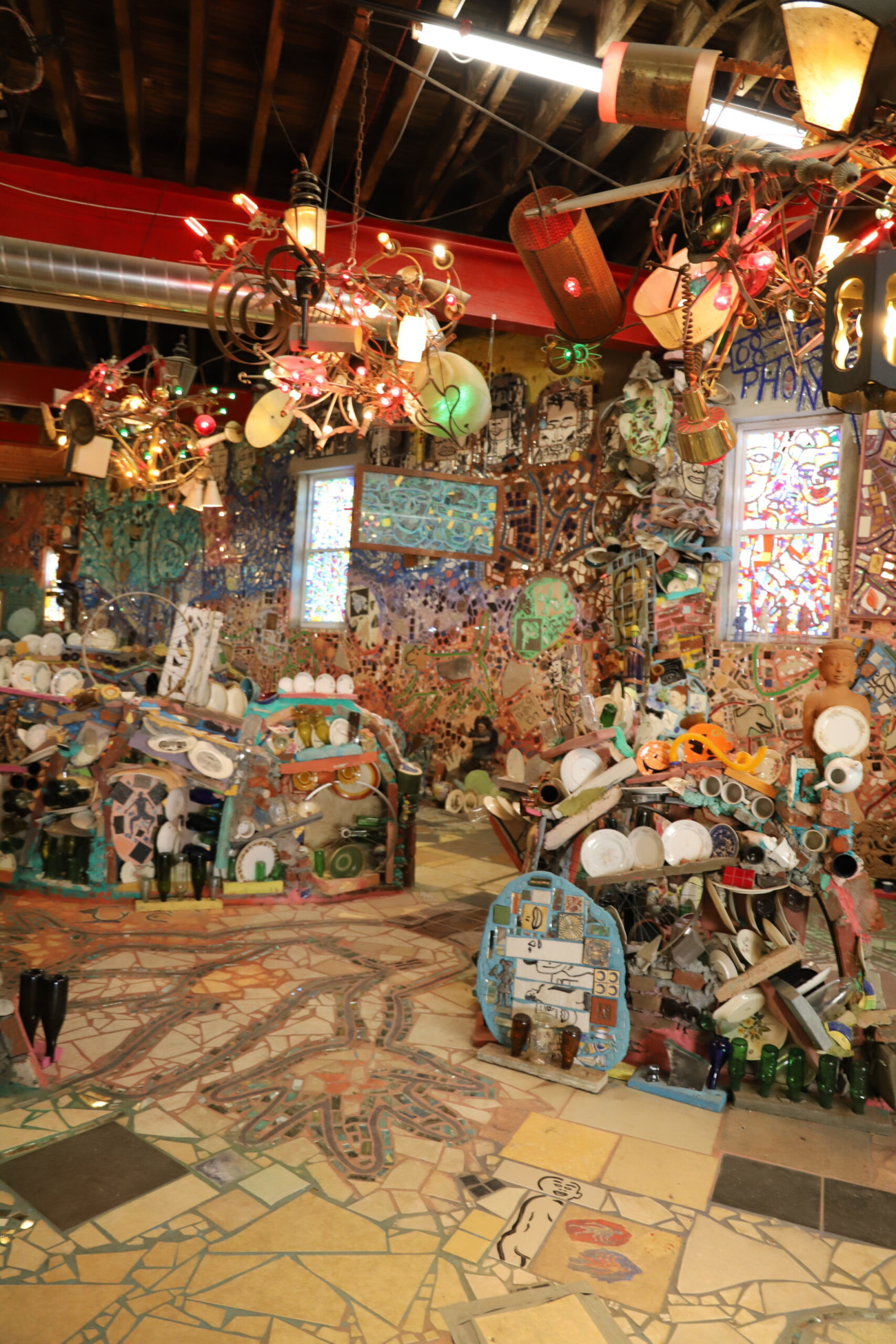
The sculptures embedded in the murals and showcased throughout the Museum are folk art pieces, most of which come from Mexico and other Latin American countries. Folk Art has always been part of the story of Philadelphia’s Magic Gardens. Isaiah Zagar and his wife Julia first connected with Folk Artists in the 1960s when they worked in Peru as Peace Corps volunteers. Their love for Folk Art grew as they purchased works from around the world for the Eye’s Gallery, Julia’s store at 4th and South Streets. The objects at the Magic Gardens Museum and Studio are often pieces that broke and could not be sold. Many are special collaborative commissions between Isaiah and the Folk Artist. If Isaiah admires the work of an artist, he will leave drawings with them to interpret in their own style. These partnerships sometimes continue for years and result in hundreds of unique pieces being installed throughout his work.
The majority of the Folk Art at the Magic Gardens Museum and Studio is Mexican, since the Zagars fostered so many friendships there over the past five decades. However, there are also Folk Art pieces from many other countries they have visited. Works from India, Peru, Ecuador, Morocco, Indonesia, and Guatemala can all be found in the spaces.
The PMG staff began taking trips to Mexico in 2016 to carry on this legacy of working with folk artists. It is PMG’s mission to continue supporting the work of these talented artists and to share their stories and traditions with the public. PMG’s preservation team adds new artworks to the installation as old ones deteriorate or break, and we regularly focus temporary exhibitions on these artists.
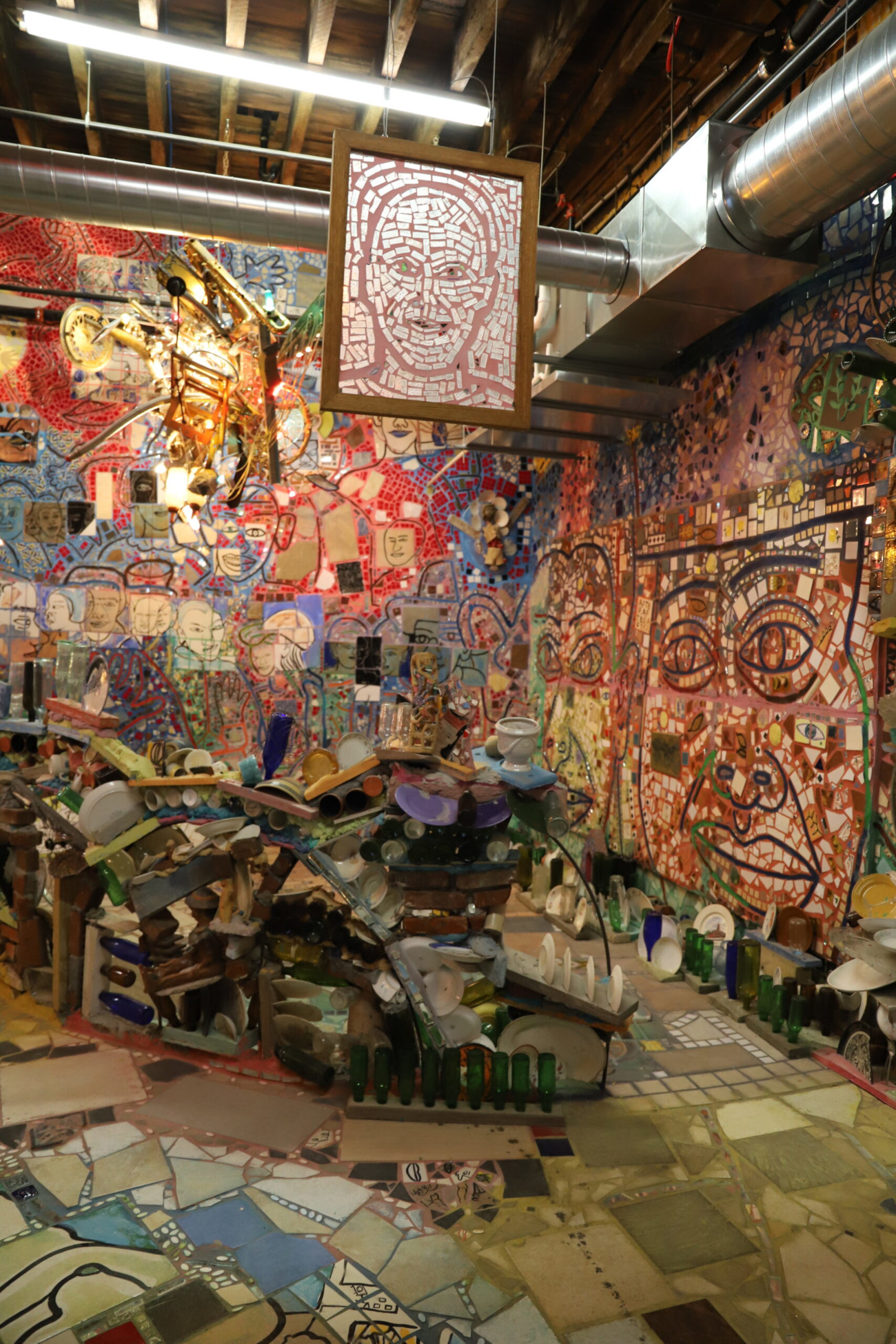
Zagar’s work has long been compared to Gaudi’s trencadis in Barcelona. As experts in this place, do you see a resemblance? Is there a connection?
Isaiah first saw Gaudí’s work in April 1991, and it had a profound influence on his own work. Isaiah wanted to see his work before starting work on the Painted Bride Art Center. He says Colonia Güell is “the most amazing building in the world.” He included Gaudí’s name in the mosaics in the Museum’s office and on the floor in the lobby. Isaiah always said Gaudí was more of an architect, while he himself specialized in decoration.
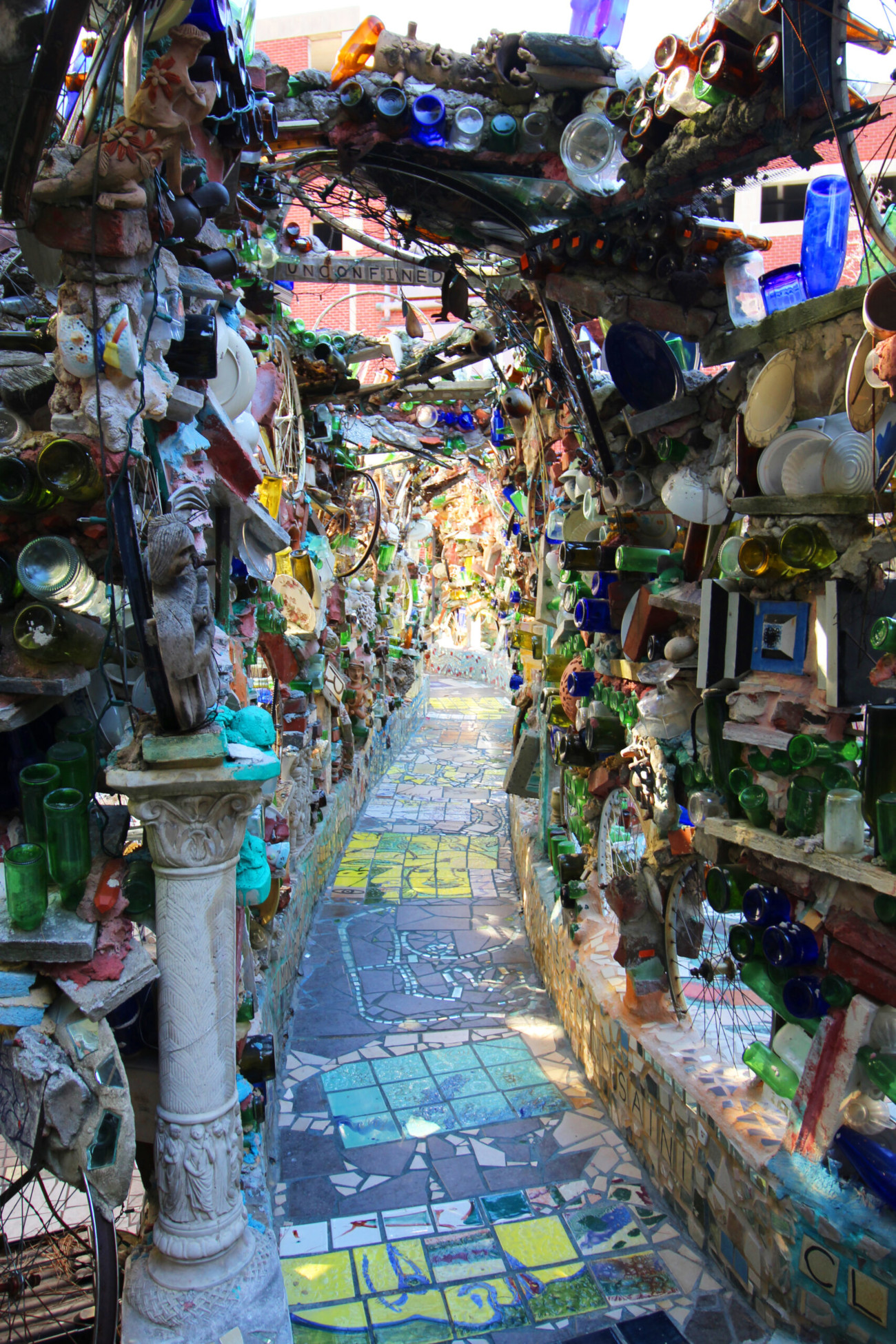
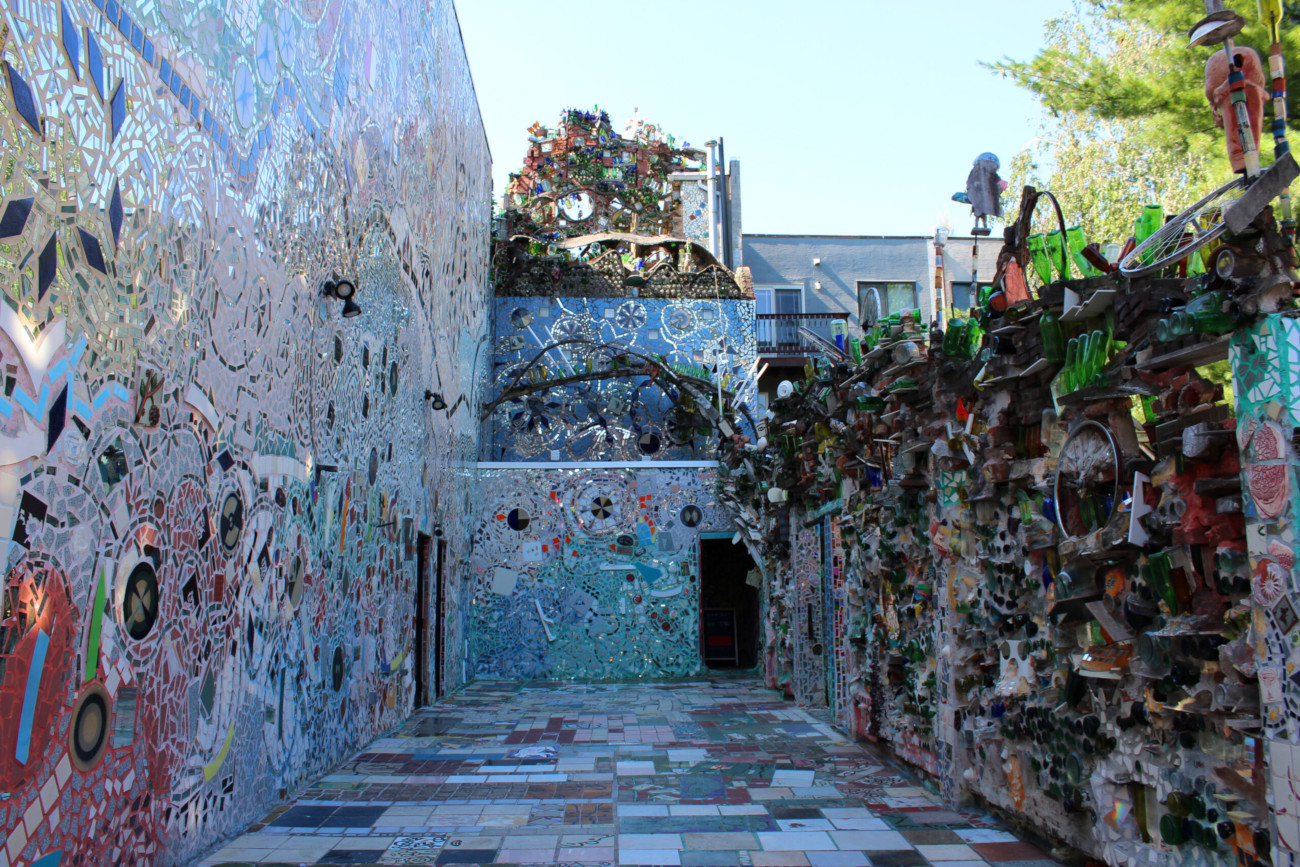
Can you tell me about the exhibits and activities the Magic Gardens hold?
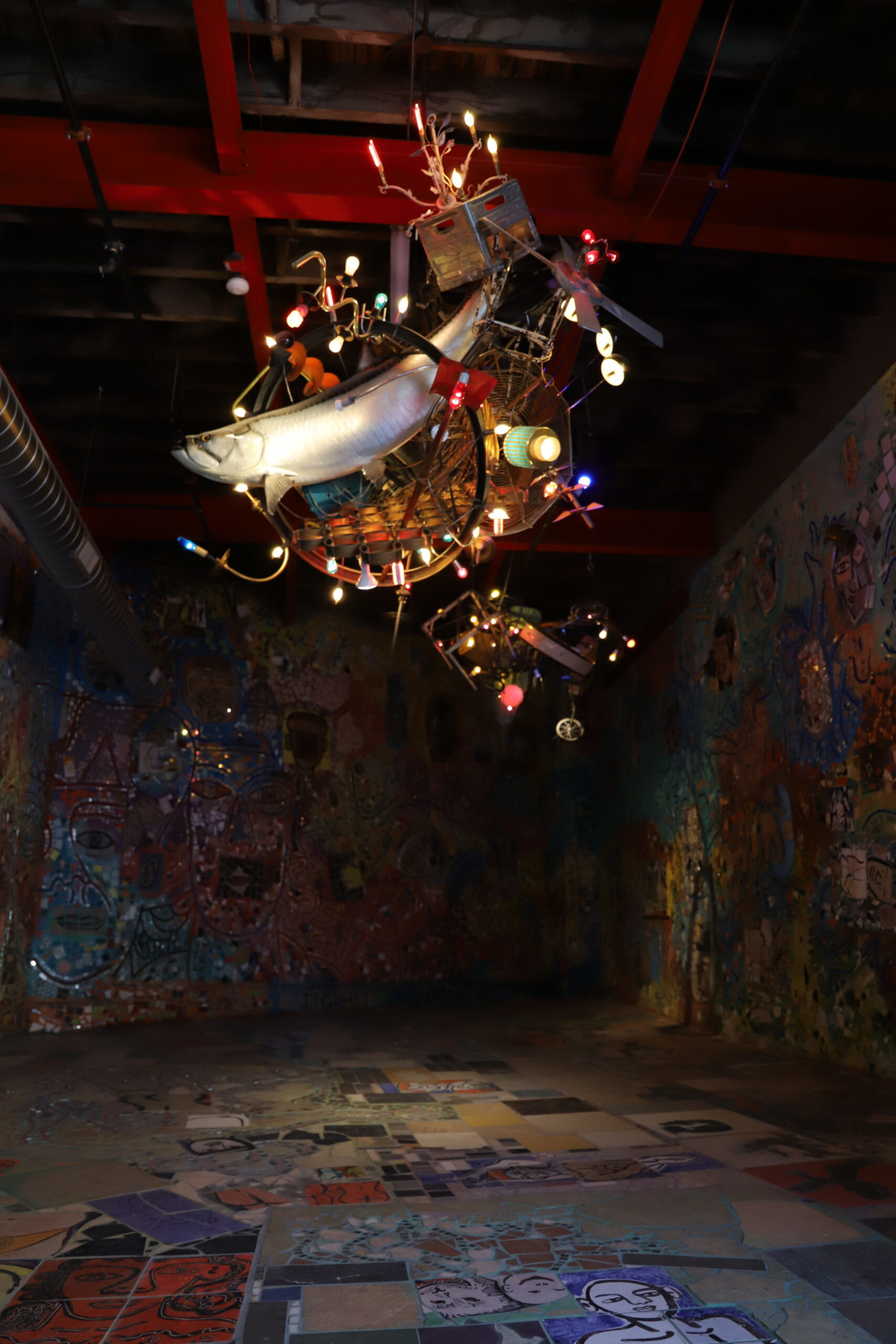
Philadelphia’s Magic Gardens hosts many programs at both the Museum and Studio locations. There are hands-on workshops where participants can learn the art of mosaicking using the Zagar method, as well as other art-making programs, like our monthly, kid-friendly PECO Family Jams. We also host live music through the Twilight in the Gardens series in the summer, and an after-hours illuminated experience called the Gardens After Dark in the winter.
Our temporary exhibitions are held in our two indoor galleries and showcase the work of both local and international artists working in a variety of mediums.
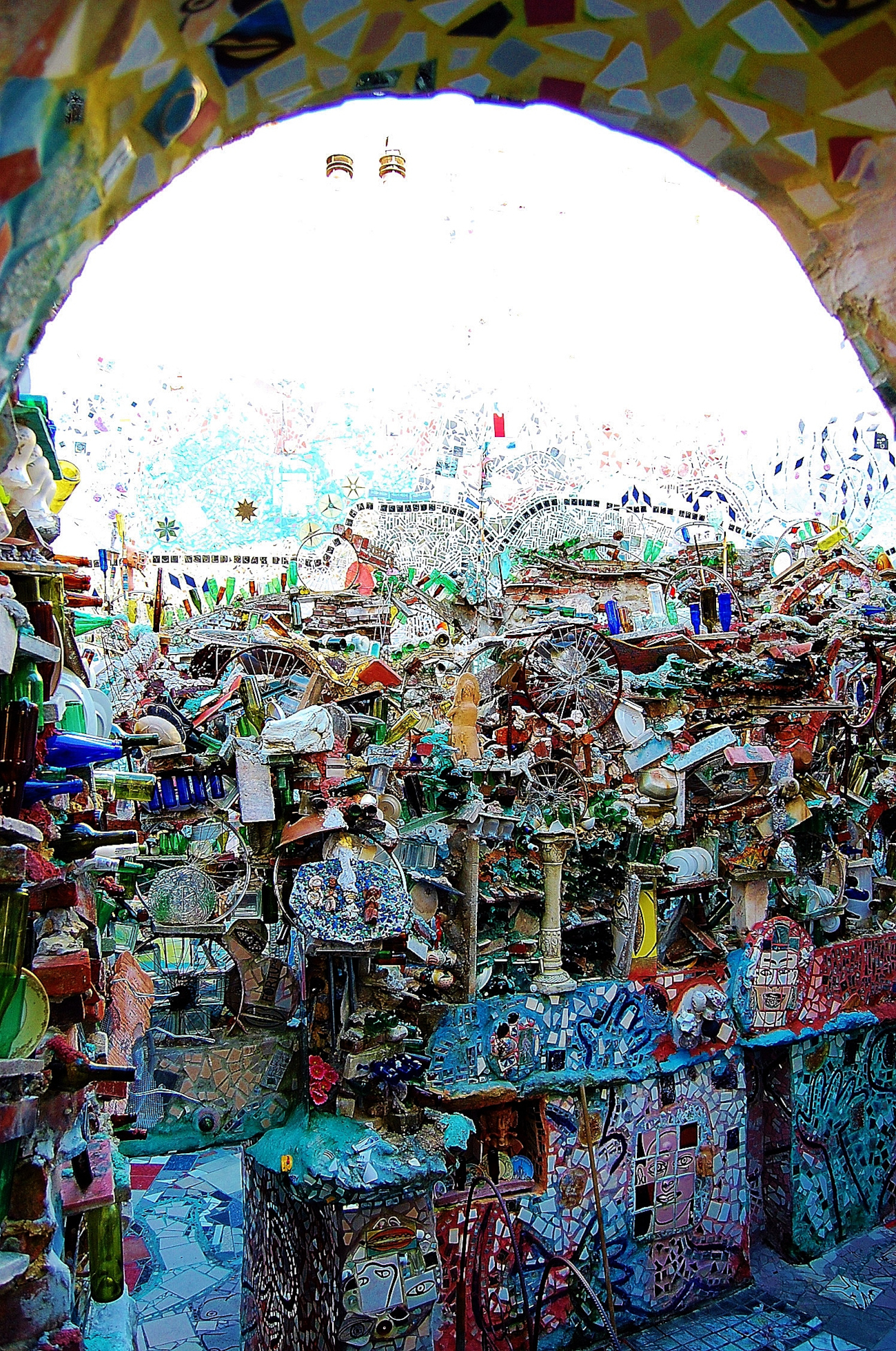
What meaning do the Magic Gardens hold for the city of Philadelphia?
Philadelphia’s Magic Gardens and the work of Isaiah Zagar is part of what makes Philadelphia unique. He began creating his mosaics at a time when South Street was in danger of being demolished for the construction of an Expressway—which would have wiped out this entire neighborhood. Thanks to the efforts of many community members, including the Zagars, they were able to save South Street and turn it into an artists’ mecca. After that point, the city became Isaiah’s canvas, and his work draws people in from all over the world.
What do you hope people take away from a visit to the Magic Gardens?
We hope that after visiting the Magic Gardens Museum, people become inspired by the power of one individual’s vision. Isaiah’s dedication to his craft, and his ability to rally his community resulted in this incredible art environment in the middle of the city. We hope that people take away the message that they too can create art—no matter their background or skill level—and that one person can change the face of their community.