

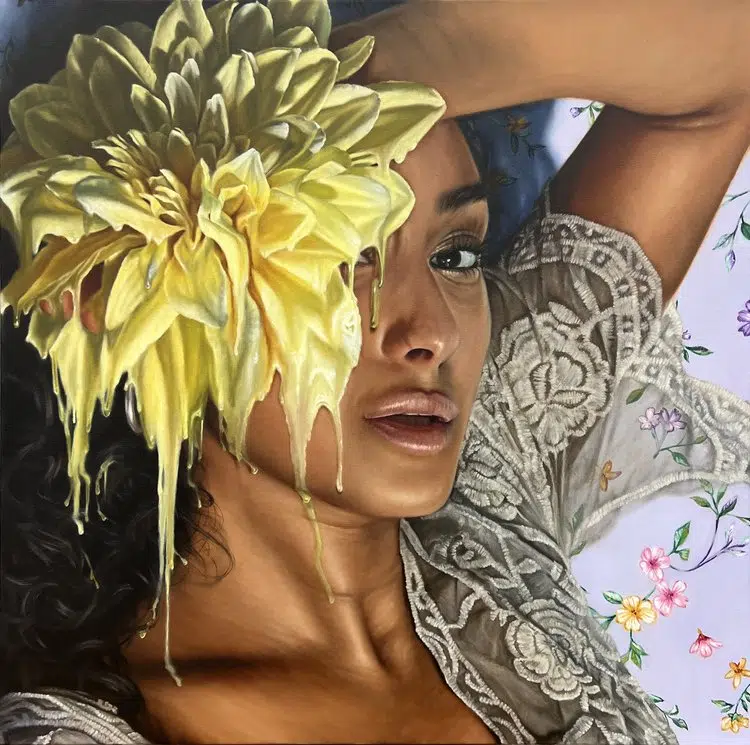
“Roddass”
Suspended somewhere between bloom and decay, the paintings of Niki Zarrabi unfold like living organisms in transformation. Flesh dissolves into petals. Flowers melt into skin. Rich jewel tones pulse against shadowed backgrounds, creating dreamlike compositions that feel at once microscopic and cosmic. Across her work, beauty is never static. Instead, it exists in a continual state of becoming, fragile, regenerative, and haunted by impermanence.
Based in the intersection of symbolism, spirituality, and biological imagery, Zarrabi’s paintings explore what connects all living things. Flowers recur throughout her work not simply as decorative motifs, but as metaphors for mortality and renewal. “I first began painting flowers in 2015, during a period when my work was heavily focused on the relationship between biology and spirituality,” the artist tells My Modern Met. “Flowers became the perfect symbolic language for that exploration because they exist in a constant state of transformation: blooming, wilting, dying, and regenerating in an endless cycle.”
That sense of transformation permeates her celebrated Femme Petale series, where floral forms appear to liquefy and dissolve before reemerging anew. The melting flowers are both unsettling and seductive, confronting viewers with the inevitability of decay while simultaneously suggesting rebirth. “For me, decay is not something separate from beauty, but intrinsically tied to it,” Zarrabi explains. “There is something profoundly human about witnessing transformation, even when it feels unsettling.”
Rather than presenting femininity through fixed definitions, Zarrabi approaches the body as an emotional and symbolic landscape. Faces are frequently obscured, cropped, or veiled, allowing her figures to function less as portraits and more as archetypes shaped by memory, grief, sensuality, and resilience. “I want my work to create space for that complexity rather than define femininity in a singular way,” she says. “One woman may connect to a piece through grief, another through empowerment, another through memory or desire.”
As an Iranian-American artist, Zarrabi’s layered understanding of identity also informs the emotional architecture of her paintings. Existing between cultures fostered an awareness of both difference and universality, an idea that echoes throughout her exploration of interconnectedness. “Growing up Iranian American, I often felt suspended between two worlds rather than fully belonging to one,” she reflects. “That experience gave me an awareness of both the beauty of cultural specificity and the underlying unity that exists beneath it.”
This duality extends into the visual language of the work itself. “My palette is heavily inspired by Renaissance paintings, which also overlaps beautifully with the deep, saturated colors often found in Persian art and textiles,” the artist notes while discussing her use of color. “I love how these tones can simultaneously feel vibrant and melancholic.”
Despite their painterly beauty, Zarrabi’s works are never merely aesthetic exercises. “I’ve always felt that science and mysticism exist much closer together than we tend to acknowledge,” she explains. Her work transforms biological structures into psychological terrains. Cellular forms resemble galaxies. Petals echo anatomical tissue. Organic systems collapse into spiritual metaphors. She says, “That space between what can be measured and what can only be felt is where I would like my work to exist.”
That fascination with impermanence also connects her work to historical artistic traditions, particularly Dutch vanitas painting. In pieces such as Memento Mori and Vanitas Novus, Zarrabi revisits centuries-old meditations on mortality through a contemporary lens. Classical vanitas paintings once warned viewers about the fleeting nature of earthly pleasures through decaying fruit, extinguished candles, and lavish objects. Zarrabi updates those anxieties for the modern world.
“Only the objects of obsession have changed,” she explains. “Instead of solely symbolizing wealth through fruit, silver, or wine, our modern compulsions revolve around substances, power, beauty, technology, attention, and validation.” By reimagining historical symbolism through contemporary desires, her paintings reveal how deeply human vulnerability transcends time.
What ultimately makes Zarrabi’s work so compelling is its refusal to separate opposing emotional states. Beauty exists beside discomfort. Vulnerability coexists with strength. Life and death unfold simultaneously within the same frame. “Some of the most beautiful, transformative moments in my life have emerged alongside grief, pain, or uncertainty,” she shares. “That duality feels inseparable from the human experience.”
In many ways, her paintings function like emotional mirrors, inviting viewers to locate themselves within the instability of transformation. Before intellectual interpretation begins, the work asks to be felt. When asked what she hopes viewers take away from her work, she says, “I would hope they feel like they’re having a personal conversation with the painting before they even fully understand it intellectually. More than anything, I hope they walk away seeing themselves, or life itself, from a slightly different perspective.”
To keep up to date with the artist’s work, you can follow Niki Zarrabi on Instagram.
Flowers melt, decay, and regenerate throughout Niki Zarrabi’s floral series, using botanical imagery to explore femininity, mortality, and the cyclical nature of life.
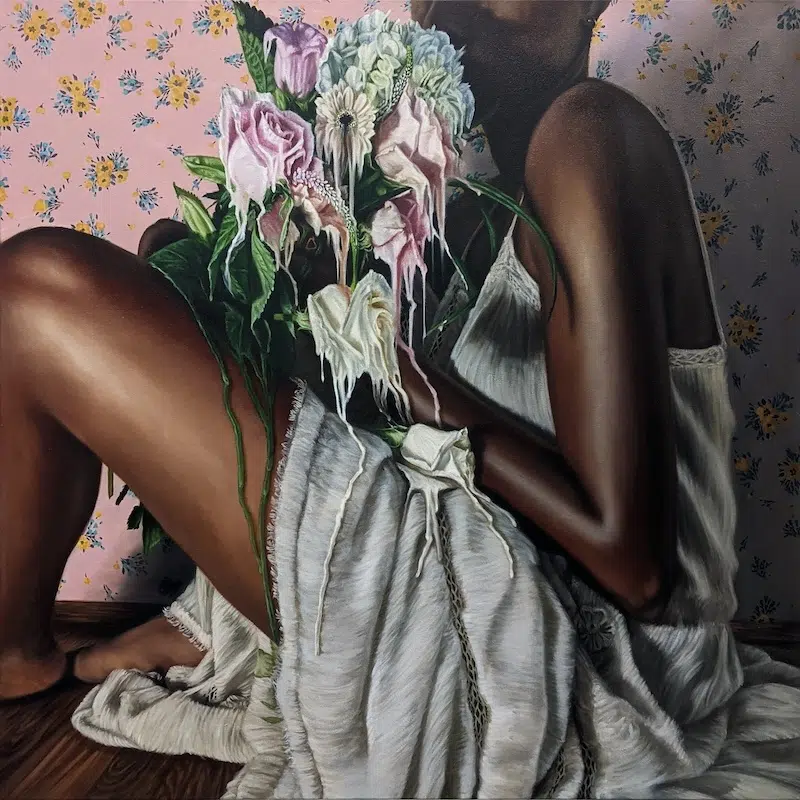
“Subdued”
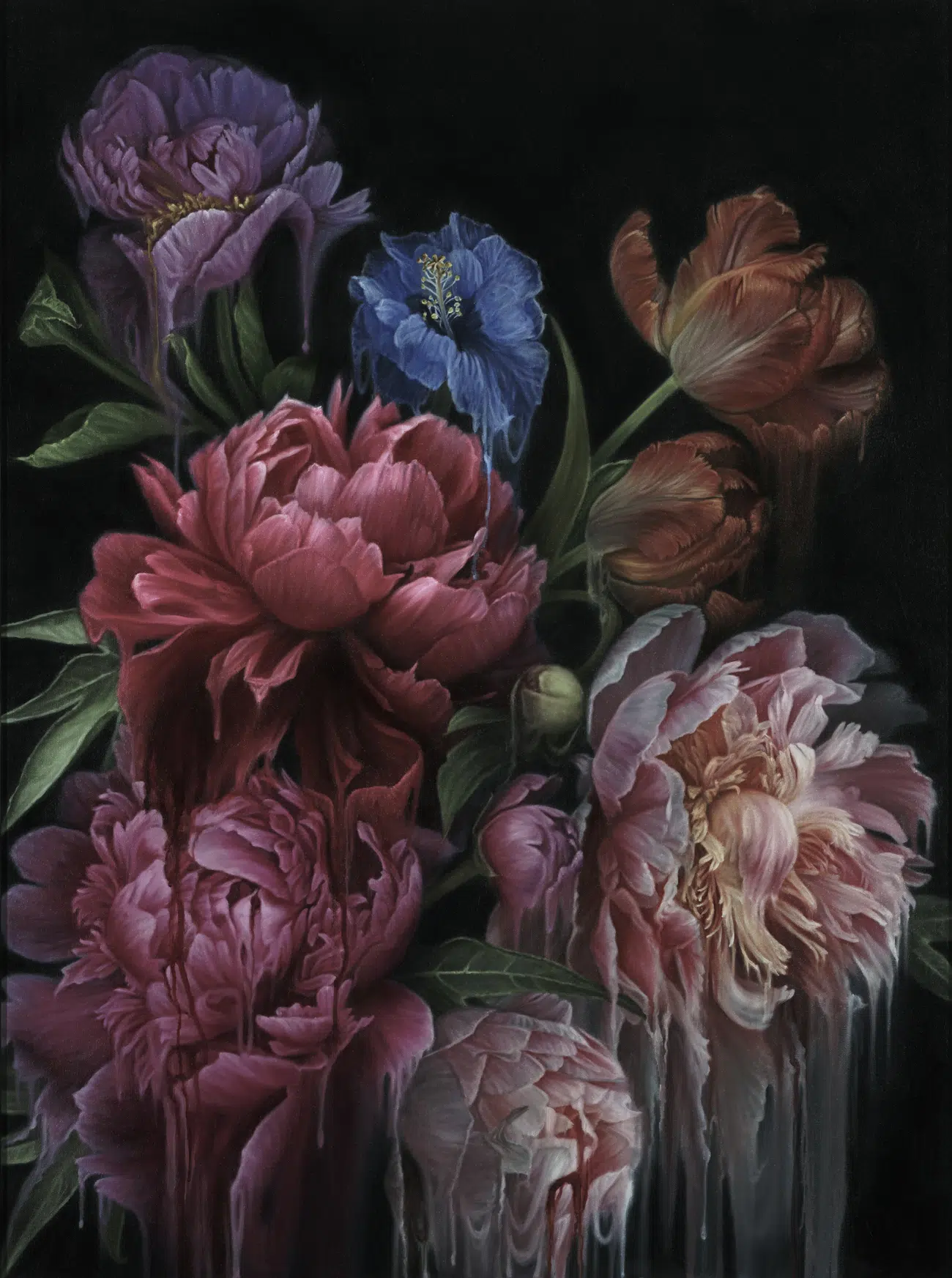
“Til Death Did Us Part I”
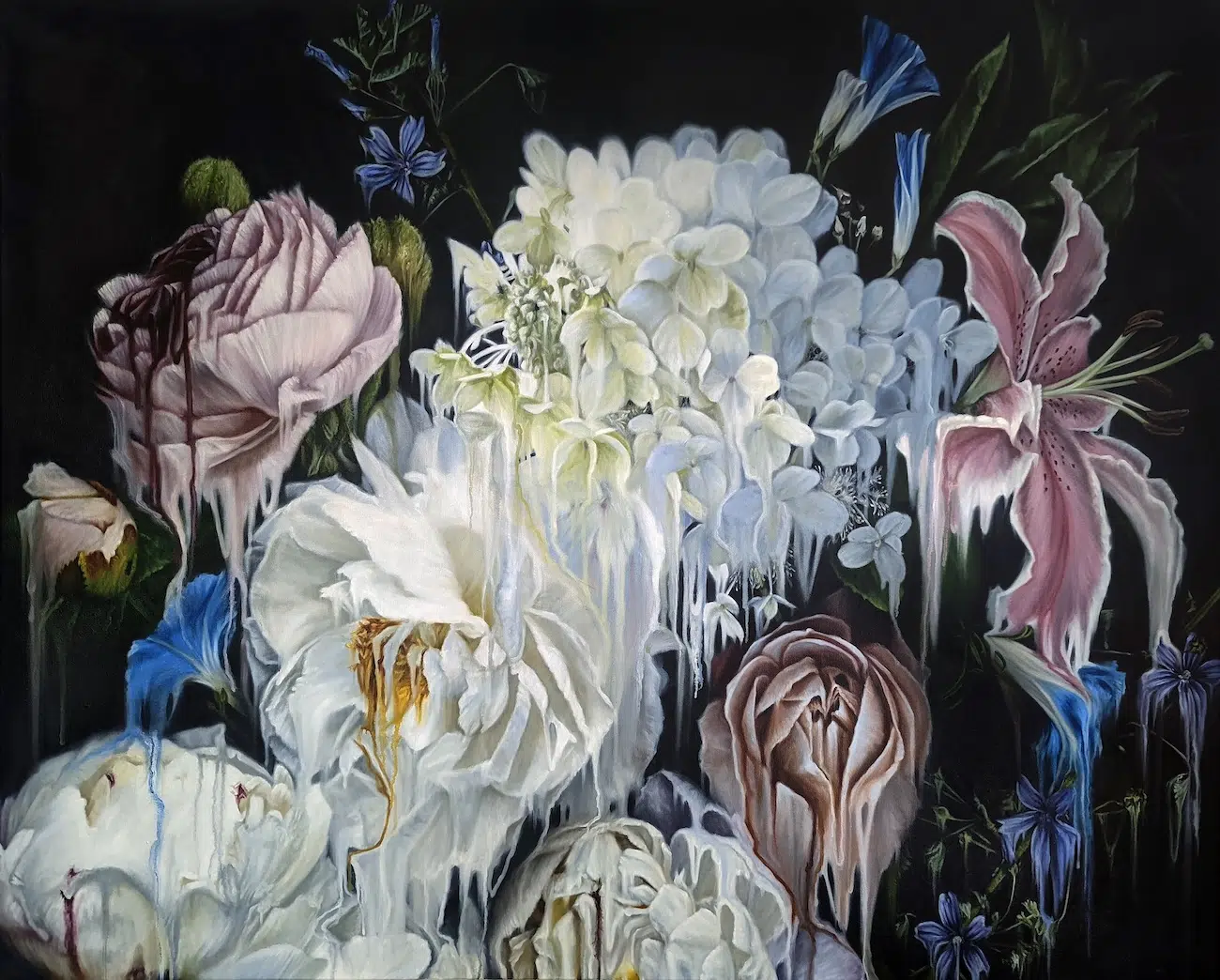
“Amorous”
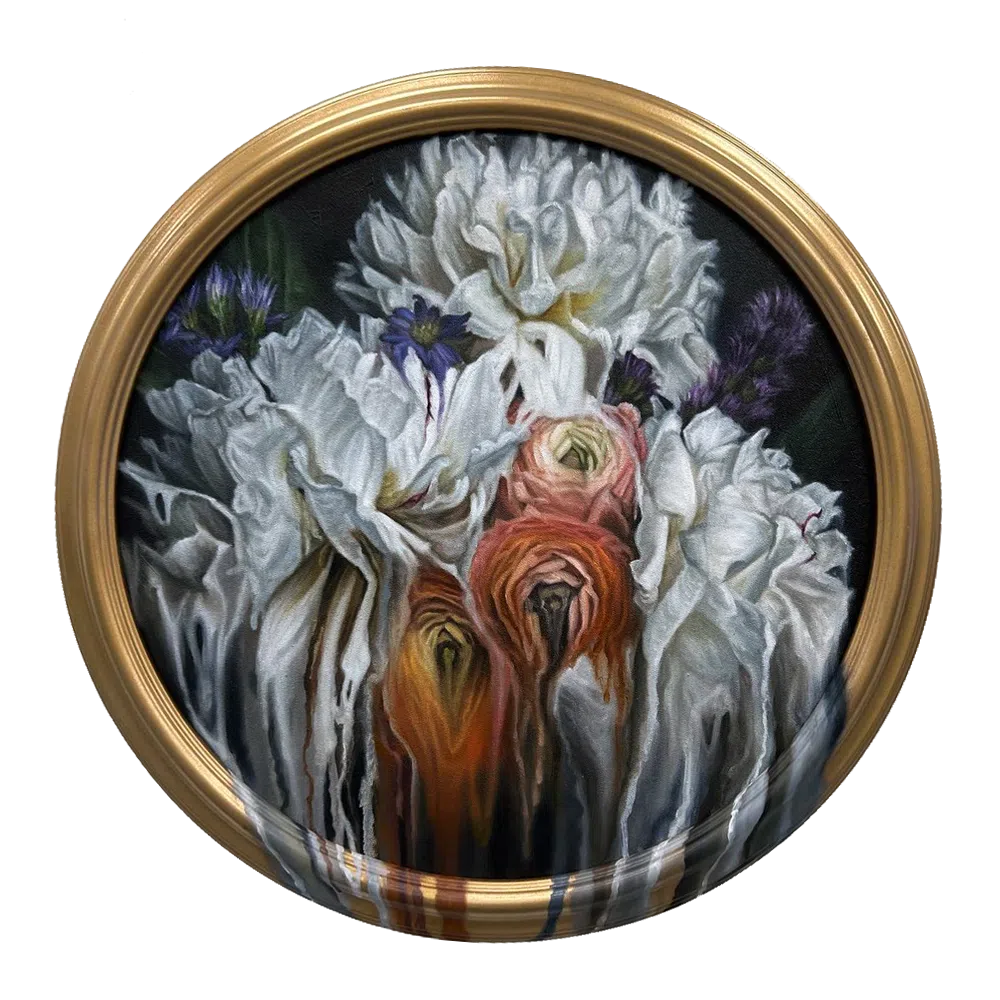
“Buttercup Bud”
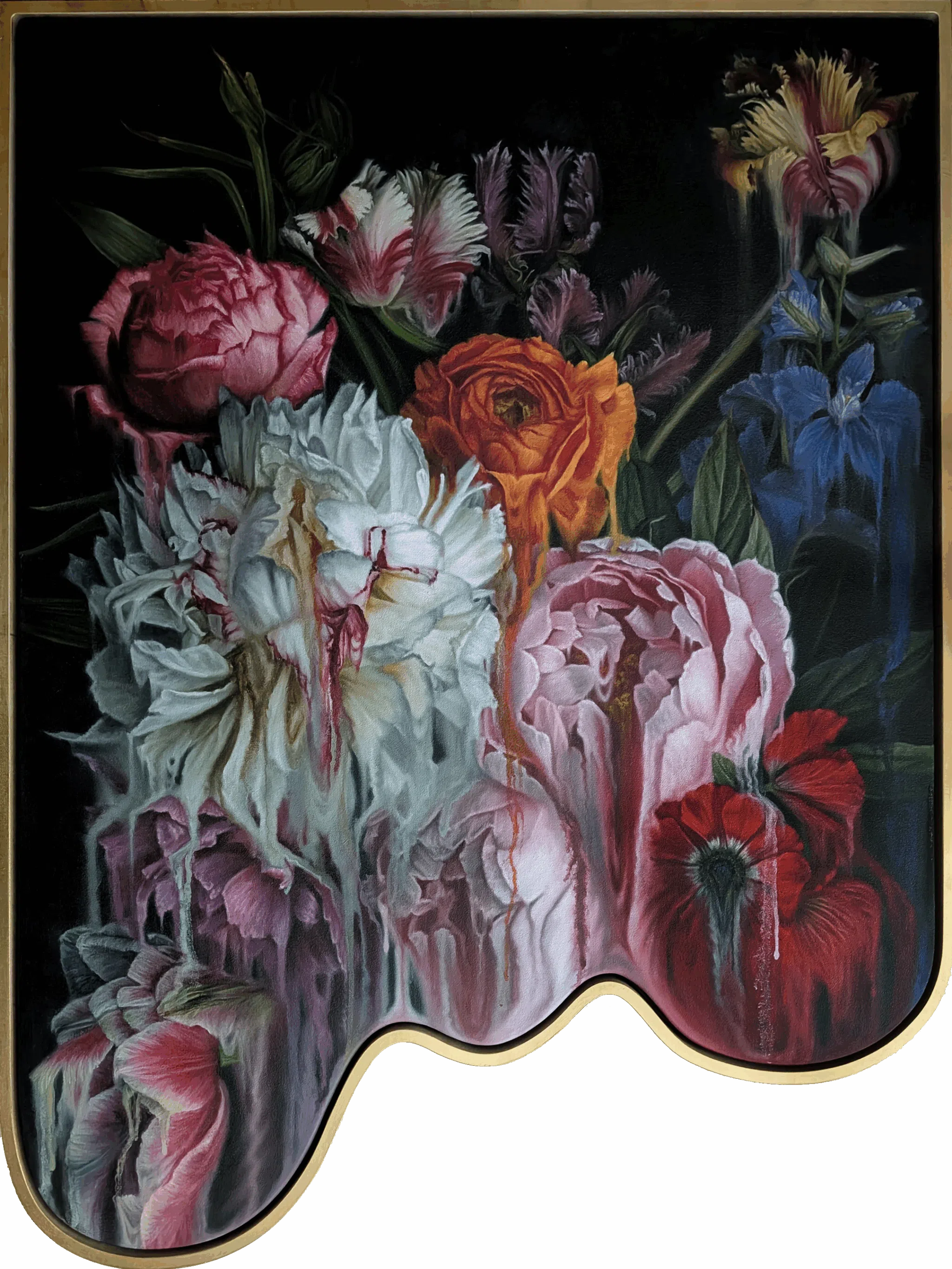
“Deliquesce”
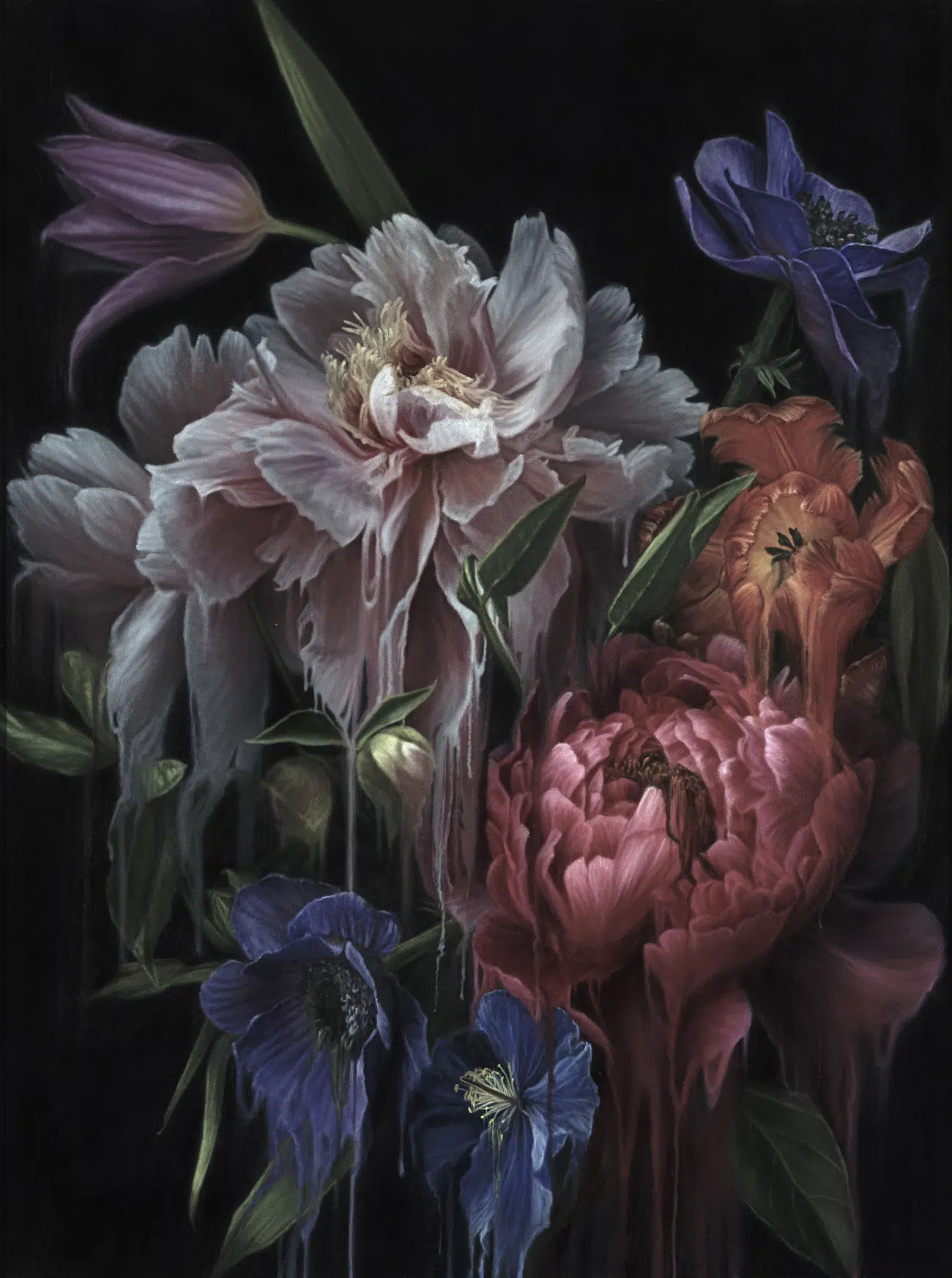
“Til Death Did Us Part I”
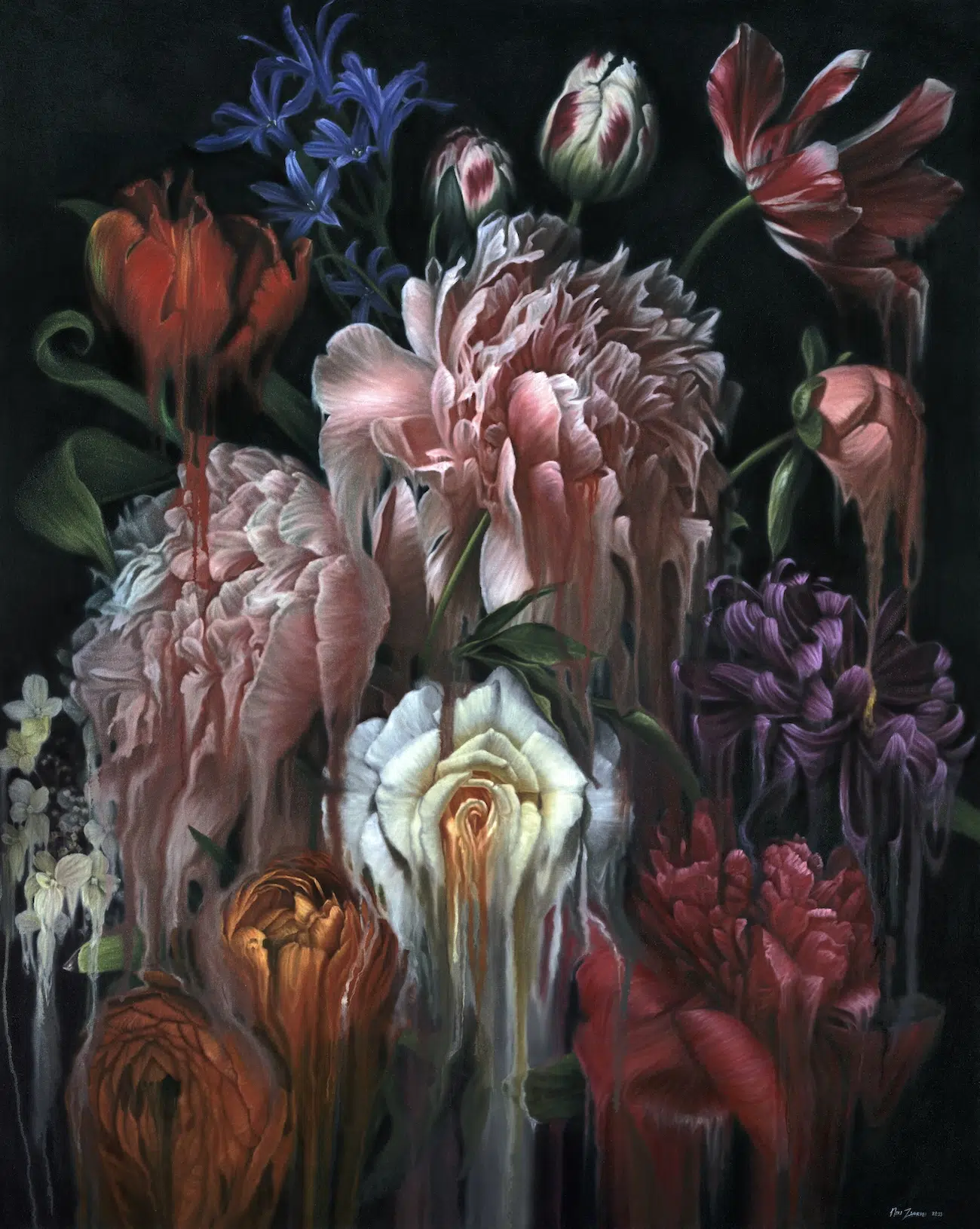
“Blooming Descent”
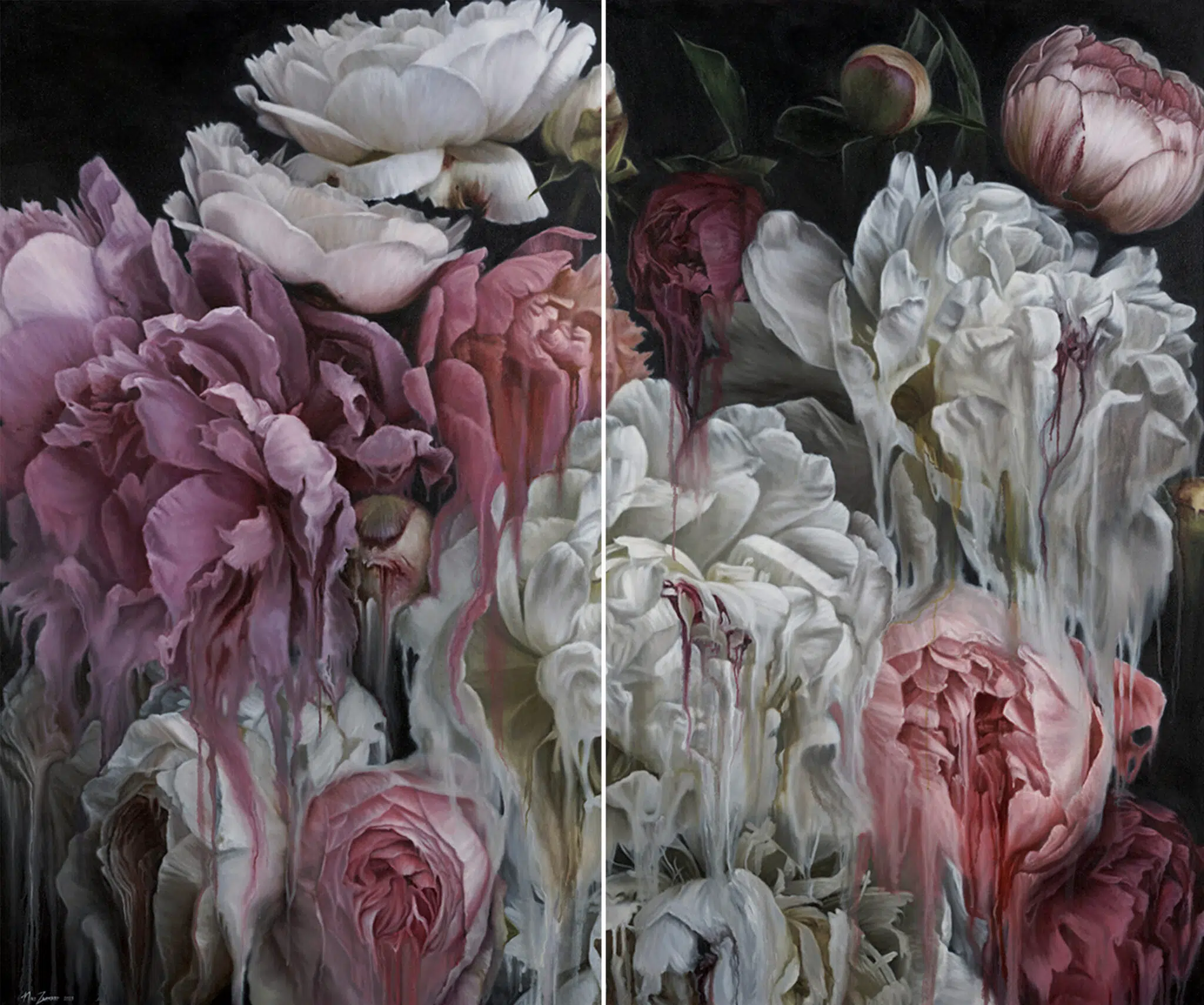
“Amorous Liason”
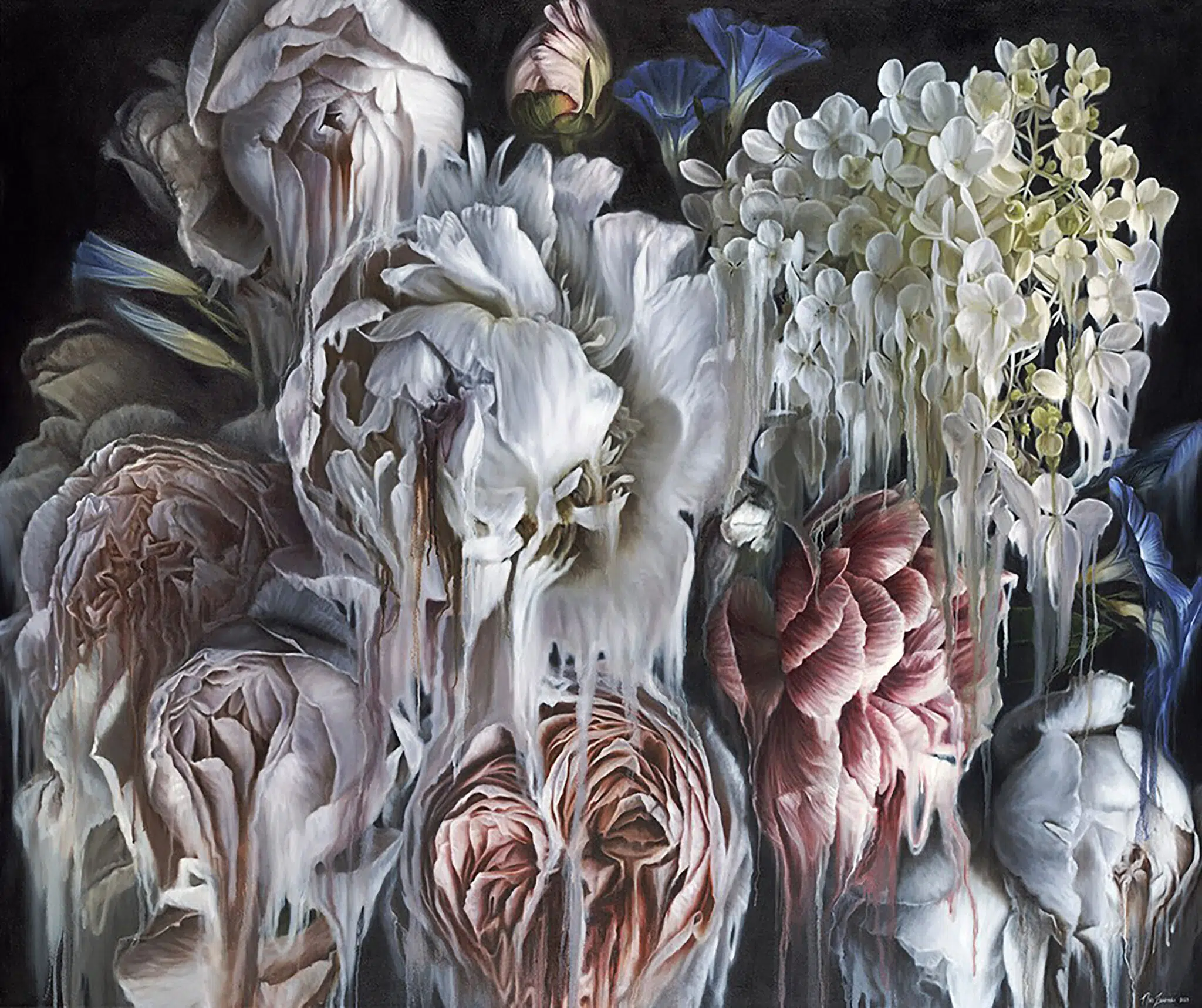
“Nostalgic Redolence”
Influenced by both Persian art and Renaissance painting, her compositions combine jewel-toned palettes, obscured female figures, and organic forms that feel simultaneously intimate and cosmic.
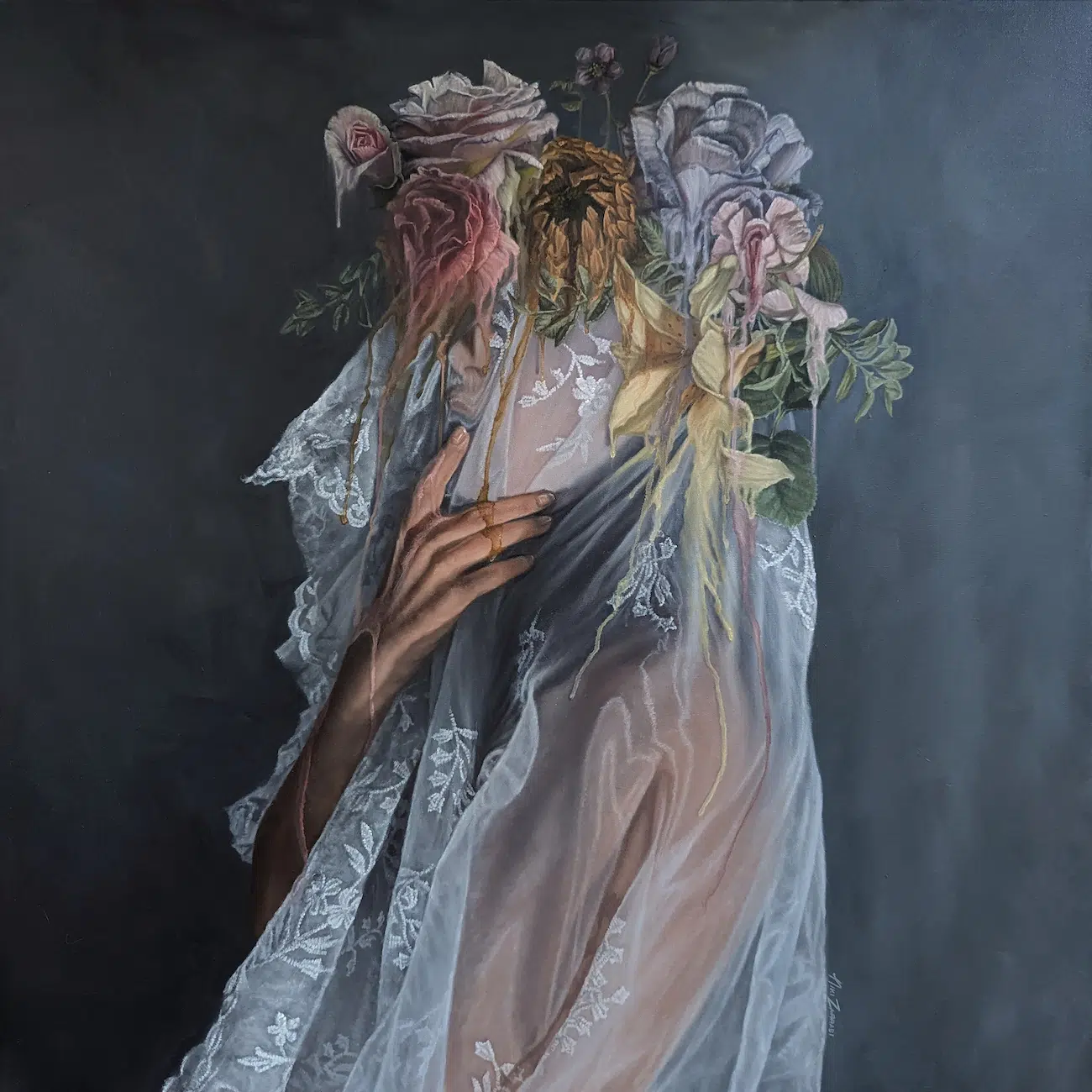
“To Surrender Like Flow”
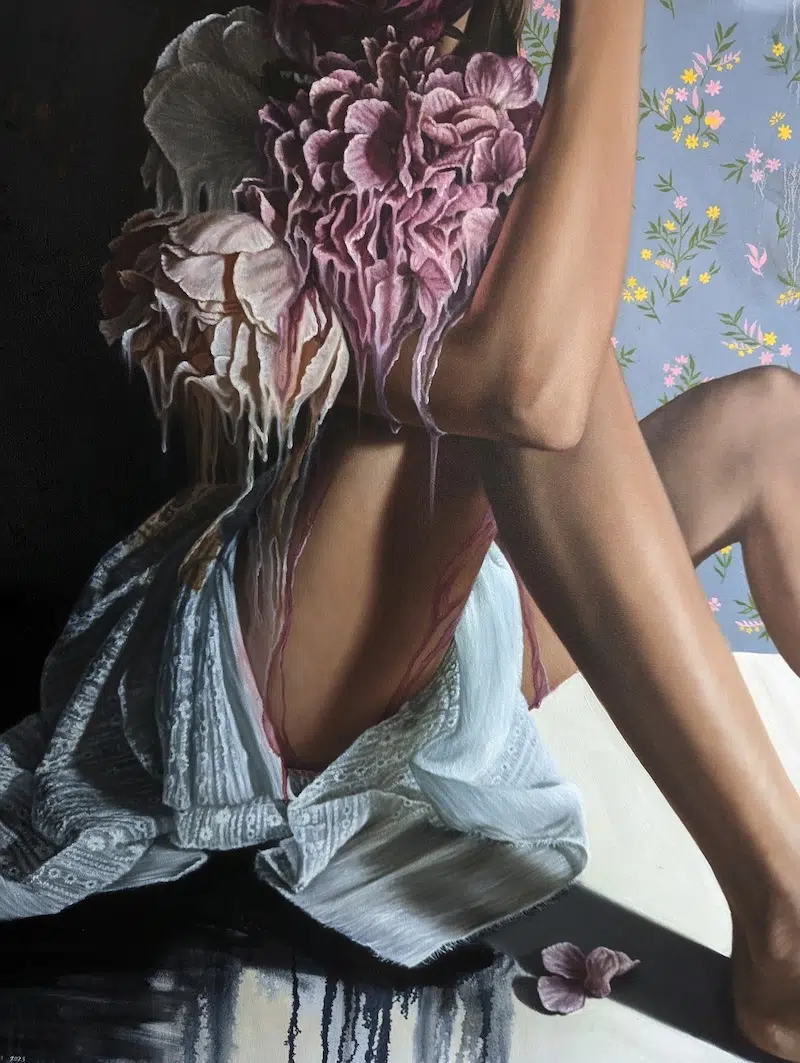
“Evanescent”
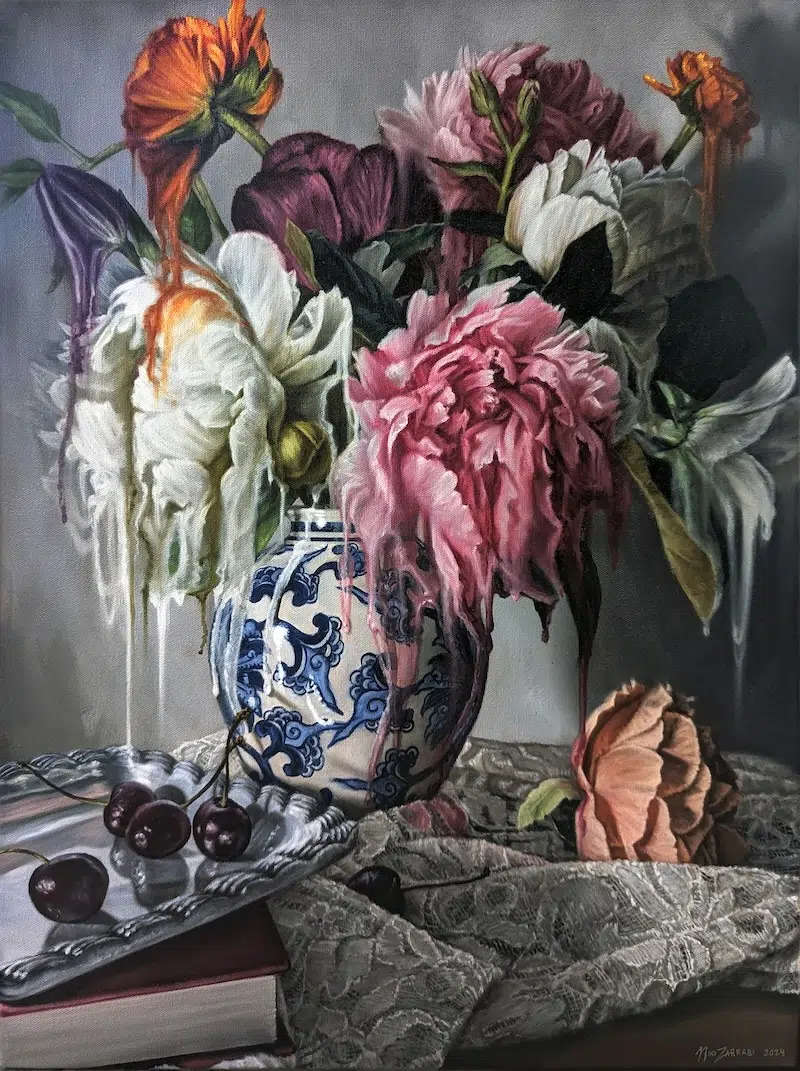
“Vanita Novus”
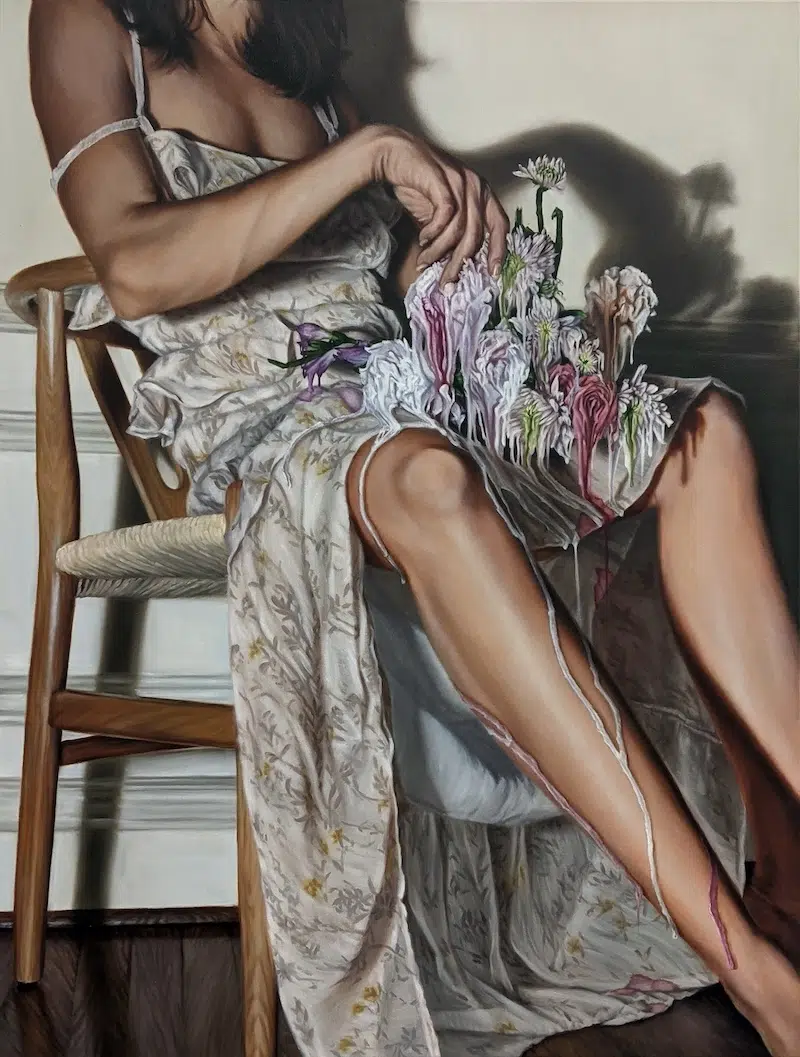
“Flowering”
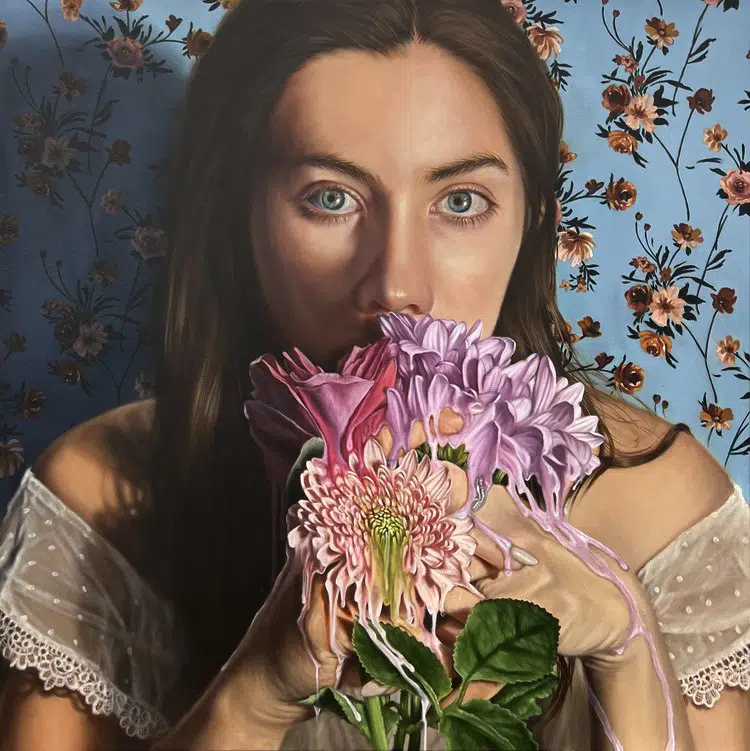
“Lucy”
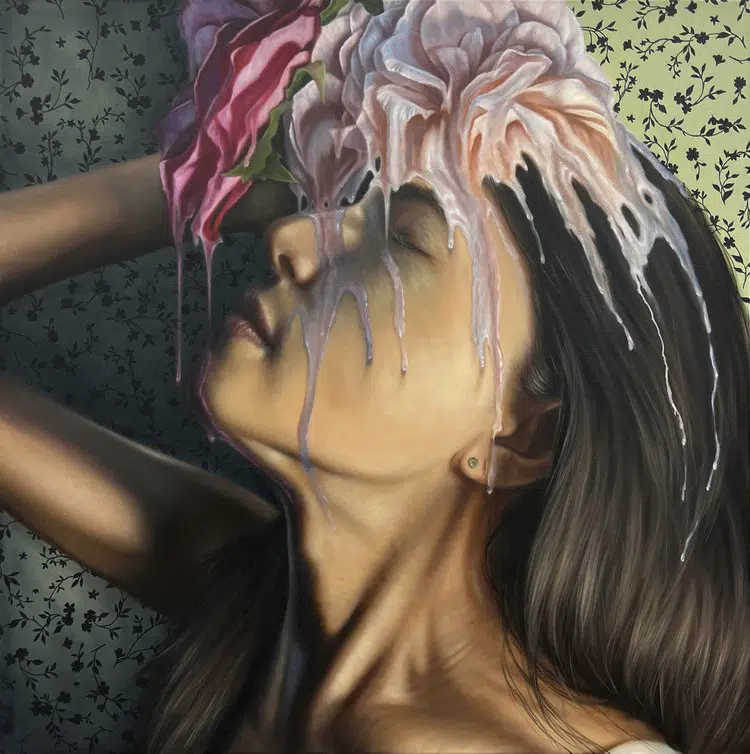
“Janice”
Referencing historical vanitas paintings, her contemporary works examine modern obsessions with beauty and impermanence through surreal symbolic imagery.
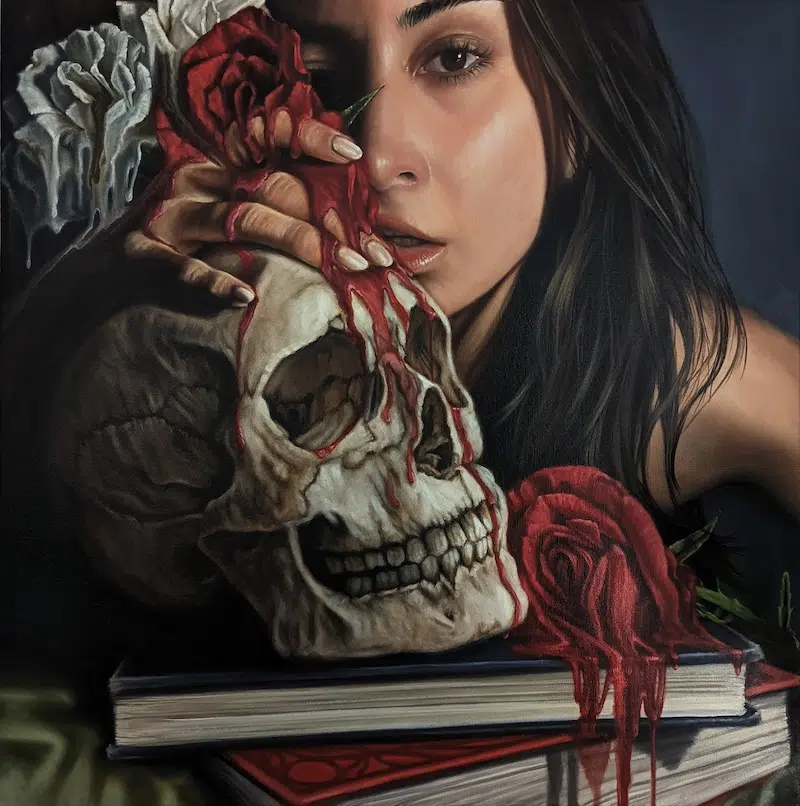
“Memento Mori”
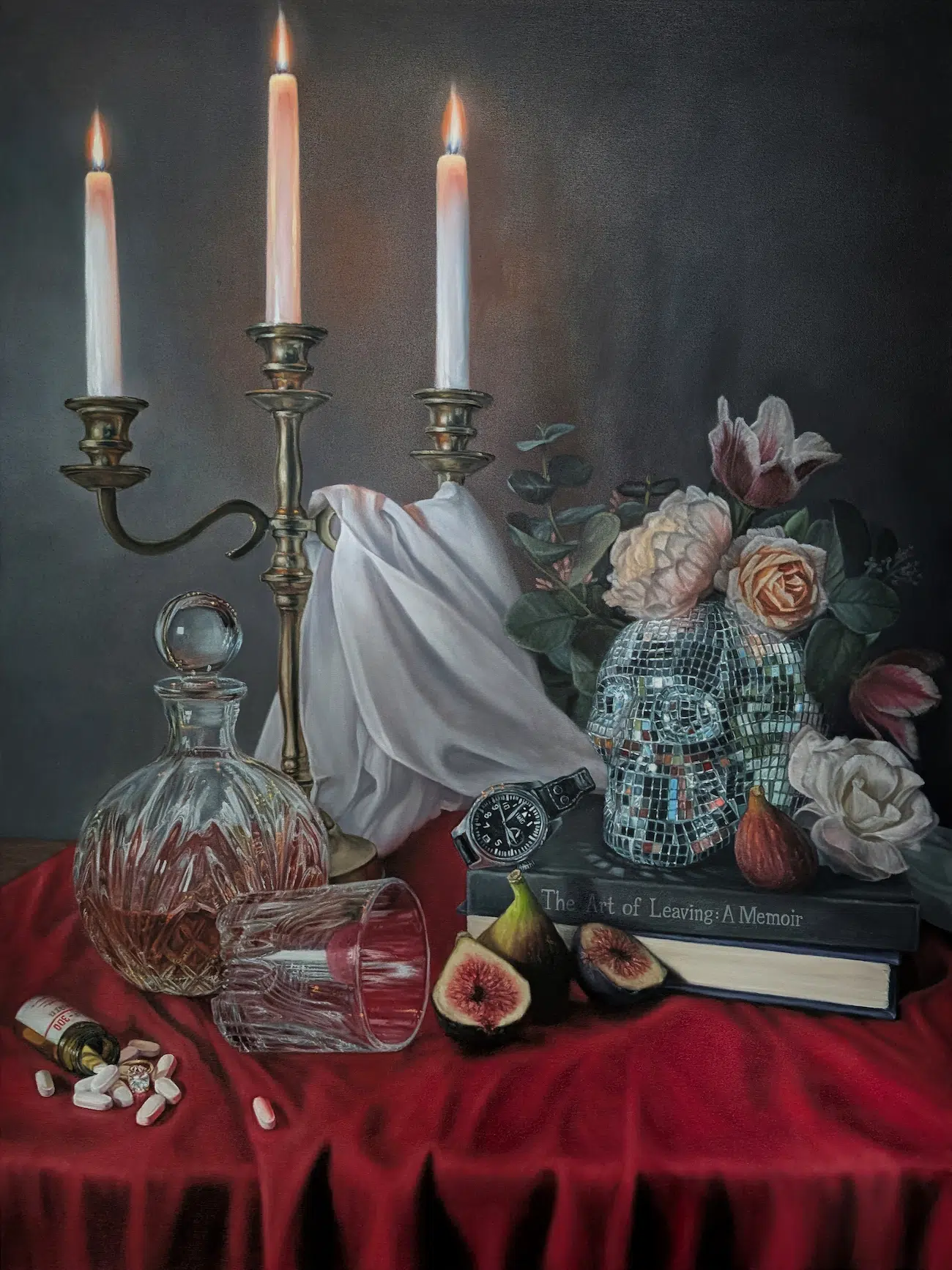
“You Will Know Me by the Wreckage”
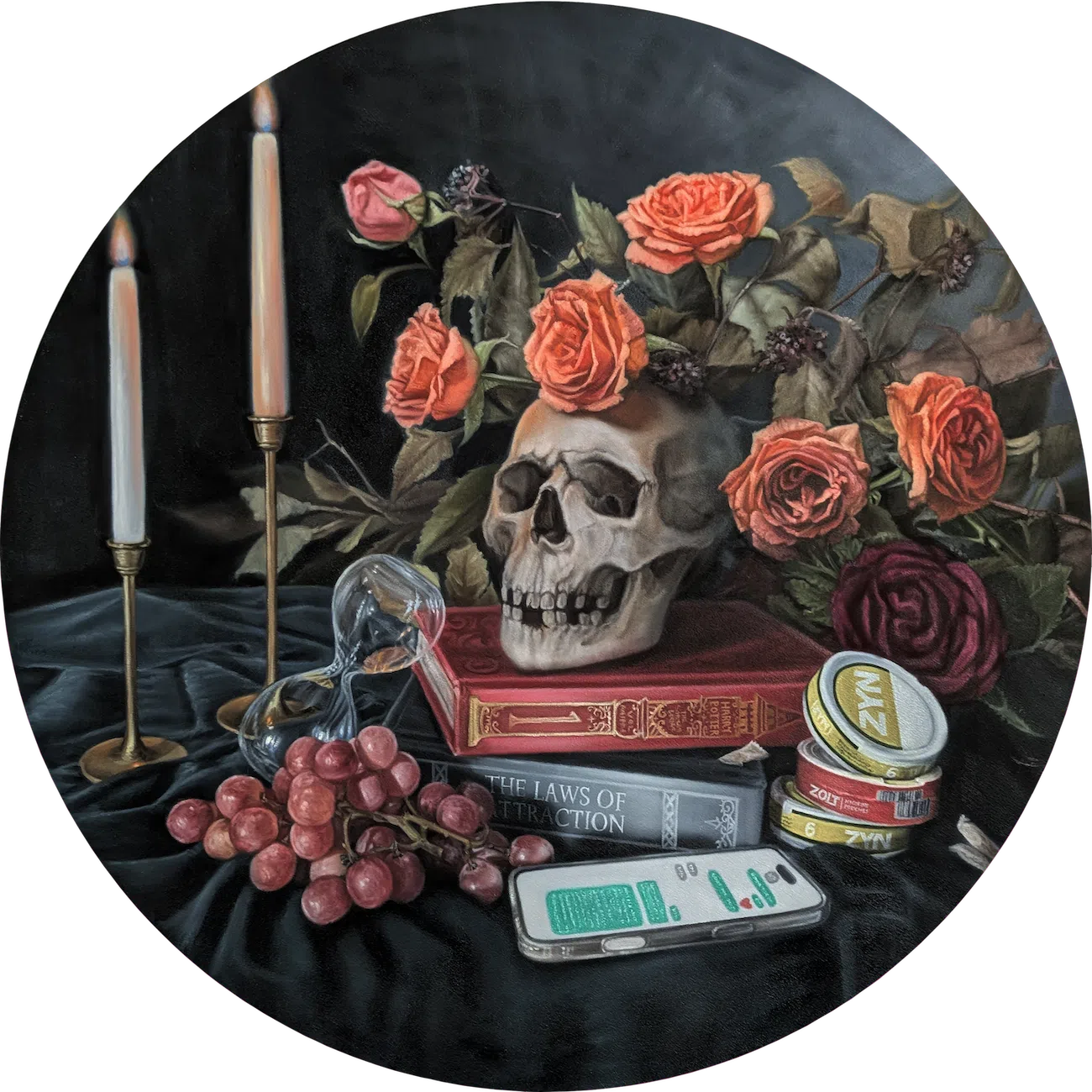
“Seven Deadly Zyns”
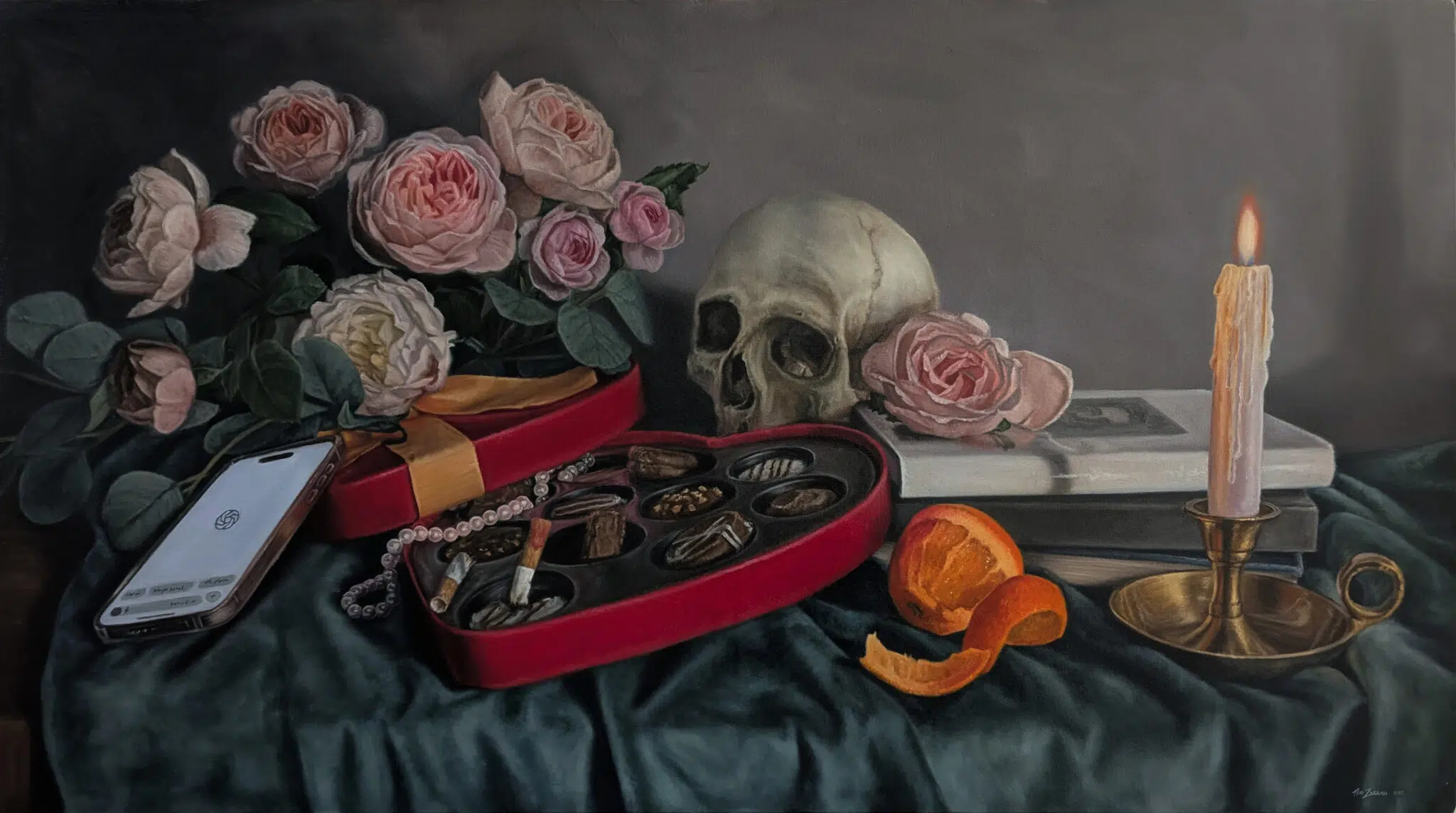
“Love You to Death”
Niki Zarrabi: Website | Instagram
My Modern Met granted permission to feature photos by Niki Zarrabi.
Related Articles:
Luminous Oil Paintings Capture the Powerful Path of Light From Sky to Sea
Self-Taught Painter Translates Personal Emotions Into Vibrant Oil Paintings [Interview]
Artist Disrupts Realistic Portraits With Dripping Paint To Explore Identity and Perception
Artist Transforms Painting Into a Spiritual Call To Protect the Earth