

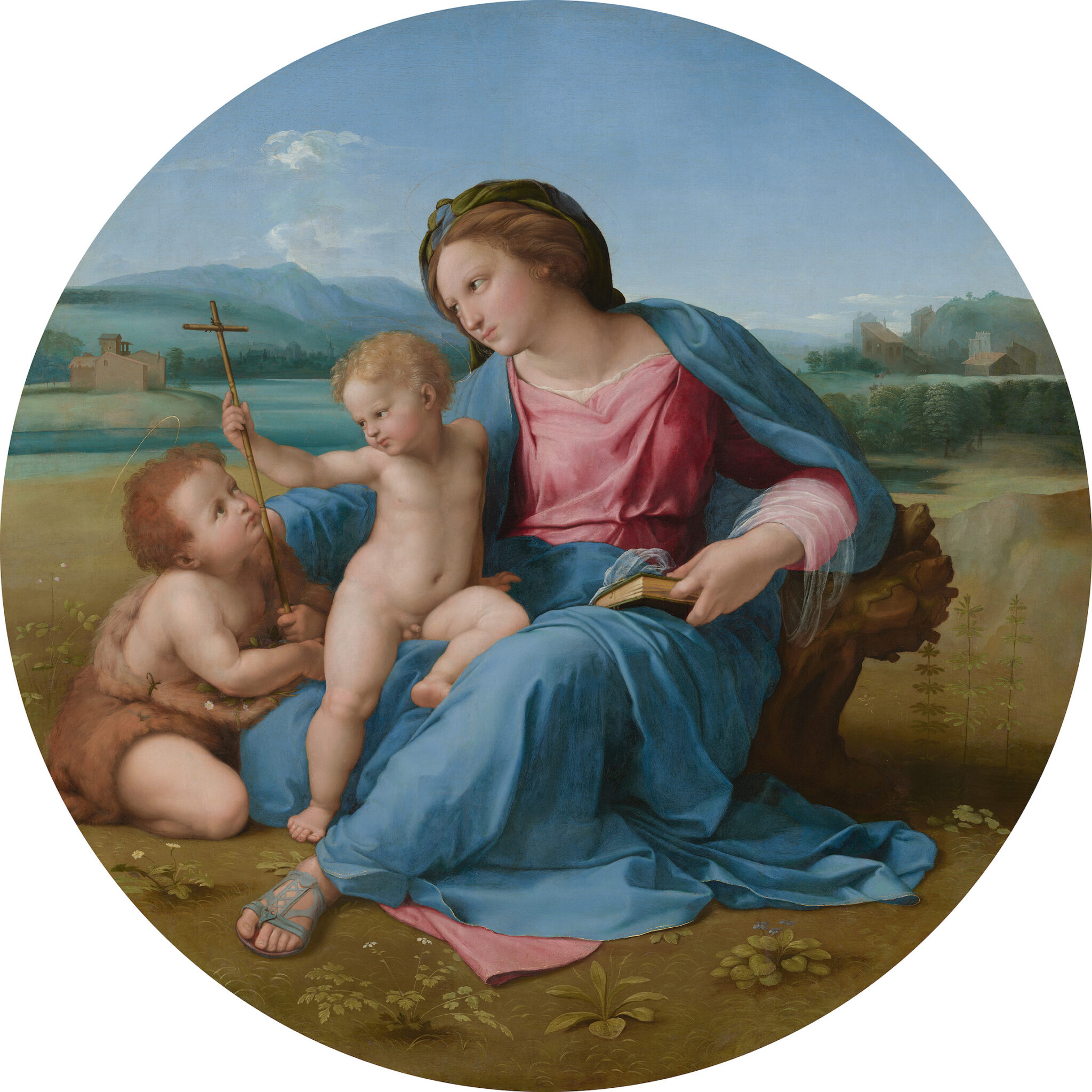
“The Virgin and Child with Infant Saint John the Baptist in a Landscape (The Alba Madonna),” ca. 1509-11. Oil on canvas. (Photo: National Gallery of Art, Washington, D.C.)
Despite living a relatively brief life, Italian Renaissance master Raphael left behind one of the world’s most indispensable legacies when he died in 1520 at only 37 years old. The Old Master, alongside luminaries like Leonardo da Vinci and Michelangelo, revolutionized Renaissance art, playing with narrative, emotion, perspective, and composition at an unprecedented scale. Even so, Raphael hasn’t been the subject of a comprehensive exhibition in the United States—that is, until now.
After seven years of intense research, the Metropolitan Museum of Art will finally present Raphael: Sublime Poetry, opening on March 29. The retrospective gathers more than 200 works, many of which rarely—if ever—travel beyond the private and public institutions in which they’re held. For that reason alone, Sublime Poetry undoubtedly constitutes a “once-in-a-lifetime event,” per the Met’s director and CEO Max Hollein.
“Visitors will have an exceptionally rare opportunity to experience the breathtaking range of Raphael’s creative genius through some of the artist’s most iconic and seldom loaned works from around the globe—many never before shown together,” Hollein adds.
The exhibition showcases everything from drawings and paintings to tapestries and fresco fragments, revealing the sheer scope of Raphael’s practice. Taken together, these various objects beautifully trace the artist’s origins in Urbino as the son of a poet and painter, his rise in Florence, and finally his prolific decade at Rome’s papal court. The selection also encompasses some of Raphael’s most iconic pieces, including The Virgin and Child with Infant Saint John the Baptist in a Landscape (The Alba Madonna). The painting, which he began in 1509 and completed in 1511, betrays the artist’s increasing confidence and command over structure, dimensionality, storytelling, and texture. Notably, The Virgin and Child will be displayed alongside his preparatory drawings, offering an intimate glimpse into his process.
Renowned works aside, Sublime Poetry hopes to expose a new side of Raphael as well. Carol Bambach, who curated the exhibition, tells Elle Decor that the Met intends to go “deeper into the philosophy of the artist,” situating Raphael not simply as a Renaissance genius, but as a person whose relationships and entrepreneurship greatly informed his art. “My aim,” Bambach continues, “is to give a glimpse over the artist’s shoulder, to get into his mind as he’s creating.”
To achieve this sense of interiority, Bambach sourced three works by Raphael’s father, Giovanni Santi; an unfinished manuscript of a poem that Raphael was composing to the late Duke of Urbino; and even an account book that catalogs funeral expenses for his sister and mother, who died in childbirth when Raphael was 8 years old. The exhibition also underscores the artist’s portrayal of women, with a particular focus on his tender depictions of the Madonna and Child. Such works underscore an enduring fascination with the motif, perhaps stemming from the loss of his mother at such a young age.
“The seven-year journey of putting together this exhibition has been an extraordinary chance to reframe my understanding of this monumental artist,” Bambach concludes. “It’s a thrilling opportunity to engage with [Raphael’s] unique artistic personality through the visual power, intellectual depth, and tenderness of his imagery.”
Raphael: Sublime Poetry will be on view at the Metropolitan Museum of Art from March 29 to June 28, 2026.
The Metropolitan Museum of Art will host the U.S.’s first comprehensive exhibition on Raphael, one of the world’s most prominent Renaissance masters.
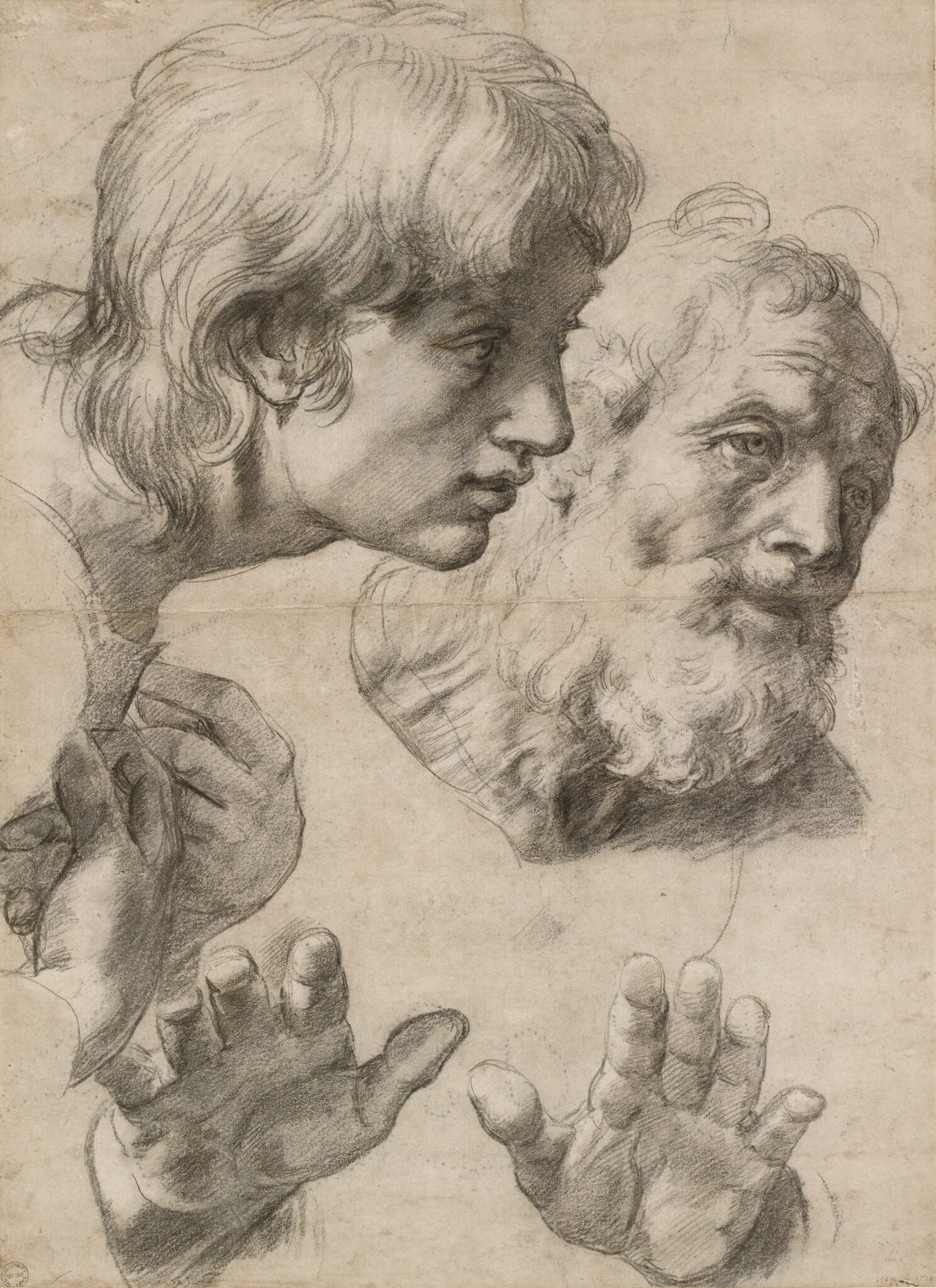
“The Head and Hands of Two Apostles (“Auxiliary Cartoon” for the Transfiguration),” ca. 1519-20. Black chalk, traces of white gouache highlights, drawn freehand over pounce marks on laid paper. (Photo: Ashmolean Museum, Oxford)
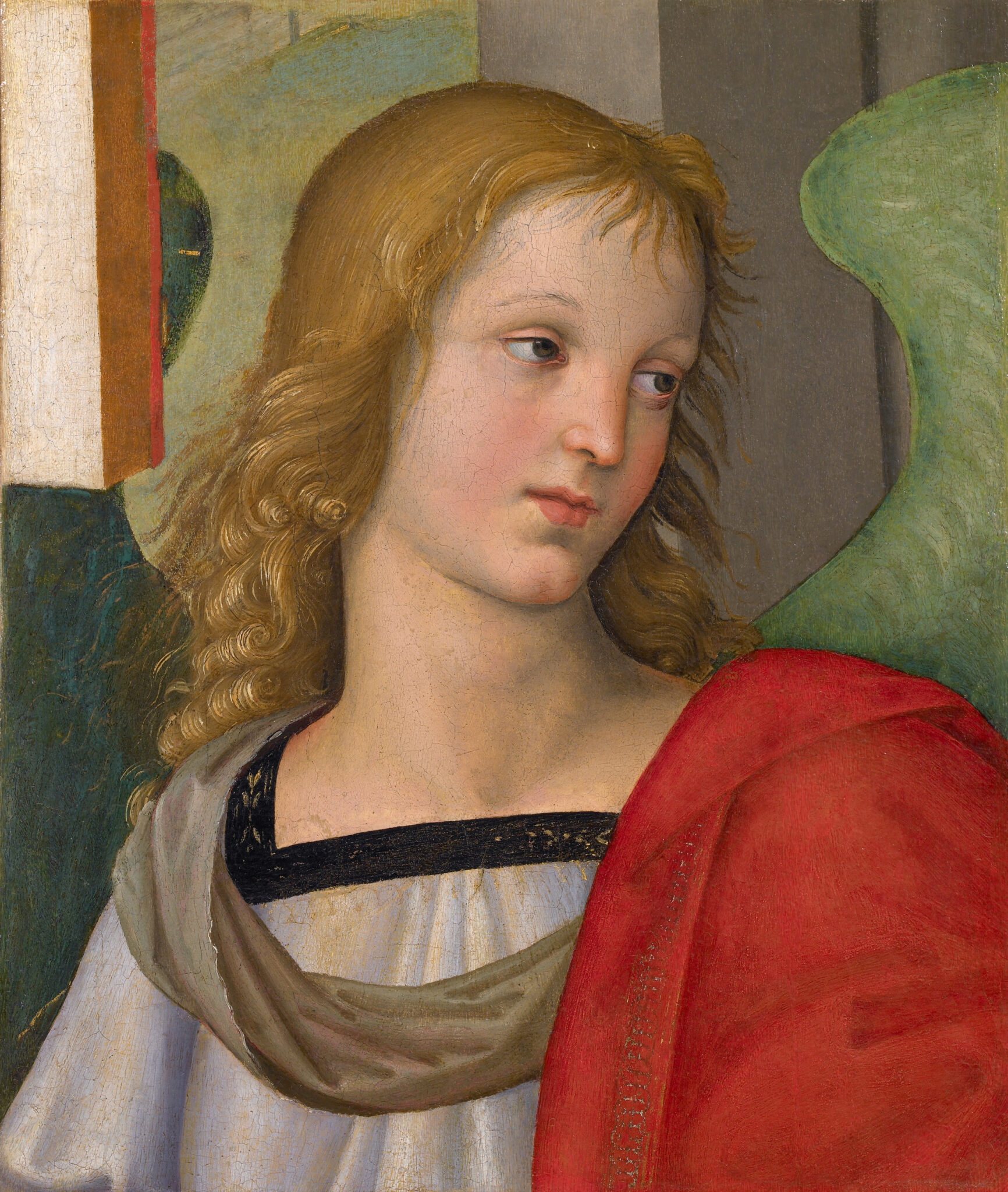
“Angel in Bust-Length (Fragment from the Baronci Altarpiece),” ca. 1500-1501. Grayish black chalk, highlighted with white (now lost), on laid paper. Oil with gold highlights on canvas, transferred from wood. (Photo: Pinacoteca Tosio Martinengo)
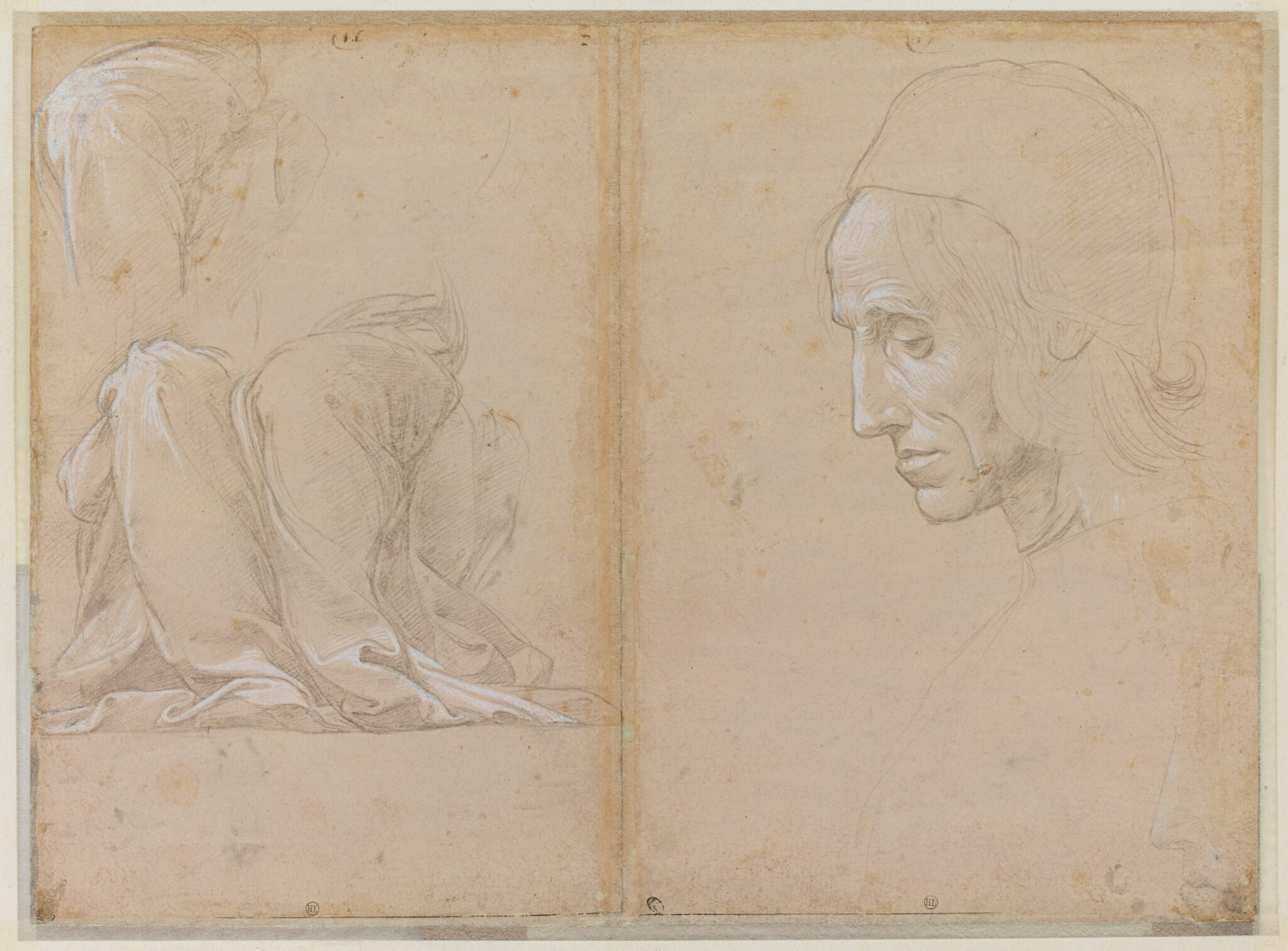
“Sketches of Infants; the Virgin and Child (recto), Two Studies for Draperies on a Seated Figure; Head of a Man in Profile (verso),” ca. 1507-8. Pen and brown ink, over leadpoint underdrawing (recto), metalpoint, highlighted with white gouache, on paper prepared yellowish pink (verso). (Photo: Ecole Nationale Supérieure des Beaux-Arts)
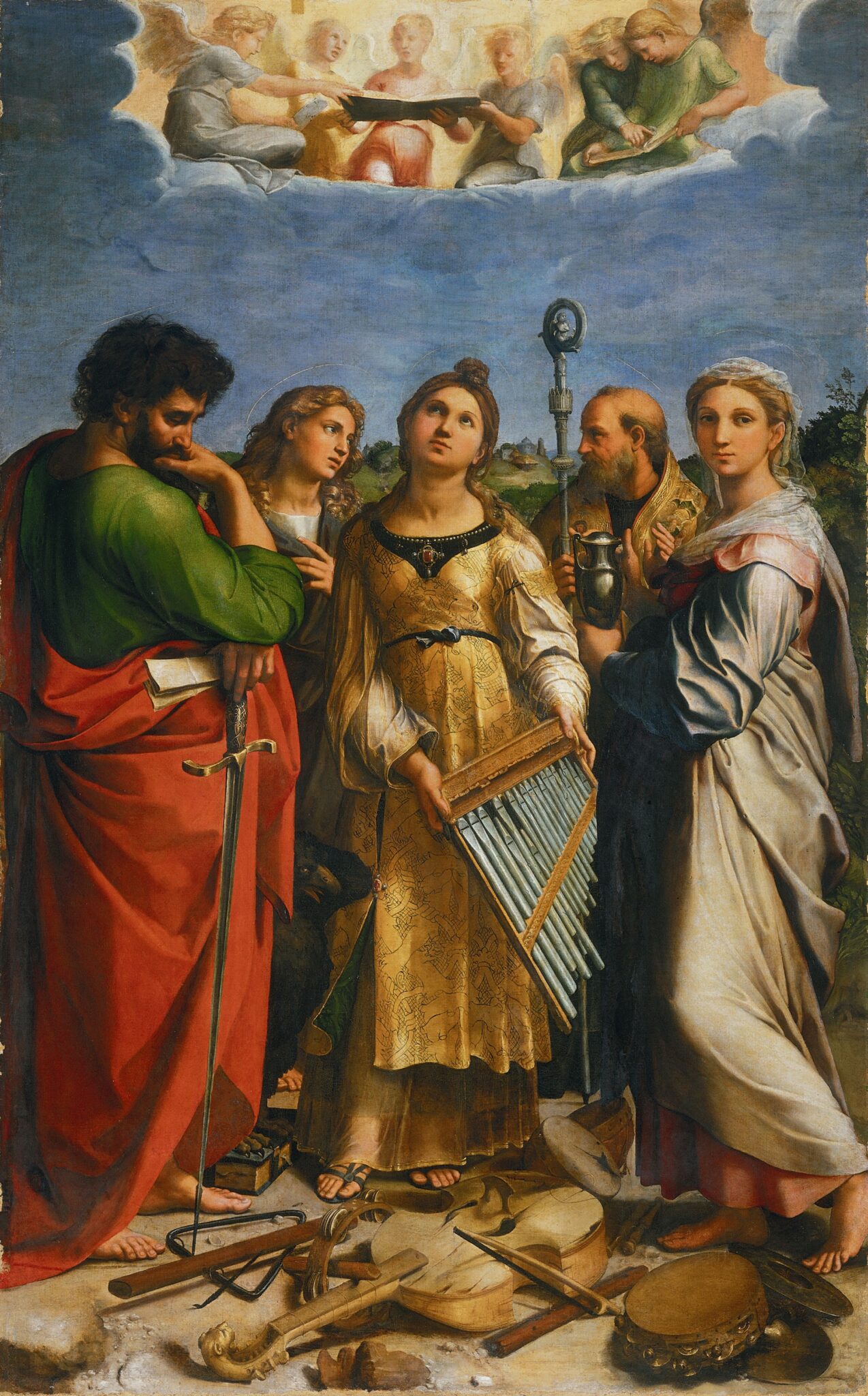
“The Ecstasy of Saint Cecilia with Saints Paul, John the Evangelist, Augustine, and Mary Magdalene,” ca. 1515-16. Oil on canvas, transferred from wood. (Photo: Scala / Art Resource, NY)
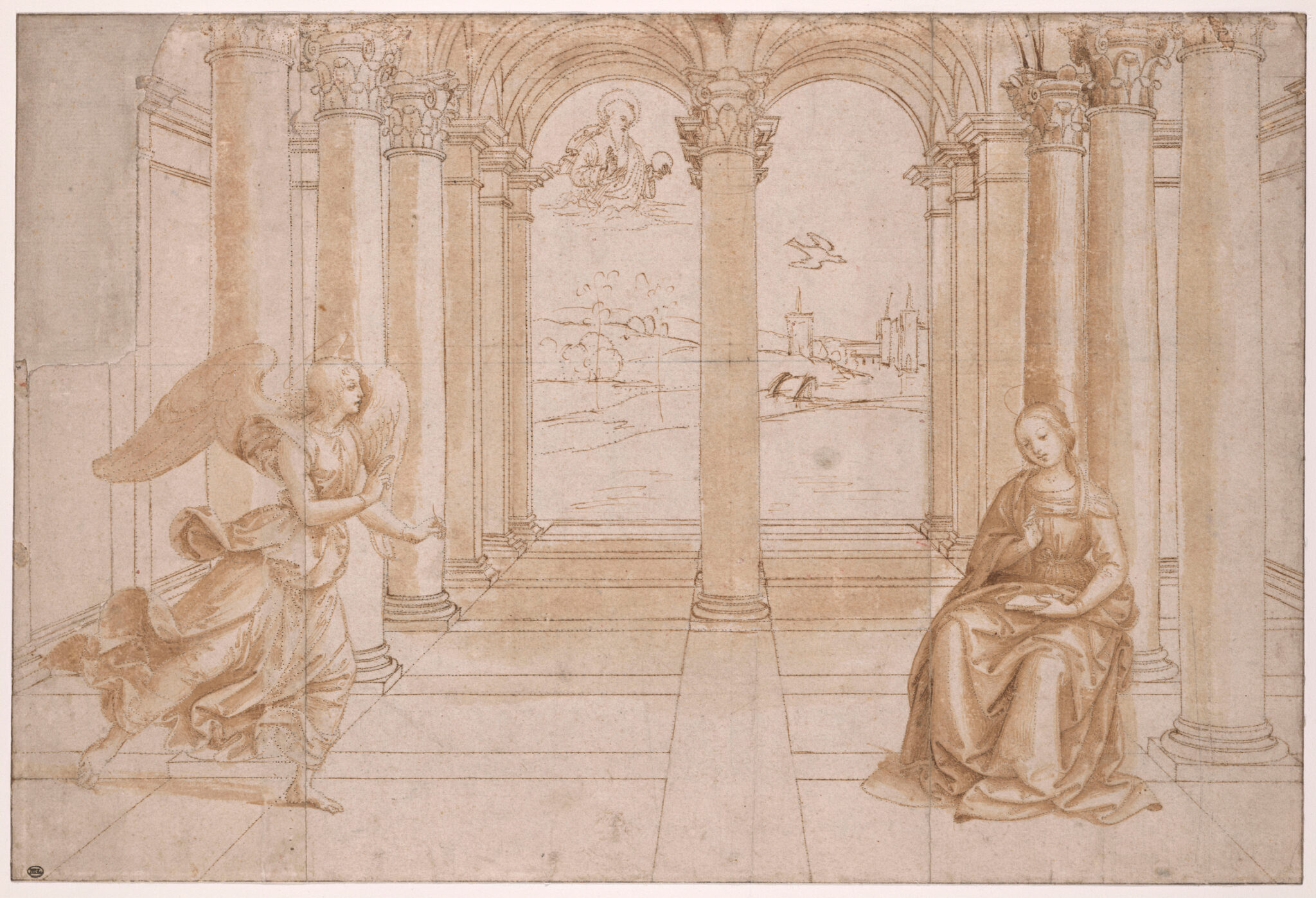
“The Annunciation (Cartoon for the Left Scene in the Predella of the Oddi Altarpiece),” ca. 1503-4. (Photo: Michel Urtado © RMN-Grand Palais / Art Resource, NY)
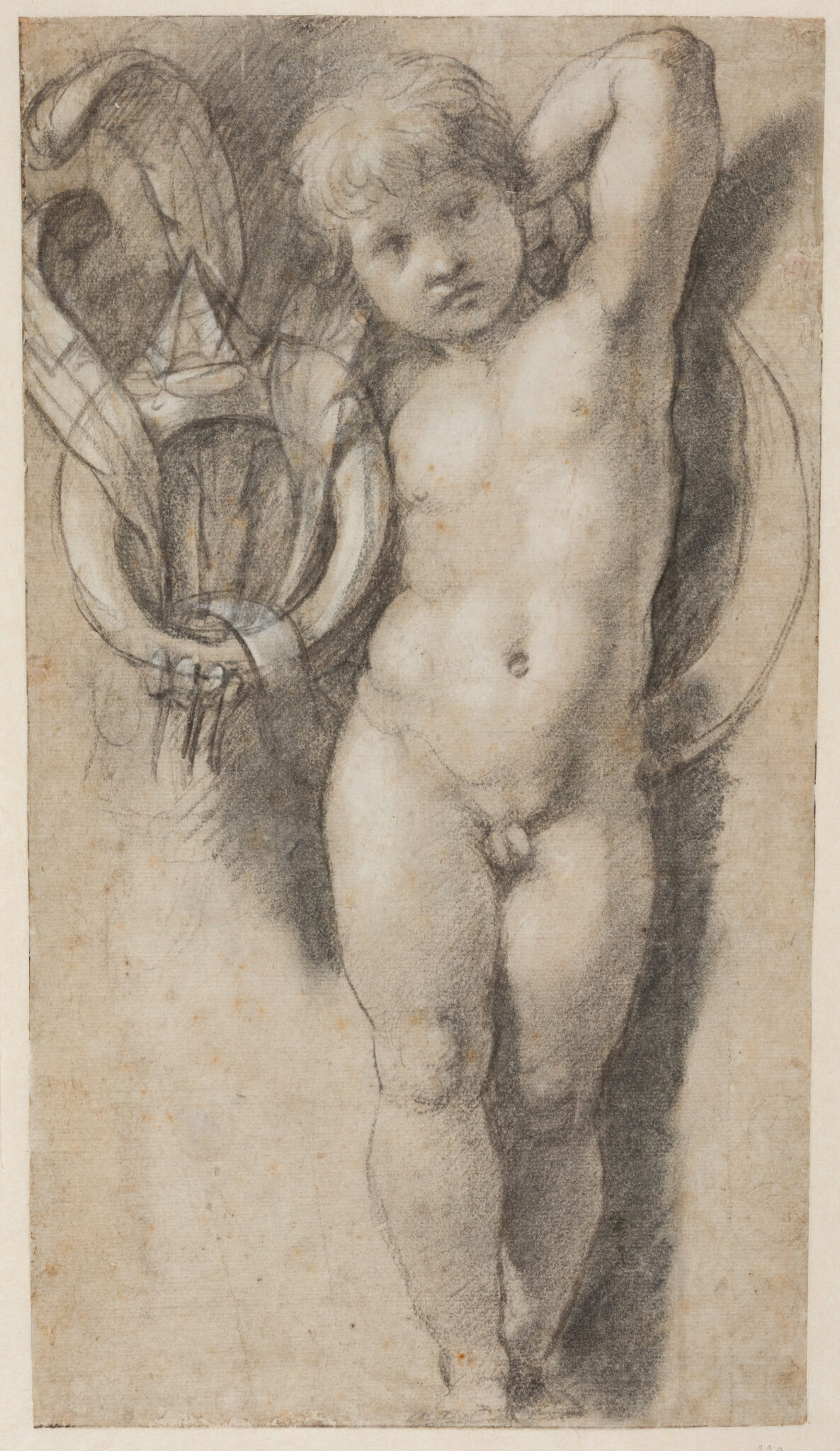
“Study of Putto with the Impresa of Pope Leo X de’ Medicica,” 1513-14. Black chalk, heightened with white chalk, with later framing lines in black. (Photo: Teylers Museum, Haarlem)
With more than 200 featured works, Raphael: Sublime Poetry will be on view at the Met through June 28, 2026.
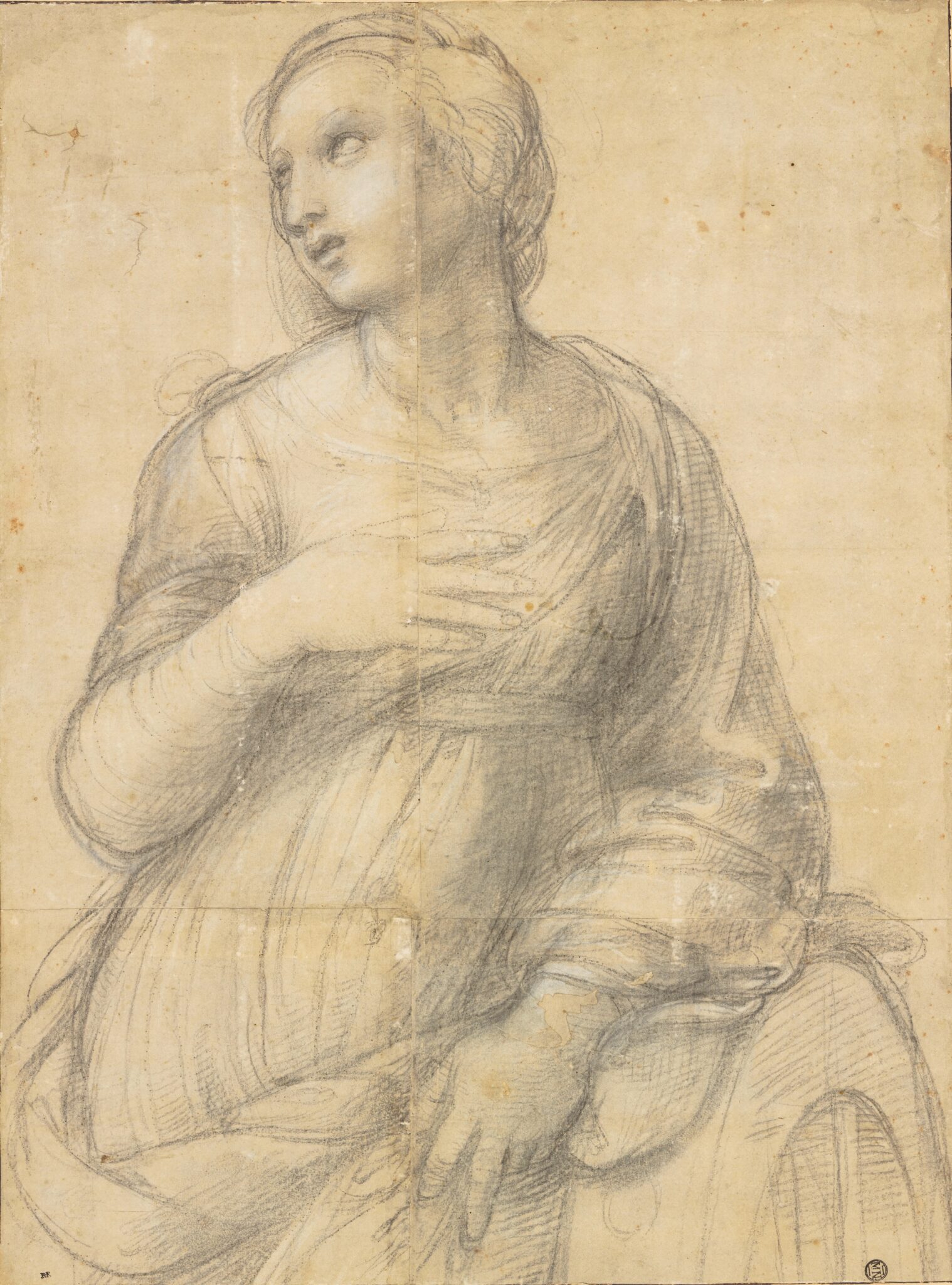
“Saint Catherine in Three-Quarter Length (Cartoon for the Painting in the National Gallery, London),” ca. 1507. Charcoal, black chalk, highlighted with white gouache and white chalk, on four sheets of paper glued with overlapping seams, outlines pricked for transfer of the design. (Photo: Michel Urtado © RMN-Grand Palais / Art Resource, NY)
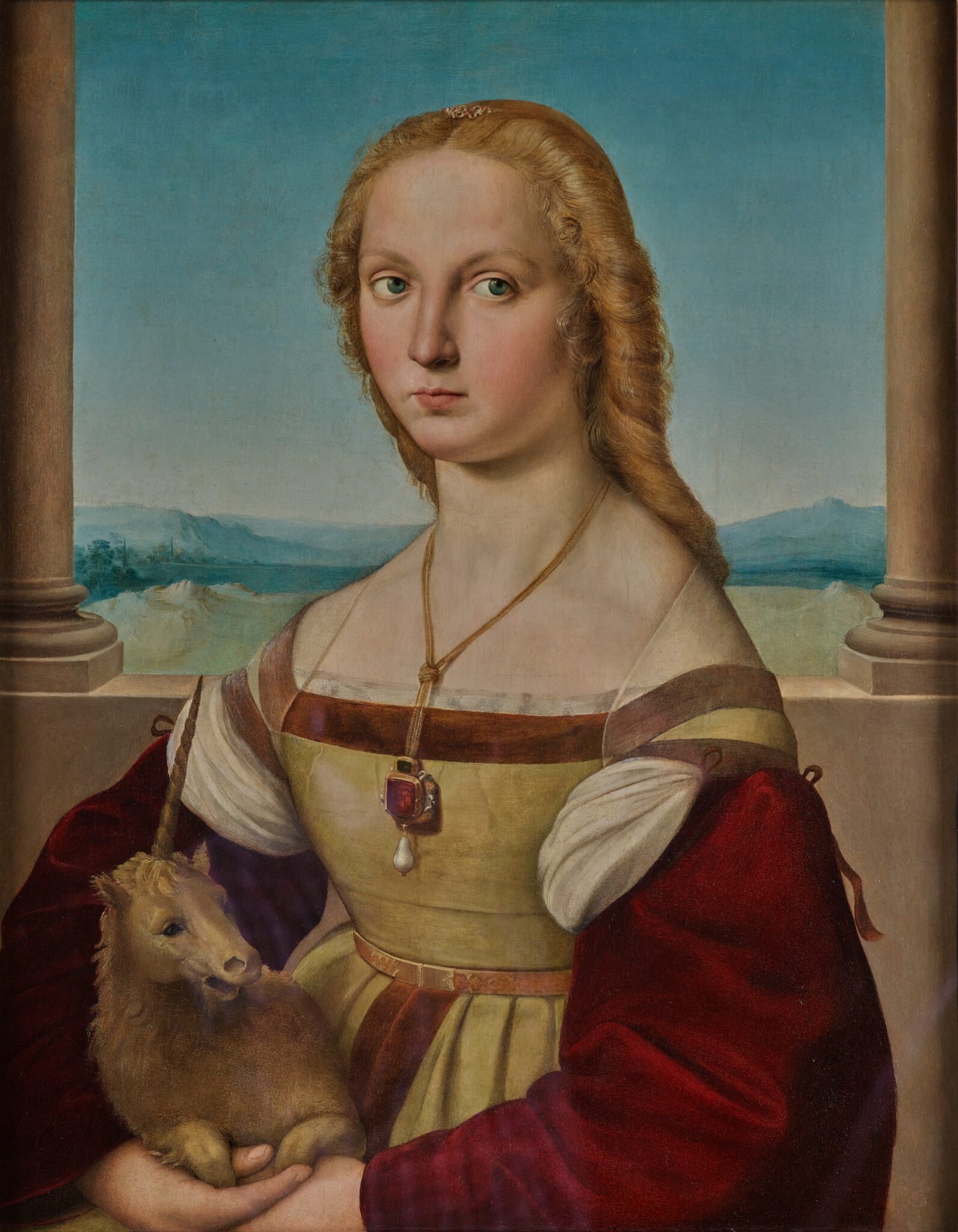
“Portrait of a Lady with a Unicorn,” 1505-6. Oil on canvas, transferred from wood. (Photo: Mauro Coen, courtesy of Galleria Borghese)
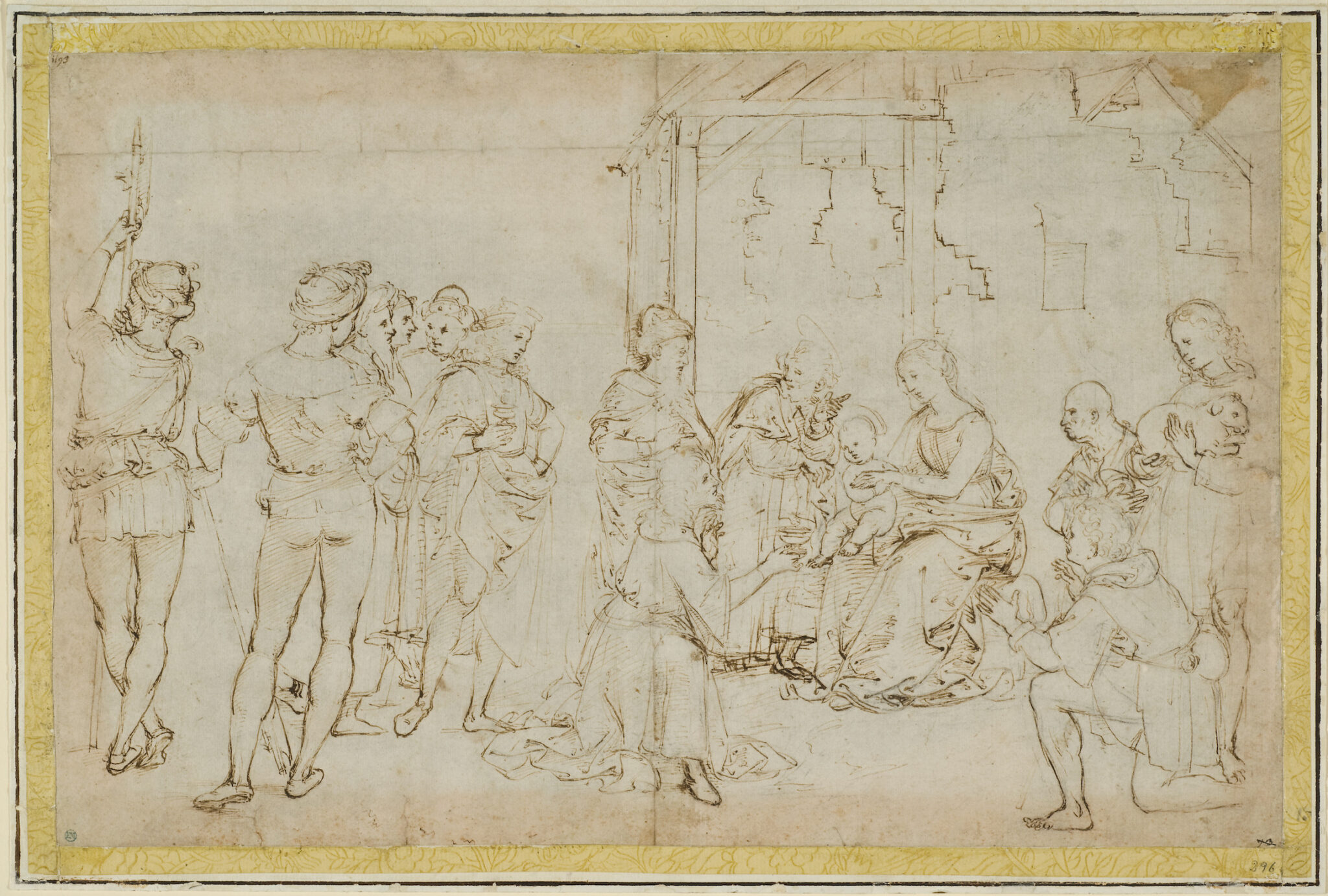
“The Adoration of the Magi (Full-Scale Composition Study for the Central Scene in the Predella of the Oddi Altarpiece),” ca. 1503-4. (Photo: Eric Cornelius, courtesy of Nationalmuseum, Stockholm)
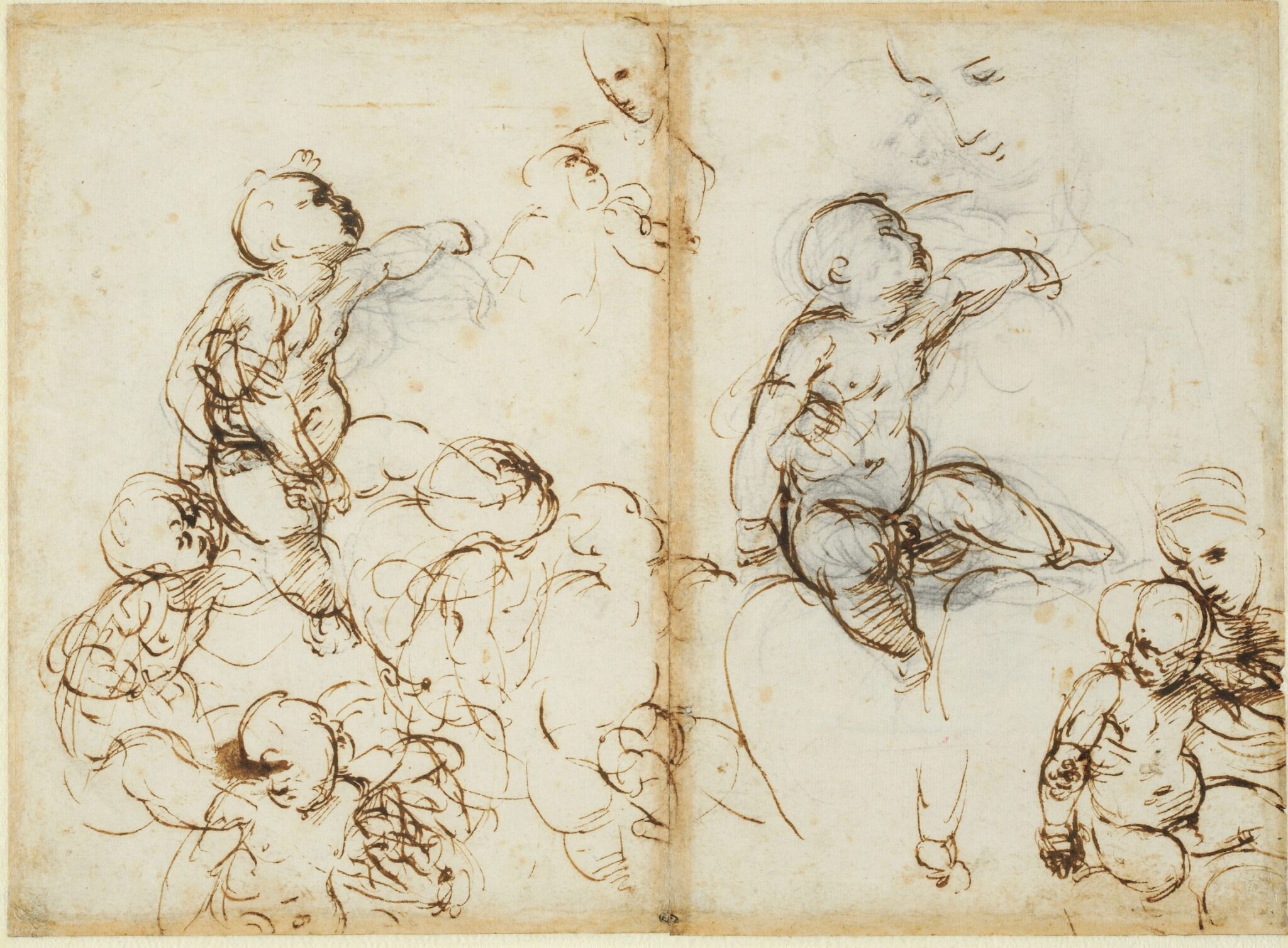
“Sketches of Infants; the Virgin and Child (recto), Two Studies for Draperies on a Seated Figure; Head of a Man in Profile (verso),” ca. 1507-8. Pen and brown ink, over leadpoint underdrawing (recto), metalpoint, highlighted with white gouache, on paper prepared yellowish pink (verso). (Photo: Ecole Nationale Supérieure des Beaux-Arts)
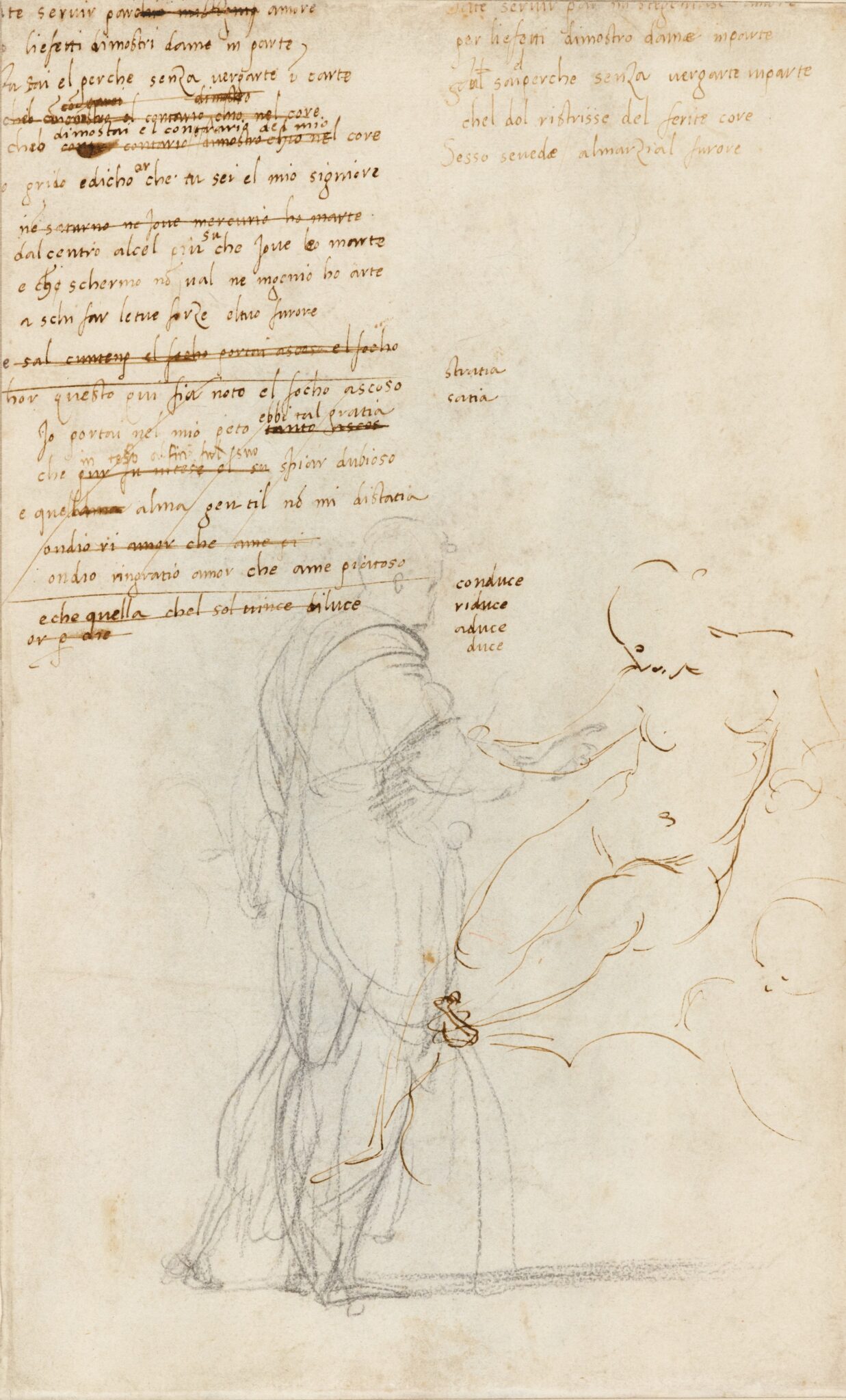
“Figure Studies and a Draft of a Petrarchan Sonnet (verso),” ca. 1509-11. Black chalk, pen and black ink (verso). (Photo: Ashmolean Museum of Art and Archaeology, Oxford)