

Photo: ATCHAIN and Snøhetta
Nestled beside the Qiantang River in Hangzhou are a series of ambitious downtown developments. These new buildings snake along the river, offering stunning views of the nearby waterways. In the coming years, yet another structure will join this budding skyline: the Hangzhou Qiantang Bay Art Museum. Spearheading the museum’s design is Snøhetta, the Oslo-based architecture firm behind such renowned projects as the Oslo Opera House, Egypt’s Bibliotheca Alexandrina, and Times Square’s 2017 transformation.
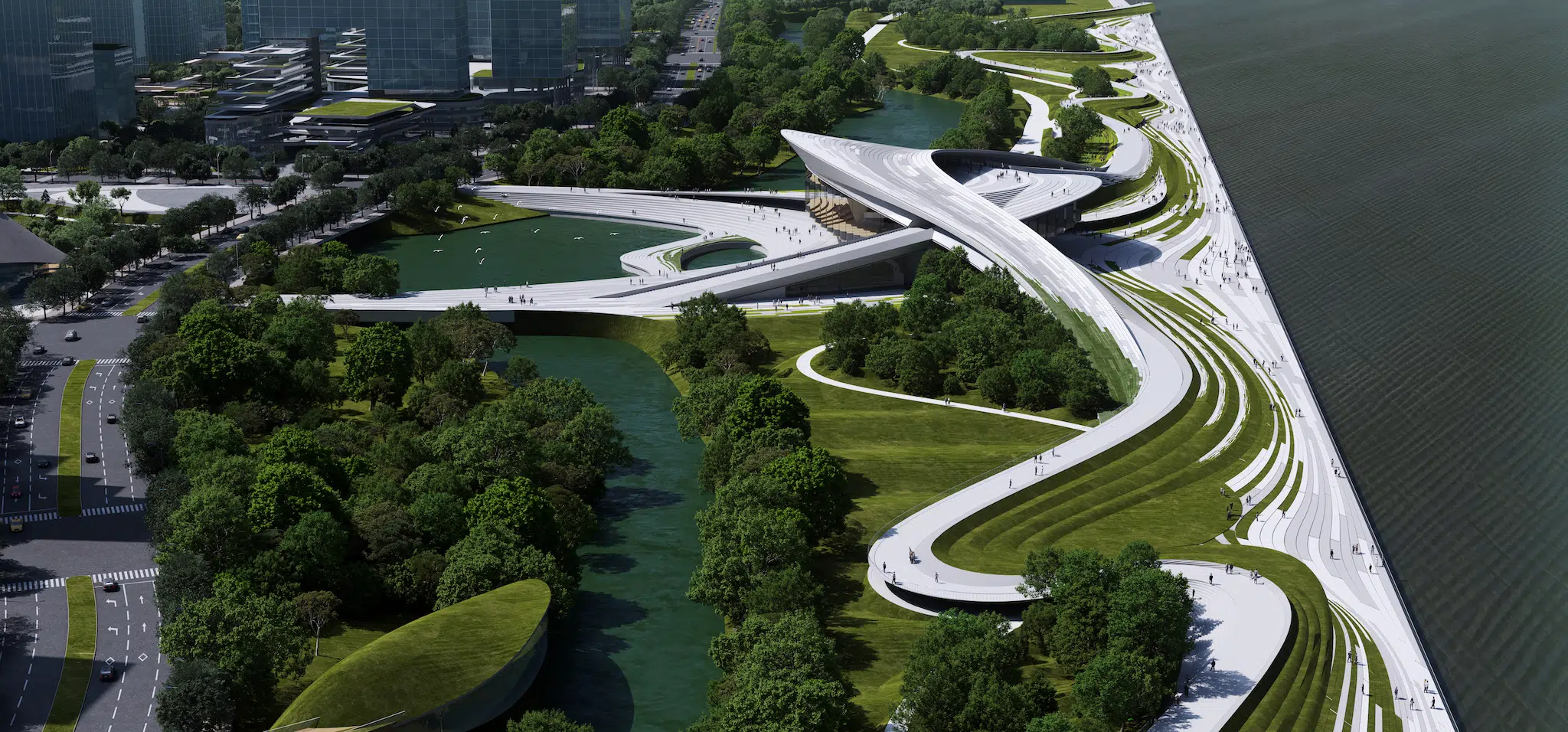
Per renderings recently released by Snøhetta, the Qiantang Bay Art Museum will be radically informed by its natural environment. The museum’s architecture takes most of its inspiration from the Qiantang River, reinterpreting its meandering path through a rhythmic silhouette, sleek arches, and organic forms. At the heart of the design are two wave-like volumes, woven together into circulation routes that connect at a central node. Perched directly above is a lush rooftop terrace, where visitors can indulge in the waterfront vista ahead of them.
At 18,000 square meters (about 194,000 square feet), the museum is effectively organized into two sections, each joined by fluid walkways that cut through the surrounding landscape. To the north, leisurely promenades twist through the riverscape, ultimately leading to the rooftop skyline. To the east, bridge-like paths seamlessly guide visitors from an urban to a cultural setting, while a central gateway positioned at the museum’s ground level further solidifies this threshold motif. In other words, this gate serves as both a spatial and symbolic gesture, where passing beneath it mimics the transition into nature, creativity, and beauty.
Taken in its entirety, Snøhetta’s vision for the Qiantang Bay Art Museum is highly sculptural, coexisting rather than competing with the Qiantang River. Inside, this philosophy continues, expressed through generous public spaces for social, educational, and communal gathering.
“[Our] design captures the essence of the site’s distinctive context, utilizing architecture and landscape as a bridge to seamlessly connect nature and city,” Snøhetta explains. “With [this museum], we aim to ignite a spark for arts and creativity that pays homage to the city’s iconic Qiantang River.”
Snøhetta only recently won the competition to craft the centerpiece art museum for the Qiantang Bay Future Headquarters, so it has yet to announce a construction timeline. To stay updated on the project’s progress, visit Snøhetta’s website and follow the firm on Instagram.
Snøhetta has won the competition to design the Qiantang Bay Art Museum in Hangzhou, China, nestled beside the meandering Qiantang River.
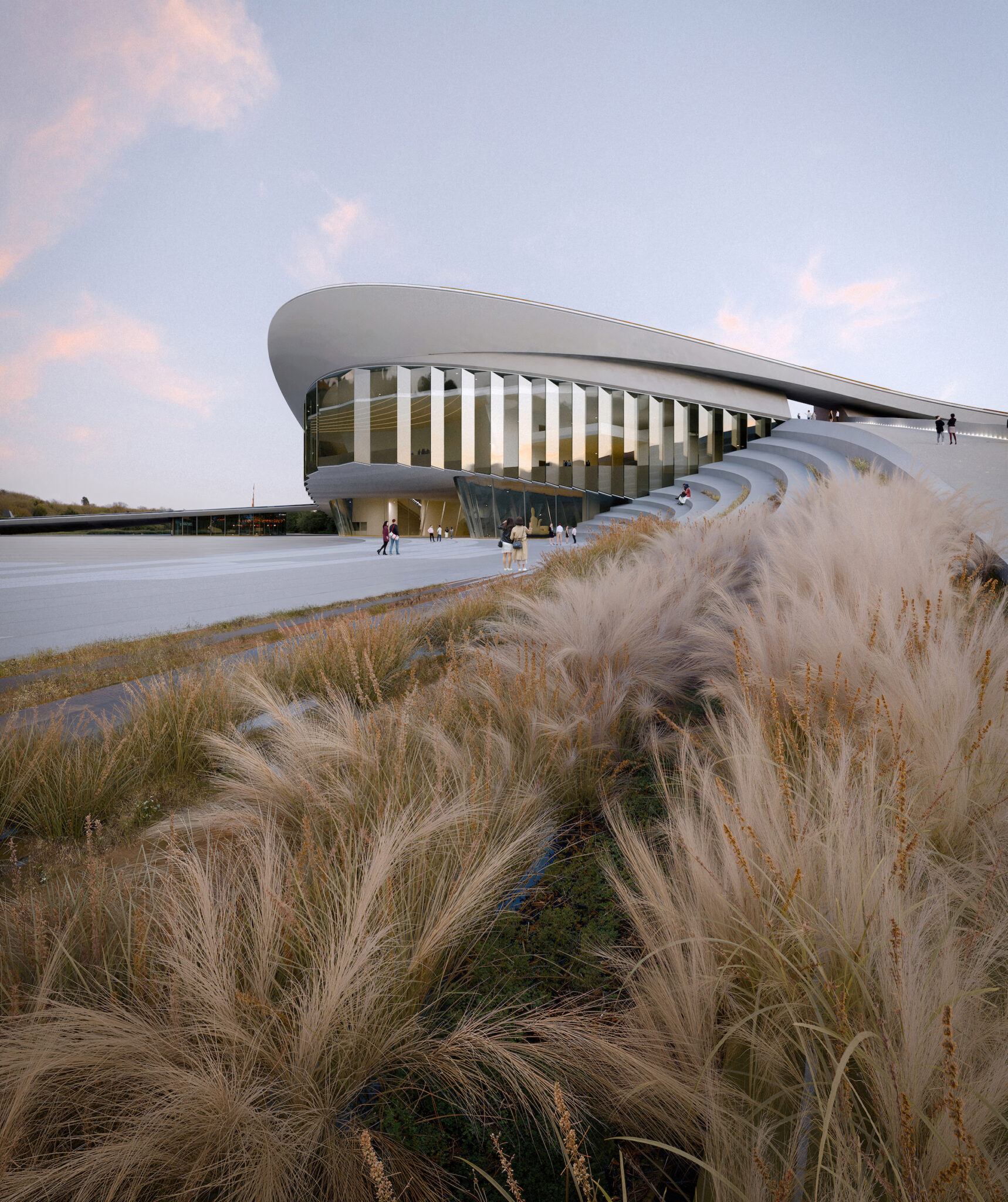
Photo: ATCHAIN and Snøhetta
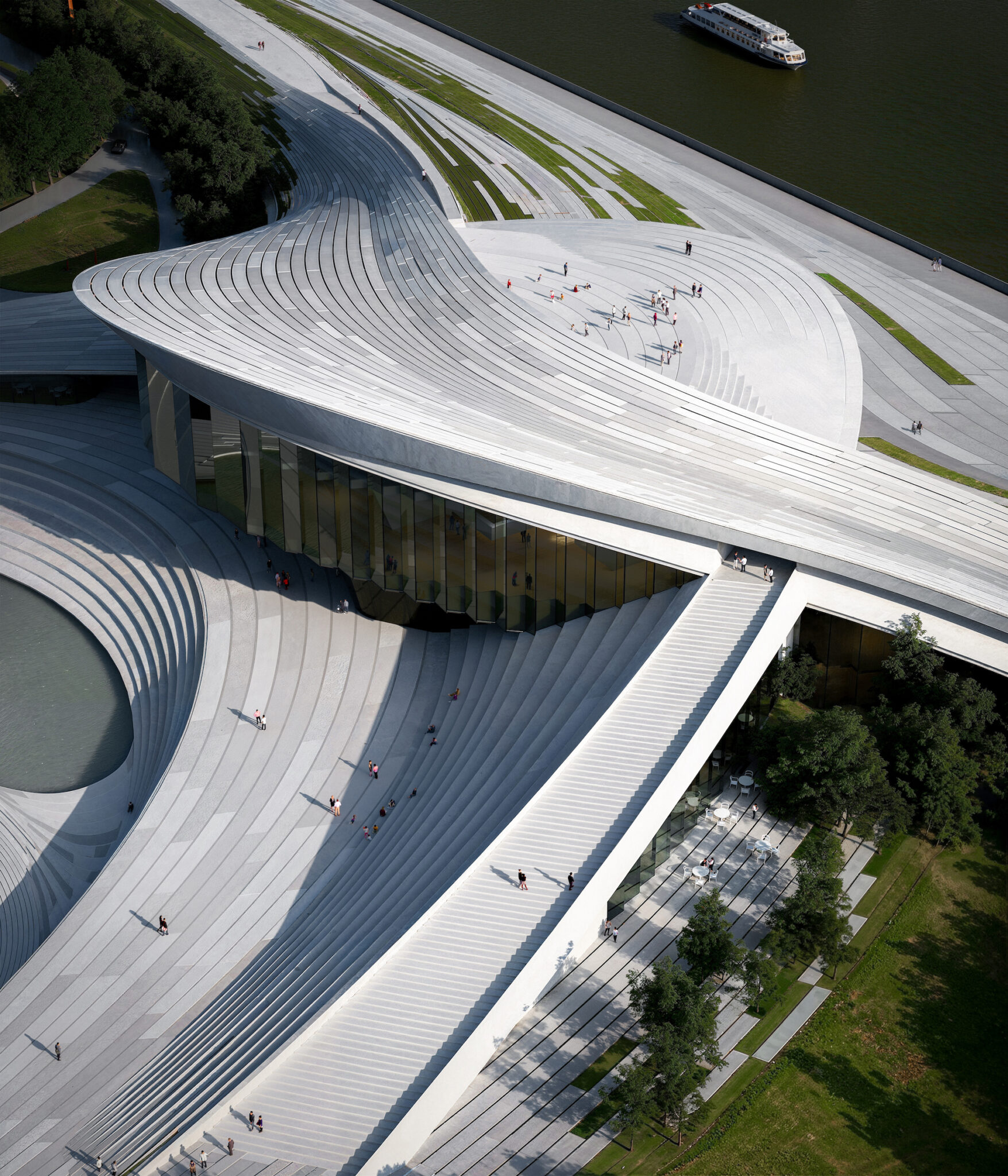
Photo: ATCHAIN and Snøhetta
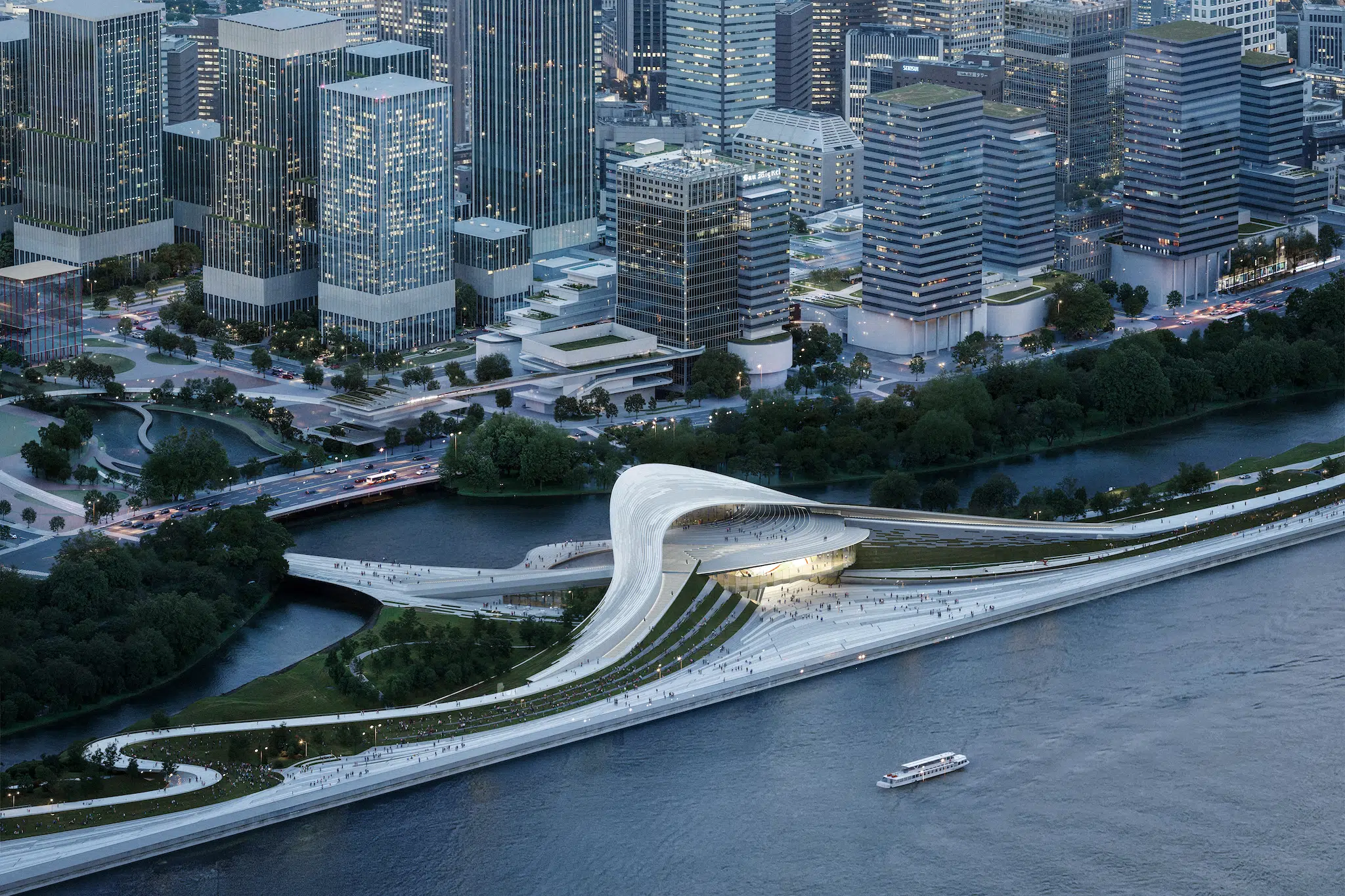
Photo: ATCHAIN and Snøhetta
Given its stunning waterfront location, the Qiantang Bay Art Museum is heavily inspired by organic forms, sleek arches, twisting pathways, and bridge-like motifs.
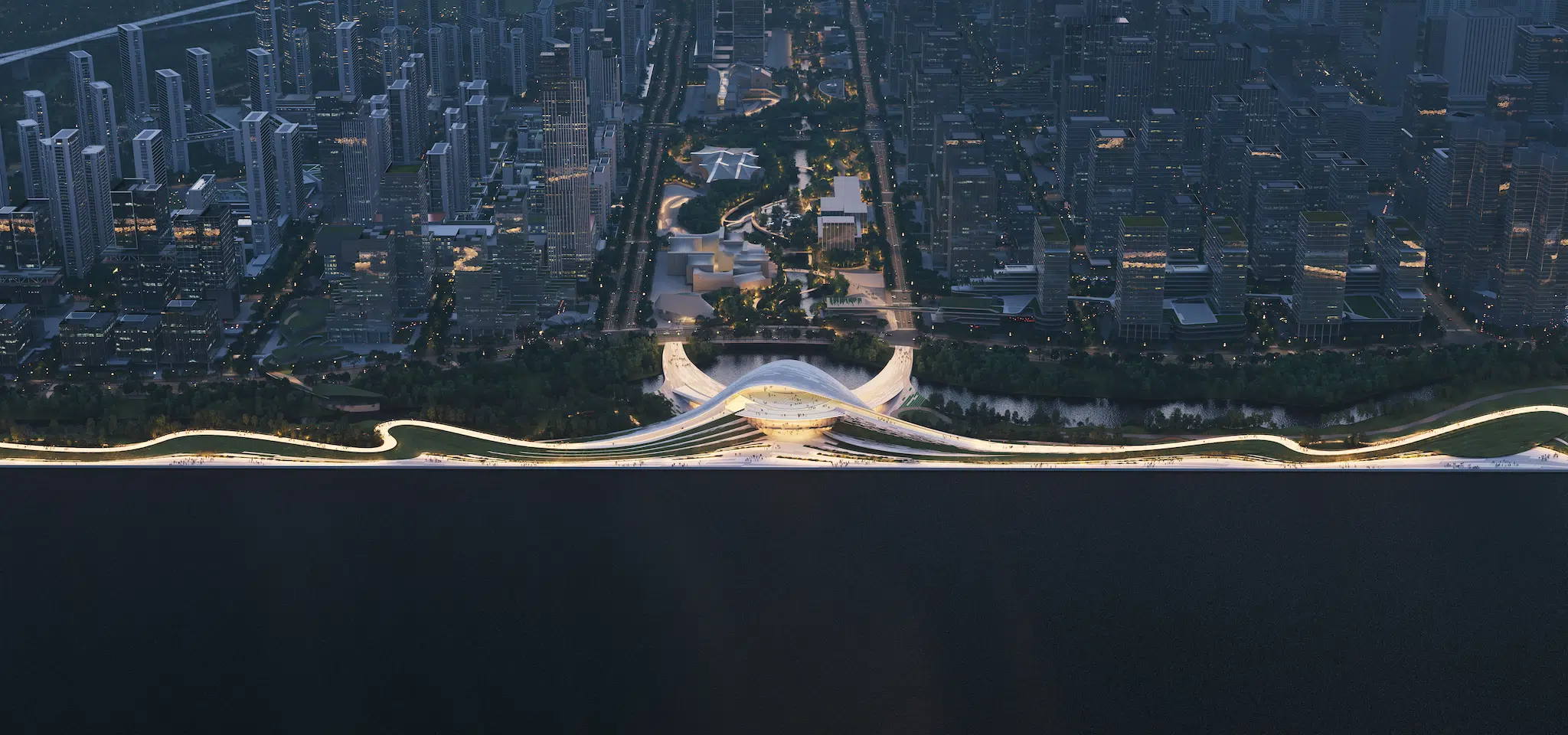
Photo: ATCHAIN and Snøhetta
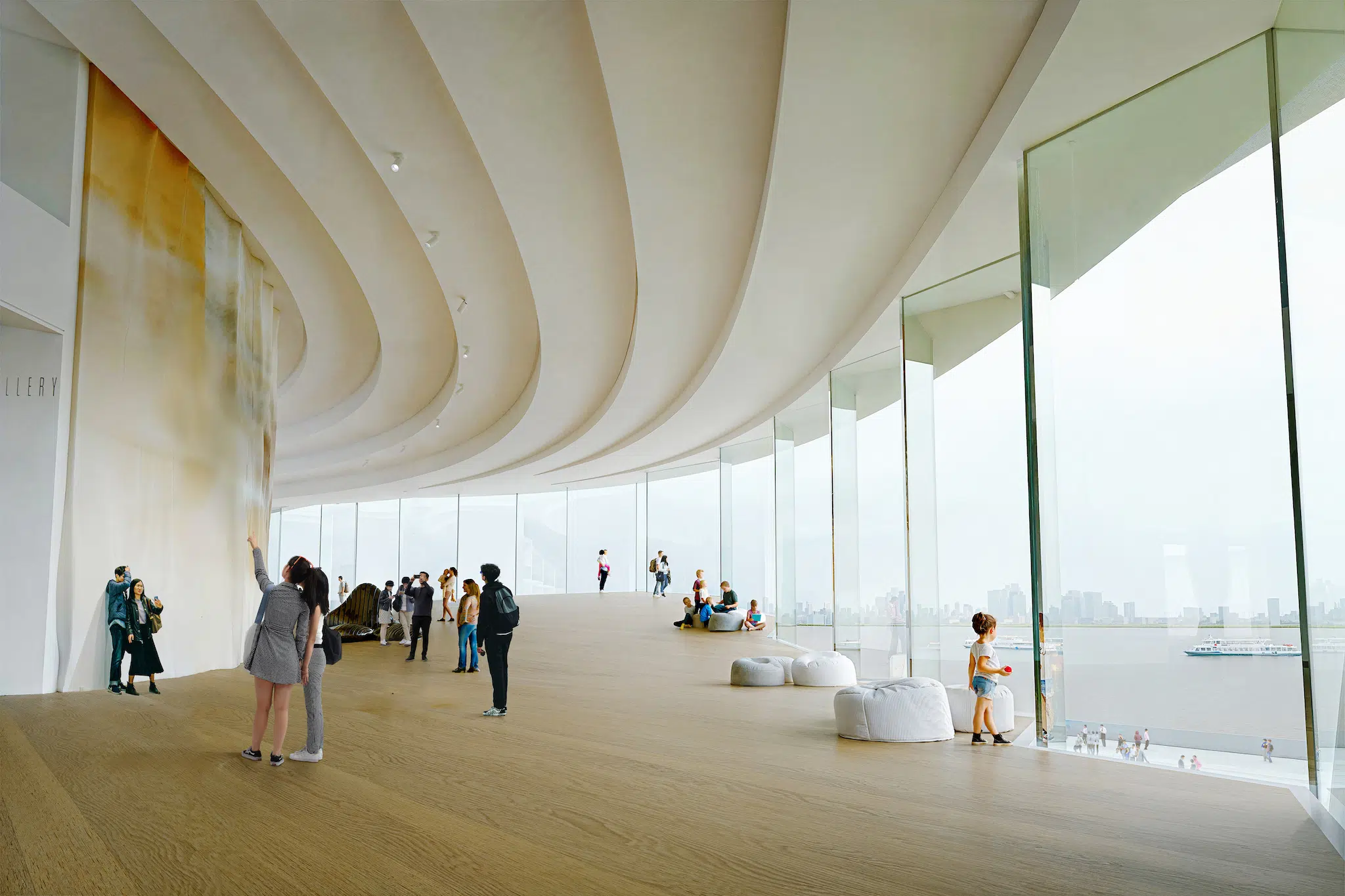
Photo: ATCHAIN and Snøhetta
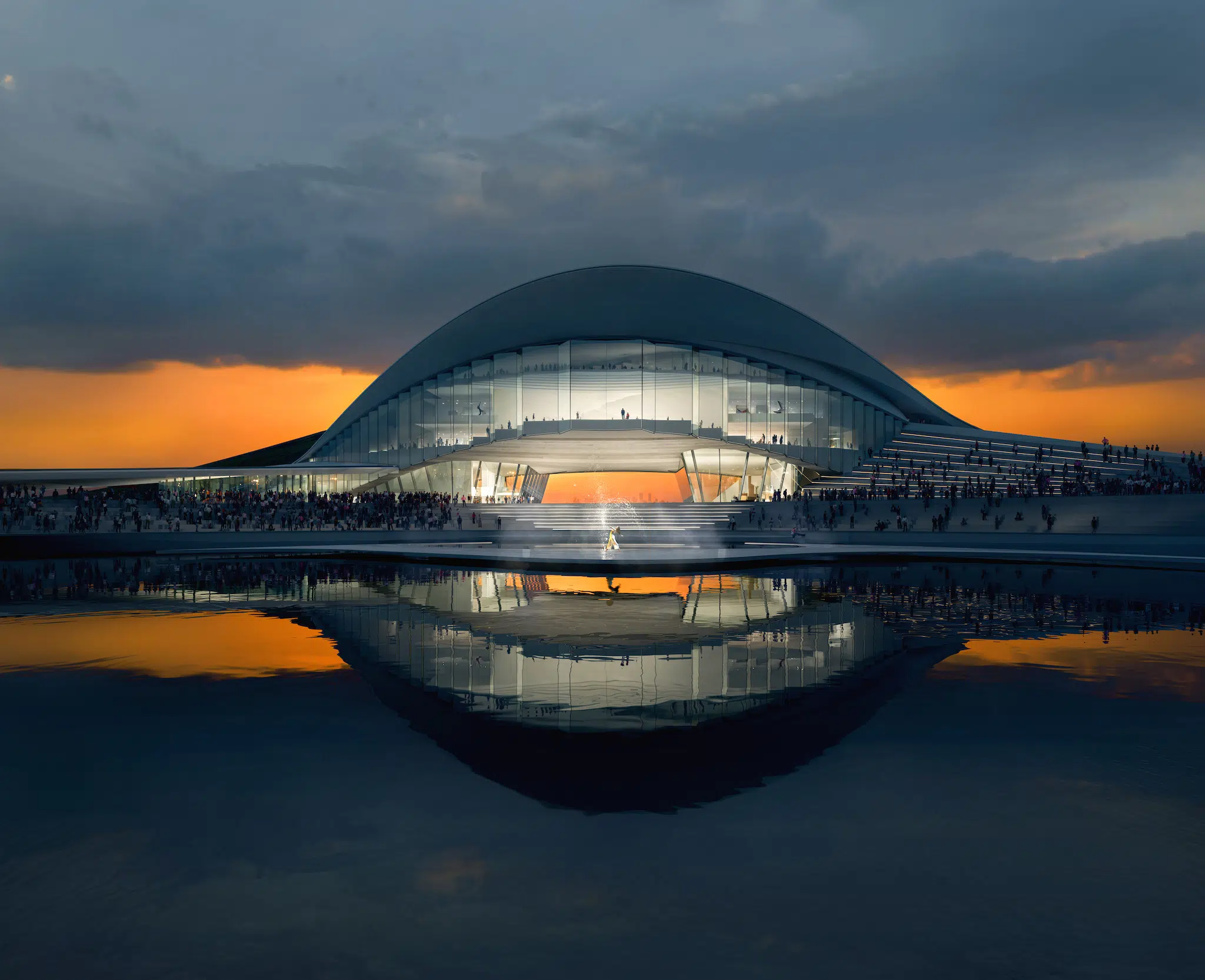
Photo: ATCHAIN and Snøhetta