
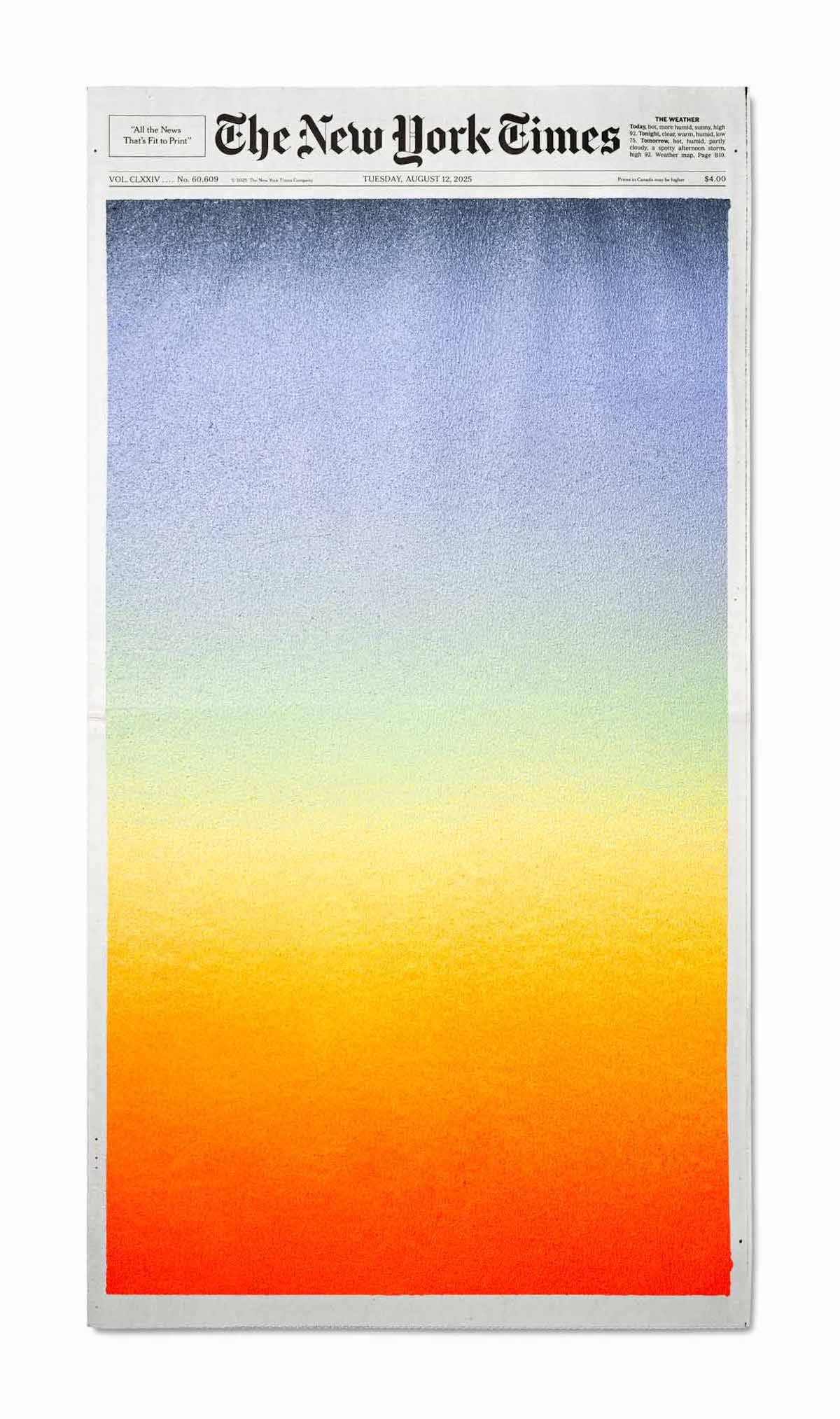
From August 12, 2025.
For the Brooklyn-based artist Sho Shibuya, there’s nothing better than living in—and capturing—the present moment. Today, as in the past, the present is marred by both despair and joy, two conflicting forces that Shibuya still manages to mediate throughout his practice. That balancing act is incredibly effective, thanks in no small part to his chosen medium.
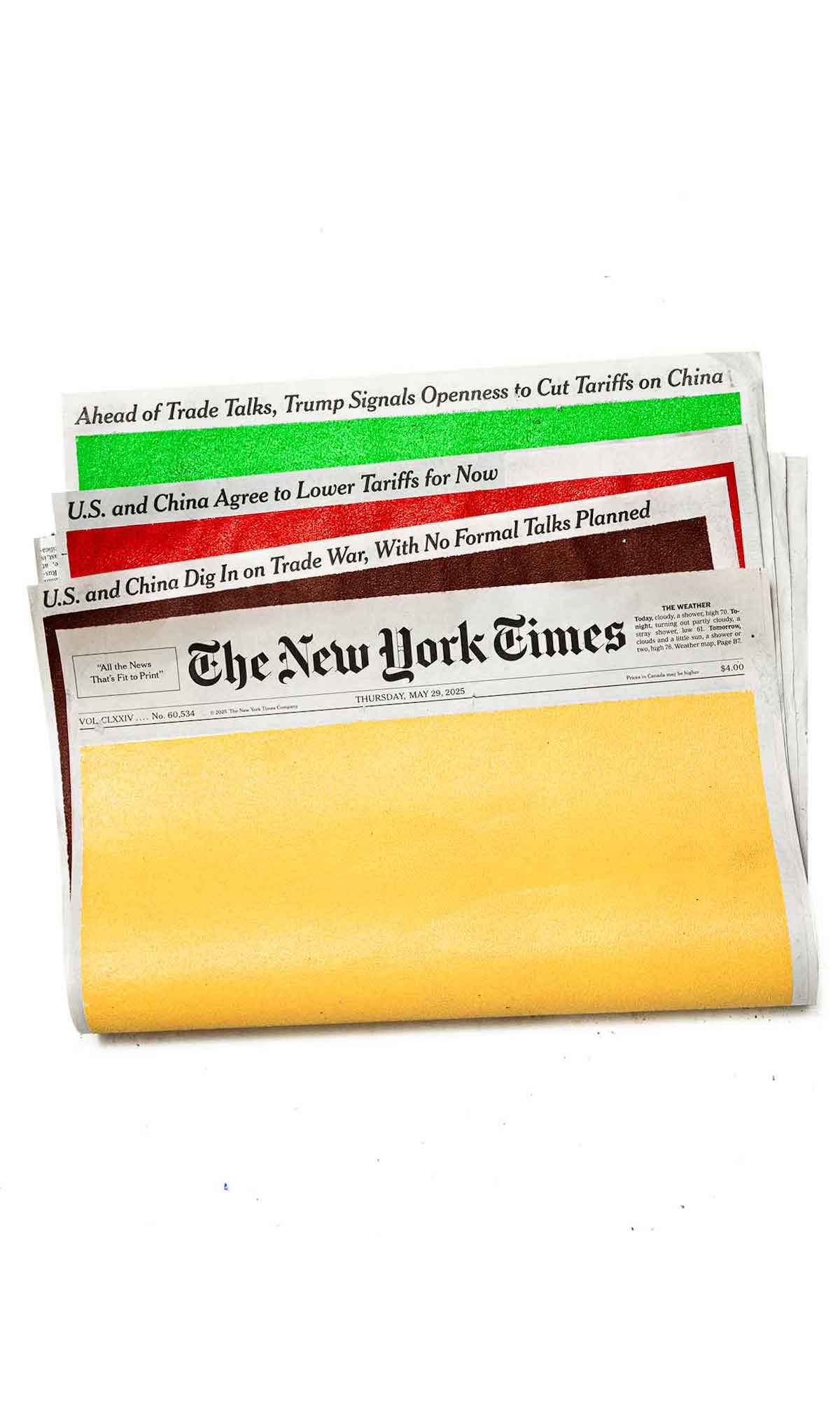
For years, Shibuya has reclaimed pages pulled from The New York Times, transforming them into canvases upon which he splashes stark colors, gradient maps, and minimalist graphics. Haunting and uplifting headlines alike accompany the artist’s crisp visuals, each reducing the publication’s top stories to their most essential parts.
“I subscribe to The New York Times because I live in New York and, since its founding in 1851, it has become one of the city’s enduring symbols,” Shibuya tells My Modern Met. “I wanted to borrow that cultural legacy and weave it into my own work.”
Perhaps nothing encapsulates the present better than newspapers, complete with reporting and musings about current affairs. Because of that, it should come as no surprise that Shibuya gravitated toward the New York Times, and, inadvertently, the political, cultural, and global events that it covers. In this past year alone, Shibuya has created remarkable compositions related to Zohran Mamdani’s historic win in New York City’s Democratic primary; a rare meteorological phenomenon called a “roll cloud” that formed off Portugal’s coast; the ongoing starvation in Gaza; Pope Francis’s death; and the controversy swirling around the Epstein files, which also happens to be one of Shibuya’s recent favorites.
“I enjoy combining original text with painted imagery,” he adds.
Alongside its political undercurrents, Shibuya’s work is also concerned with an ongoing process of creation. There’s a continuity embedded within the artist’s practice, in which he produces art on a daily basis with an almost fervent sense of consistency.
“I don’t analyze too much why I keep going—it simply feels natural,” Shibuya explains. “One reason is clear, though: I deeply enjoy the practice. In a way, it has become my ikigai—a Japanese term meaning ‘a reason for being,’ or the reason I wake up each day.”
That impulse may be most clear in his Sunrise From a Small Window series, originally started in 2020 during the early stages of the COVID-19 pandemic. Every day, Shibuya would peek out his window, observing how the sky shifted, its many shades slipping into magnificent purples, striking oranges, and deep blues.
“Each morning, [I’d] photograph the sunrise from my apartment window,” Shibuya says. “At that time, the sunrise felt like the only source of hope each day. Five years later, I’m still painting them daily. What began as a moment of comfort has now become part of who I am.”
As for those engaging with his art, he acknowledges and, above all, appreciates the varying perspectives they harbor.
“I don’t have a specific expectation,” he concludes. “Each date, and each sunrise, carries a different meaning for every person who sees it.”
To learn more about the artist, visit Sho Shibuya’s website.
For years, Sho Shibuya has transformed pages from The New York Times into stunning minimalist artworks.
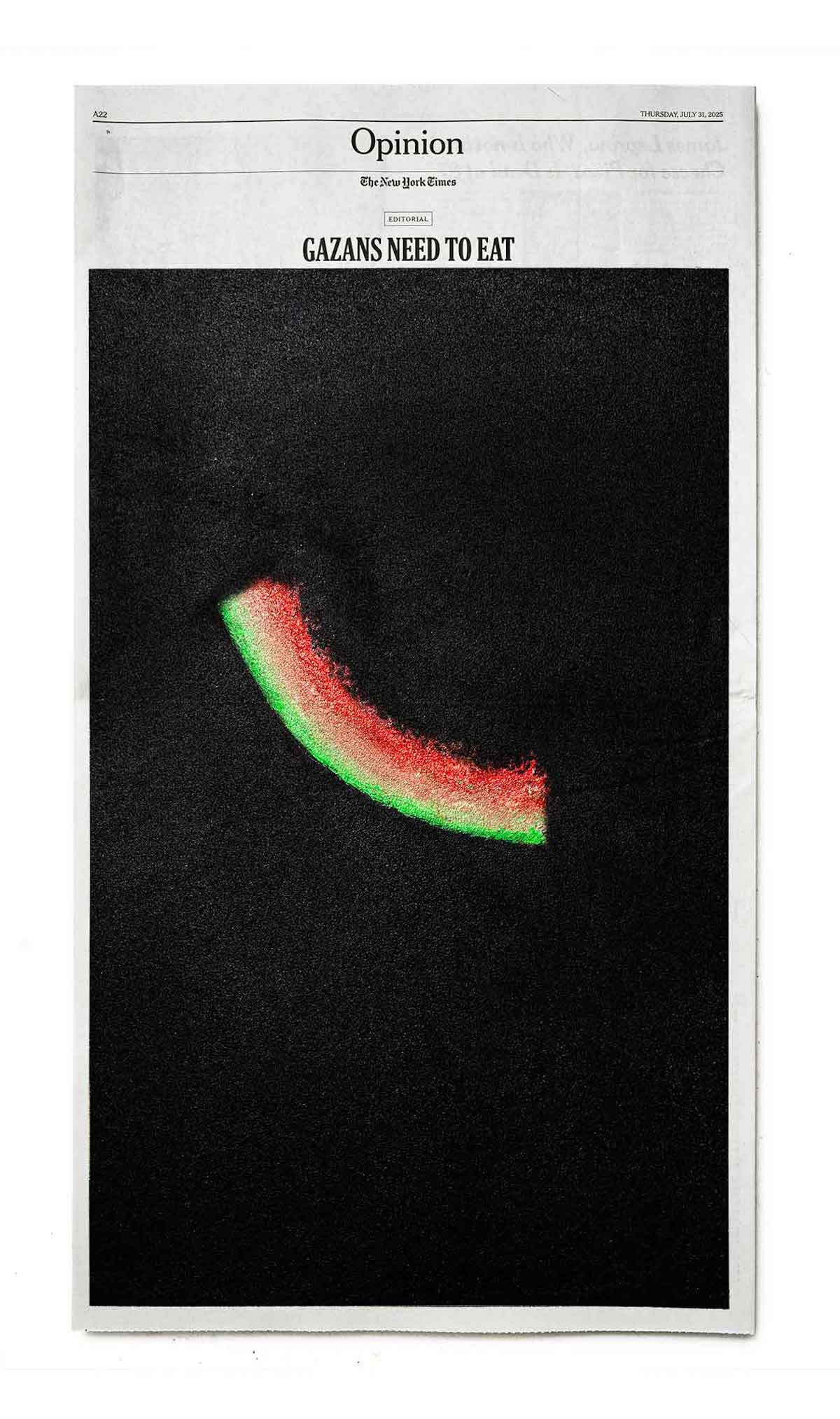
“Gazans Needs to Eat,” July 31, 2025.
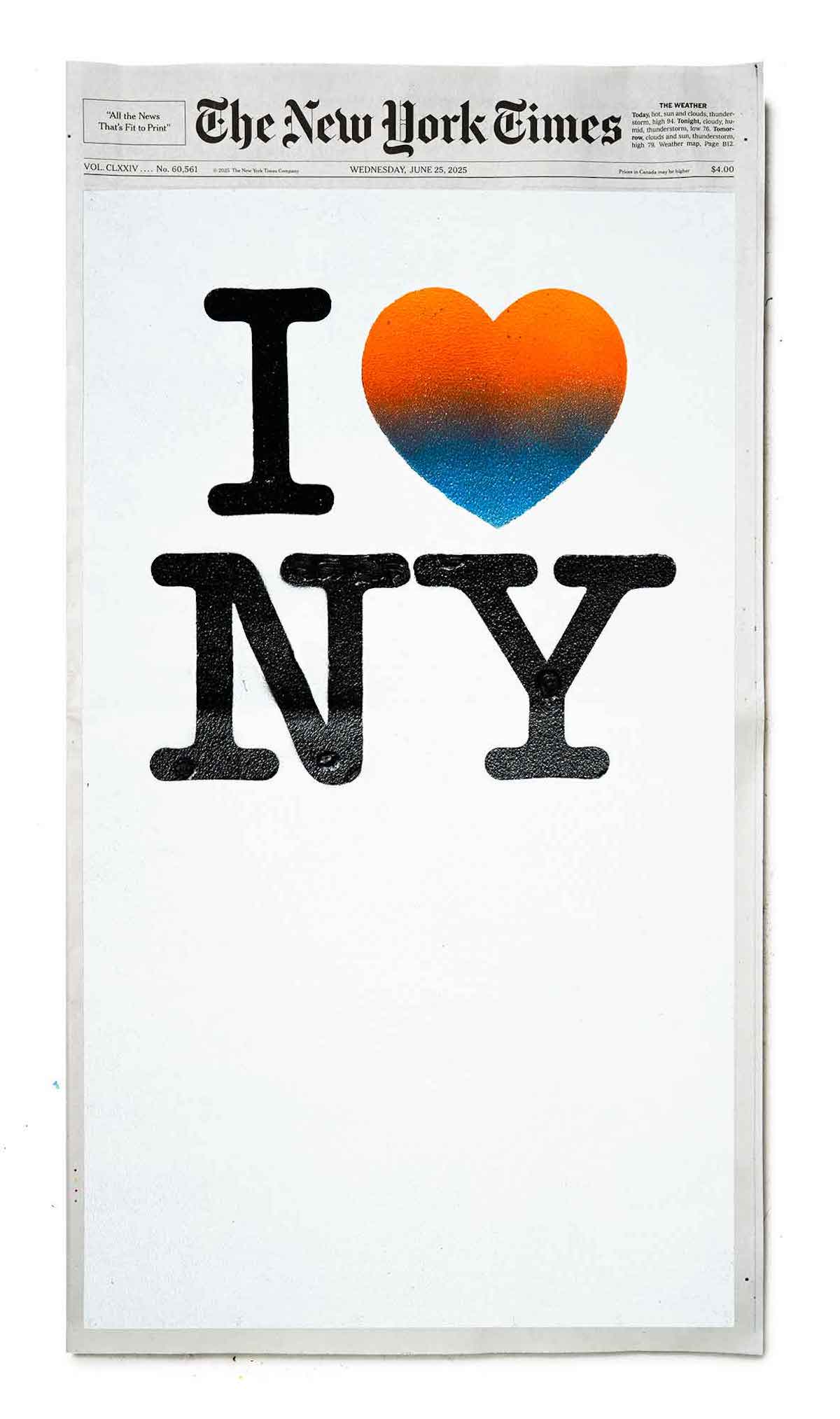
“Zohran Mamdani,” June 25, 2025.
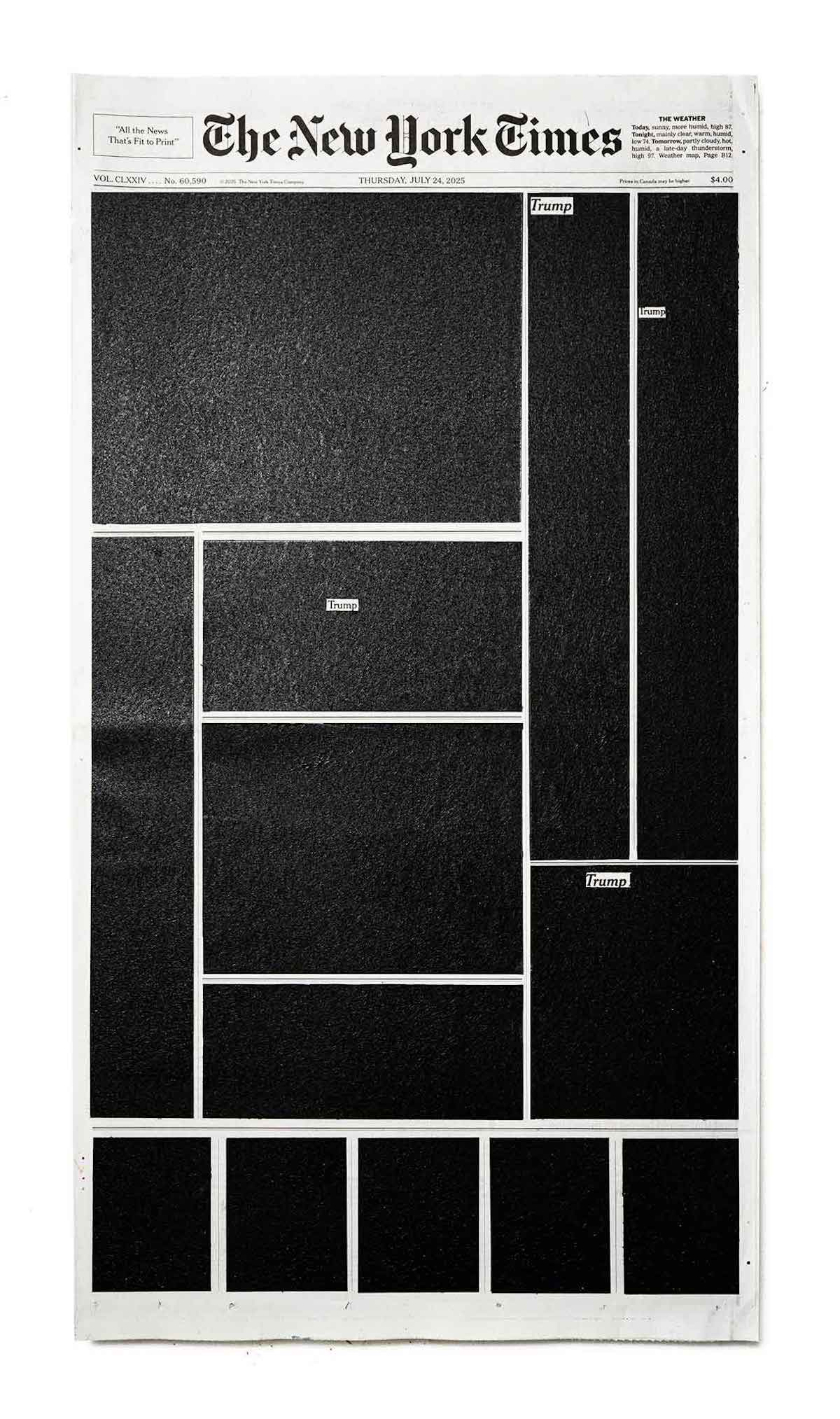
“Epstein Files,” July 24, 2025.
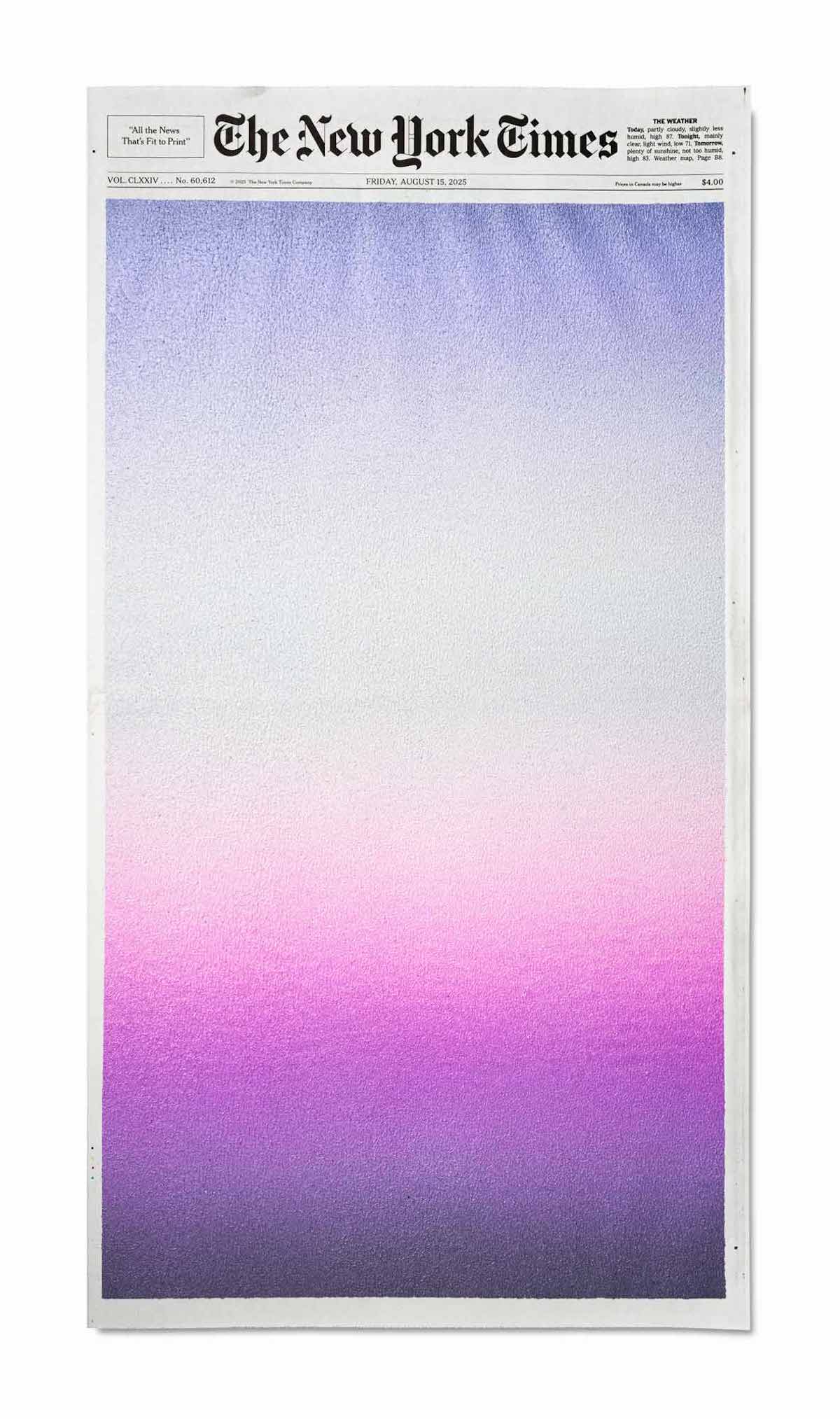
From August 15, 2025.
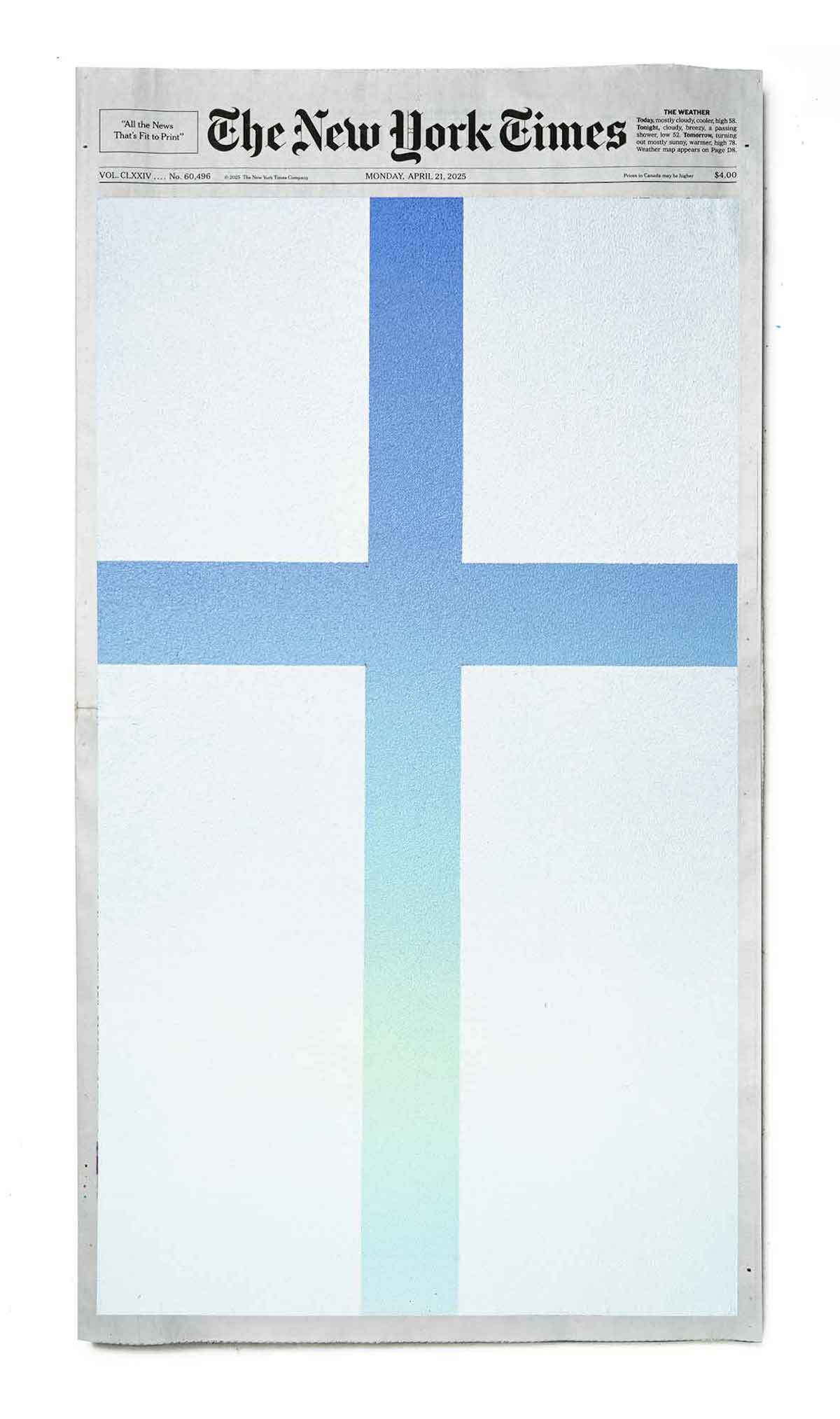
“Pope Francis,” April 21, 2025.
His art responds to current events, whether they be haunting or uplifting, all while stripping NYT’s coverage to its most essential parts.
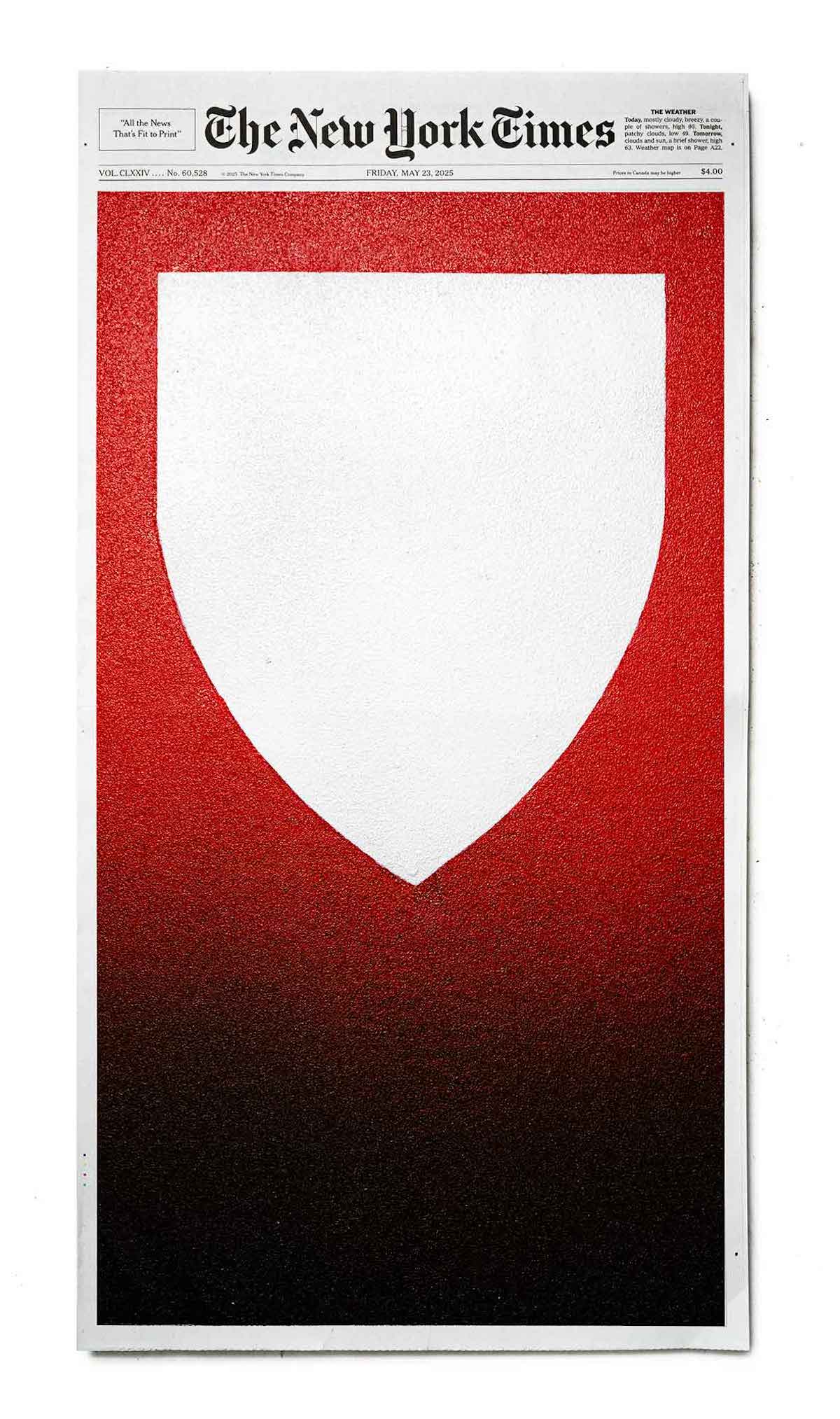
“Harvard,” May 23, 2025.
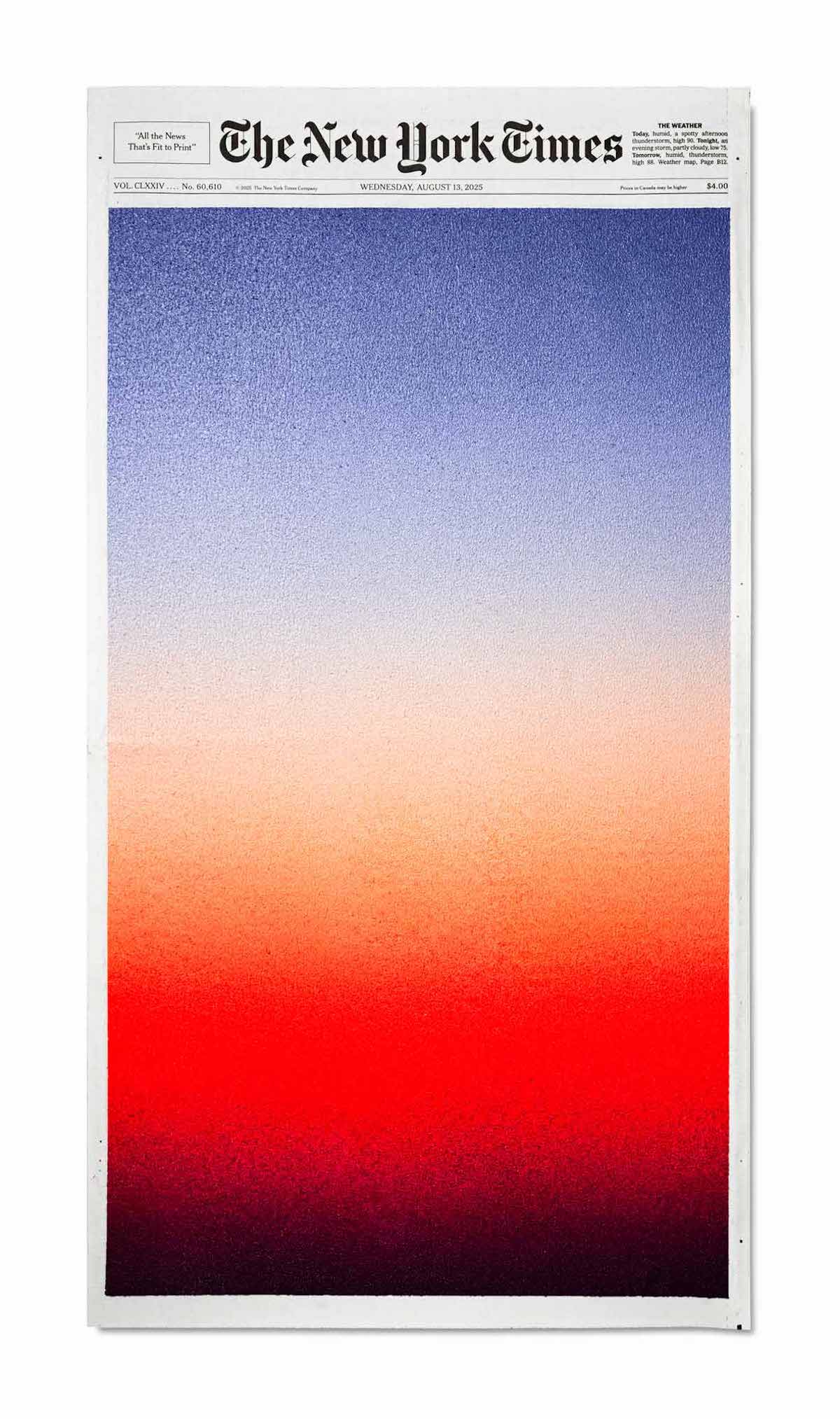
From August 13, 2025.
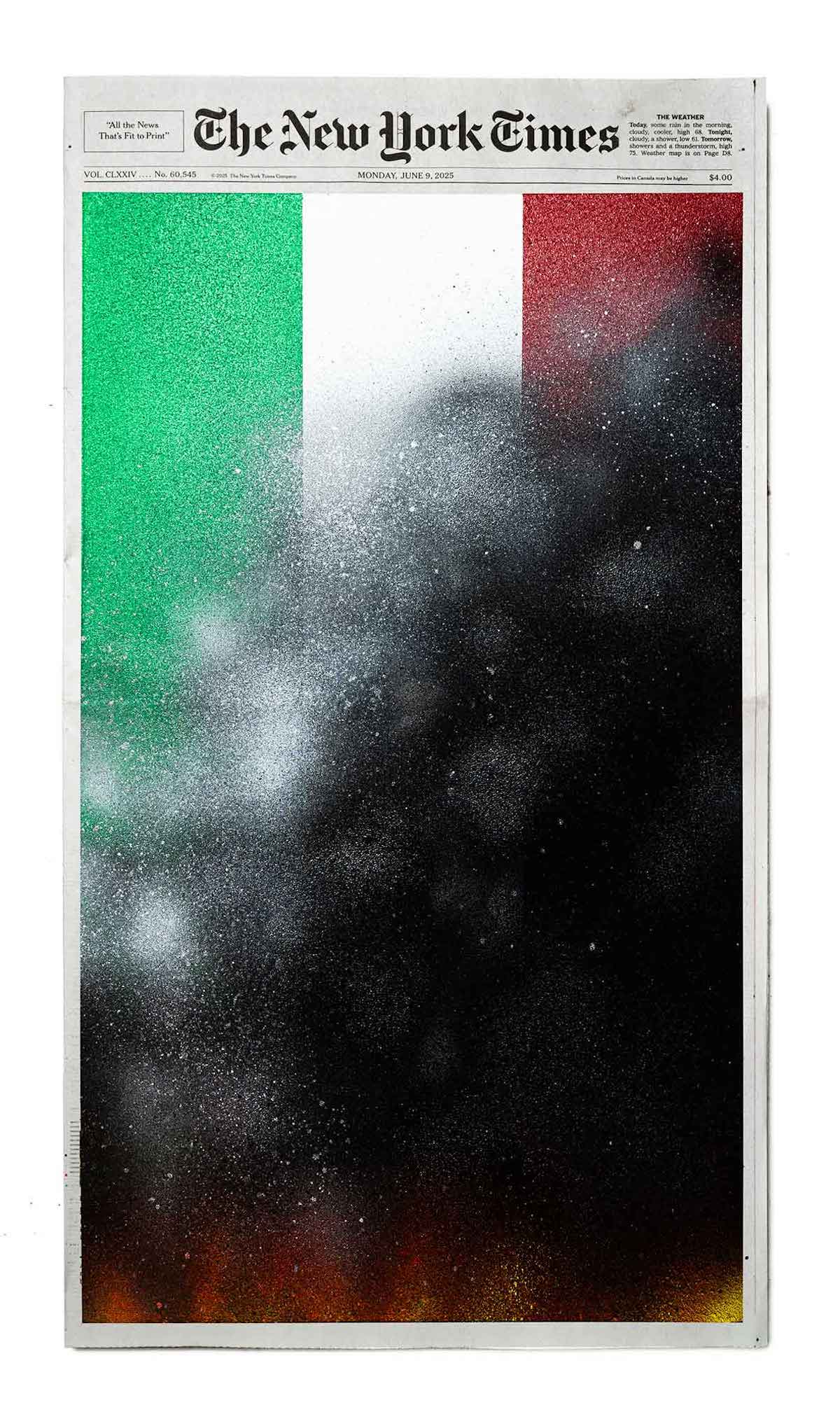
“Los Angeles,” June 9, 2025.
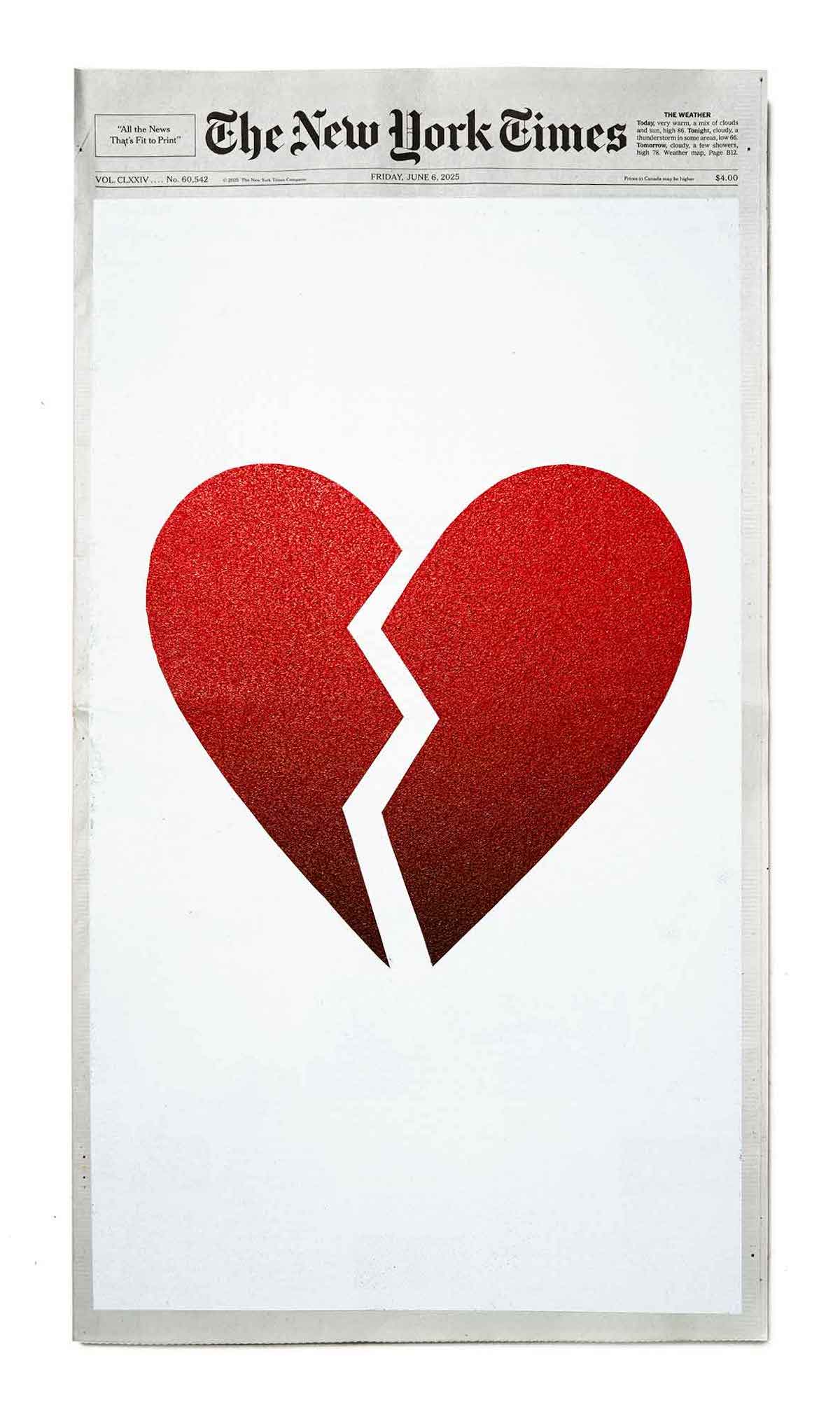
“Big, Beautiful Breakup,” June 6, 2025.
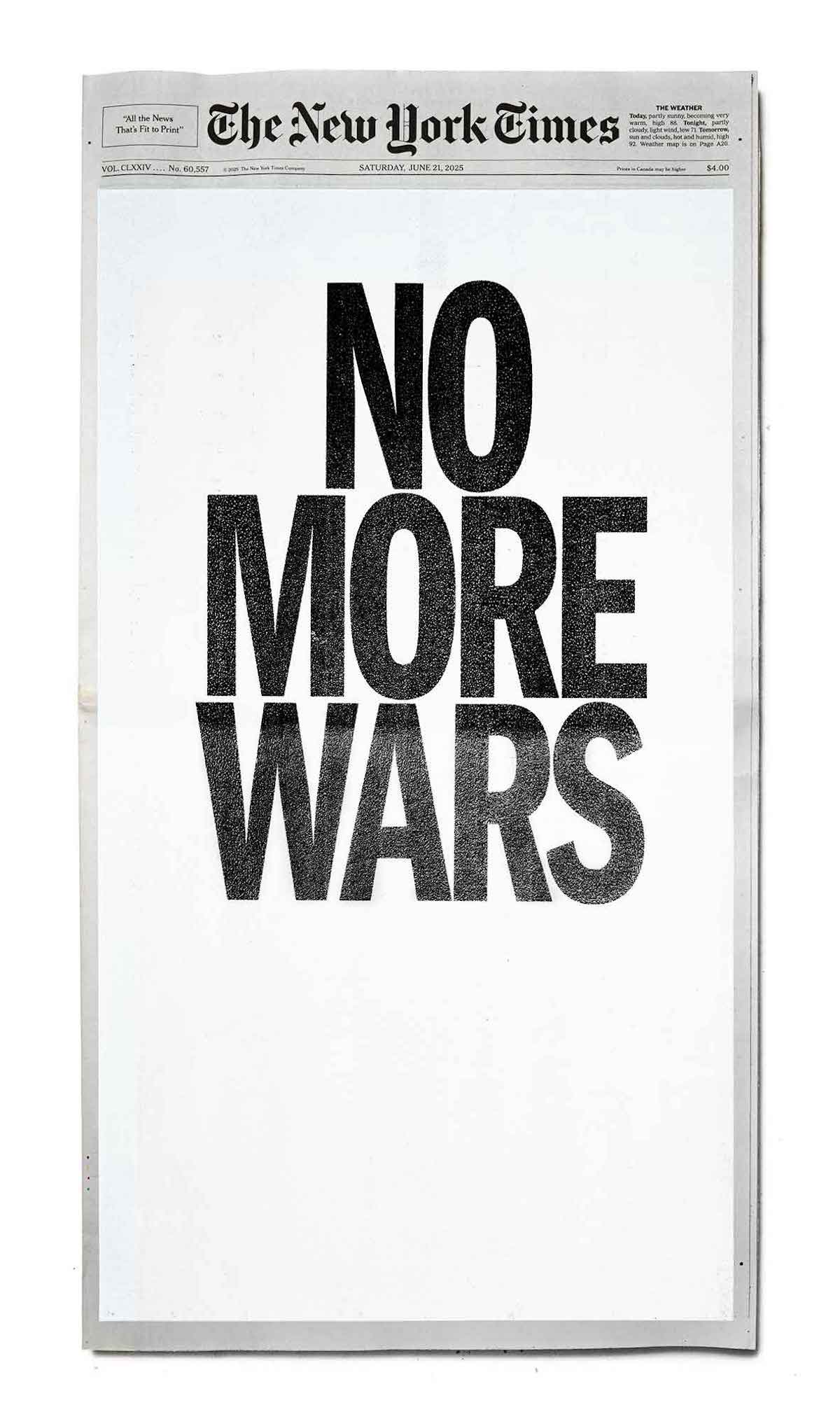
“No More Wars,” June 21, 2025.
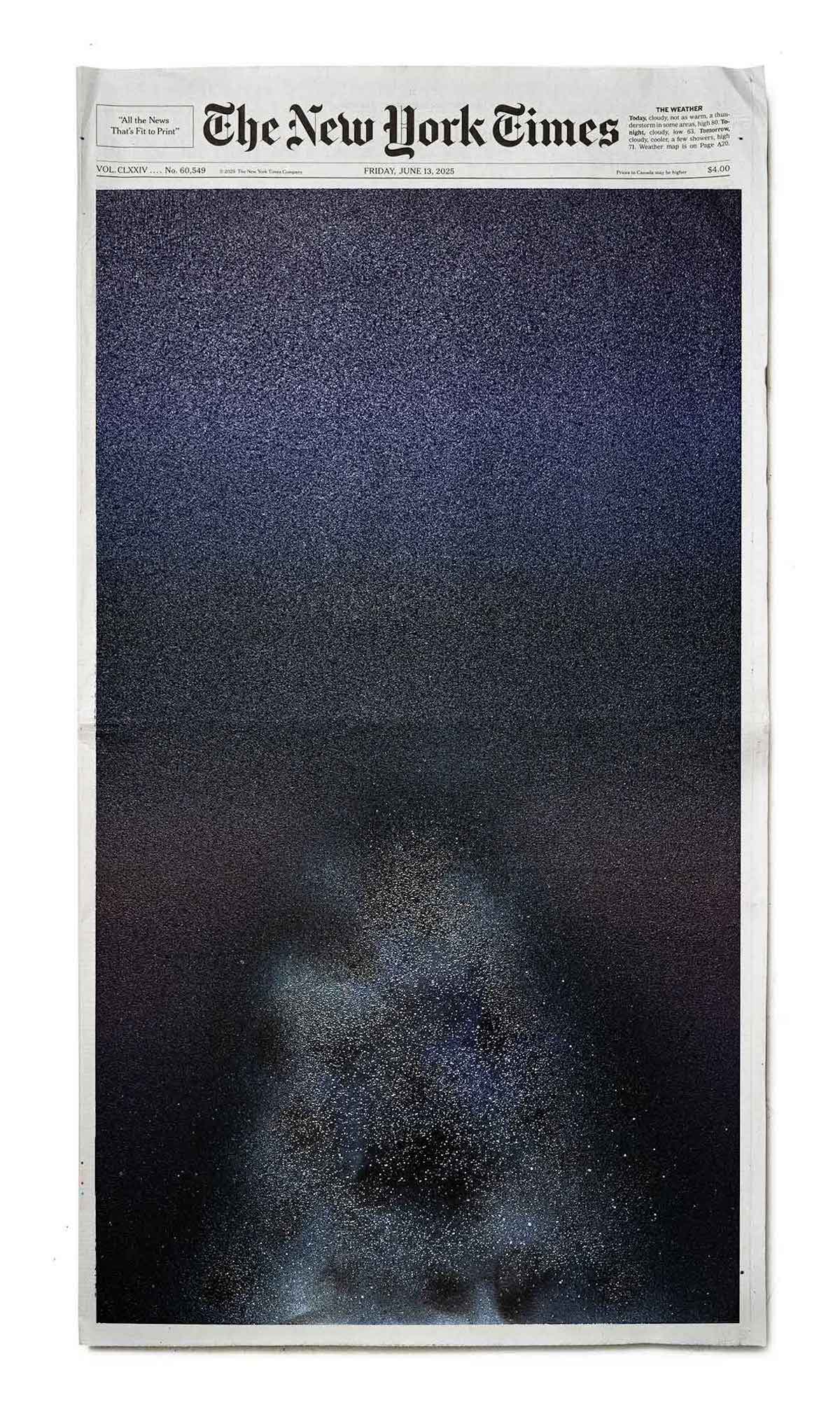
“Iran,” June 13, 2025.
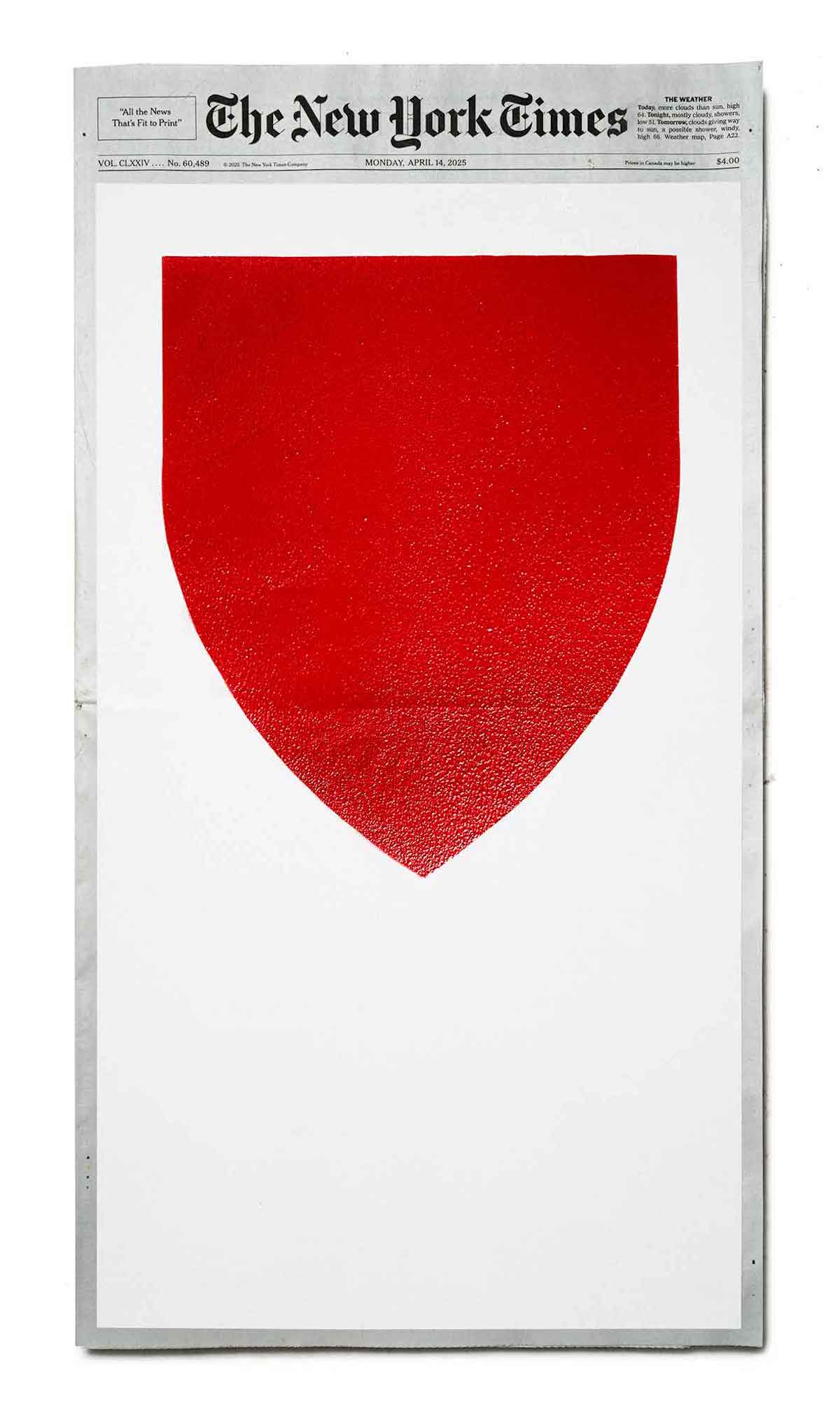
“Harvard,” April 14, 2025.
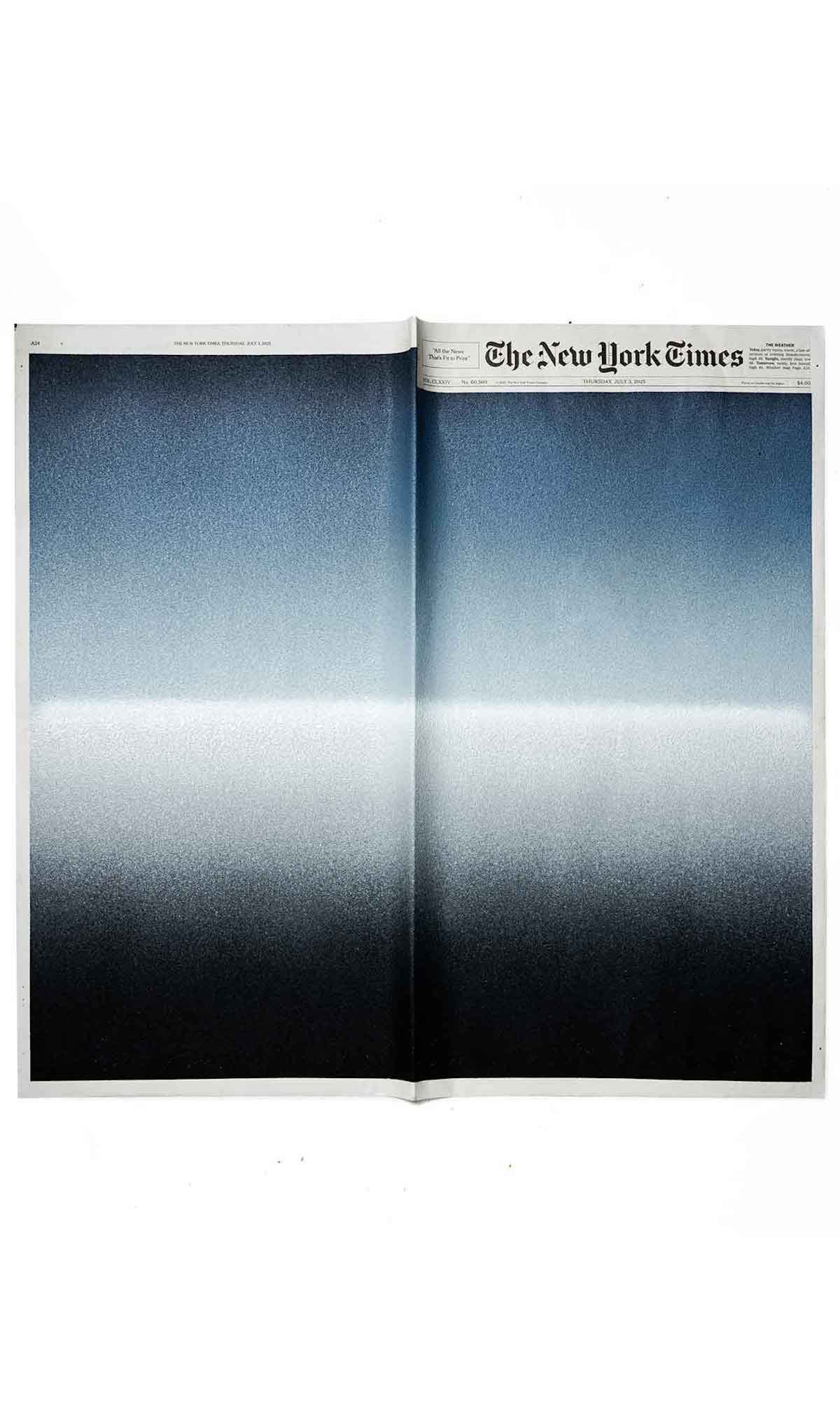
“Roll Cloud,” July 4, 2025.