

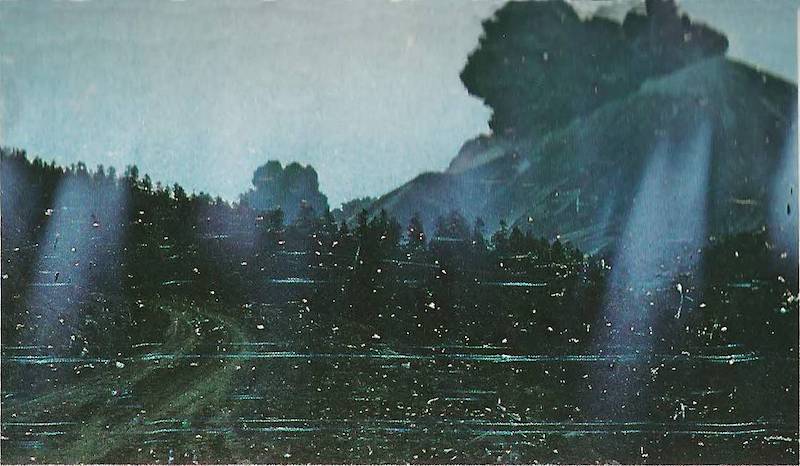
One of Robert Landsburg’s photographs from the Mount St. Helens eruption in 1980. (Photo via Wikimedia Commons, CC 4.0)

On the evening of May 17, 1980, Robert Landsburg set up camp near Mount St. Helens in southwestern Washington. The 48-year-old freelance photographer had been visiting the volcano for weeks, all in the hopes of capturing its forthcoming eruption. He wasn’t the only one enduring the trek; when seismographs detected small tremors beneath Mount St. Helens in March 1980, countless scientists, photographers, and hikers descended upon the area, preparing for a dramatic blast.
Early the next morning, on May 18, Landsburg once again drove his station wagon toward the volcano. He had already prepared his camera when a 5.1-magnitude earthquake struck at 8:32 AM, triggering what would become the largest landslide in U.S. history. In the moments that followed, the mountain’s north face slid away to reveal partly molten rock, which suddenly exploded toward Spirit Lake alongside a scalding mix of lava. An ash cloud soon rose 15 miles into the sky, and pyroclastic flows traveling at speeds of up to 400 mph swept through more than 230 square miles of forest. All told, the eruption released 24 megatons of thermal energy, 1,600 times the size of the atomic bomb dropped on Hiroshima during World War II.
“All hell broke loose,” Catherine Hickson, a geology student who was nine miles away from the volcano when it burst, later recalled. “An incredible black cloud was cascading down the mountainside, fed by the billowing columns soaring upward into a huge mushroom cloud.”
Landsburg, on the other hand, was five miles closer to Mount St. Helens. From his vantage point, he could already discern the pyroclastic ash clouds, much too thick and deadly to outrun. He sprinted to his car for shelter, all while snapping pictures out of the window. Once he finished his final roll of film, he rewound it back into its canister and stuffed it and his camera into his backpack on the car seat next to him. By then, it was growing dangerously hot and the smog even denser, reaching temperatures of up to 800°F. Landsburg knew the only thing he could hope to save was his photographs. He threw his body on top of his backpack, shielding the delicate film.
It took 17 days to recover Landsburg’s body, buried amid heaps of ash. He was one of 57 people who died due to the explosion. In June 1980, rescuers unearthed Landsburg’s car and, inside it, his precious roll of film. When they were finally developed a few weeks later, the photographs revealed the haunting plumes and smog that claimed Landsburg’s life. The images were later published by National Geographic in January 1981, illustrating Mount St. Helens’s pure force and destruction.
Now, Landsburg’s photographs stand not just as harrowing accounts of the historic eruption. They also offer critical insight into Mount St. Helens itself, providing geologists, even decades later, with on-the-ground documentation. In those ways, Landsburg’s legacy extends beyond his own life, his final moments still being shared with people around the world.
When Mount St. Helens erupted in southwestern Washington on May 18, 1980, Robert Landsburg spent his final moments saving his photographs.
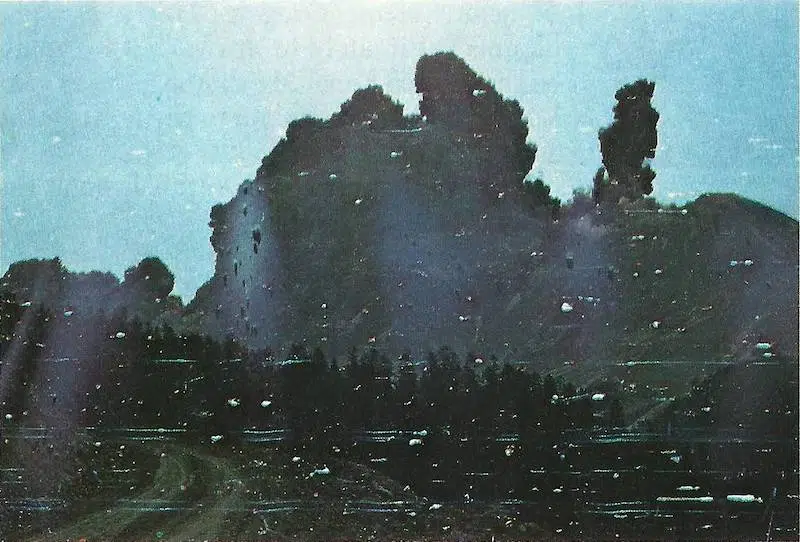
One of Robert Landsburg’s photographs from the Mount St. Helens eruption in 1980. (Photo via Wikimedia Commons, CC 4.0)

Landsburg sought shelter in his car once the volcano’s deadly ash clouds reached him. He stuffed film rolls in his backpack, shielding everything with his body.
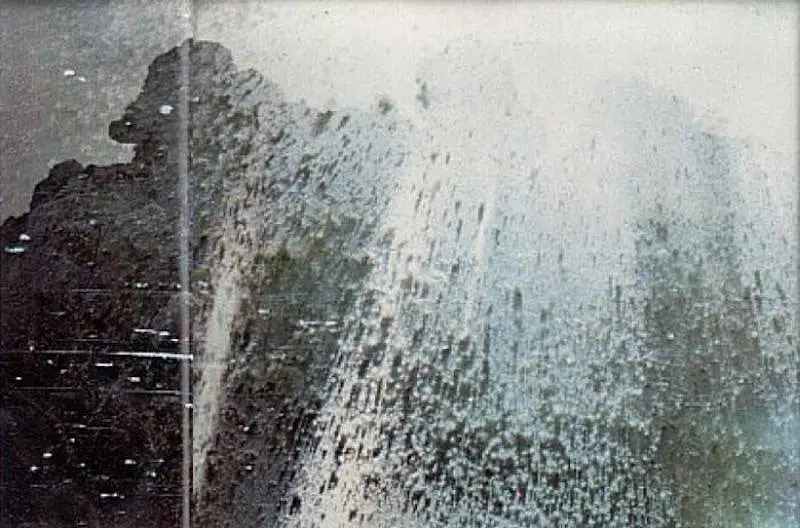
One of Robert Landsburg’s photographs from the Mount St. Helens eruption in 1980. (Photo via Wikimedia Commons, CC 4.0)

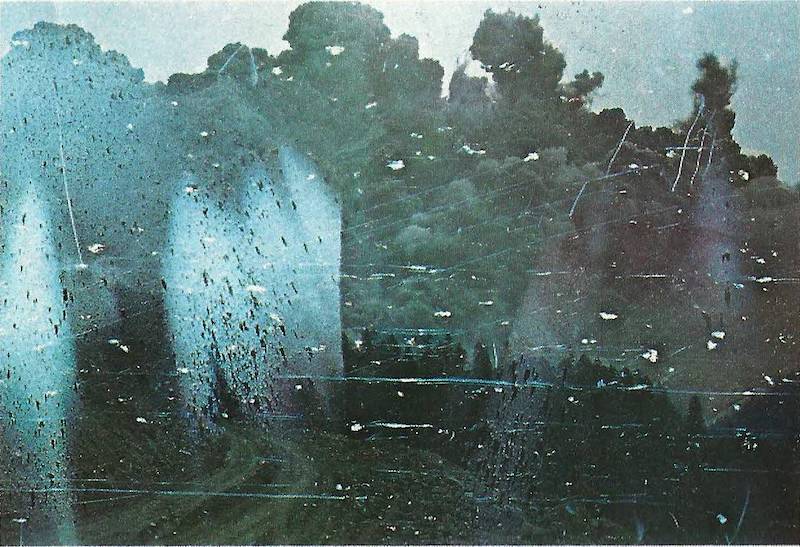
One of Robert Landsburg’s photographs from the Mount St. Helens eruption in 1980. (Photo via Wikimedia Commons, CC 4.0)

Landsburg was one of 57 others who died due to the volcanic eruption.
Sources: Remembering the day Mount St. Helens erupted: A photojournalist looks back 45 years later; Looking Back 45 Years After the Mount St. Helens Eruption; The Haunting Final Images From Two Photographers on Mt. St. Helens; Robert Landsburg, The Photographer Who Spent His Final Moments Documenting The Eruption Of Mount St. Helens
Related Articles:
Breathtaking Videos Capture Lightning Striking an Erupting Volcano in Guatemala
Videographer Shares Nerve-Wracking Footage of His Drone Crashing Into an Icelandic Volcano
Fiery Photos of Iceland’s Volcano Eruption Show a Surreal Display of Lava and Smoke