
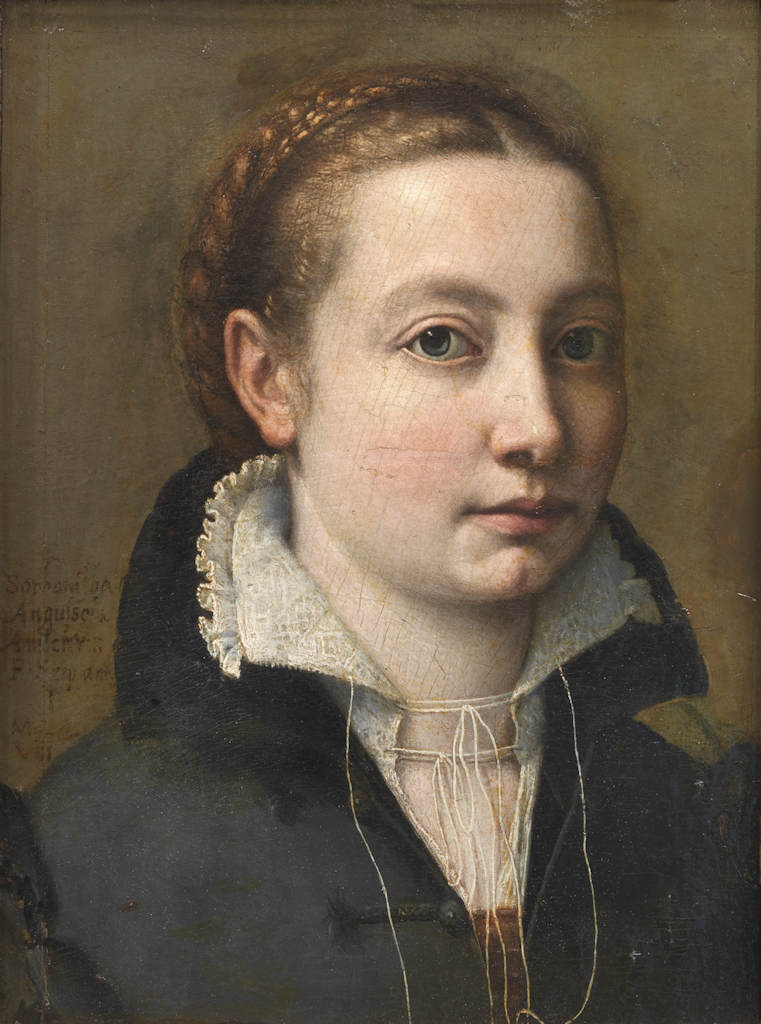

When we think of women in the Italian Renaissance, we often picture the enigmatic sitter in Mona Lisa by Leonardo da Vinci, or the serene beauty of La Fornarina by Raphael. These women have become icons of Western art. Yet far fewer people can name the women who were the actual painters of the time, as opposed to “the muse.” One such painter was Sofonisba Anguissola, a pioneering artist from Cremona who built an international reputation through her remarkable command of portraiture.
Celebrated in her lifetime and praised by artists of her day, Anguissola later slipped from mainstream narratives of the Renaissance. Now the rediscovery of her long-lost 1552 painting, Portrait of a Canon Regular, has returned her to the spotlight. The resurfaced work not only revives a missing chapter of art history, but also highlights the technical mastery she possessed at just 20 years old.
For decades, scholars knew the portrait only from a black-and-white photograph taken in the 1920s. The original painting disappeared from public view for 100 years and slipped out of scholarship. Its survival came to light after Renaissance art historian Michael Cole discussed the lost work in a lecture. The owners of the painting in North Carolina recognized the key details and reached out. After examining it in person, Cole confirmed the attribution. The painting later appeared publicly at The Winter Show in New York City, where it drew renewed scholarly and market attention.
Anguissola painted Portrait of a Canon Regular during her early years in Cremona. She depicts an unidentified clergyman mid-lecture, his hand resting firmly on an open Bible. An eagle rises behind him, reinforcing the clergyman’s intellectual and spiritual authority.
Her craftsmanship extends beyond symbolism. Anguissola handles oil paint with restraint and precision. She builds the clergyman’s face through controlled layering, blending warm and cool tones to create lifelike flesh. Subtle highlights trace the bridge of his nose and cheekbones, while gentle shadows model the contours of his jaw. Even at a young age, she demonstrated control over composition and gesture.
Anguissola achieved this level of sophistication despite the limitations placed on women in the 16th century. Most female artists lacked access to formal workshops or anatomical study. Her father recognized her talent early and supported her artistic training. That encouragement proved transformative. Renaissance biographer Giorgio Vasari praised her intellect and refinement. Even Michelangelo reportedly admired her drawings, acknowledging her ability to capture emotion with precision.
She later served at the Spanish court, where she worked within the expectations of royal portraiture. Yet, her early Italian paintings, including Portrait of a Canon Regular, reveal the independence and innovation that defined her artistic voice.
The rediscovery of this long-lost work does more than excite collectors. It strengthens Anguissola’s position within Renaissance art history and restores visibility to a woman who helped shape it. Through disciplined technique, Sofonisba Anguissola expanded what portraiture could achieve. Now, with this painting returned to public view, her mastery commands attention once again.
Sofonisba Anguissola is one of the few celebrated women artists of the Italian Renaissance, and now there’s renewed interest in her work after a long-lost painting was rediscovered.
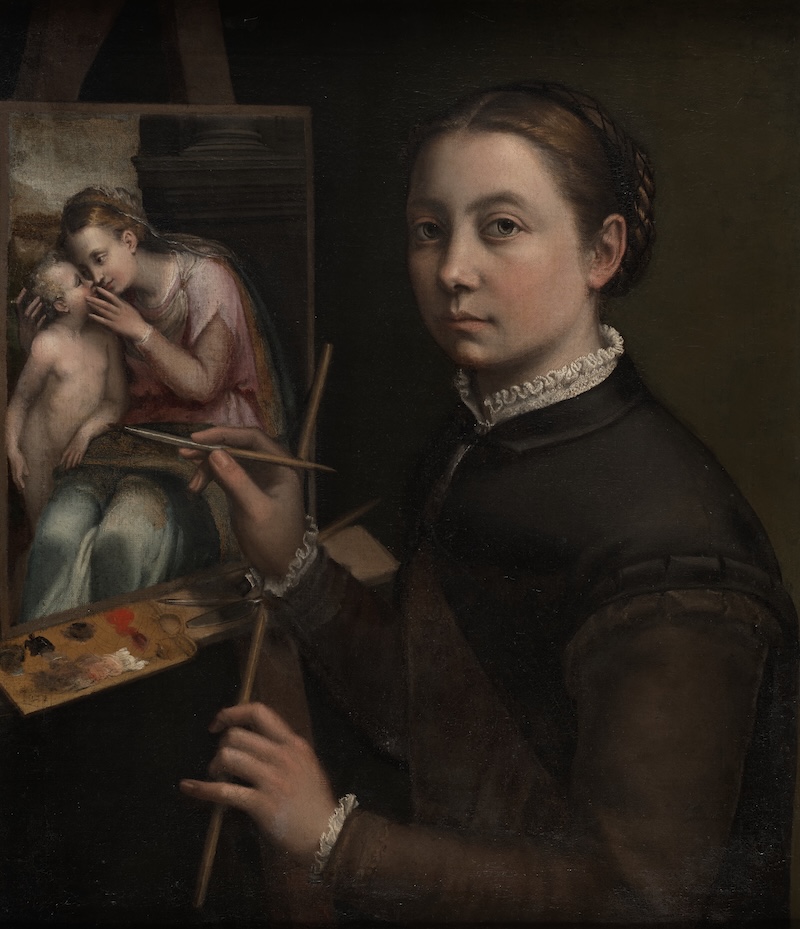
“Self portrait at the easel” by Sofonisba Anguissola, 1556. (Photo: via Wikimedia Commons, Public domain)
The painting, Portrait of a Canon Regular, resurfaced in North Carolina after missing from public view for 100 years and showcases Anguissola’s mastery of oil, subtle symbolism, and her refined technique.
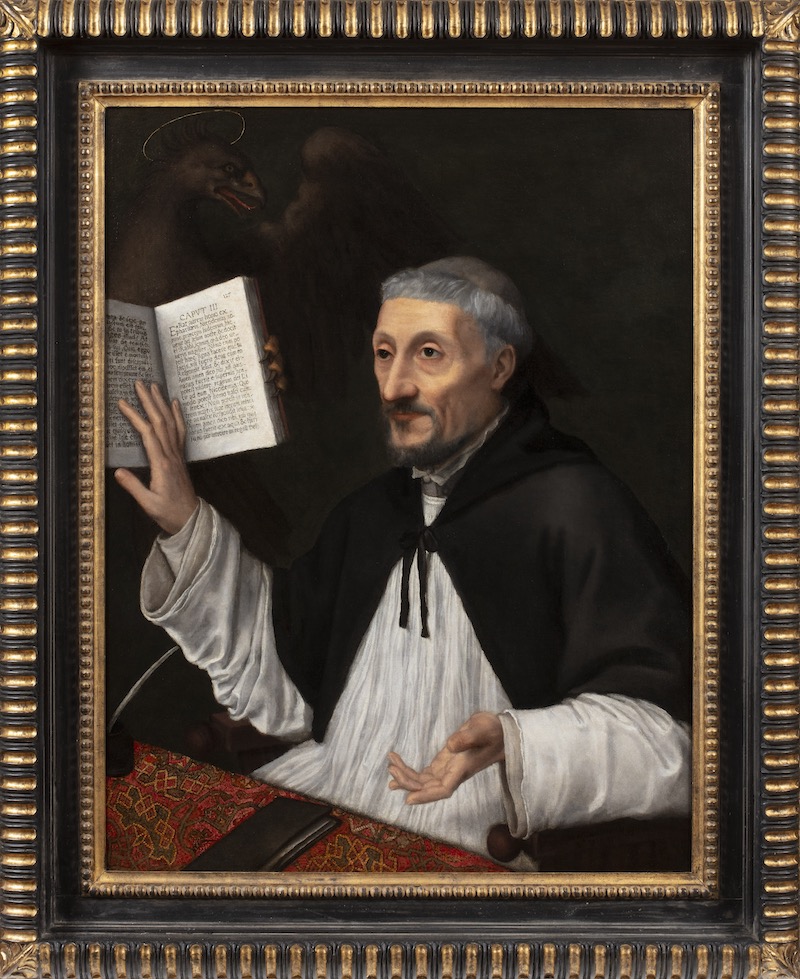
“Portrait of a Canon Regular” by Sofonisba Anguissola, 1552. (Photo: Robert Simon Fine Art, New York)
Source: Historians Thought This Rare Renaissance Portrait by One of the First Famous Female Artists Was Lost to History—Until It Surfaced in North Carolina, Lost Painting by the ‘Illustrious Woman’ Painter of the Renaissance Surfaces in N. Carolina After 100 Years
My Modern Met granted permission to feature photos by Robert Simon Fine Art.
Related Articles:
Newly Discovered Michelangelo Chalk Drawing Worth $2 Million Heads to Auction
11-Year-Old Accidentally Discovers and Saves 500-Year-Old Renaissance Print From Trash
Long-Lost Renaissance Masterpiece by Famous Artist Andrea Mantegna Has Resurfaced in Pompeii
KAWS Reimagines Renaissance Art With Modern Twist Highlighting Our Dependence on Technology