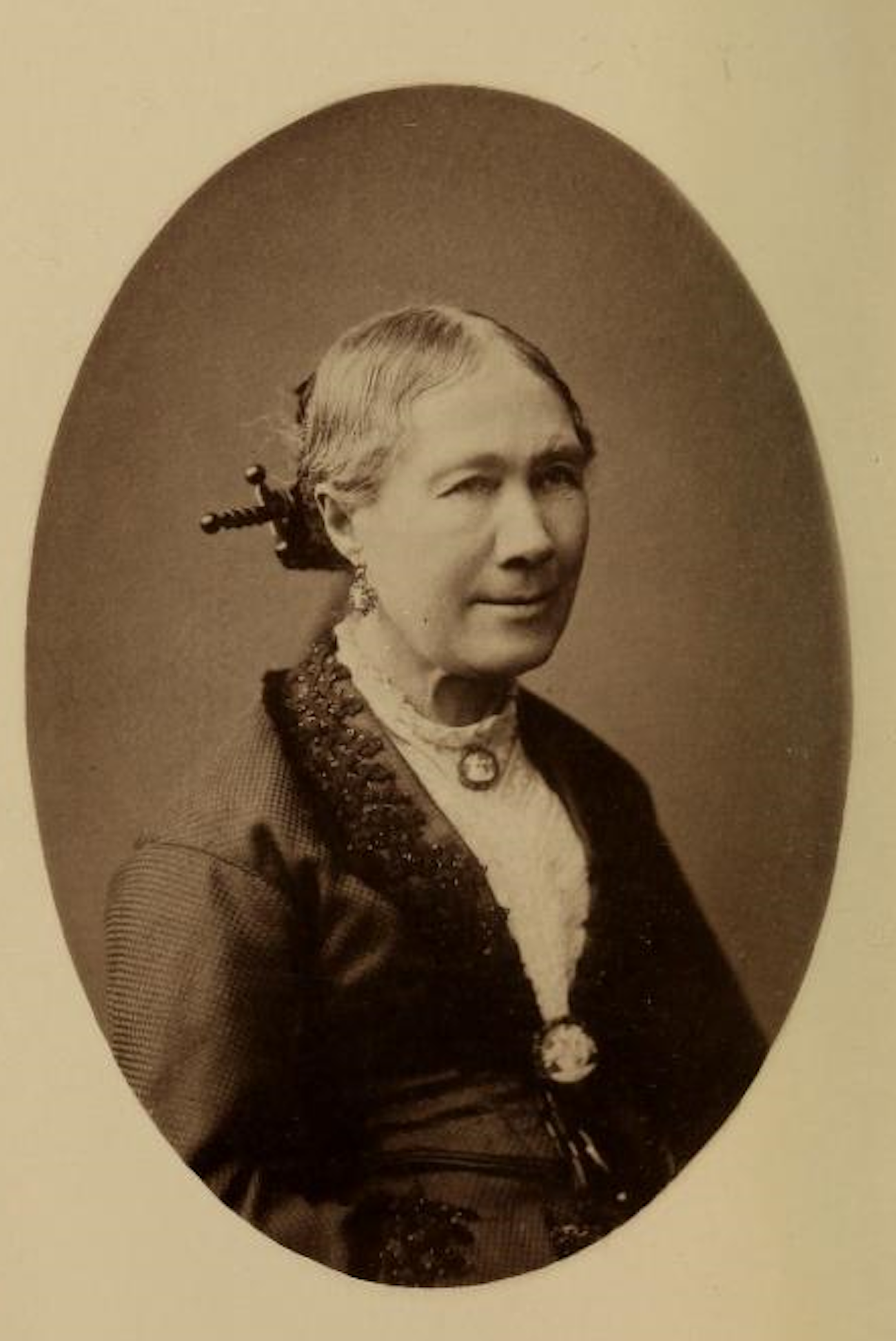
In the mid-19th century, Georgiana Houghton began creating intricate, abstract drawings unlike anything her contemporaries had seen. Houghton developed a visual language of swirling color and line that she believed was guided by unseen spiritual forces.
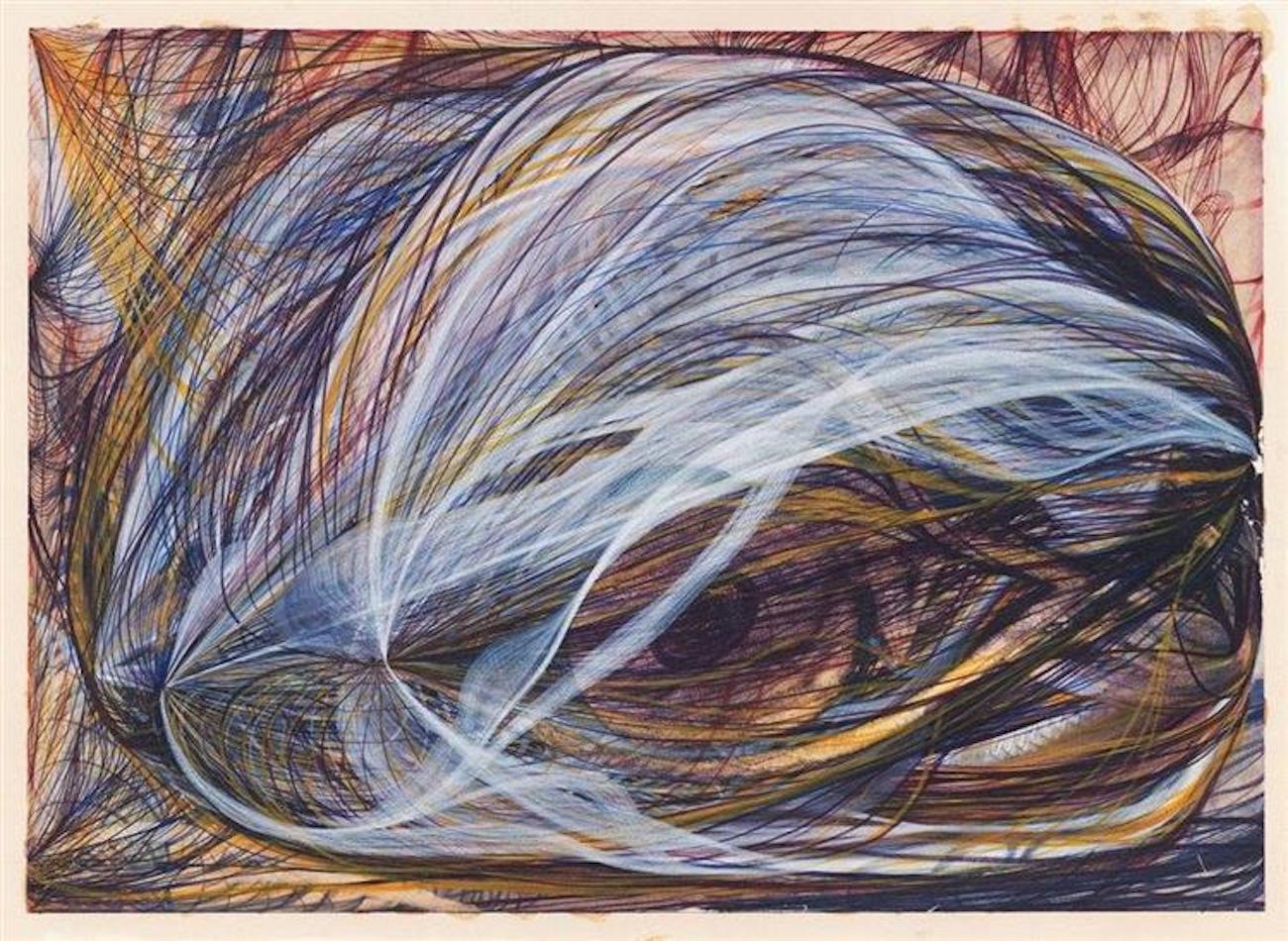
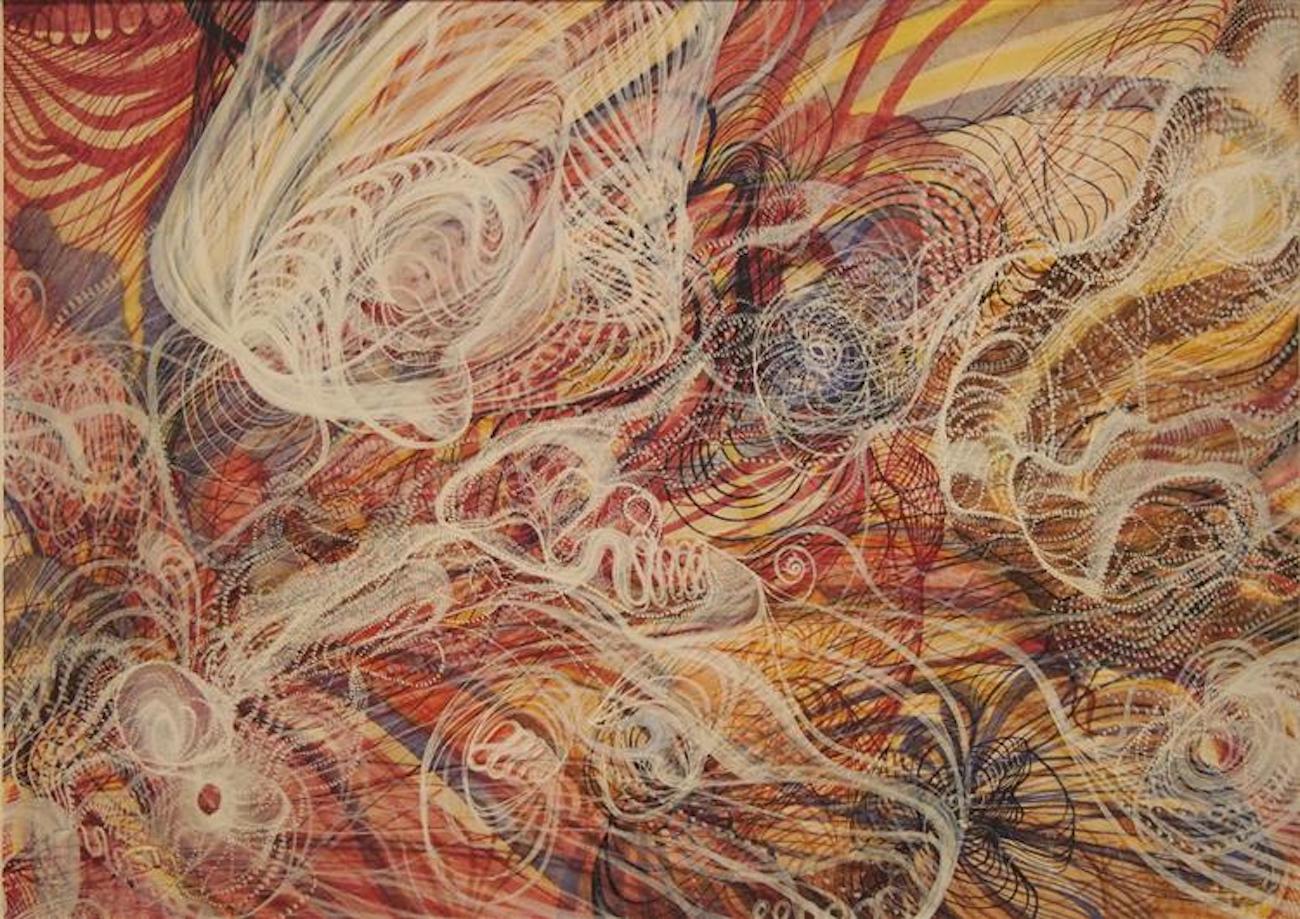
In Victorian England during the 1860s and 1870s, Houghton produced intricate watercolor compositions she described as “spirit drawings.” These works were not conceived as imaginative inventions, but as transmissions by spirits from another realm. To encounter her work today is to experience something strikingly contemporary. Luminous tangles of line, radiant passages of color, and looping, textile-like structures unfold across the page with a sense of internal rhythm.
Houghton did not position herself as the sole author of her work. Instead, she understood her role as a medium, an intermediary through which visual information passed into material form. Her process was rooted in what is now described as automatism, a method in which the hand moves freely without conscious direction. For Houghton, this movement was not simply subconscious but spiritually guided. She attributed her drawings to the influence of the divine, and even Old Master painters, whose presence she believed shaped the flow of each line.
This perspective is visible in the structure of the work itself. Dense networks of interlacing marks coil, knot, and unfurl across the surface, suggesting choreography rather than composition. The drawings feel less designed than received, as though they record the passage of unseen forces moving through the body. What makes these paintings especially compelling is the way they construct meaning without relying on recognizable imagery. Houghton developed a symbolic system in which color, density, and movement carry spiritual significance.
At times, the imagery suggests organic growth. Tendril-like lines expand and intertwine, recalling botanical forms such as roots, petals, or vines. Elsewhere, the lines resemble frequencies, vibrating across the page in a way that feels almost auditory. Each drawing seems to hold motion within it, as though the act of making has been preserved in the final image.
Houghton made deliberate efforts to translate the unseen into a legible system. She frequently annotated her works with detailed explanations, identifying the spiritual influences behind each piece and outlining the symbolic meaning of specific colors and forms. In this sense, her drawings function as both image and text. The surface becomes a site of revelation, while her inscriptions attempt to anchor that experience in language.
Even so, the works resist complete interpretation. They remain immersive and elusive, operating through sensation as much as through meaning. The viewer is invited to engage not only intellectually, but perceptually, navigating a field of marks that suggests presence without fully defining it.
In 1871, Houghton organized a solo exhibition in London, presenting over 150 abstract works to the public. The response was largely one of confusion. Without a framework for understanding non-representational imagery, audiences struggled to interpret both the visual language and the spiritual claims behind it.
As such, her work remained largely overlooked for decades. Yet the very qualities that led to its dismissal now position it as remarkably forward-thinking. Houghton arrived at abstraction through belief rather than theory. Her paintings do not reject representation so much as move beyond it, seeking a visual language capable of expressing what cannot be seen.
In their intricate intensity, the works hover between control and surrender, structure and improvisation, the material and the immaterial. They suggest that drawing might be more than an act of representation. It might also be a way of listening, of tracing something that exists just beyond the edge of visibility.
19th-century artist Georgiana Houghton created intricate abstract paintings decades before modern abstraction was formally recognized.
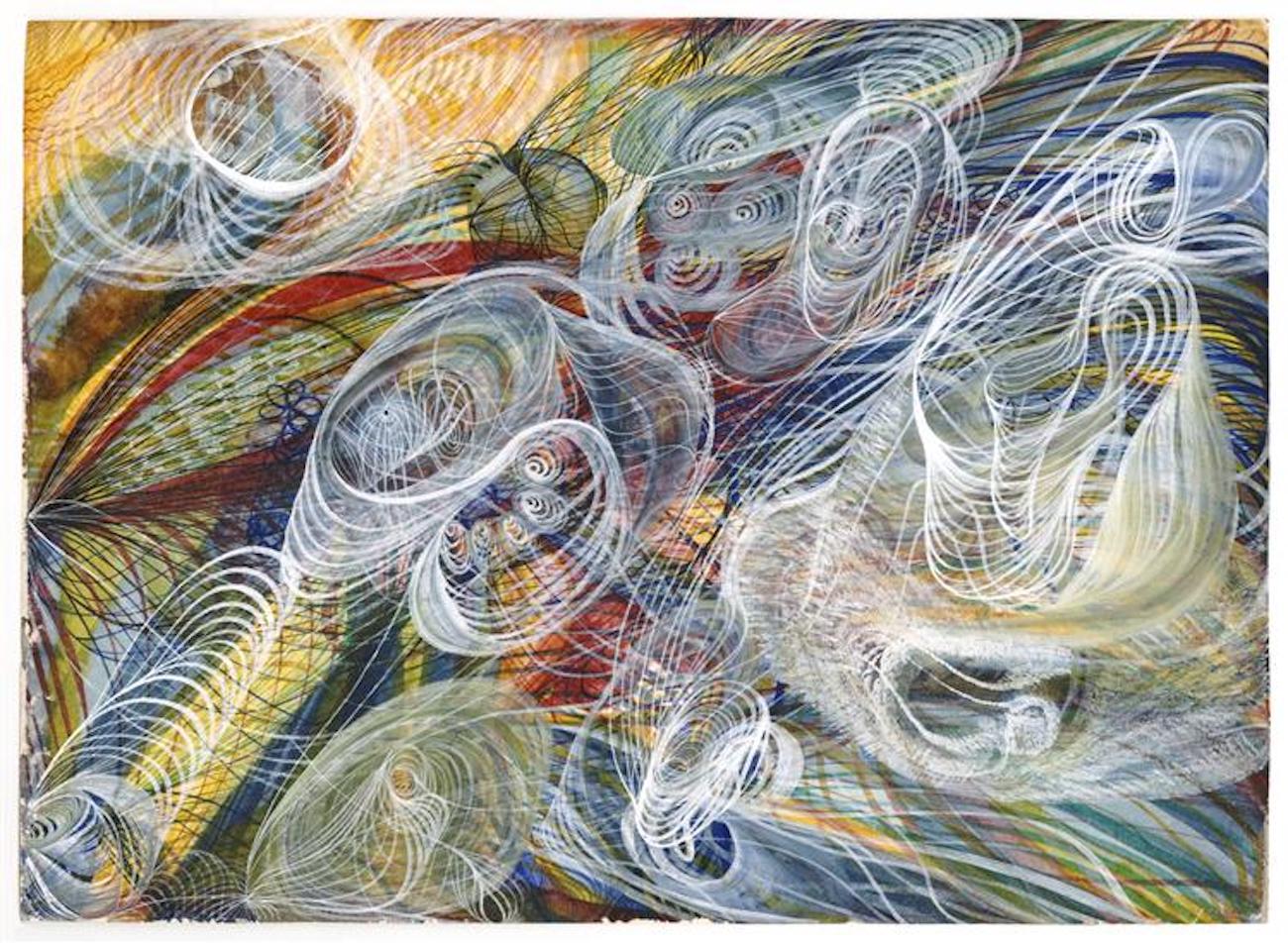
Believing her hand was guided by spirits, she developed a symbolic visual language of swirling lines, radiant color, and layered meaning.
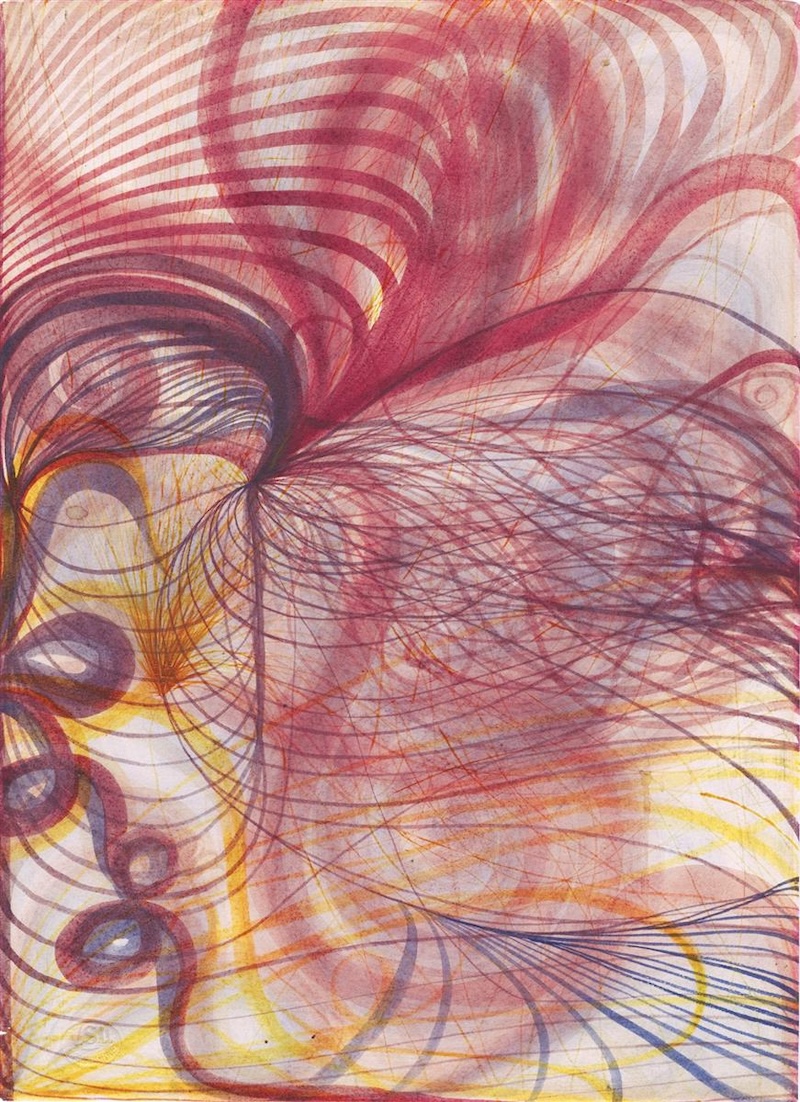
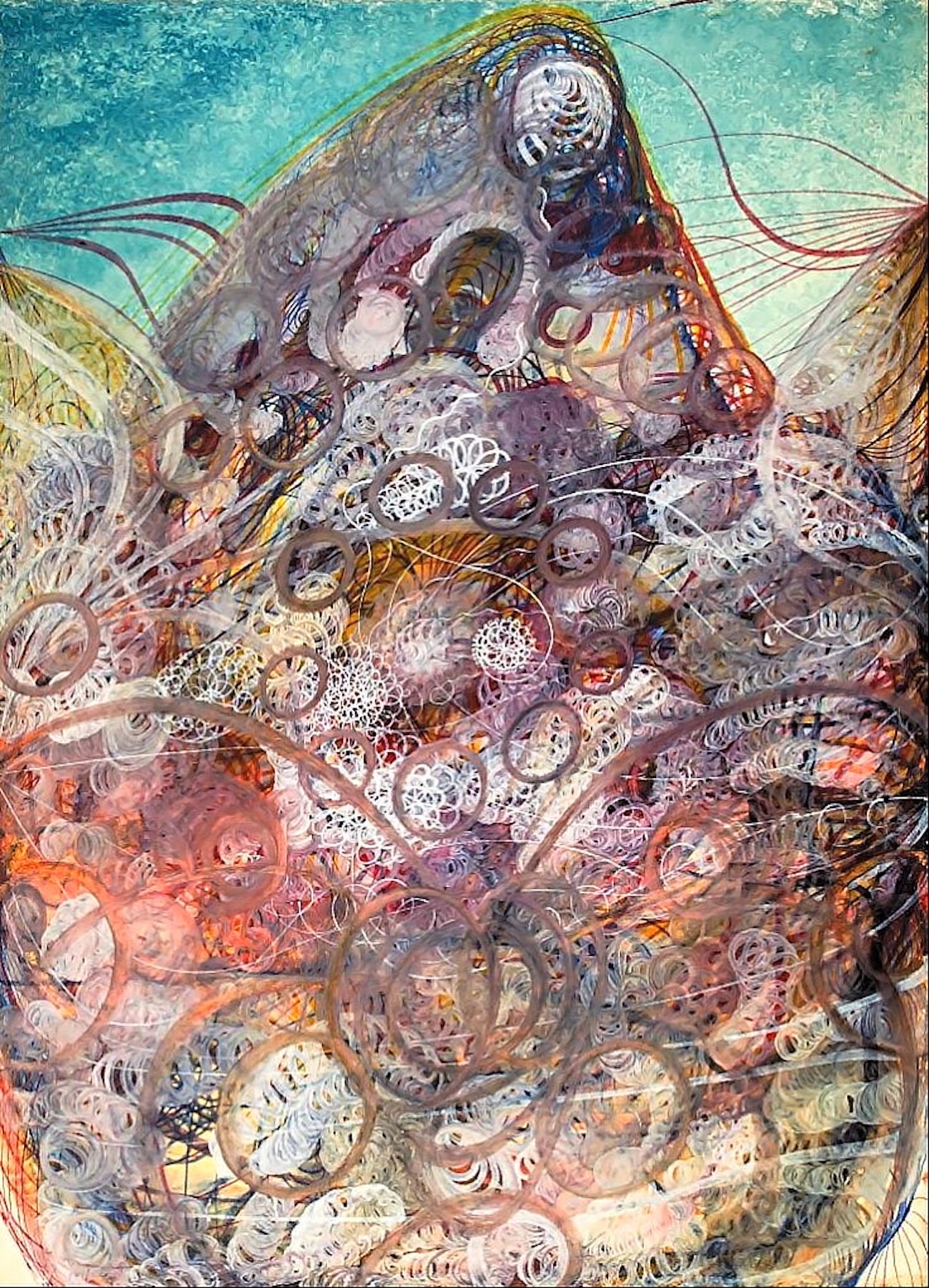
Once overlooked, her visionary works are now celebrated as some of the earliest examples of abstract art and a bridge between creativity and the unseen.
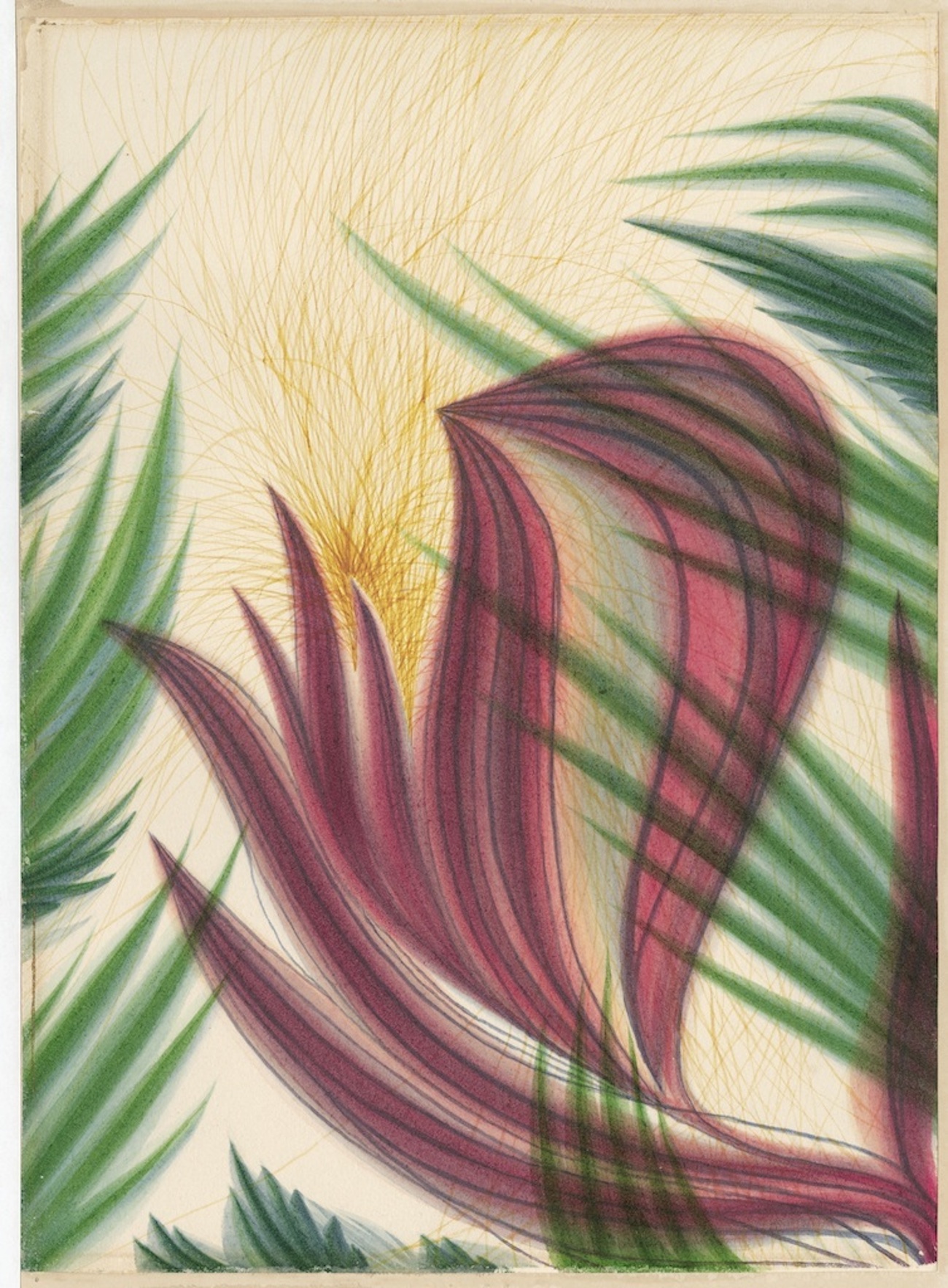

Georgiana Houghton: Website | Instagram
Source: “The Substantiality of Spirit”Georgiana Houghton’s Pictures from the Other Side.
Related Articles:
Artist Takes Grandmother’s Guidance To Stitch Memory, Spirit, and Protection Into Monumental Quilts
Artist Sees Faces in Driftwood and Reveals Them as Stunning Spirits of Nature
Colorful Geometric Street Art Murals Celebrate the Vibrancy of the Human Spirit [Interview]
New York City’s 600-Foot-Long Subway Mural Recalls Hilma af Klint’s Astounding Mysticism