

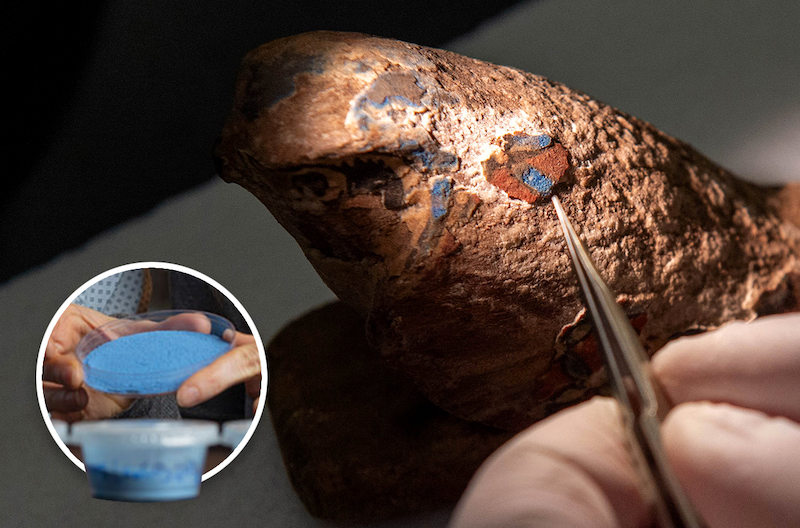
An ancient wooden Egyptian falcon, alongside a powder developed by WSU for research into Egyptian blue. (Composite featuring photos by Matt Unger and Joshua Franzos, Carnegie Museum of Natural History)
The world’s oldest synthetic pigment, Egyptian blue, dates back more than 5,000 years, to around 3300 BCE. For millennia, the specifics of its recipe have mostly been lost to time, unable to be completely reproduced. Now, a team of researchers from Washington State University (WSU), in collaboration with the Carnegie Museum of Natural History and the Smithsonian’s Museum Conservation Institute, has finally changed that.
Per a study published last month in NPJ Heritage Science, the team combined various raw materials, such as crystalline silicon dioxide, copper, calcium, and sodium carbonate, as well as different heating methods to develop 12 recipes for Egyptian blue. These mixtures were then heated at more than 1800 degrees Fahrenheit for up to 11 hours. Once the samples cooled, the scientists studied the pigments through modern microscopy and analysis techniques, while also comparing them to two ancient Egyptian artifacts.
“We hope this will be a good case study in what science can bring to the study of our human past,” John McCloy, first author on the paper and director of WSU’s School of Mechanical and Materials Engineering, said. “The work is meant to highlight how modern science reveals hidden stories in ancient Egyptian objects.”
Millennia ago, Egyptian blue offered an inexpensive substitute for minerals like turquoise, indigo, and lapis lazuli, even being called hsbd-iryt, or “artificial lapis lazuli,” in the Egyptian language. Despite its name, the precise shade of Egyptian blue could range from decadent navies to dull grays or greens, depending on its ingredients and processing time, decorating everything from wood and stone to beads and amulets. After the fall of the Roman Empire, though, the pigment steadily fell out of use, and by the Renaissance period, the knowledge of how to produce it was largely forgotten, according to a statement by WSU.
“You had some people who were making the pigment and then transporting it, and then the final use was somewhere else,” McCloy said. “One of the things that we saw was that with just small differences in the process, you got very different results.”
In fact, results indicated that to create some of the most saturated, bluest colors, only about 50% of the blue-colored components were needed. McCloy also noted that Egyptian blue has recently witnessed a “resurgence of interest,” given new, high-tech applications in our modern era. Most notably, the pigment emits light in the near-infrared part of the electromagnetic spectrum invisible to humans, meaning that it to be used for fingerprinting, counterfeit-proof inks, and more, the researchers say.
“It started out just as something that was fun to do because they asked us to produce some materials to put on display at the [Carnegie Museum], but there’s a lot of interest in the material,” McCloy added.
Though opening up a world of intriguing possibilities today, it’s important to honor the cultural and artistic significance Egyptian blue once carried.
“The production of Egyptian blue was a highly sophisticated process, made possible only within a well developed cultural and technological context,” Moujin Matin, an archeologist at the University of Western Ontario and who wasn’t involved in the recent research, told Chemistry World. “Culturally, the prominence of blue in religious symbolism and daily life gave the pigment special significance, ensuring its sustained value and use.”
The samples produced by WSU are currently on display at the Carnegie Museum in Pittsburgh, Pennsylvania, and will soon become part of the museum’s new long-term gallery dedicated to ancient Egypt. For those also curious about the full study, visit NPJ Heritage Science.
Researchers at Washington State University have recreated the elusive Egyptian blue, the world’s oldest synthetic pigment, dating back more than 5,000 years.
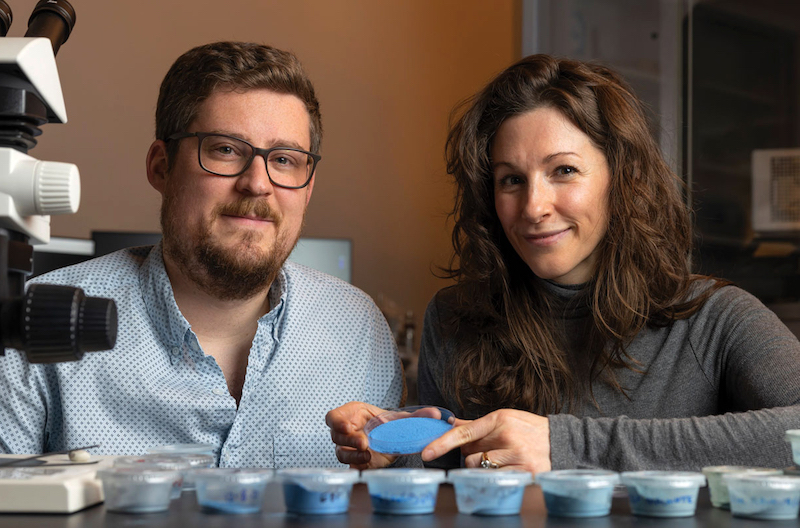
Travis Olds (l.) and Lisa Haney with powders the WSU team created for their research into Egyptian blue. (Photo: Joshua Franzos, Carnegie Museum of Natural History)
The research team meticulously combined various raw materials with different heating methods to develop 12 recipes for Egyptian blue, which decorated everything from wood and stone to beads and amulets.
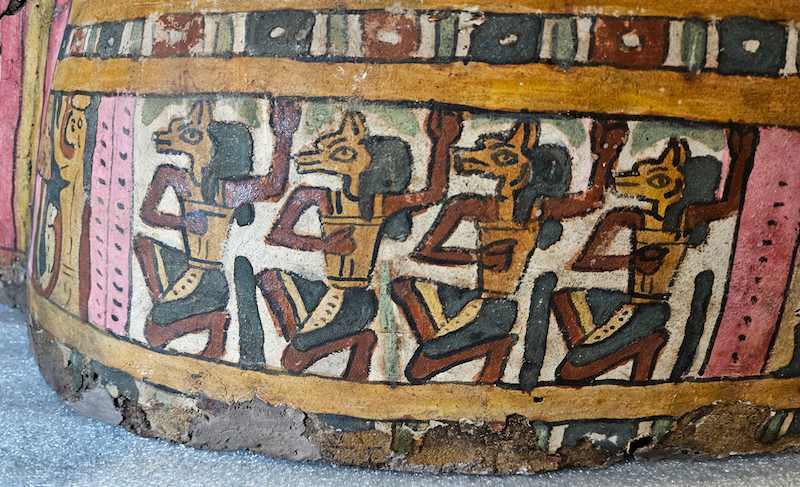
An example of Egyptian blue pigment used on ancient artifacts. (Photo: Carnegie Museum of Natural History)
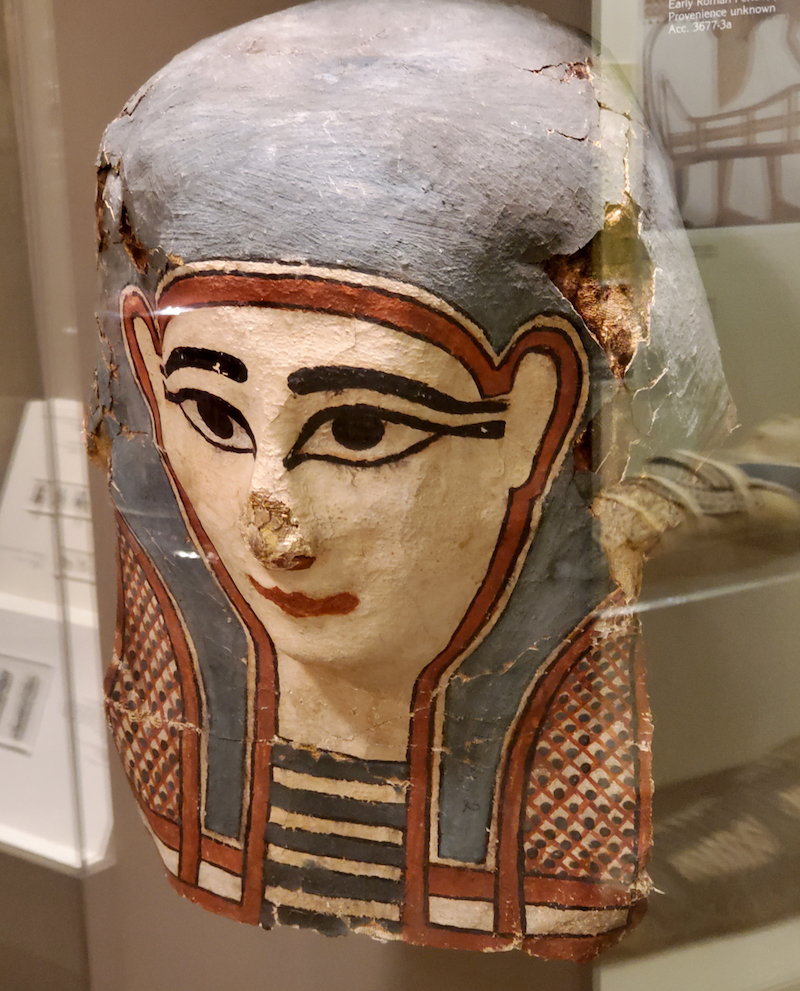
An example of Egyptian blue pigment used on ancient artifacts. (Photo: Carnegie Museum of Natural History)
Sources: Ancient Color: Creating Blue; Researchers recreate ancient Egyptian blues; Archaeologists Are Recreating the Long-Lost Recipe for Egyptian Blue, the World’s Oldest Known Synthetic Pigment; Scientists Have Recreated the Long-Lost Formula for Ancient Egyptian Blue Pigment; Assessment of process variability and color in synthesized and ancient Egyptian blue pigments
Related Articles:
Archaeological Team Unearths 3,000-Year-Old Egyptian Tombs Honoring Prominent Statesmen
Restoration Uncovers Stunning Art and Inscriptions of 2,000-Year-Old Egyptian Temple
What Do Ancient Egyptian Mummies Smell Like? The Answer May Surprise You.