
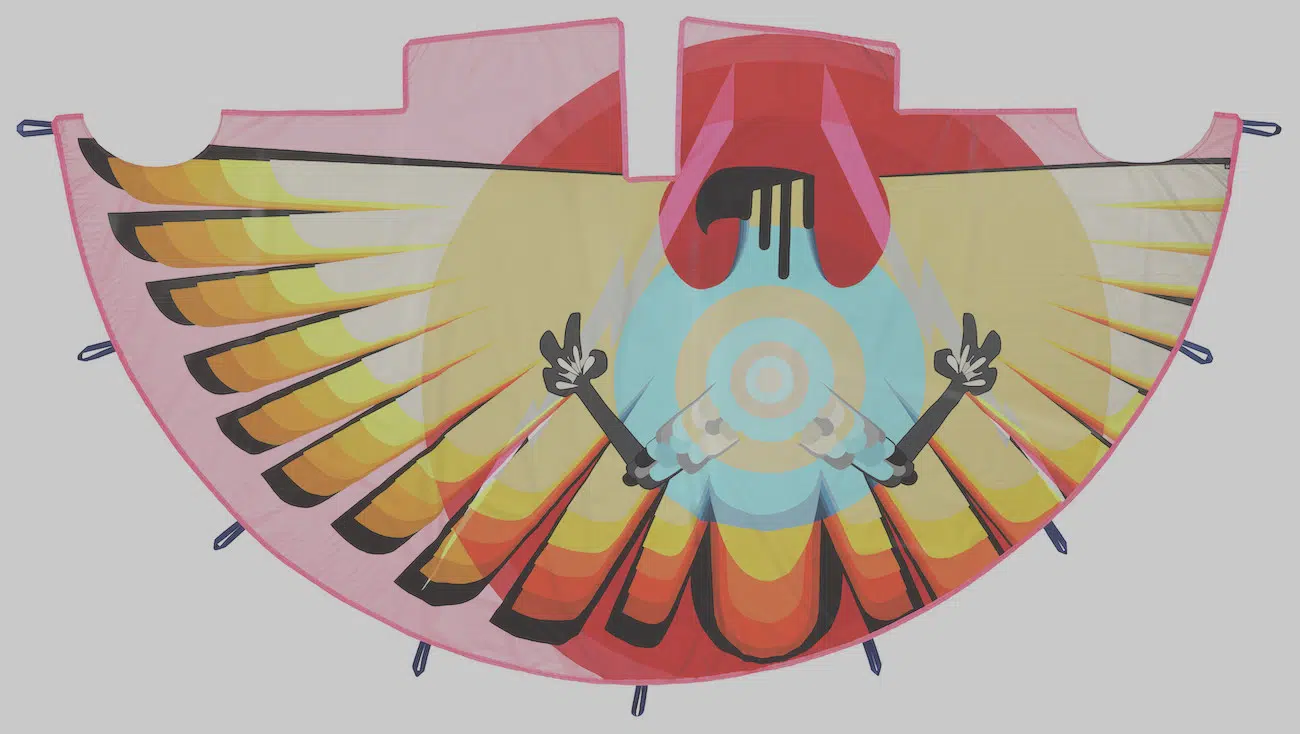
Cannupa Hanska Luger (Mandan, Hidatsa, Arikara and Lakota, b. 1979), “Special Forces,” 2025
The de Young Museum has unveiled its reimagined Arts of Indigenous America galleries, offering a renewed look at one of the most significant collections of its kind in the United States. Part of the Fine Arts Museums of San Francisco, the institution has collected works from across the Americas since 1895. The updated installation builds on that history while reconsidering how these works are presented.
Museums have long struggled with how to exhibit Indigenous art. Objects have often been framed as historical artifacts, disconnected from the cultures that continue to produce them. The new galleries take a different approach. Rather than attempting to correct the past outright, they shift the framework.
The reinstallation began with collaboration. Curators worked with Indigenous advisors, including scholars and community members to shape how the galleries function. This input informed both interpretation and structure.
The shift is immediately visible. Labels read with greater specificity and context. Objects are not confined to a single historical moment. The galleries emphasize relationships between land, material, and cultural knowledge.
The galleries unfold across four sections, each focused on different regions and ideas. The layout avoids a strict chronological path. Visitors move between geographies and time periods without a prescribed order.
One space centers on Native California and foregrounds connections to place and environment. Another highlights Mesoamerican material, including ceramic and architectural forms. A third presents objects tied to ancient urban centers, emphasizing scale and systems of exchange. A final section brings together works from across North America, encouraging comparison rather than separation.
Historical and contemporary works appear alongside one another throughout the galleries. This presents Indigenous art, not as something preserved or rediscovered, but as an entity that remains active. These connections between past and present emerge over time, broadening visitors’ understandings of continuity.
Art of Indigenous America is less about delivering a definitive narrative and more about changing how viewers approach what they see. It encourages a slower form of looking, where meaning builds over time rather than arriving all at once.
The de Young Museum reimagines its Arts of Indigenous America galleries, offering visitors a fresh perspective on a historic collection.
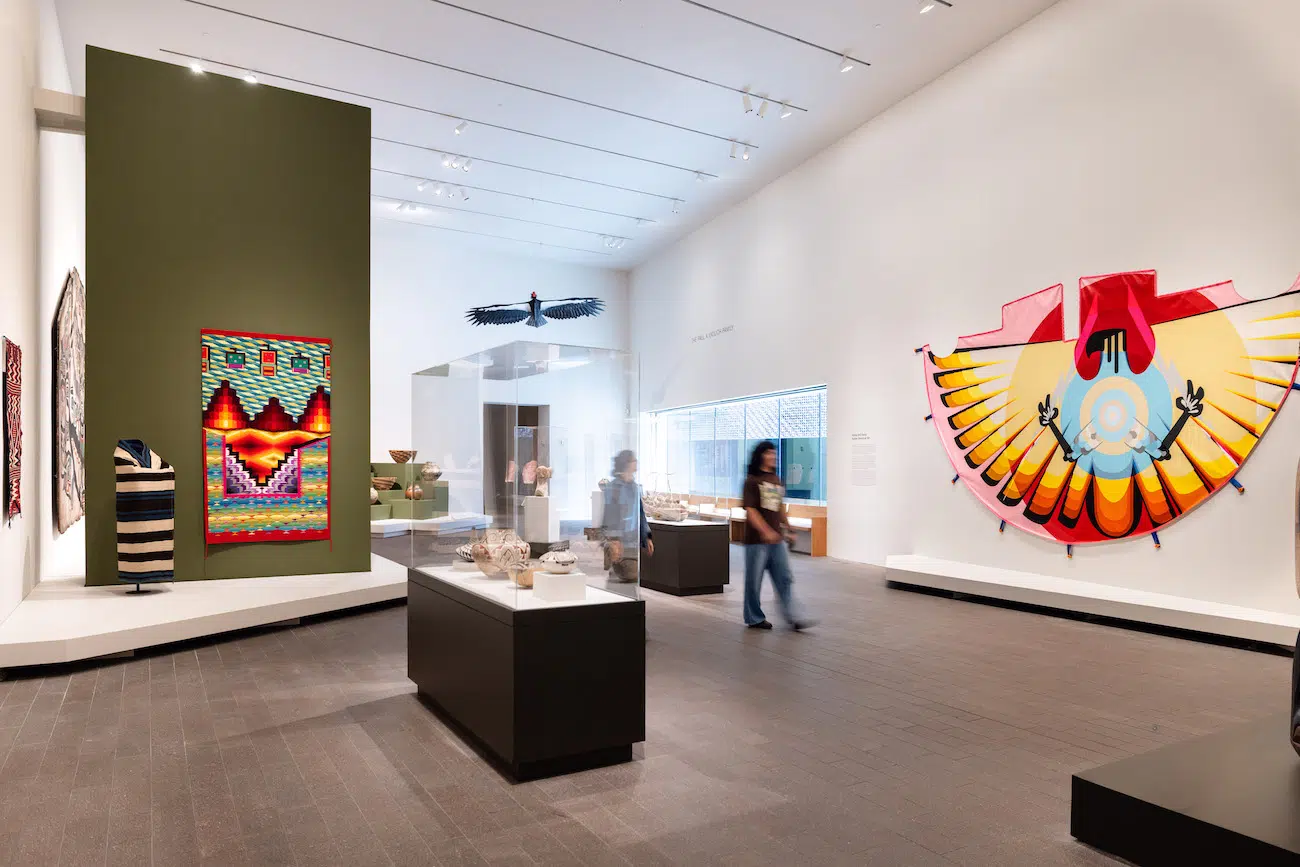
Installation view of “Arts of Indigenous America,” at the de Young Museum, San Francisco, 2025
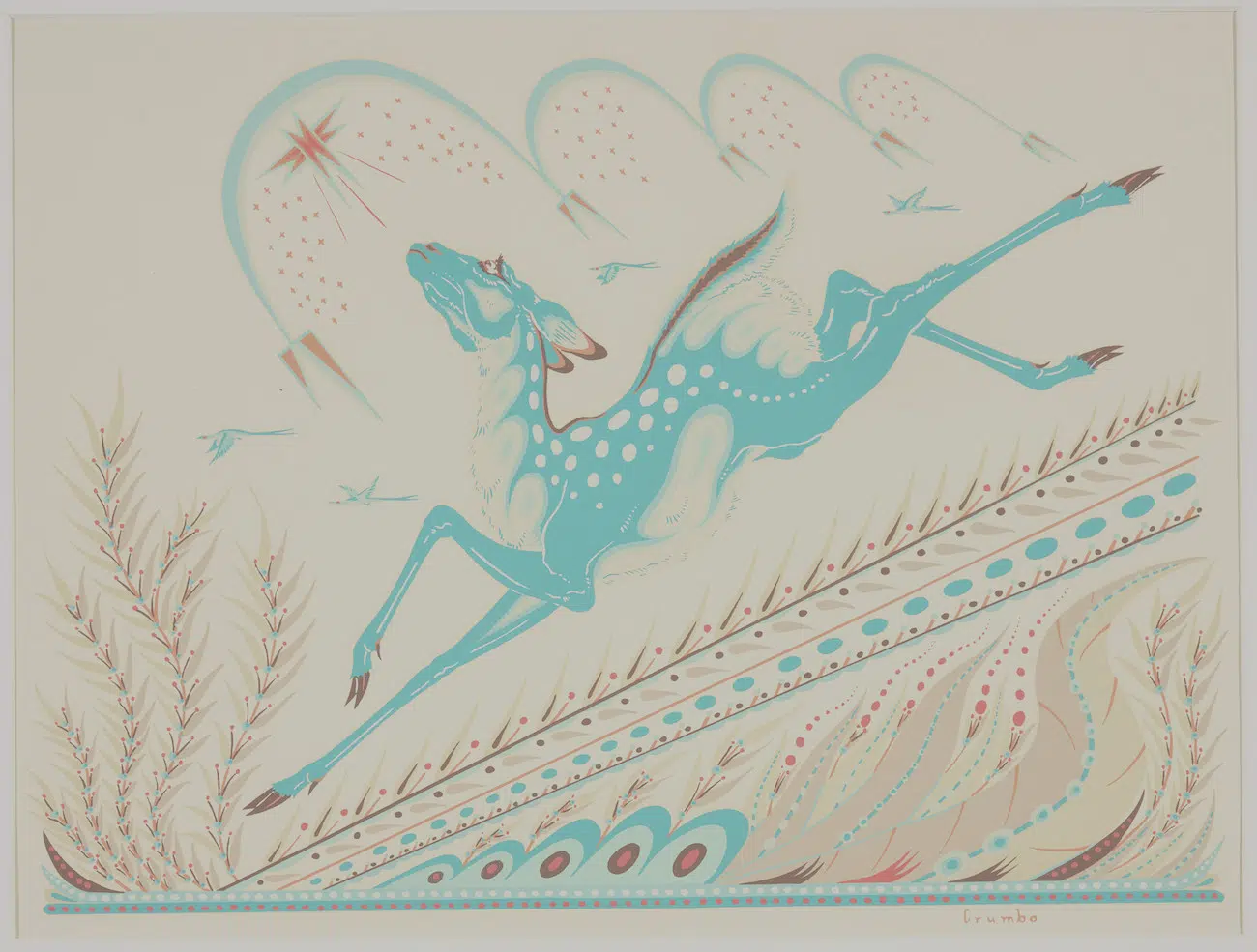
Woodrow Wilson Crumbo (Woody Crumbo) (Citizen Potawatomi, 1912-1989) “Spirit of Spring,” ca. 1950
Nearly 2,000 objects from across North, Central, and South America are organized in a dynamic, multi-regional layout that highlights connections across time and space.
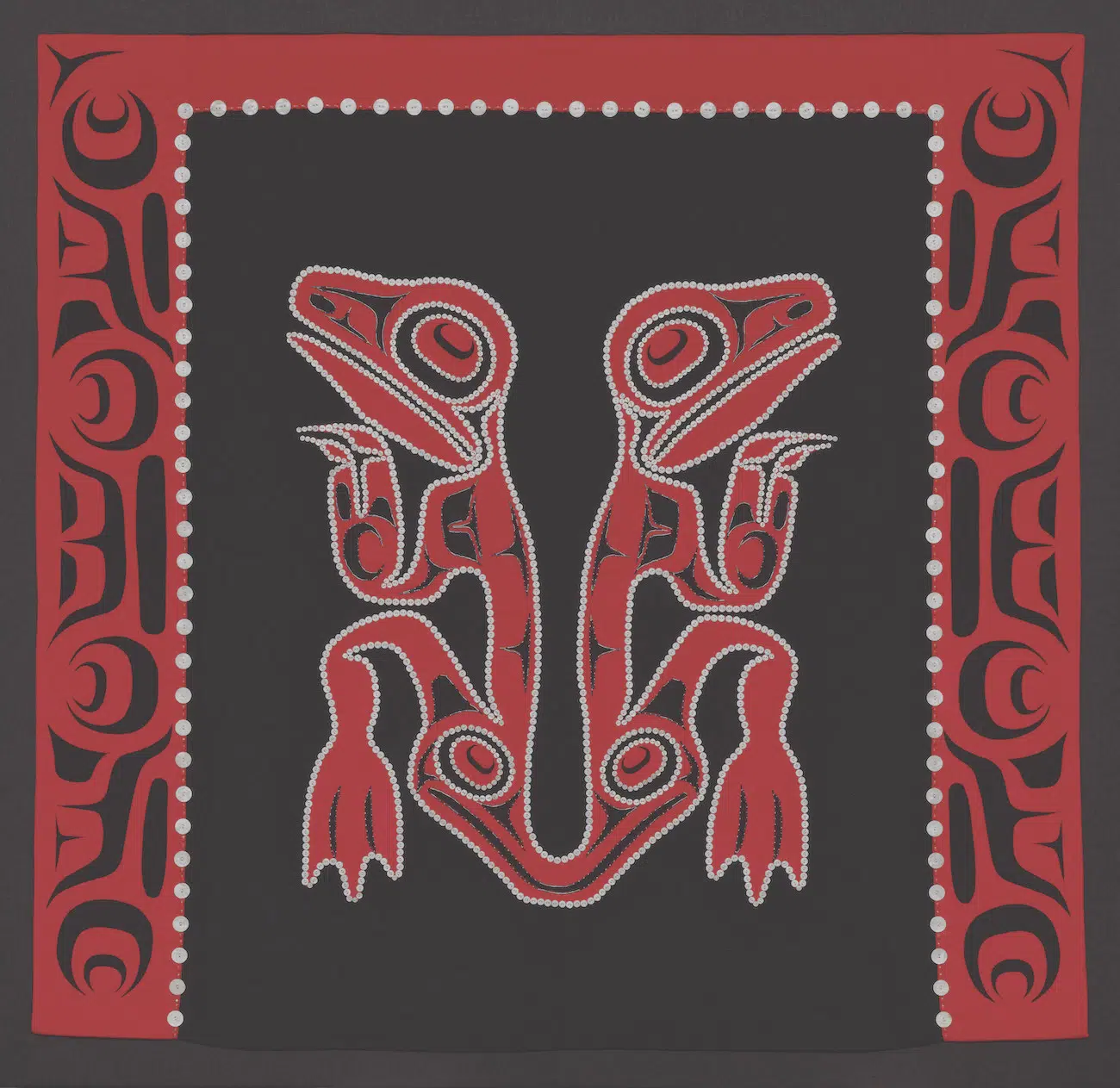
Dorothy Grant (Kaigani Haida, b. 1955) (Maker), Robert Davidson (Haida, b. 1946) (Designer) “Robe”, 1992
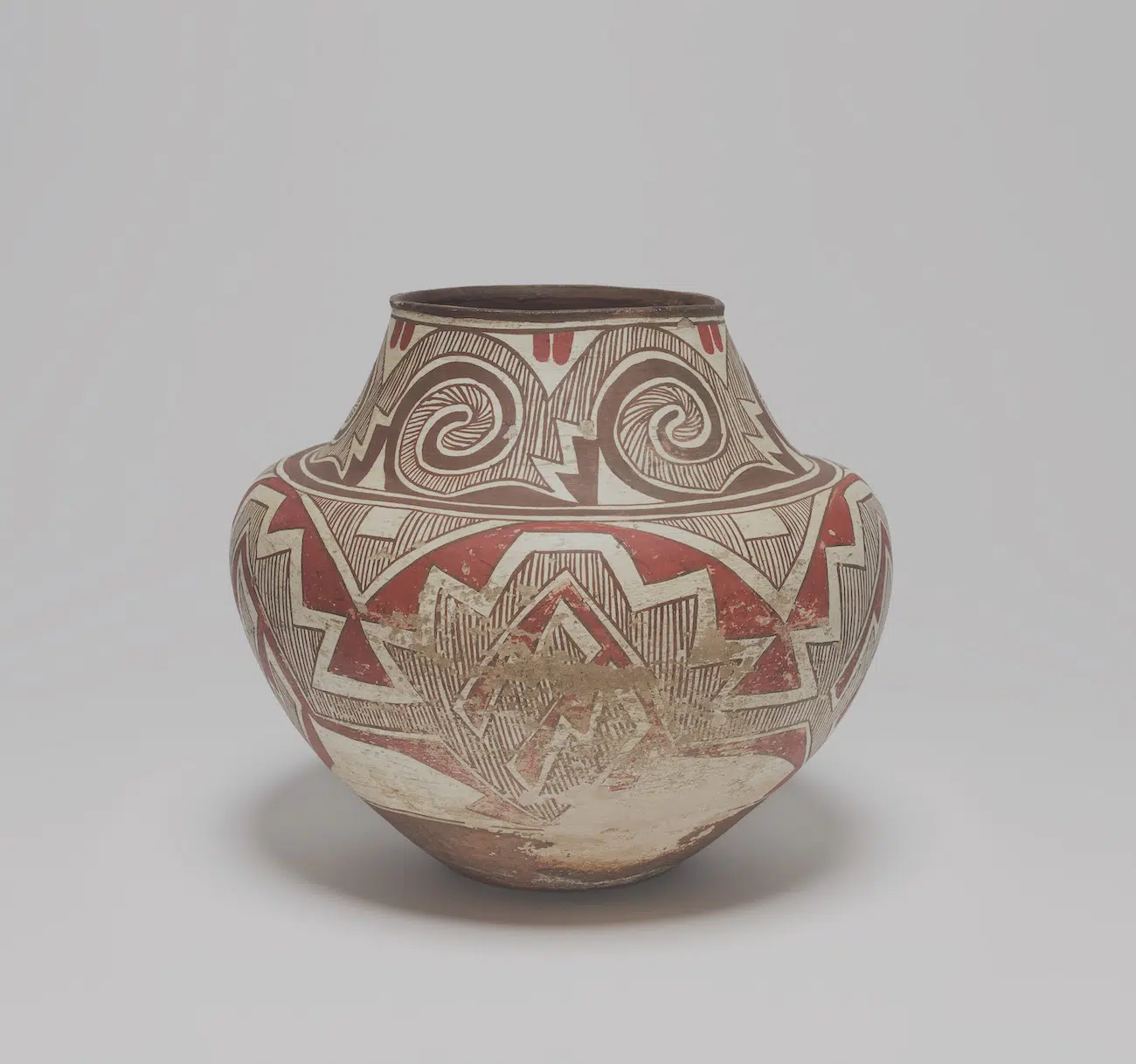
Zuni potter, “Jar”, ca. 1900-10
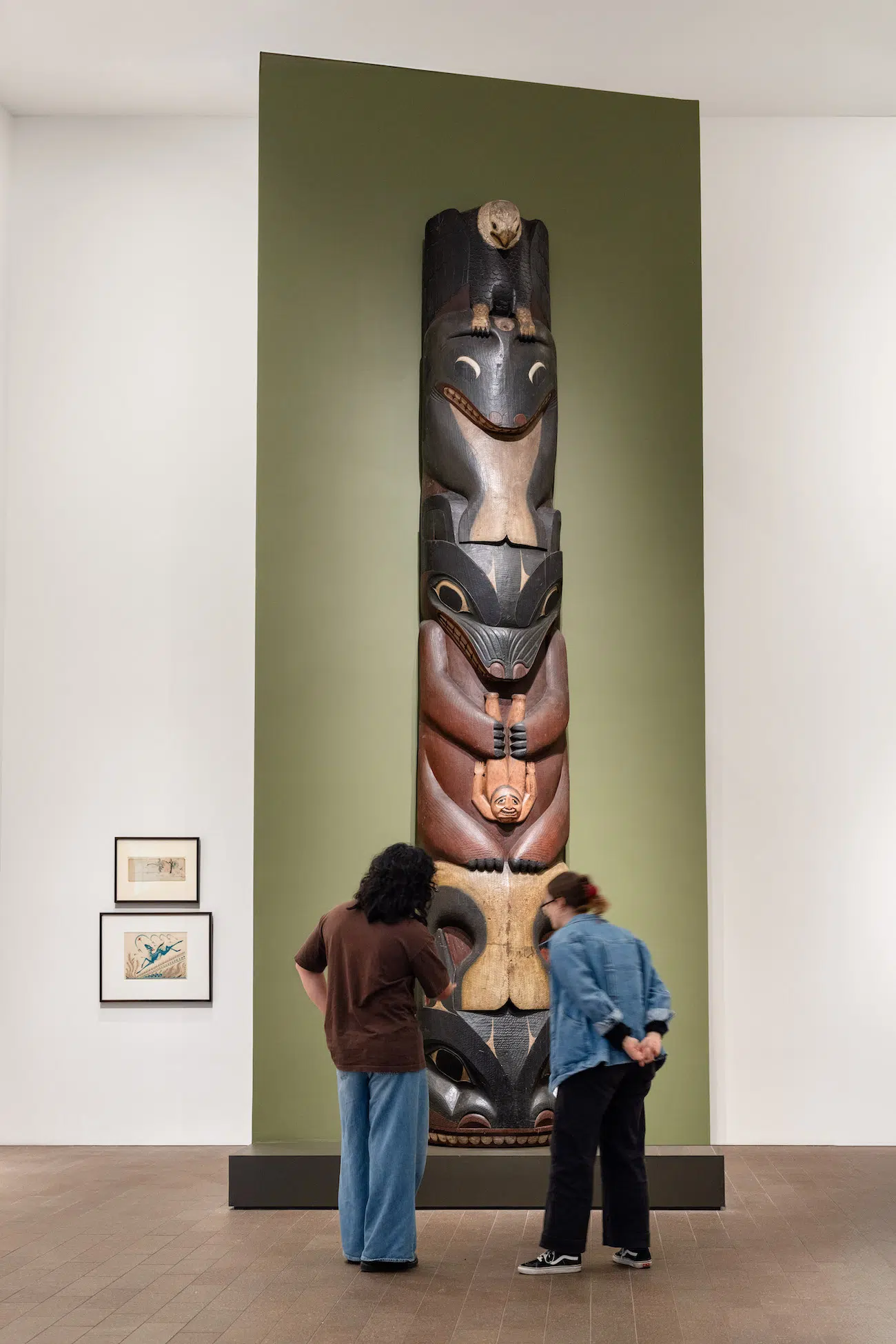
Installation view of ”Arts of Indigenous America,” at the de Young Museum, San Francisco, 2025 (Photo: Gary Sexton)
Indigenous scholars and community members collaborated closely with curators to ensure the exhibition reflects authentic cultural knowledge and context.
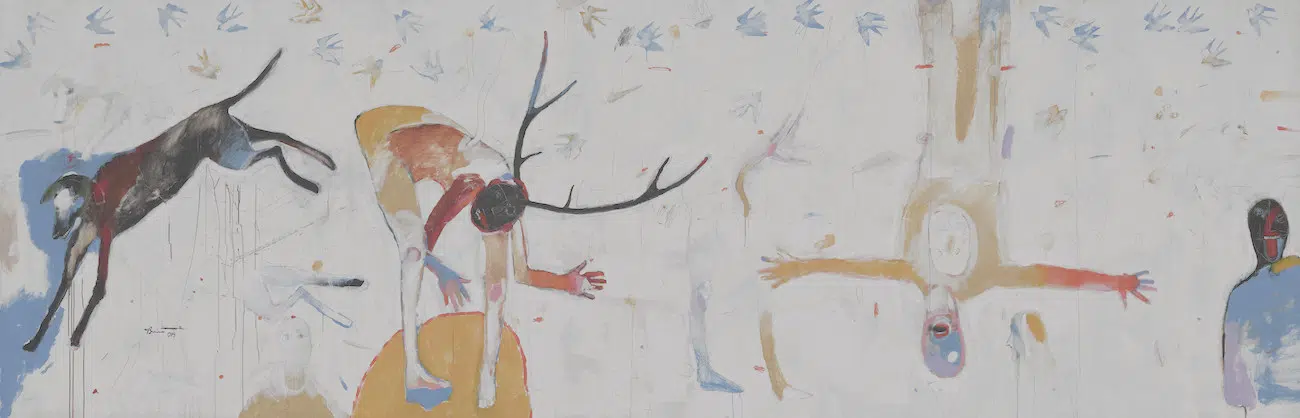
ick Bartow (Wiyot, 1946–2016), “The Magical Mind in Rural America,” 2015

Brian D. Tripp (Karuk, 1945 – 2022), “Someday You Might Have to Fight for What You Believe In,” 1999
Historical and contemporary works appear side by side, emphasizing continuity, adaptation, and the living nature of Indigenous artistic traditions.
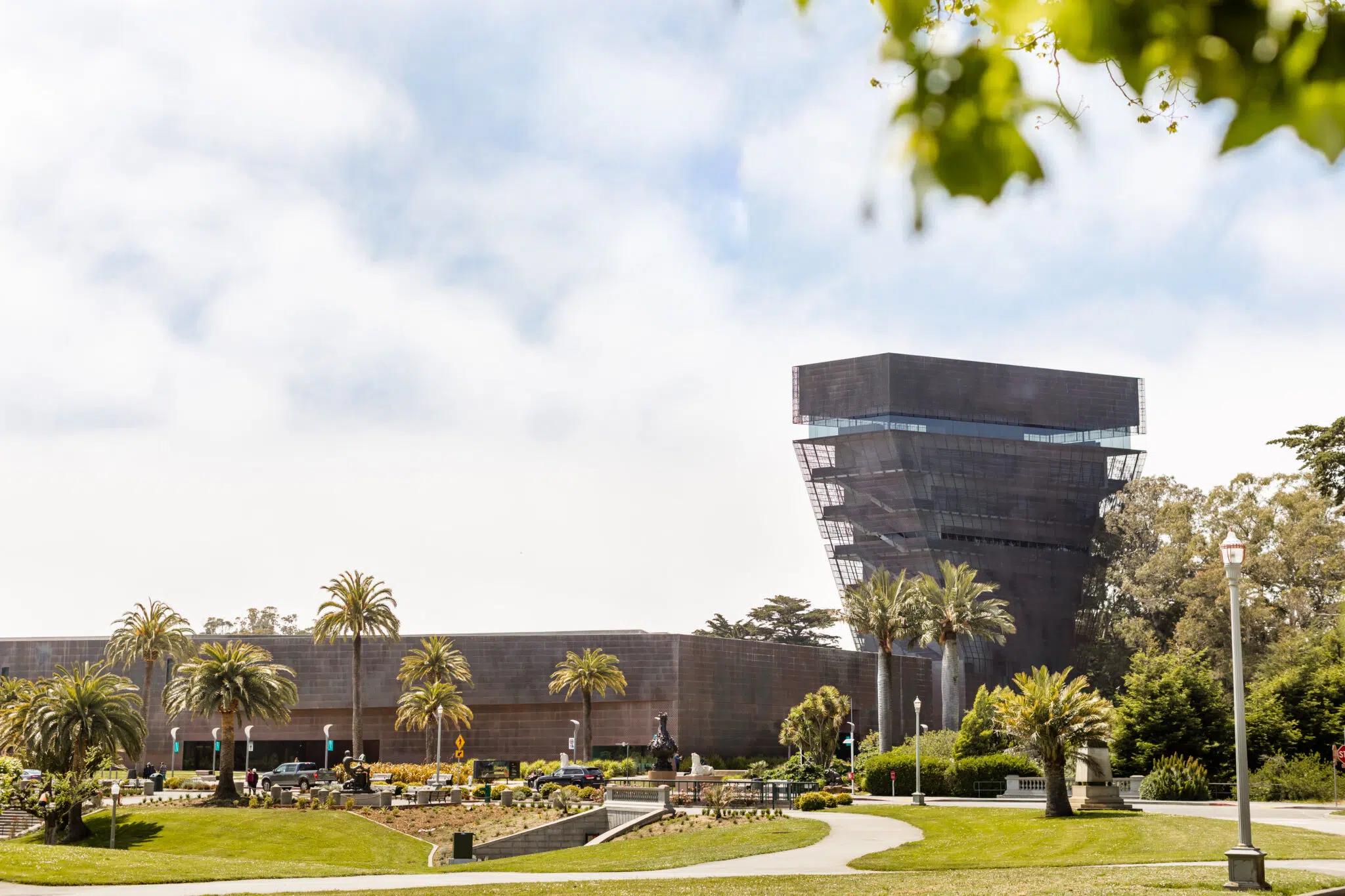
de Young Museum. (Photo: by Gary Sexton)