
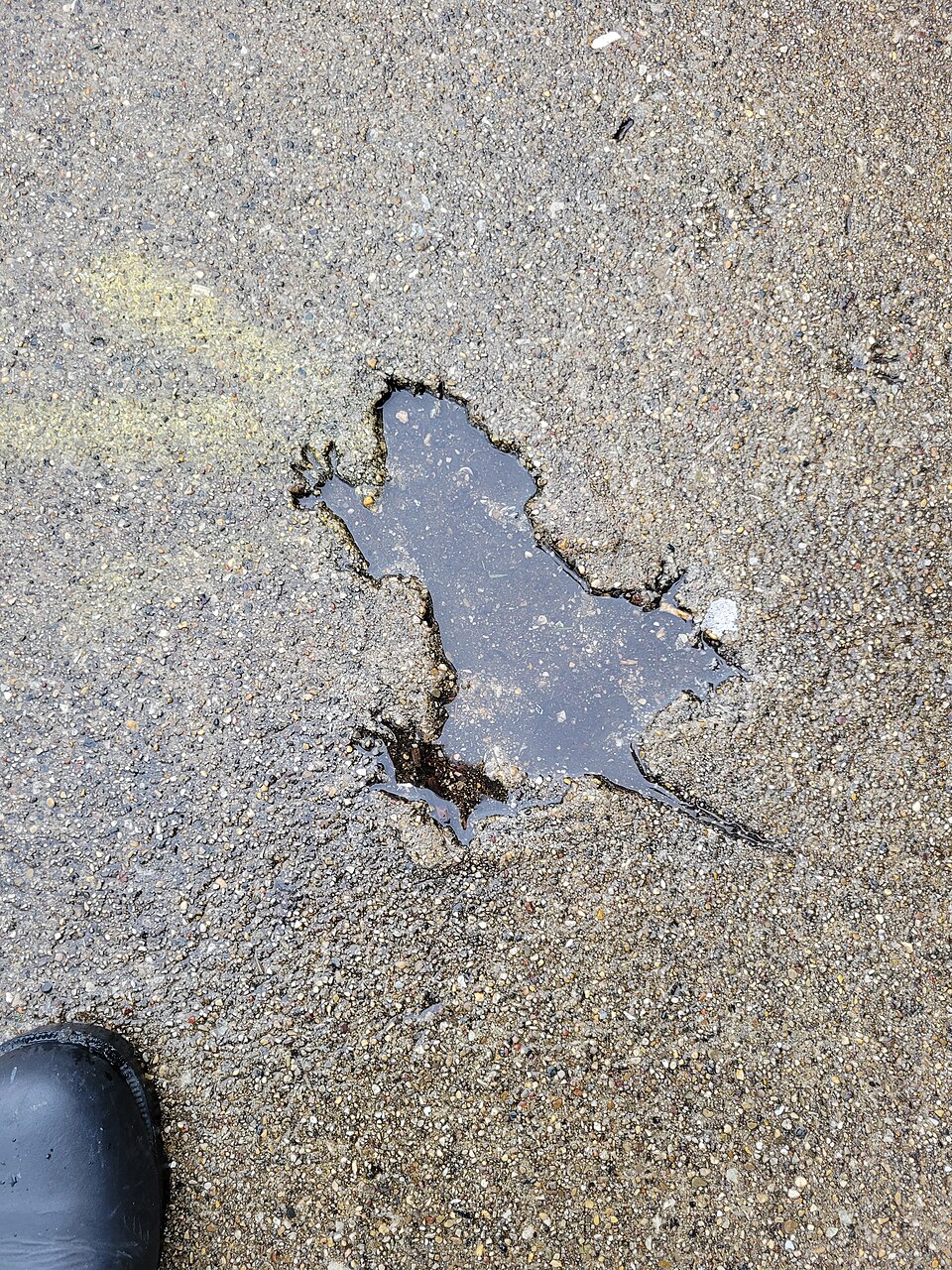
The original photo of the Chicago rat hole that triggered its virality, as taken by Winslow Dumaine. (Photo via Wikimedia Commons, CC 4.0)
Last January, Chicago residents began flocking to an unusual site on the city’s North Side: a rodent-shaped hole embedded into a slab of concrete sidewalk. The Chicago rat hole, as it was affectionately nicknamed, quickly gained a cult following, attracting countless visitors and even offerings like coins, Swiss cheese, miniature plastic rats, and candles. But new research has now called into question whether it was a rat—and not a different kind of rodent—that left its imprint in the wet concrete.
At first glance, the hole’s origin story seems to write itself. A brown rat must’ve stumbled upon the concrete as it was drying, gotten stuck, most likely died, and eventually gotten removed. No one knows when, exactly, the mark first appeared, but it’s thought to have been in Chicago’s Roscoe Village neighborhood for at least two to three decades. Still, “Splatatouille,” as the impression was also called, only shot into viral popularity once Chicago-based artist, writer, and comedian Winslow Dumaine tweeted about it on January 6, 2024. “Had to make a pilgrimage to the Chicago Rat Hole,” he joked, sparking more than 125,000 likes.
By April 2024, Splatatouille was no more. The cavity had been mysteriously filled in, later restored by local residents, and finally donated to City Hall, where it’s currently encased and preserved. These developments, however, didn’t deter Dr. Michael Granatosky from digging deeper into the rat hole.
“Just like everyone else, I looked at it like, ‘Yep, that’s a rat,’” Granatosky, an evolutionary biologist at the University of Tennessee, Knoxville, told Live Science. “But just assuming something is not the best way to actually do science.”
That’s precisely what led Granatosky and his research team to analyze the anatomical dimensions of the imprint. Was it really a rat that had splatted onto the sidewalk, or was it something else? According to the study he and his team recently published in the journal Biology Letters, it was indeed the latter.
“We can affirmatively conclude that this imprint was not created by a rat,” he confirms in The New York Times.
Since the concrete slab wasn’t available for direct study, Granatosky and his team relied upon similar scientific methods as those used to determine the animals responsible for fossilized footprints. The team meticulously gathered measurements of the rat hole based off an assortment of images, comparing that anatomical data with museum specimens of the brown rat, house mouse, Eastern grey squirrel, Eastern chipmunk, muskrat, white-footed mouse, fox squirrel, and Southern flying squirrel. Based on the imprint’s forelimbs, length of its hind paws, and the third digit on each paw, the team concluded that there’s a 98.67% likelihood that the rat hole was, in fact, created by a squirrel.
“The multitude of all the features together sort of led us down the avenue of the squirrel,” Granatosky told CNN Science. “Squirrels tend to have longer digits because they’re arboreal, and that came out as a pretty strong feature.”
A squirrel being the true culprit all along may not be that surprising, though. Squirrels, unlike nocturnal rats, are primarily active during the day, when concrete is, more often than not, freshly poured and still wet. The lack of drag marks and additional footprints also suggested that the squirrel might’ve fallen from a tree directly above the sidewalk. Longtime residents of the neighborhood even verified that a tree once stood near the rat hole, per The New York Times.
Though light-hearted in nature, this study poses fascinating questions about our urban environments and how they interact with the animals that call big cities their homes.
“The exact dimensions and causality of the Chicago rat hole were not the driving force of the story,” Dumaine, who originally posted the rat hole tweet, adds. “It doesn’t matter how it was made, but that it brought us together.”
A new scientific study proves that Chicago’s beloved “rat hole” wasn’t actually created by a rat at all.

The Chicago rat hole filled with offerings, consisting of mostly coins and a dime bag with estrogen. (Photo: JunLpermode via Wikimedia Commons, CC0 1.0)
The rat hole, also known as “Splatatouille,” first went viral in January 2024 and quickly gained a cult following.
Had to make a pilgrimage to the Chicago Rat Hole pic.twitter.com/g4P44nvJ1f
— Gatorade Should Be Thicker. (@WinslowDumaine) January 6, 2024
Researchers concluded that the rat hole imprint was most likely created either by a fox squirrel…
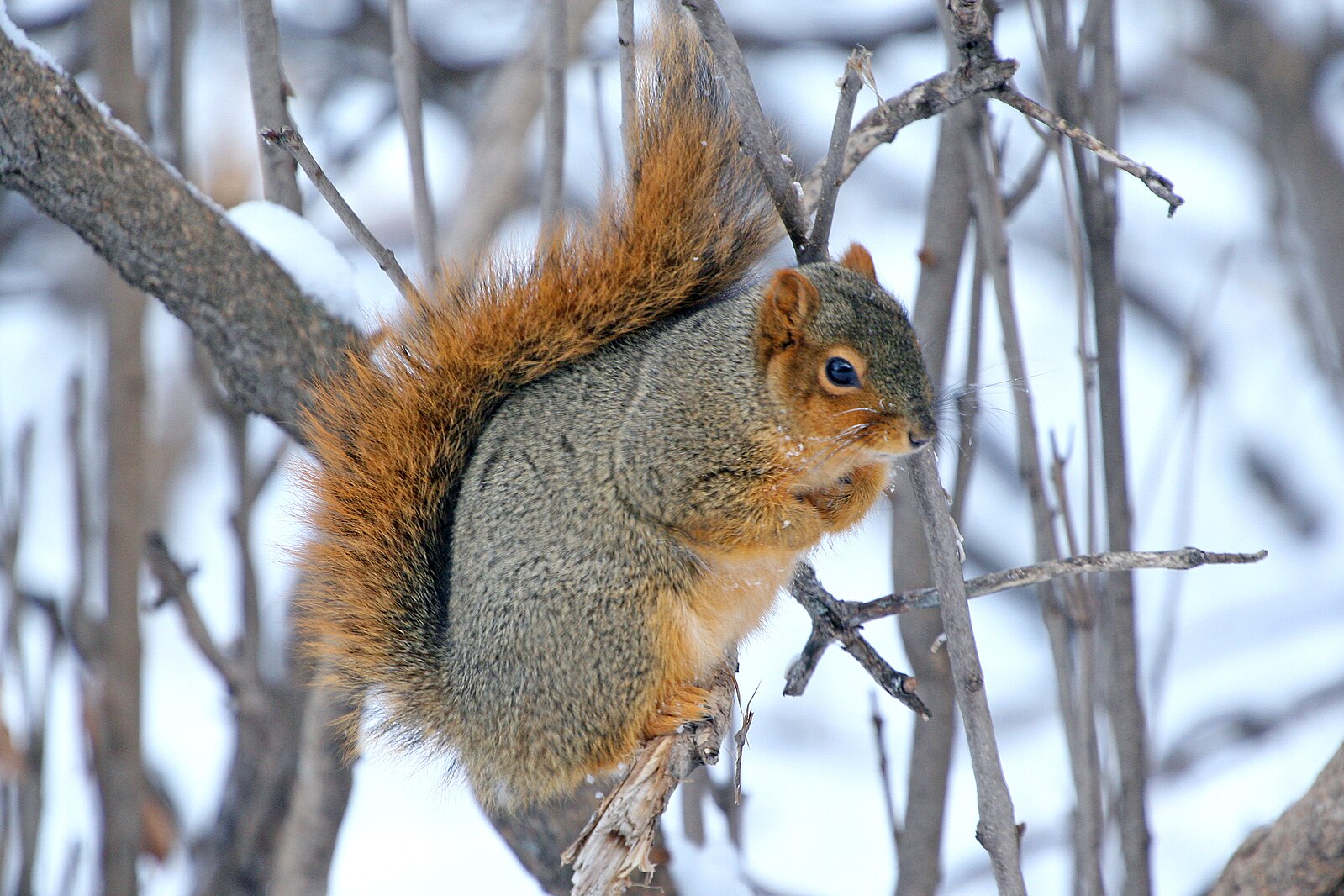
A fox squirrel balancing on a small tree branch. (Photo: Gary Eslinger/USFWS via Wikimedia Commons, CC 2.0)
…or an Eastern grey squirrel.
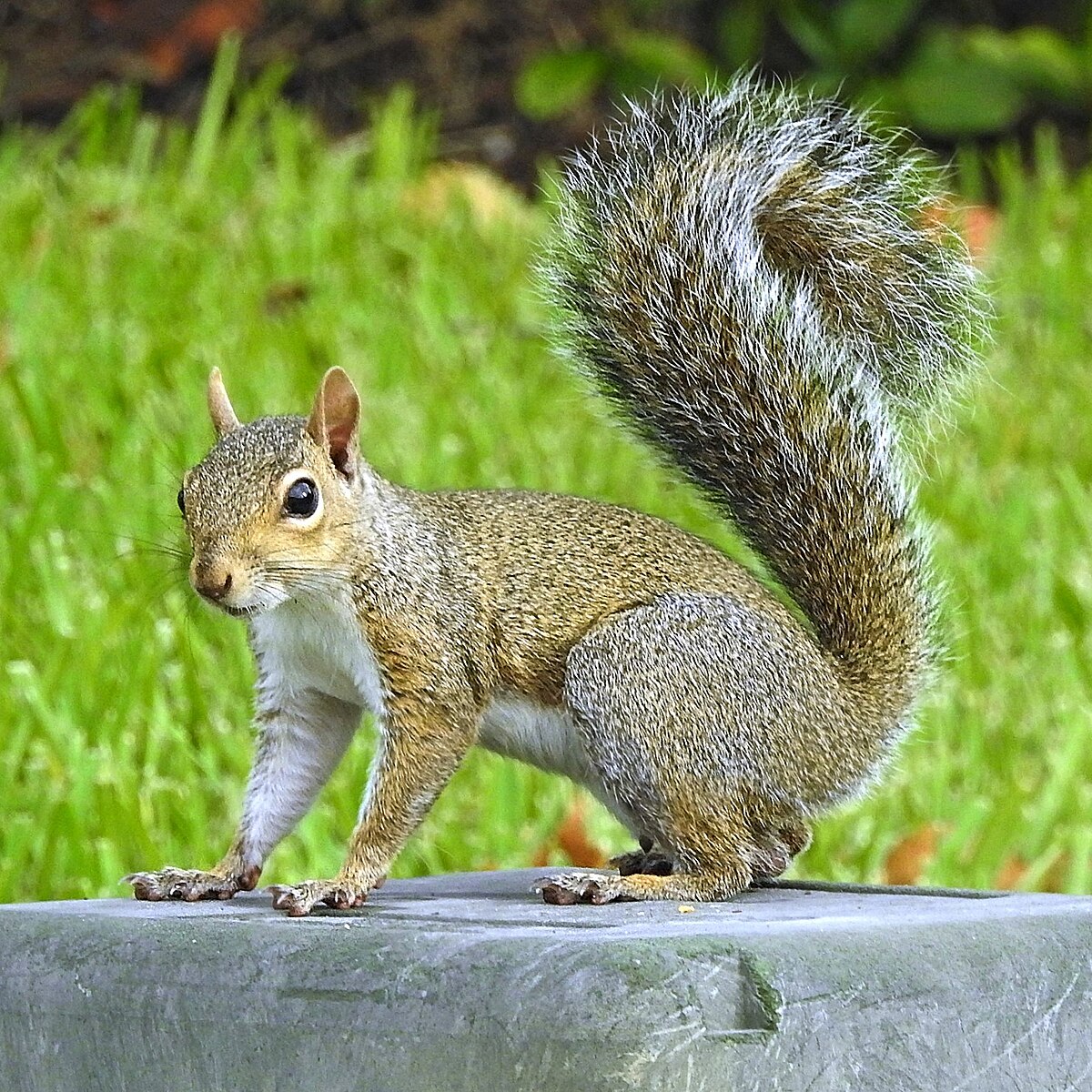


.jpg)

Sources: The Chicago Rat Hole Was Not Made by a Rat; The ‘Chicago rat hole’ sparked internet fervor in 2024. Now, scientists have found the culprit; The viral ‘Chicago Rat Hole’ wasn’t actually made by a rat, scientists claim; Chicago’s beloved ‘rat hole’ was actually made by a squirrel
Related Articles:
Japan’s Manhole Covers Colorfully Decorate the Streets of Each Prefecture
Mythical Animals Made of Straw Take Over Field in Japan for 2025 Wara Art Festival
Life-Sized Wire Mesh Animal Sculptures Roam the Galleries of a German Museum