
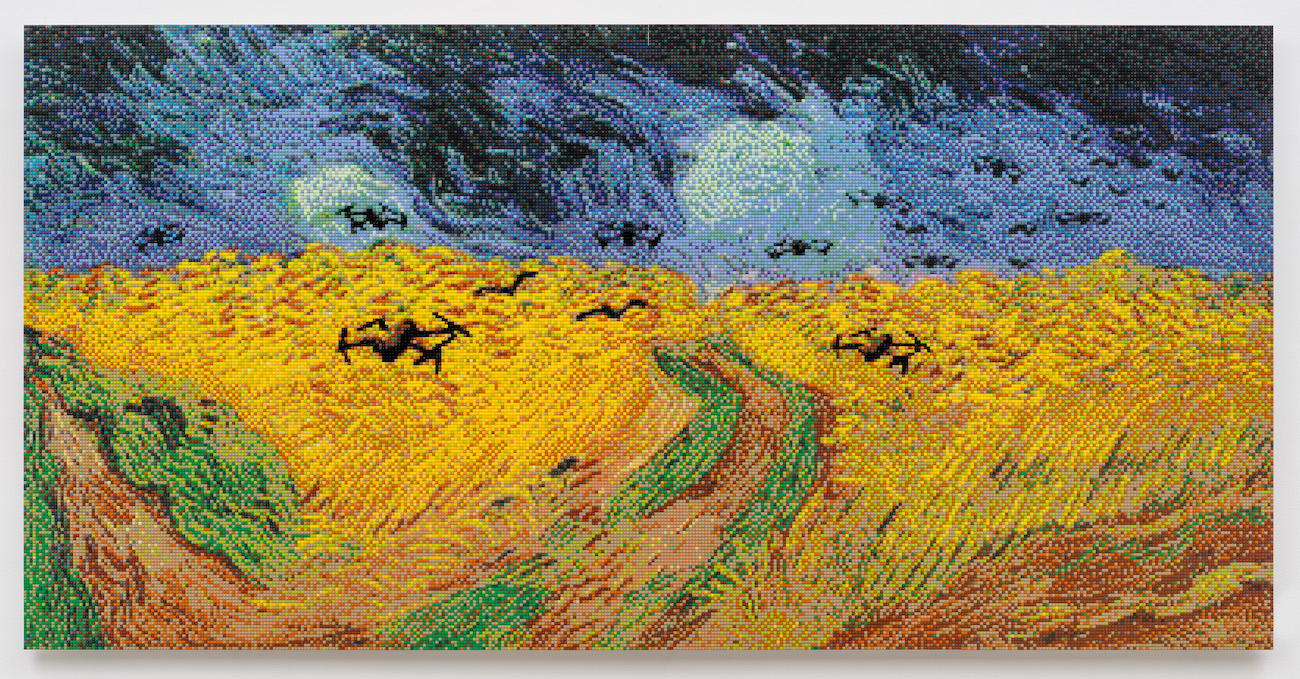
“Wheatfield with Crows,” 2024. Toy bricks.
There’s so much more to Ai Weiwei’s practice than visual art. The Chinese artist has long worked at the intersection of contemporary art and political activism—an impressive feat, considering his native country has jailed, surveilled, and exiled him for his staunch advocacy of free expression. In spite of this intense persecution, Ai has risen to international renown, combining everything from traditional Chinese crafts to searing social commentary. Now, Taschen is celebrating four decades of Ai’s incredible output, expanding upon the artist’s previous monograph with the publisher.
Released last month, Ai Weiwei: Updated Edition beautifully traces the evolution of the artist’s ethos, beginning with his exile to New York in the 1980s. During this time, he captured countless photographs of his surroundings and experimented with painting, a medium he abandoned after his Mao series. Once he returned to China in 1993, Ai contended with the country’s tight control over creative expression, which, somewhat ironically, inspired countless provocative projects. In 1995, for instance, he produced Dropping a Han Dynasty Urn, in which he dropped a 2,000-year-old ceremonial urn and allowed it to shatter on the floor beneath him. The gesture not only flouted the artifact’s symbolic and cultural weight but also rejected the Han Dynasty itself, which is widely considered to be a defining period in the history of Chinese civilization. Breaking of Two Blue-and-White Dragon Bowls, from 1996, was similar in its conceit, seeing the artist destroy ceramics from the Qing Dynasty with a hammer.
“Most of my activities are about updating or redefining objects,” Ai once remarked, referring to his 1994 sculpture Han Dynasty Urn with Coca-Cola Logo. “I had this vase for a while, and I admired its shape, but I had nothing to do with it. It just looked so bare, so empty, and I wanted to make it more related to today. To me, the Coca-Cola logo is a clear announcement of property, and of cultural or political identity, but it is also a clear sign to stop thinking.”
Aside from his early years, the updated and enlarged monograph also spotlights some of Ai’s most seminal works, including his iconic Sunflower Seeds. The installation, which was unveiled at the Tate Modern in 2011, comprised 100 million faux sunflower seeds, each handmade from porcelain by 1,600 artisans. From afar, the seeds seem identical, an expression of conformity and the anonymity of mass production in contemporary China. But, when seen up close, these seeds betray their artisanship, revealing the human hands that crafted them. During the Sunflower Seeds exhibition, Ai was arrested and detained without explanation by Chinese authorities.
Recent projects conclude the monograph, such as his ambitious Nian Nian Souvenir from 2021. Unfolding across the Internet, the initiative involved Ai reading aloud the names of 5,197 schoolchildren who died in the 2008 Sichuan earthquake. “These readings spanned 936 hours, with the participation of dozens of volunteers, continuing non-stop for 24 hours at a time, repeatedly reciting all the names,” Ai recalled. “This was a profoundly heavy and challenging work.” These names were then hand-carved into individual jade seals in ancient script, all of which were later stamped on framed sheets of paper.
Taken in its entirety, Ai Weiwei: Updated Edition is not simply a record of an artist’s output. It’s a landmark expression of advocacy and resilience, even amid intense turmoil. Across sculptures, installations, multimedia interventions, photographs, and more, a vivid portrait of Ai emerges, one that is as nuanced as it is privileged.
Ai Weiwei: Updated Edition is now available for purchase via Taschen’s website.
Taschen’s updated and expanded Ai Weiwei monograph compiles 40 years of incredible output, celebrating the artist’s impact on contemporary art and political activism.
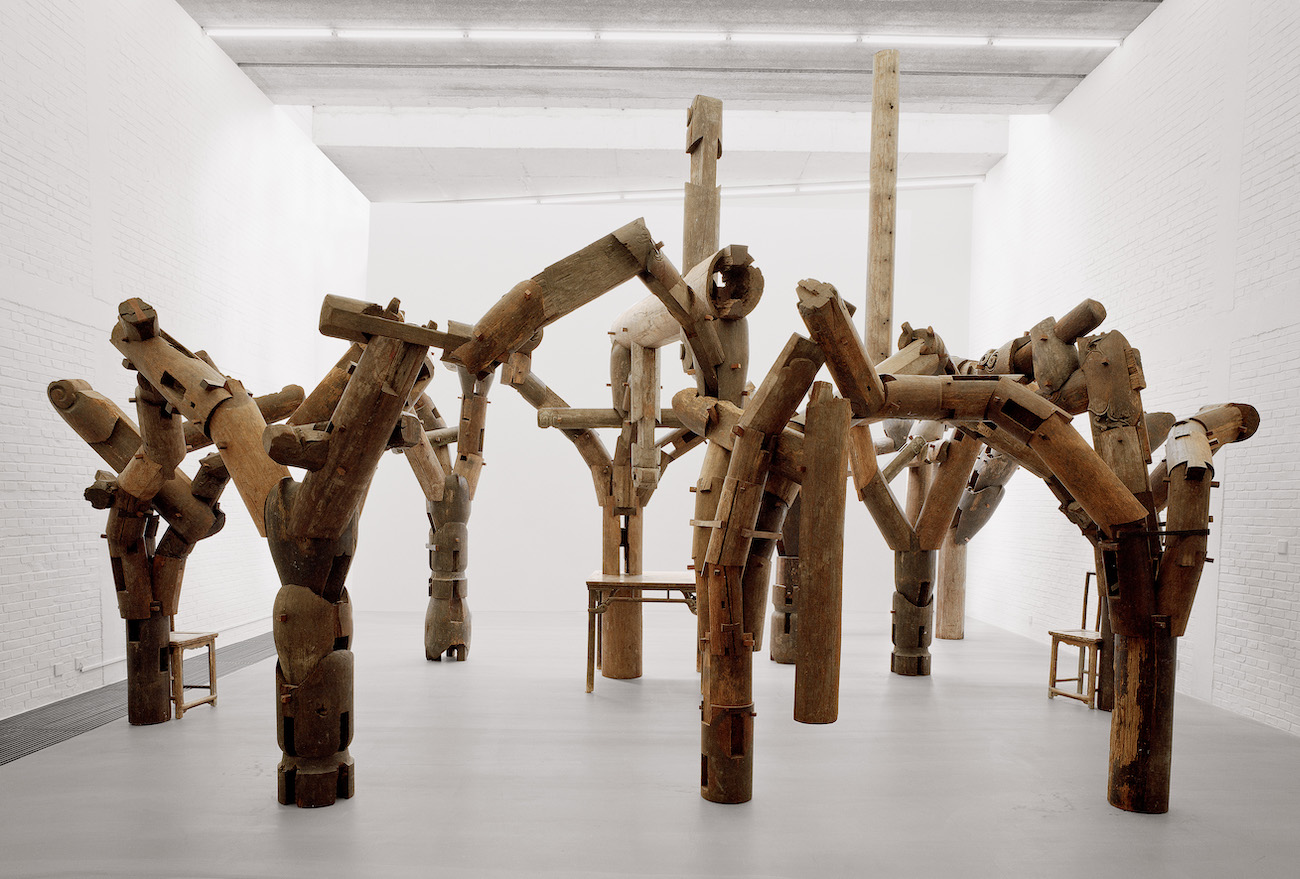
“Fragments,” 2005. Table, chairs, parts of beams, and pillars from dismantled Qing Dynasty temples.
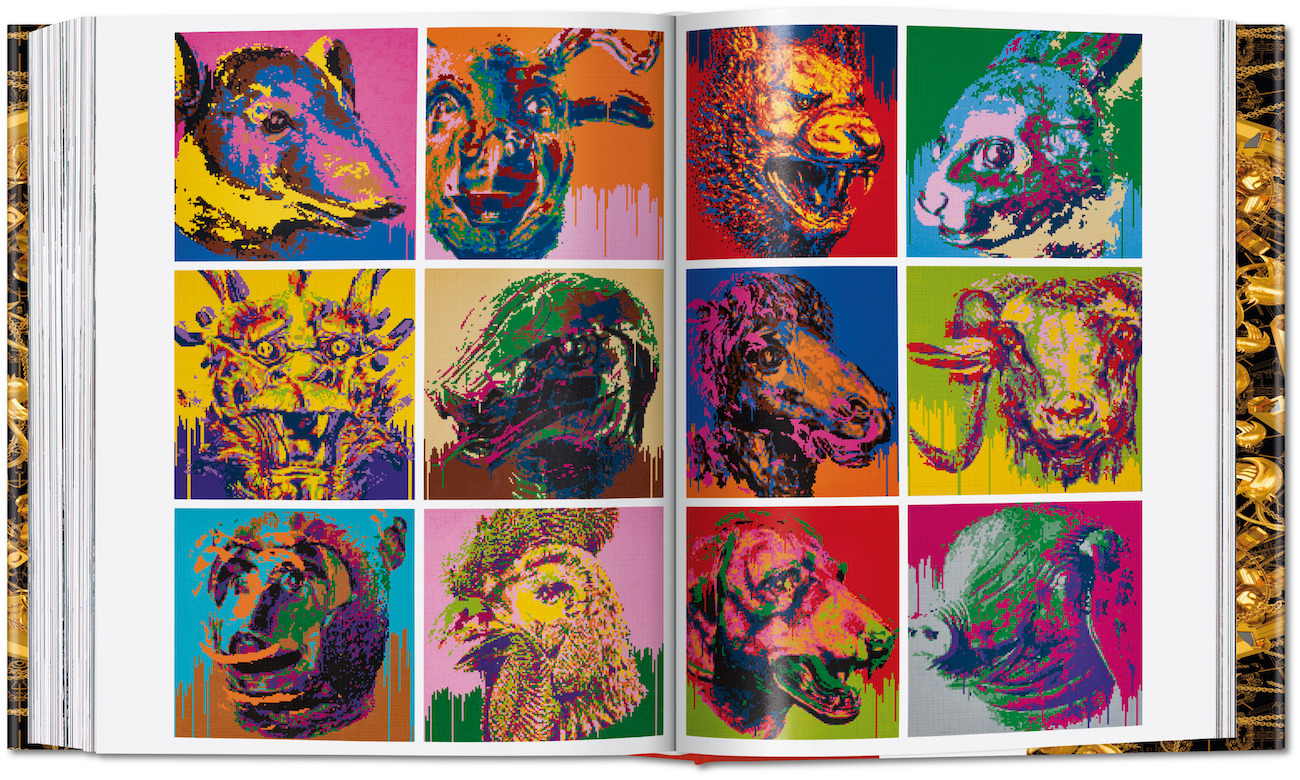
Spread from “Ai Weiwei: Updated Edition,” ed. by Hans Werner Holzwarth. (Taschen, 2026; $125.00 via the publisher’s website)
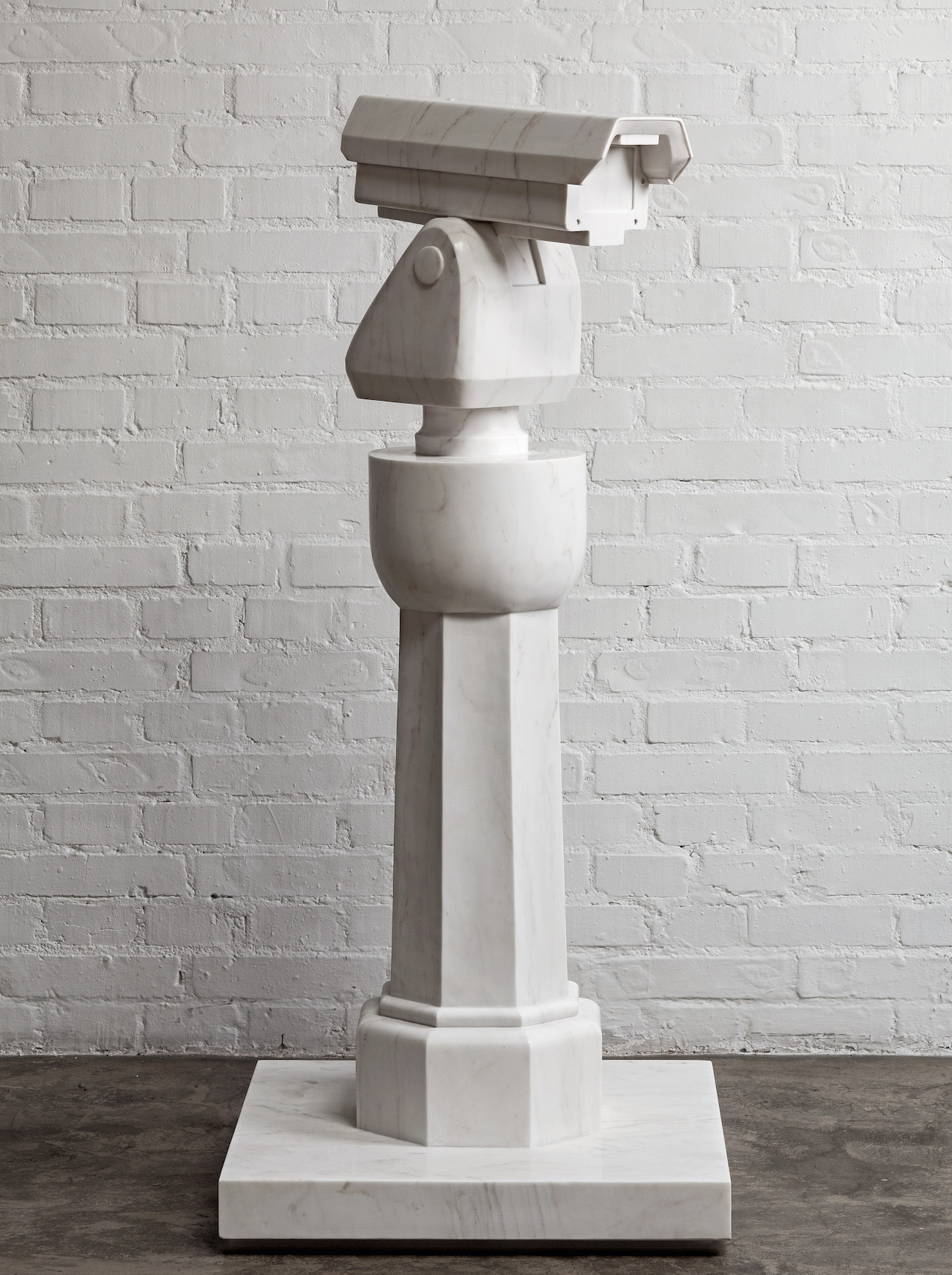
“Surveillance Camera with Plinth,” 2015. Marble.
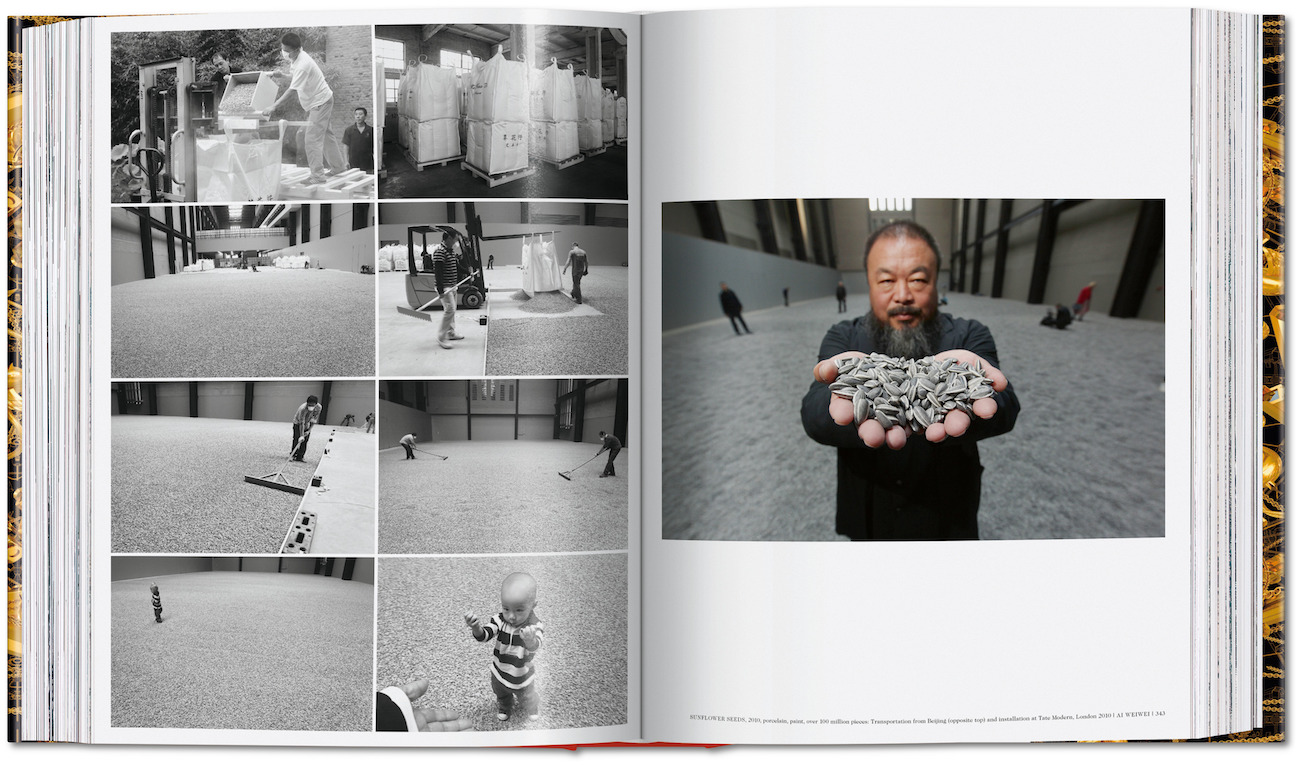
Spread from “Ai Weiwei: Updated Edition,” ed. by Hans Werner Holzwarth. (Taschen, 2026; $125.00 via the publisher’s website)
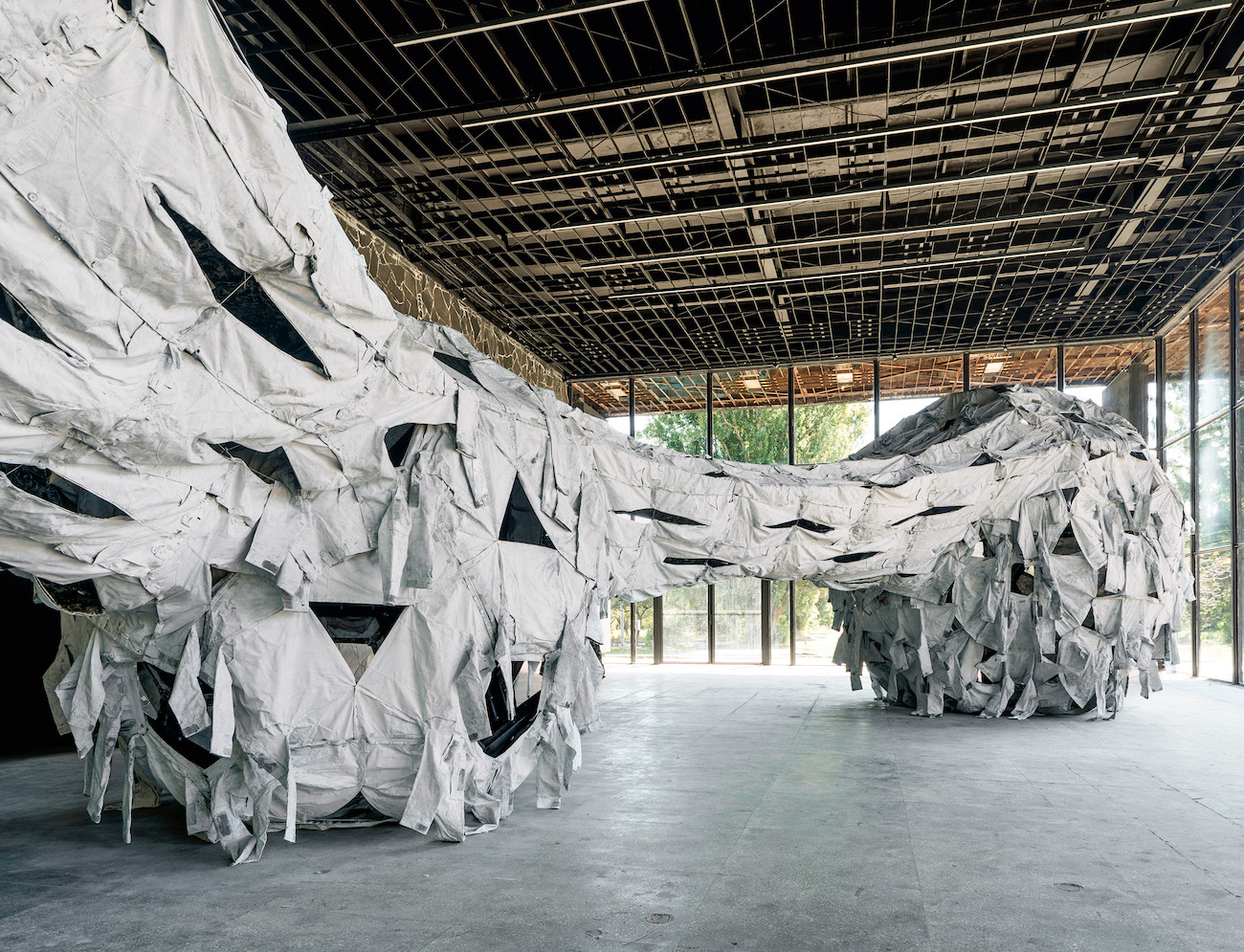
“Three perfectly Proportioned Spheres and Camouflage Uniforms Painted White,” 2025. Three metal constructions of “Divina Proportione,” camouflage jackets and trousers, and buttons.
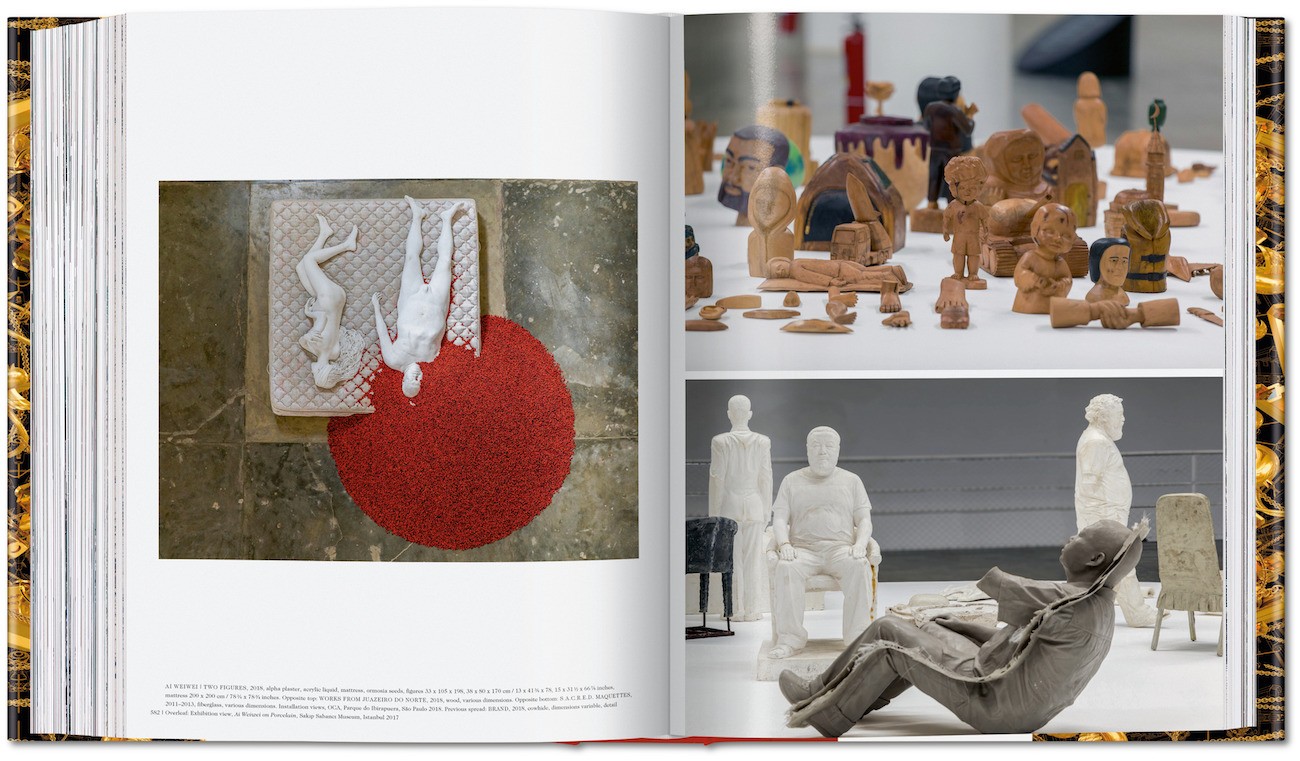
Spread from “Ai Weiwei: Updated Edition,” ed. by Hans Werner Holzwarth. (Taschen, 2026; $125.00 via the publisher’s website)
The monograph spans installations, sculptures, photographs, archival materials, and more, offering a kaleidoscopic—and unprecedented—glimpse into Ai’s multimedia practice.
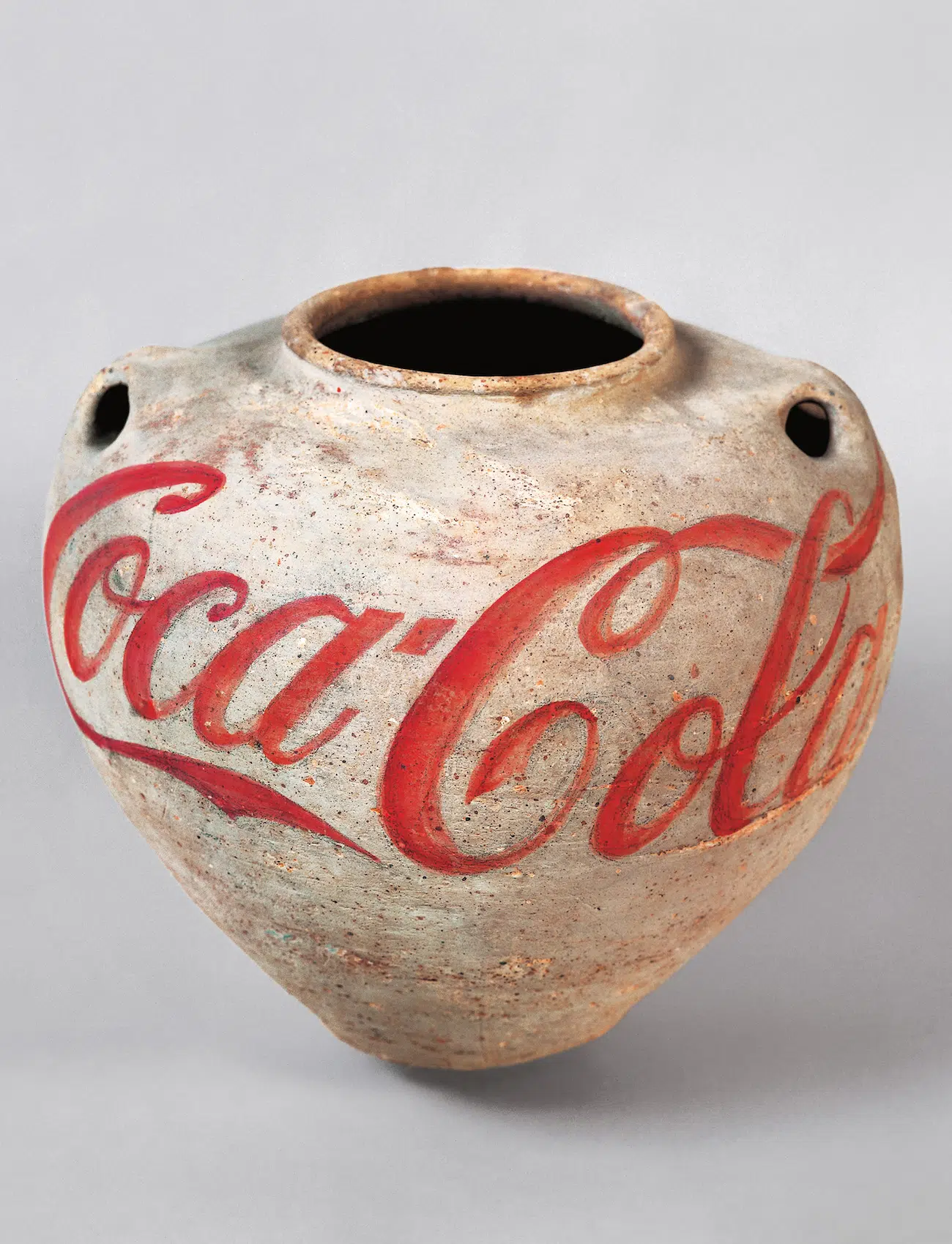
“Han Dynasty Urn with Coca-Cola Logo,” 1994. Han Dynasty urn with paint.
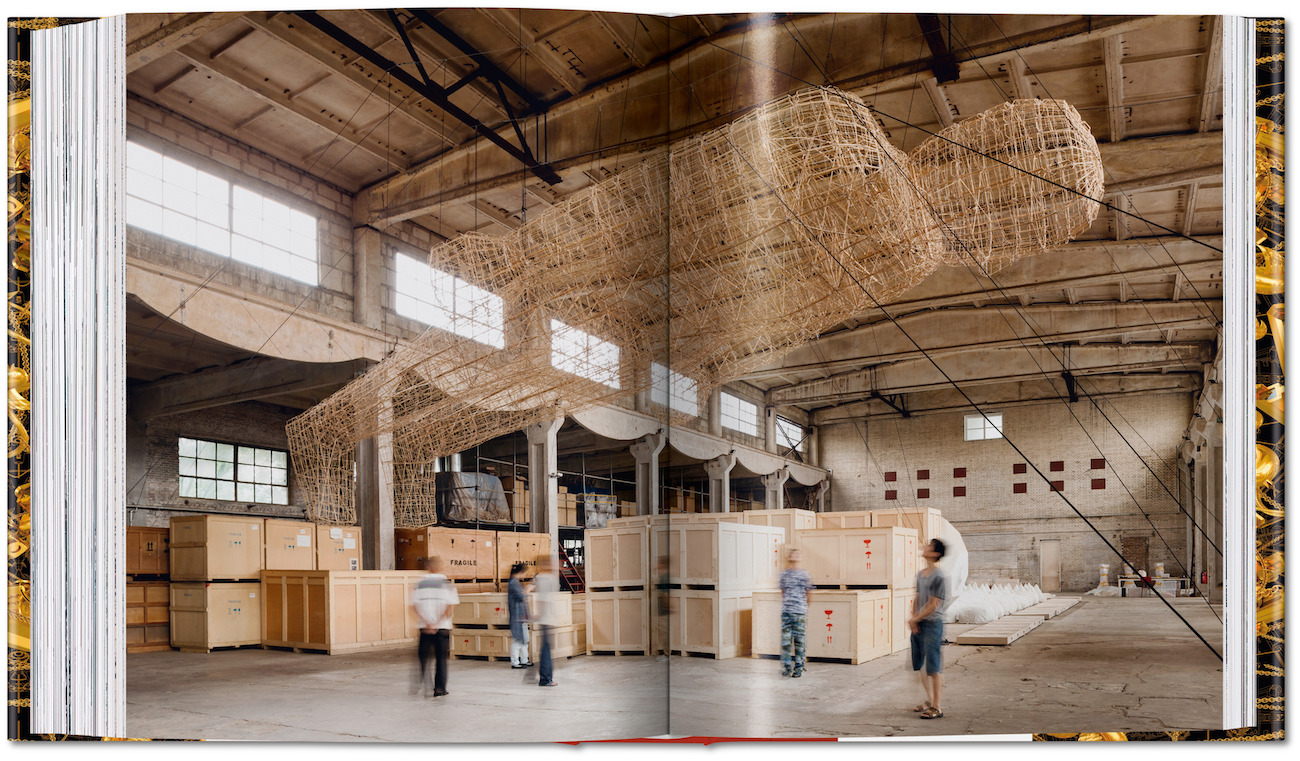
Spread from “Ai Weiwei: Updated Edition,” ed. by Hans Werner Holzwarth. (Taschen, 2026; $125.00 via the publisher’s website)
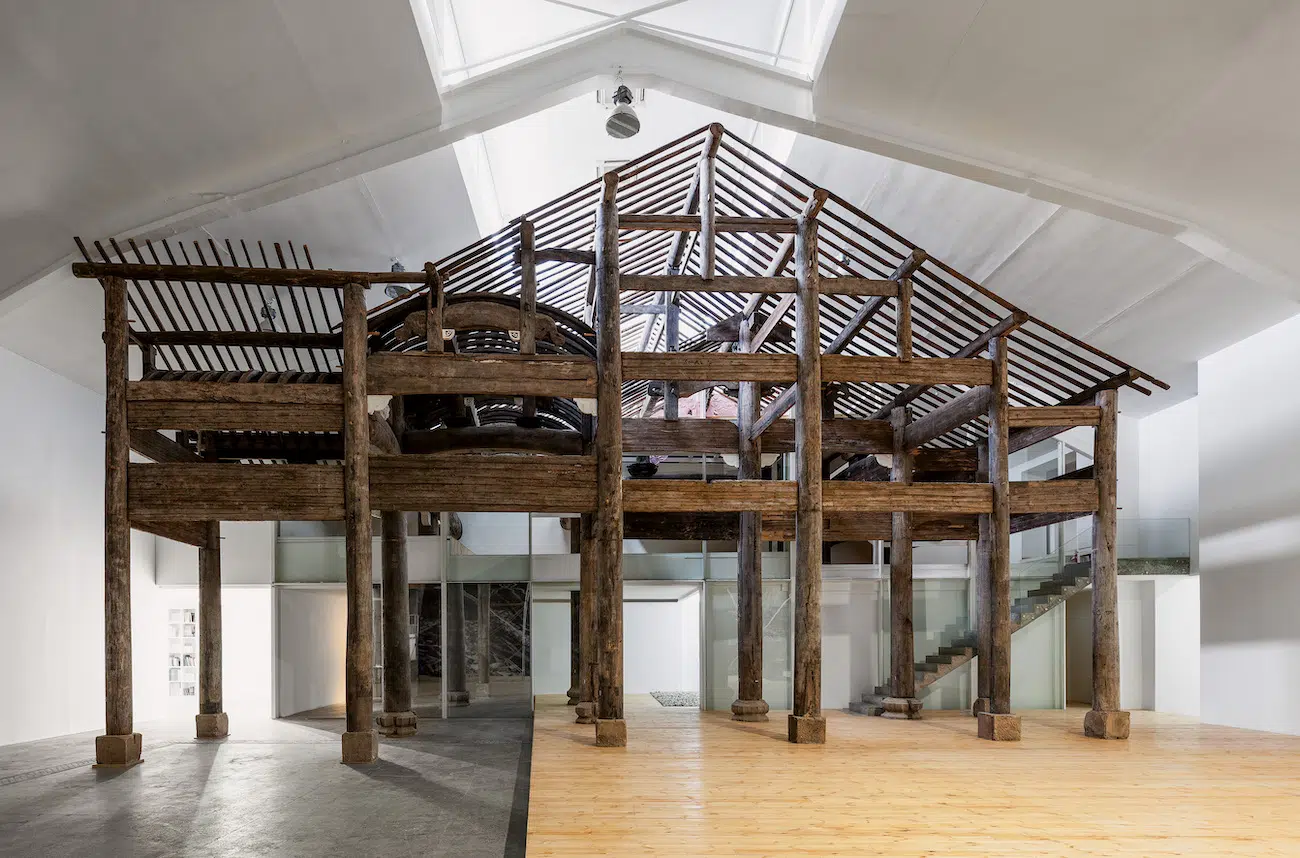
Installation view of “Wang Family Ancestral Hall,” 2015, at Tang Contemporary Art in Beijing. Over 1,300 pieces of various wooden building elements from the late Ming Dynasty with original carvings and painted replacements.
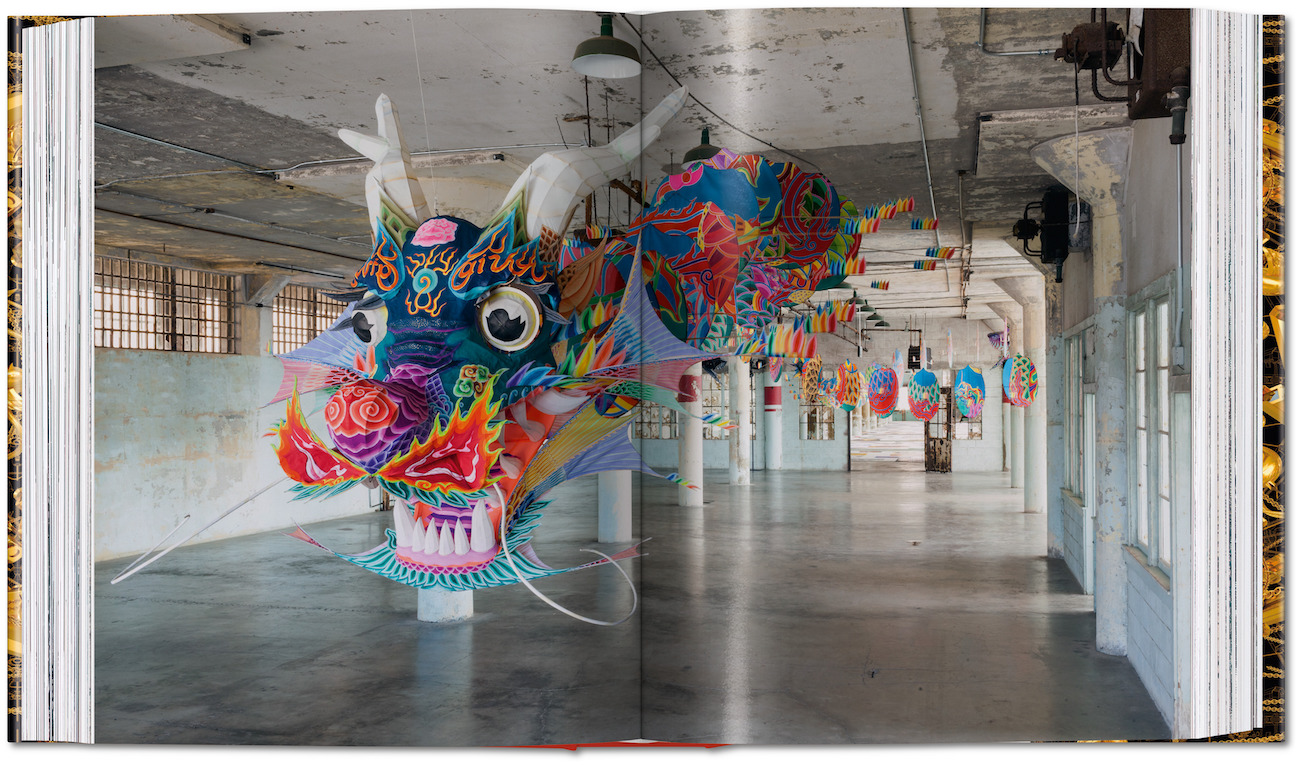
Spread from “Ai Weiwei: Updated Edition,” ed. by Hans Werner Holzwarth. (Taschen, 2026; $125.00 via the publisher’s website)
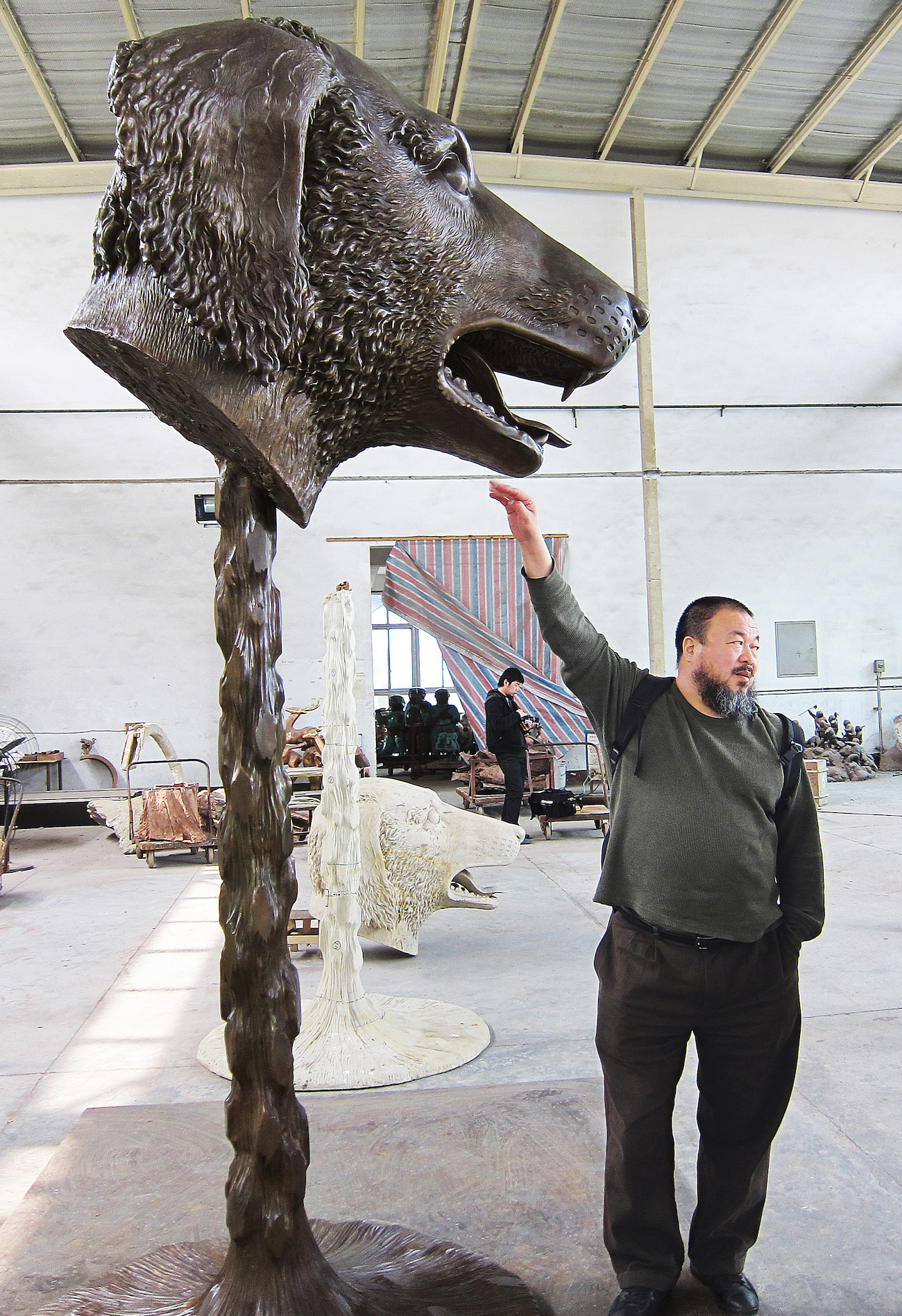
The artist with the finished dog sculpture from “Circle of Animals/Zodiac Heads,” 2010. Bronze, 1 of 12 pieces.
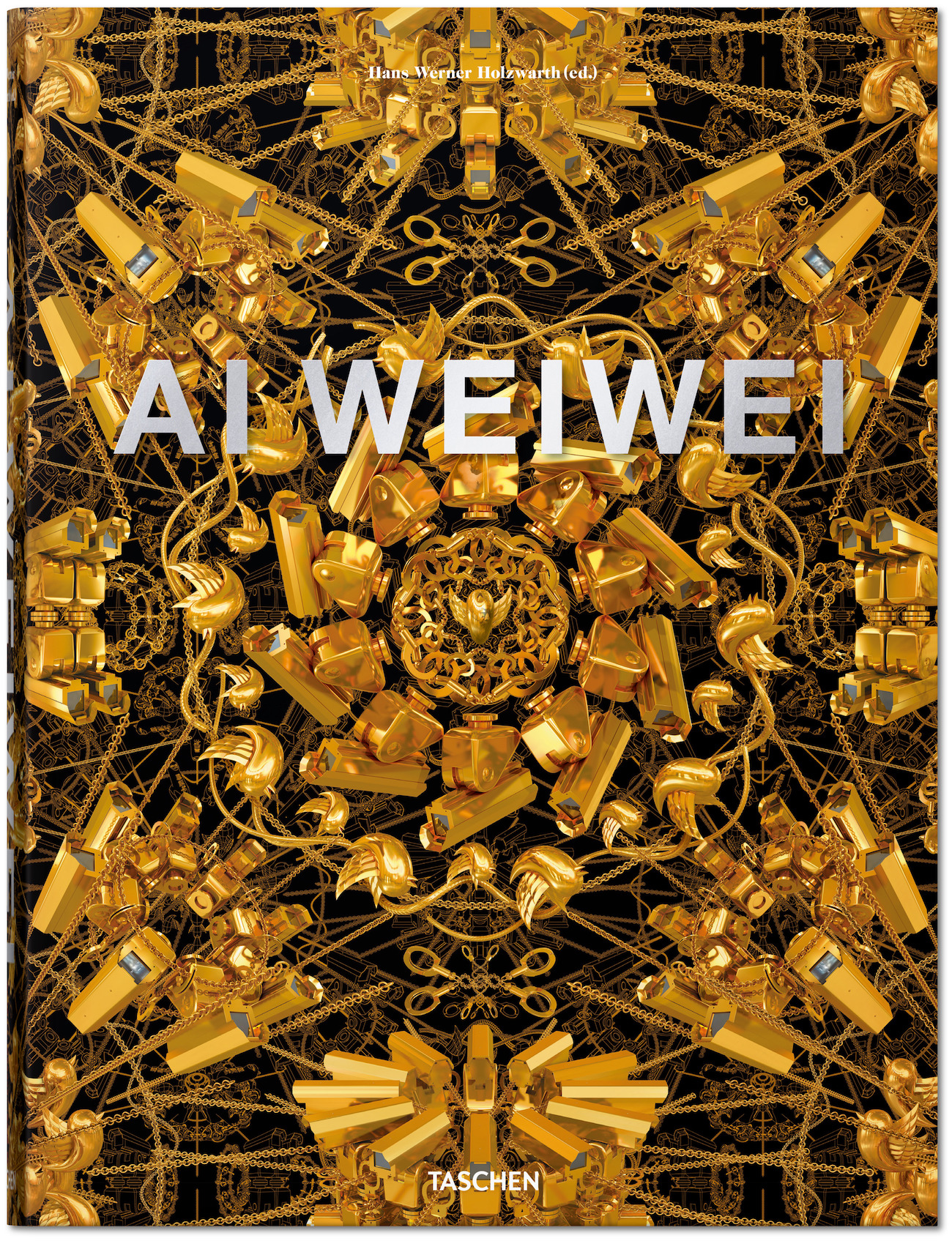
Cover for “Ai Weiwei: Updated Edition,” ed. by Hans Werner Holzwarth. (Taschen, 2026; $125.00 via the publisher’s website)
My Modern Met granted permission to feature photos by Taschen.
Related Articles:
See Ai Weiwei’s Largest-Ever U.S. Exhibition in Seattle Before It’s Gone
Ai Weiwei Recreated Monet’s ‘Water Lilies’ Out of 650,000 LEGO Bricks
Ai Weiwei Unveils Thought-Provoking Cage Installation Commenting on Refugees in Europe