

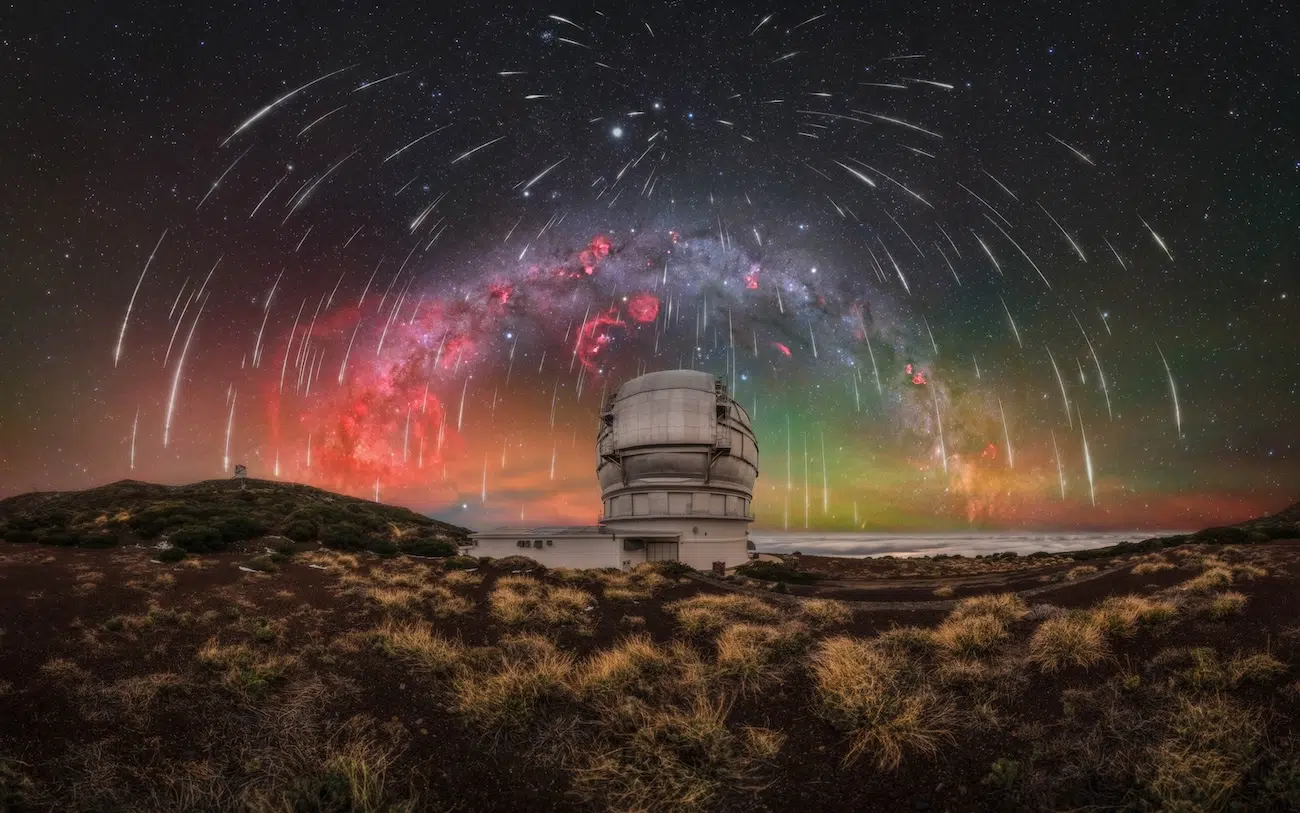
“Geminid Symphony Over La Palma’s Guardian of the Sky” by Uroš Fink
“This winter Milky Way panorama captures a sky filled with Geminid meteors above the Gran Telescopio Canarias, the largest optical telescope in the world.”
The Milky Way is an undeniable source of inspiration for many astrophotographers. This collection of stars, dust, and gas offers awe-inspiring vistas visible only in the night sky. One photography contest highlights the very best in this niche with a curated collection of Milky Way images. Aptly titled the Milky Way Photographer of the Year, the competition is hosted by the travel photography blog Capture the Atlas, and it recently released its winning images from more than 6,500 submissions—a record for the contest.
The Milky Way is visible no matter where you are in the world, and the 2026 collection features images scattered across 12 countries and regions, such as Australia, Spain, the United States, Poland, Italy, Botswana, and more. Photographers trekked through the Southern Alps of New Zealand to the deserts of Argentina, all to capture a glimpse of the galaxy. It’s the throughline within all of the images, which has a secondary benefit of highlighting Earth’s biodiversity.
The lauded images are nothing short of impressive, and this year’s selection is made even more notable because it features several “rare and difficult-to-capture scenes.” This includes photographing the Milky Way above the Very Large Telescope in Paranal, Chile, and from restricted Valle de la Luna, a UNESCO World Heritage Site in Argentina. Beyond the access that these required, the winning images also feature Perseids and Geminids meteor showers, giant fireballs, and the galaxy above sea clouds.
“Every year, this collection reminds us that photographing the Milky Way is not only about technique or planning. It is about curiosity, patience, and the desire to experience the night sky in places where it still feels wild,” says Dan Zafra, editor of Capture the Atlas. “Many of these skies are becoming increasingly rare, and we hope these images inspire people not only to admire them, but also to value and protect them.”
Scroll down to see a selection of winning images from the 2026 Milky Way Photographer of the Year. Then, visit the Capture the Atlas for the entire collection.
Check out some of the amazing winning images from the 2026 Milky Way Photographer of the Year.
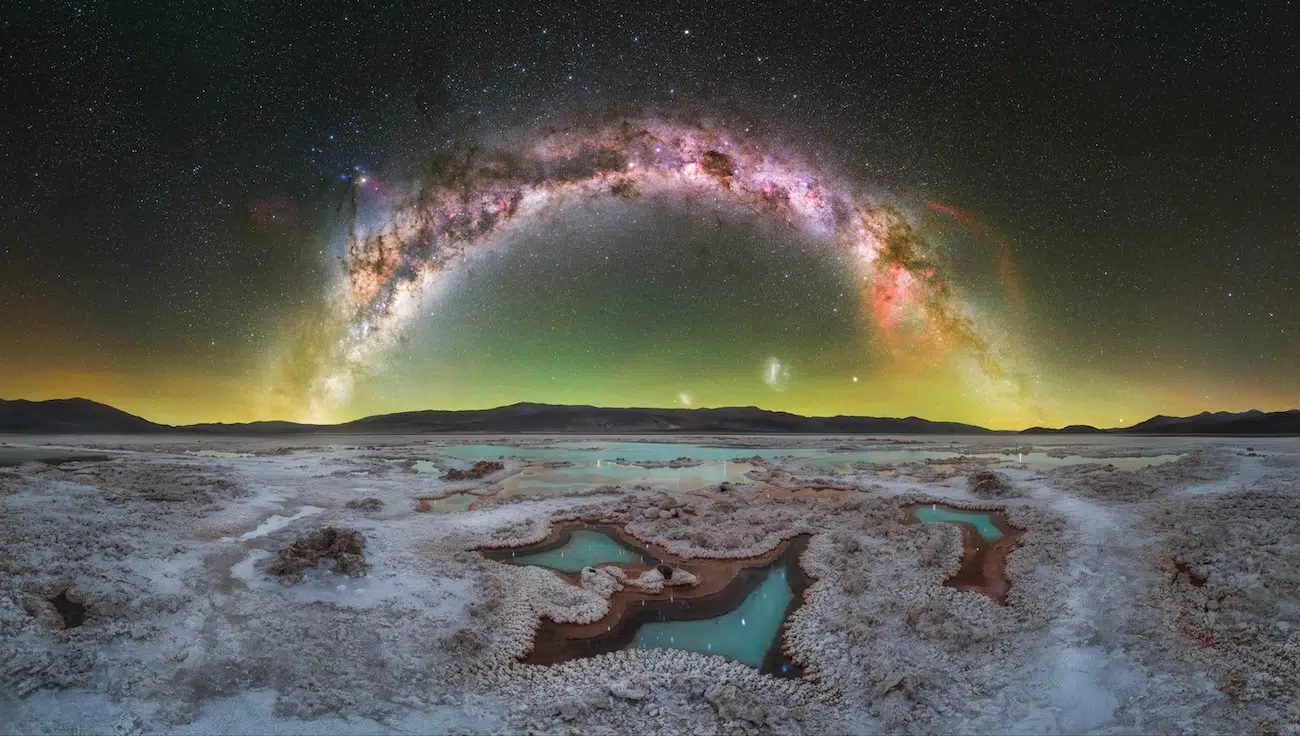
“My Perfect Night” by Daniel Viñé Garcia
“Reaching this location required traveling deep into the Argentine Puna, a remote region accessible only by 4×4 vehicles along rough dirt tracks, far from any source of light pollution. The nearest settlement was Antofalla, a small village of around 60 inhabitants, where electricity is generated locally and turned off at night. Beyond that, the closest towns are several hours away, surrounded by vast and isolated landscapes. Situated between 3,500 and 4,000 meters above sea level, the altitude and remoteness make this an exceptional environment for night sky photography.”
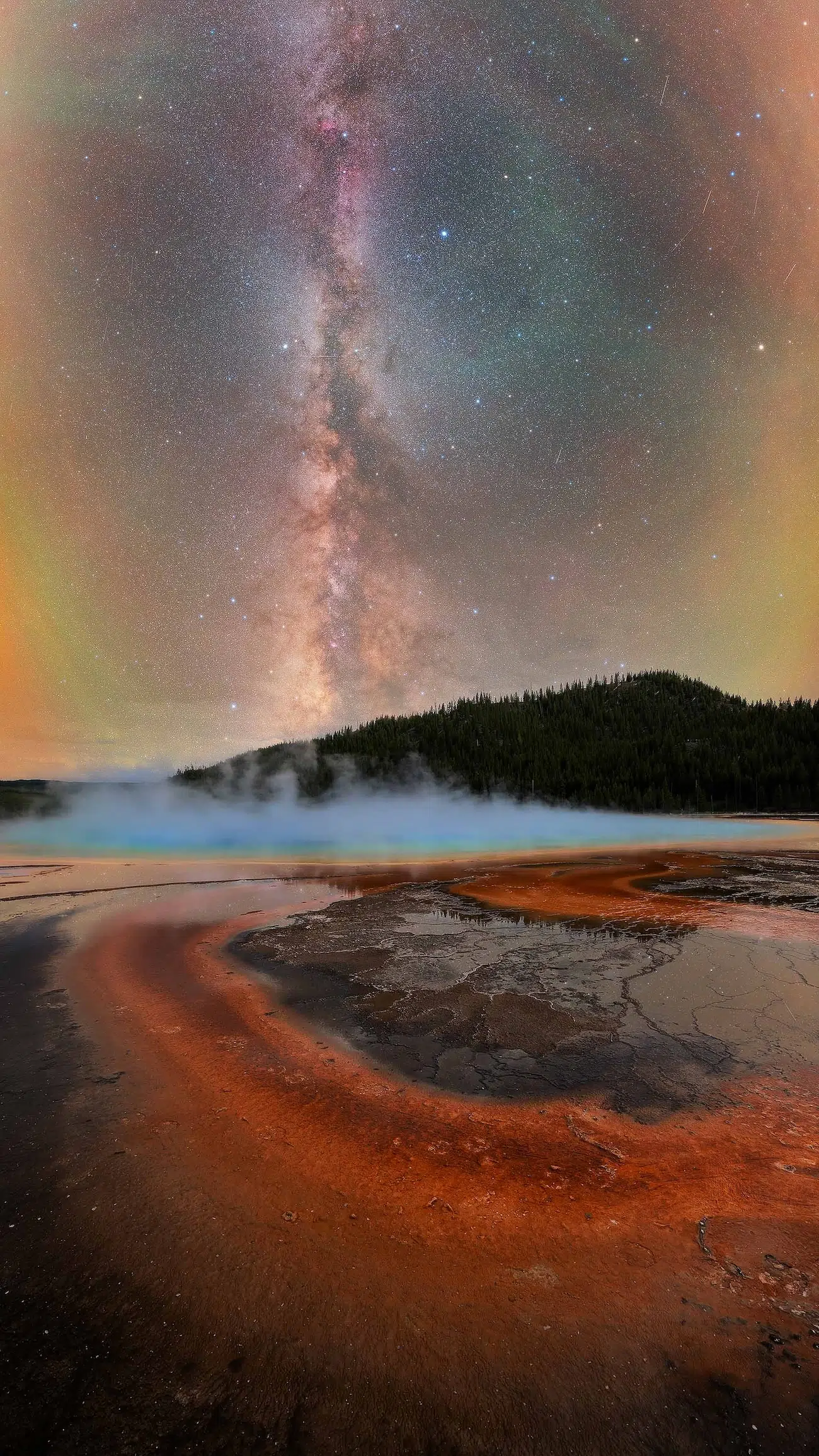
“Firewater” by Baillie Farley
“Framed by the vibrant colors and drifting steam of Grand Prismatic Spring, the Milky Way rises above one of the most unique geothermal landscapes on Earth. It is a rare moment where the raw energy of the planet meets the quiet vastness of the night sky.”
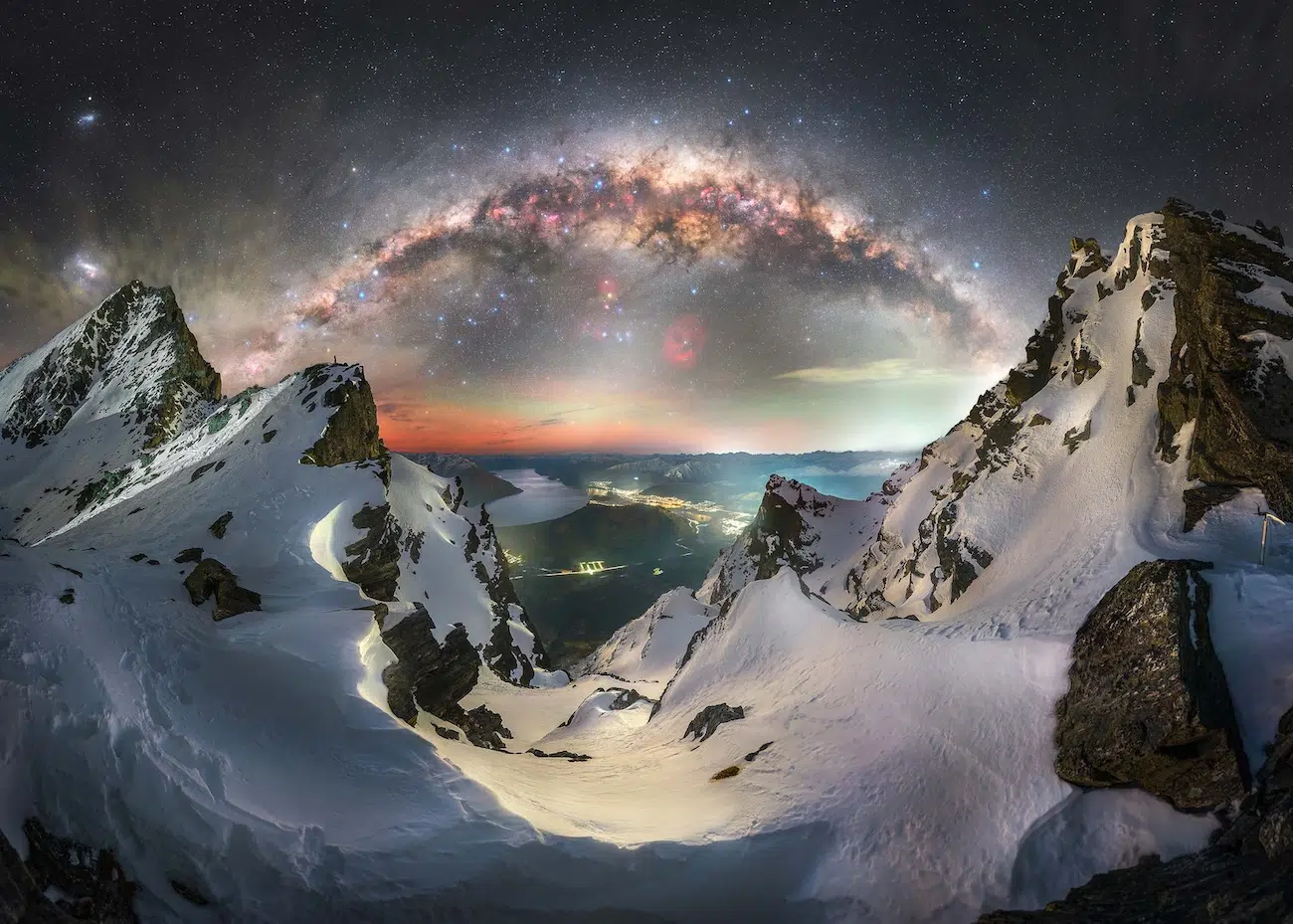
“Night at the Remarkables” by Tom Rae
“The winter Milky Way arch sets above the rugged Remarkables Range in the Southern Alps, while the lights of Queenstown, New Zealand, glow far below. It is a rare alignment of galaxy, alpine terrain, and human presence, all captured in a single moment.”
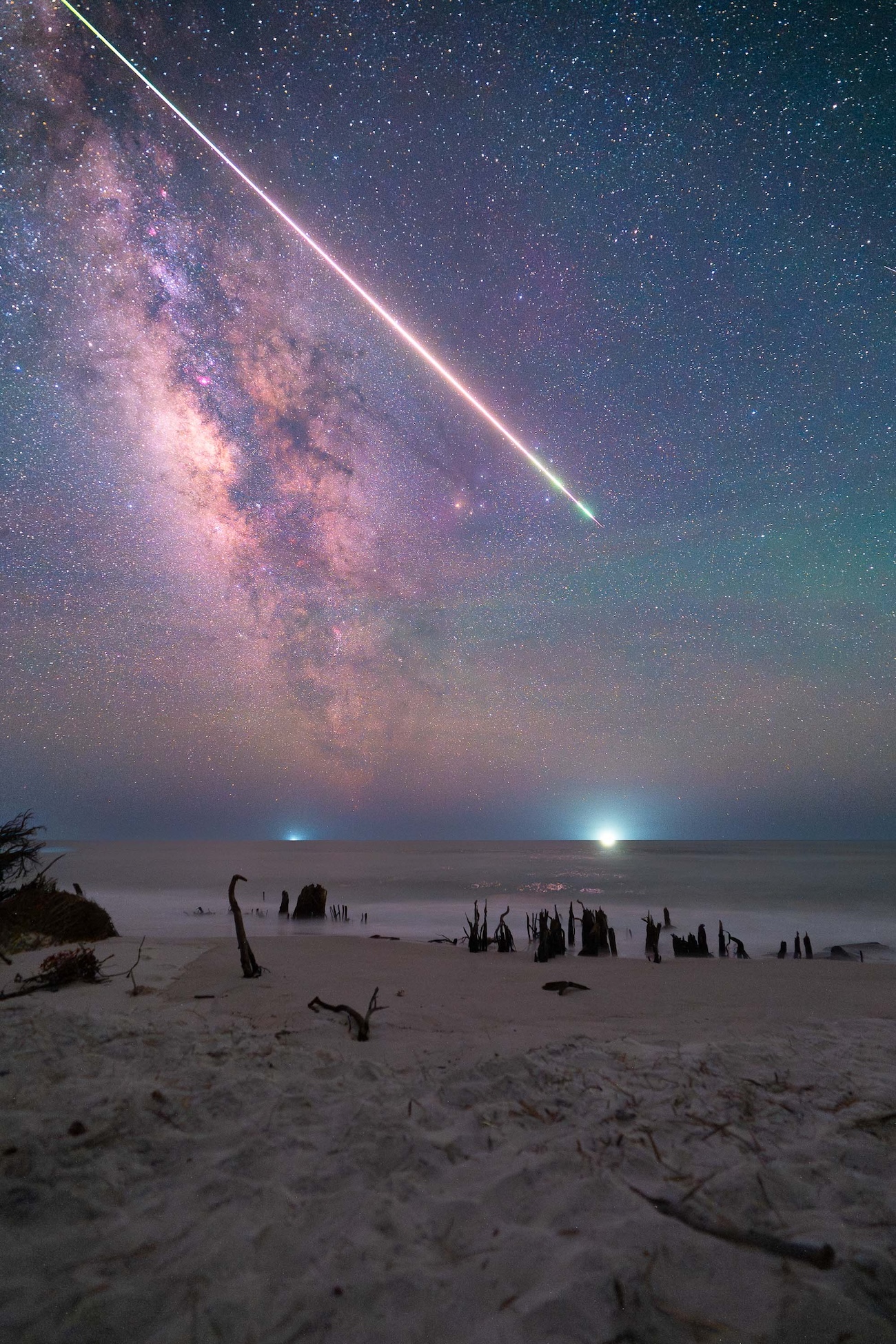
“Fireball in Paradise” by Jason Rice
“This single-exposure image became a reminder to always expect the unexpected in astrophotography. I had not even planned to visit this beach, as the forecast called for clouds and rain throughout the night. The capture was part of a larger day-to-night time-lapse that I began shooting at golden hour, working through biting insects and the intense tropical humidity of Florida. After setting up the sequence, I left the camera running and returned to my vehicle.”
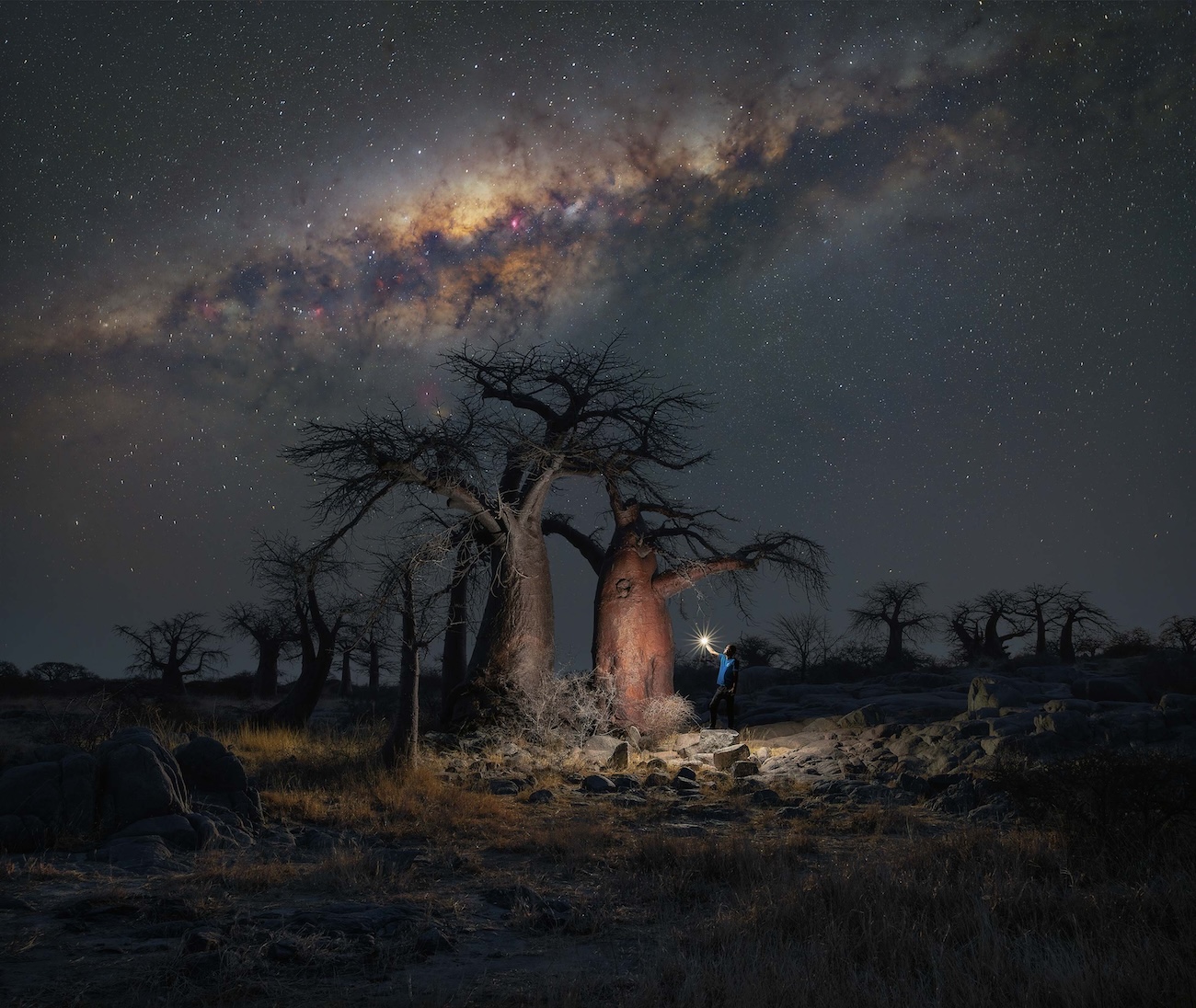
“Botswana Baobabs by Night” by Stefano Pellegrini
“I spent ten days traveling through Botswana, living out of my car and moving through remote desert landscapes in complete isolation, focused entirely on photographing the night sky. This location became the highlight of the trip: a small, ancient island rising from the middle of a vast salt pan.”
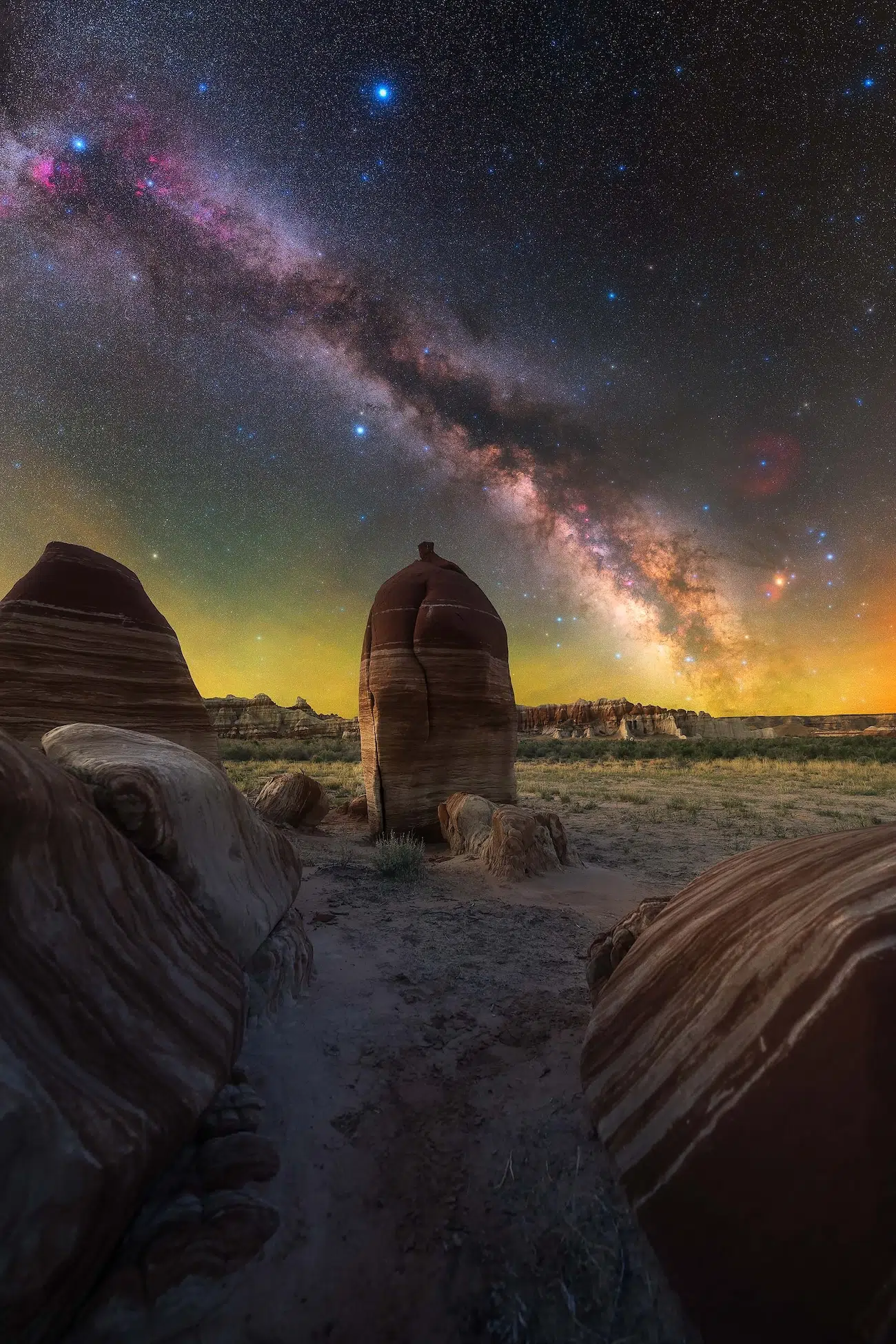
“Galactic Spine” by Andrew Imhoff
“I am drawn to Milky Way photography because of its ability to spark curiosity. It offers a perspective that feels entirely different from other forms of photography, often revealing a world that many people have never experienced.”
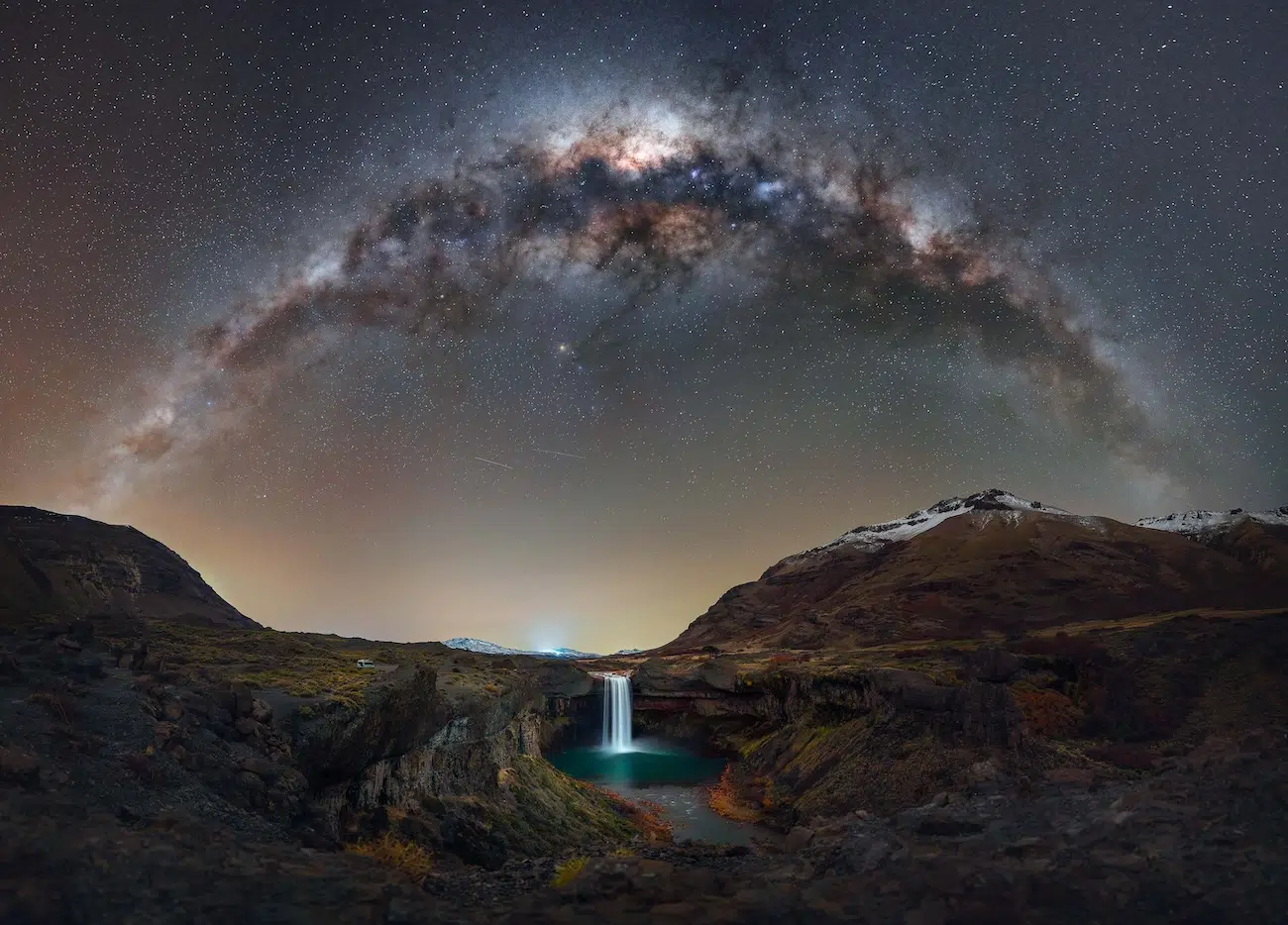
“Salto del Agrio” by Alejandra Heis
“This image was captured during a night at Salto del Agrio, in the province of Neuquén, Argentina. It’s a place that invites reflection on the immense sequence of events, both on Earth and in the sky, that shaped this landscape. The 45-meter waterfall plunges into a canyon carved by ancient lava flows from the Copahue volcano. Surrounded by basalt, the scene is enriched by the vivid colors left behind by minerals, particularly iron and sulfur carried by the Agrio River.”
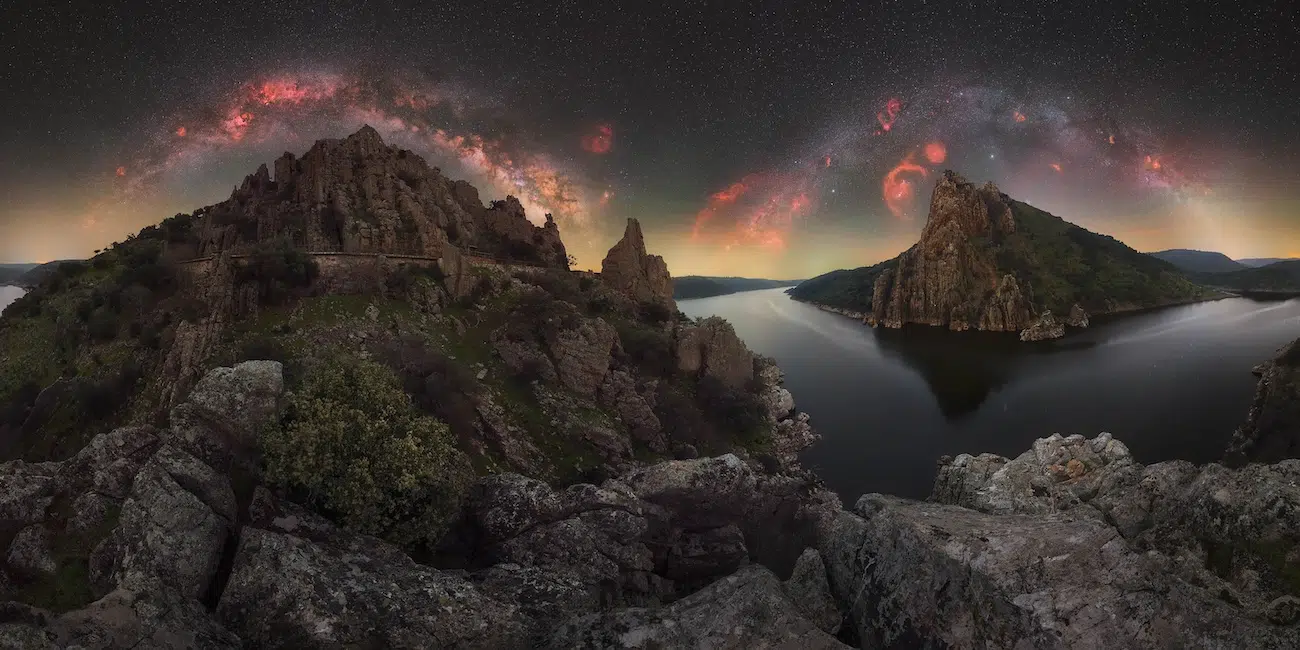
“Double Milky Way Over Monfragüe National Park” by Luis Cajete
“I am always drawn to traveling to remarkable natural landscapes to capture their essence through night photography. This image, which represented a significant challenge for me, was taken in Monfragüe National Park during one of the few nights of the year when both the winter and summer Milky Way can be seen in the same sky.”
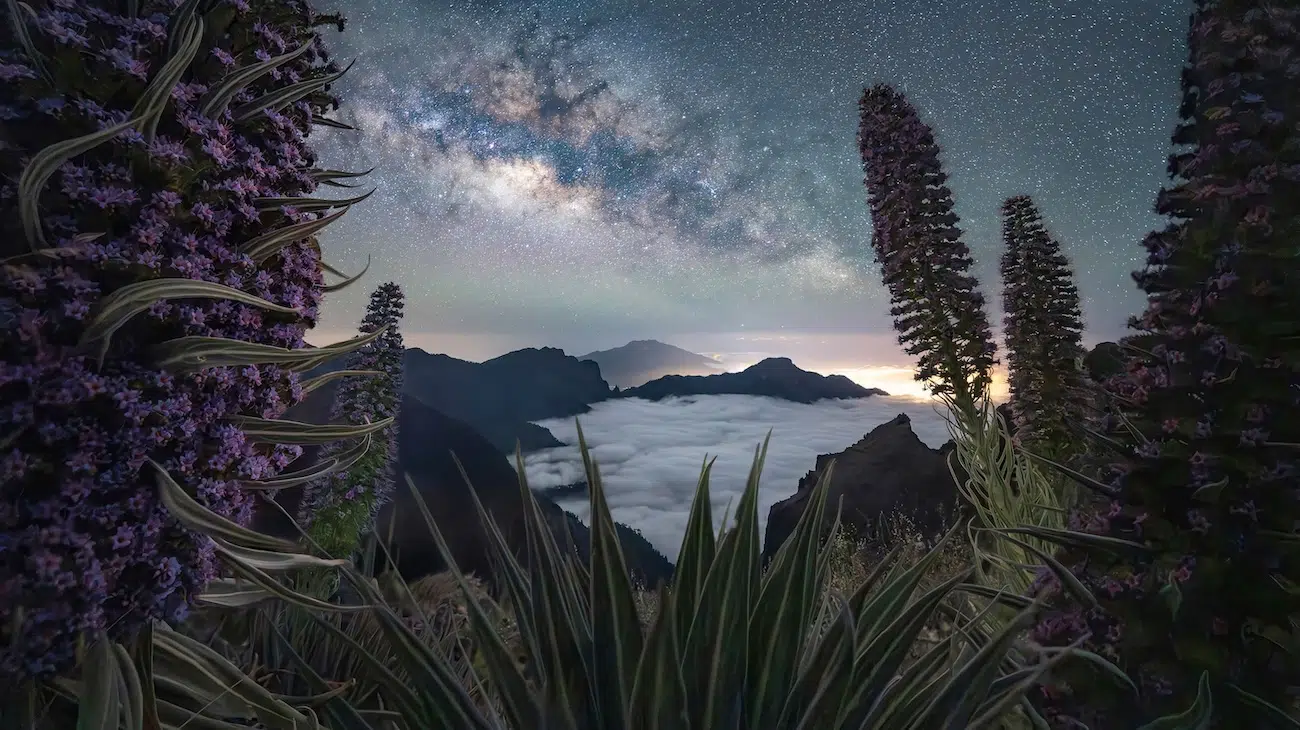
“Caldera Galaxy Panorama” by Max Terwindt
“This panorama was captured at the highest point of the volcanic island of La Palma, a location defined by its unique terrain and exceptional night sky conditions. The lack of ambient light made the process more demanding, requiring extensive focus stacking to achieve sharpness across the entire scene, but it also provided ideal conditions for astrophotography.”
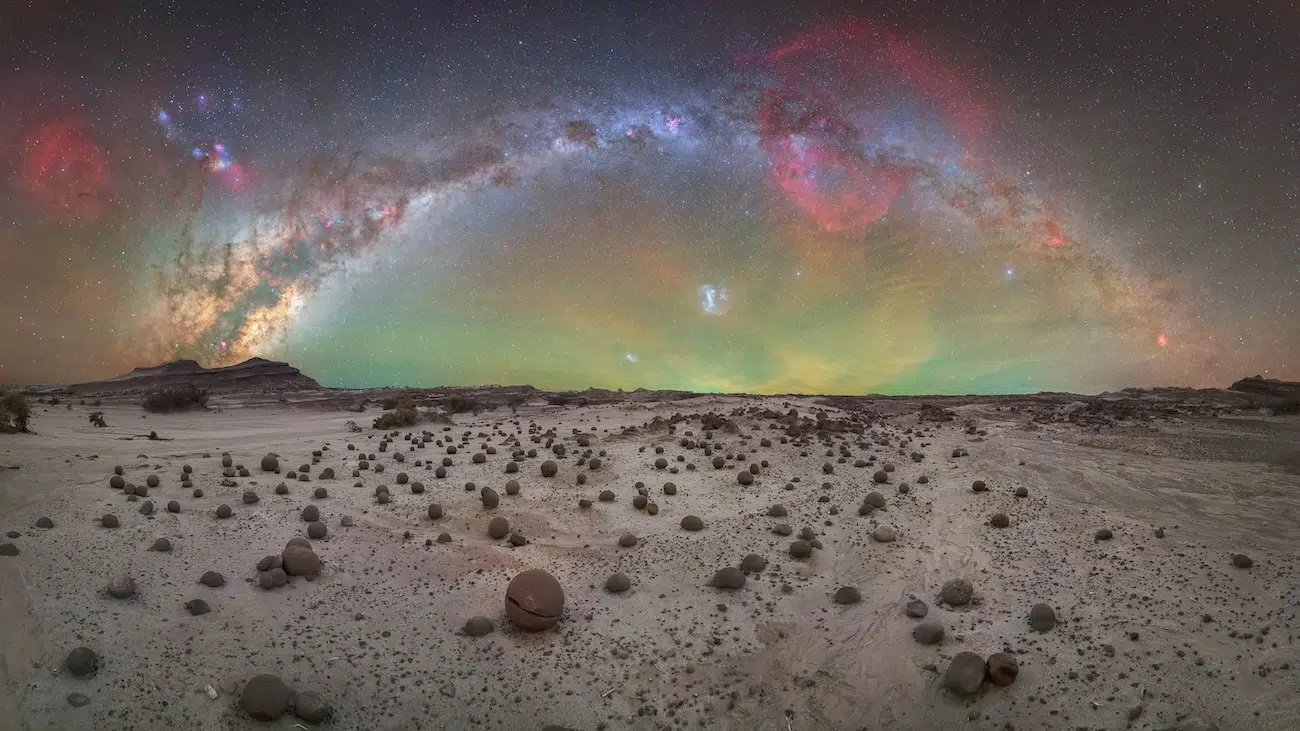
“Valle de la Luna, Universo Triasico Ischigualasto” by Gonzalo Javier Santile
“This photograph captures the first full Milky Way arch ever taken at this location, a site of exceptional scientific and cultural significance. Recognized as a UNESCO World Heritage Site, its geological importance lies in being the only place on Earth where the complete sequence of the Triassic Period can be observed, preserving key fossils from the earliest dinosaurs and earning its place among the most valuable geological heritage sites in the world.”
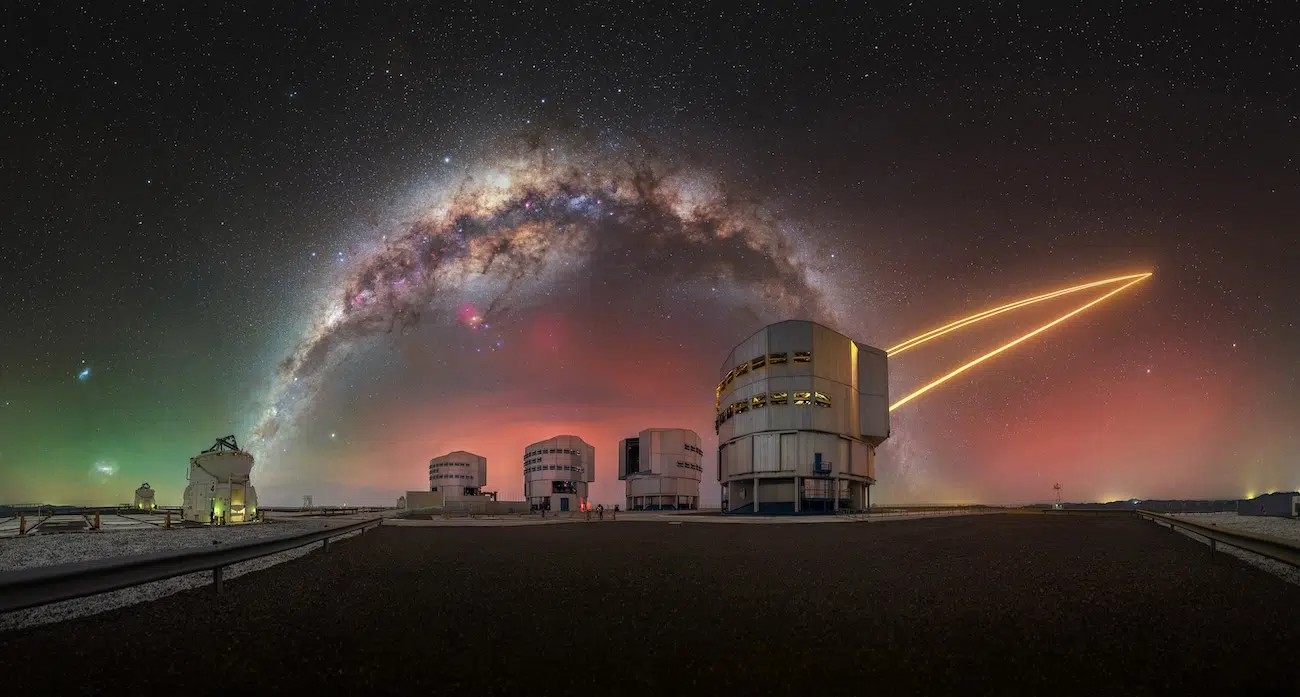
“Sodium Milky Way” by Julien Looten
“This scene was captured at the Very Large Telescope (VLT) on Cerro Paranal, in Chile’s Atacama Desert, under exceptionally pure observing conditions where the boundary between Earth and sky feels almost seamless.”
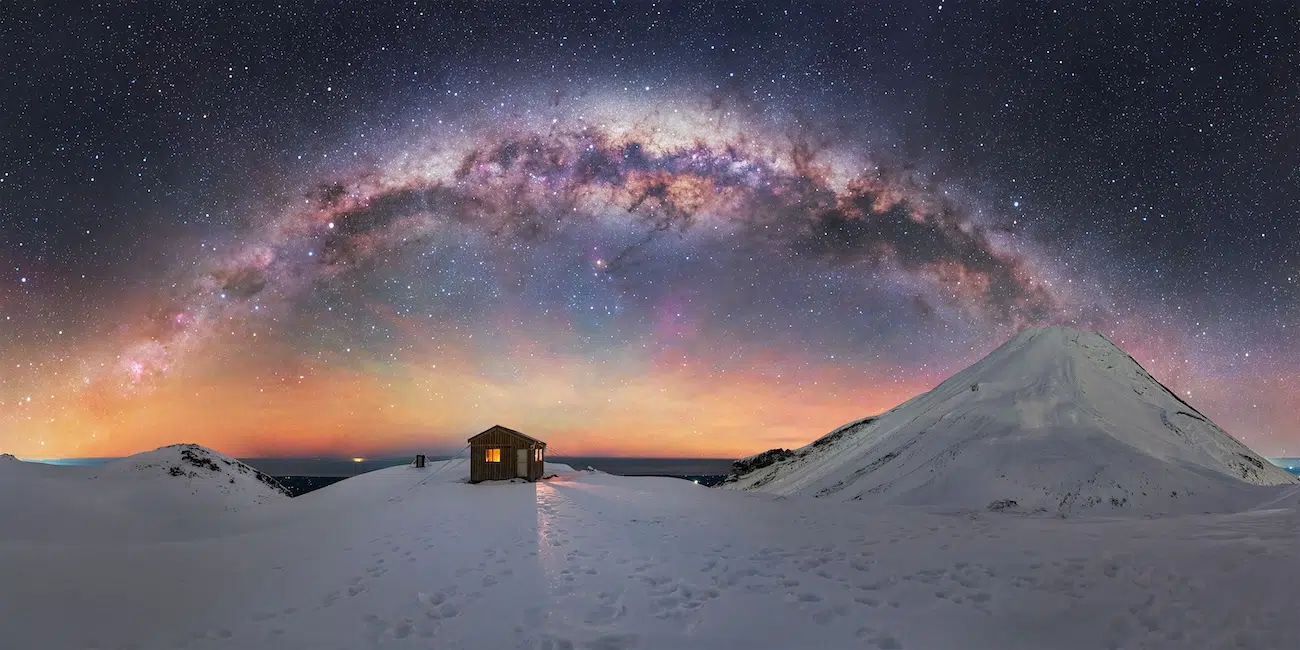
“Milky Way Over Syme Hut and Mt Taranaki” by Brendan Larsen
“Reaching this location required a demanding ascent to Fanthams Peak on Mount Taranaki, involving over five hours of hiking through deep snow and ice in extreme conditions. With windchill dropping to around -15°C and a heavy 20kg pack, progress was slow and physically taxing, with each step forward often followed by sliding back in the soft snow. The journey culminated at what is known as the coldest hut in New Zealand’s North Island, making this one of the most challenging hikes I have ever undertaken.”
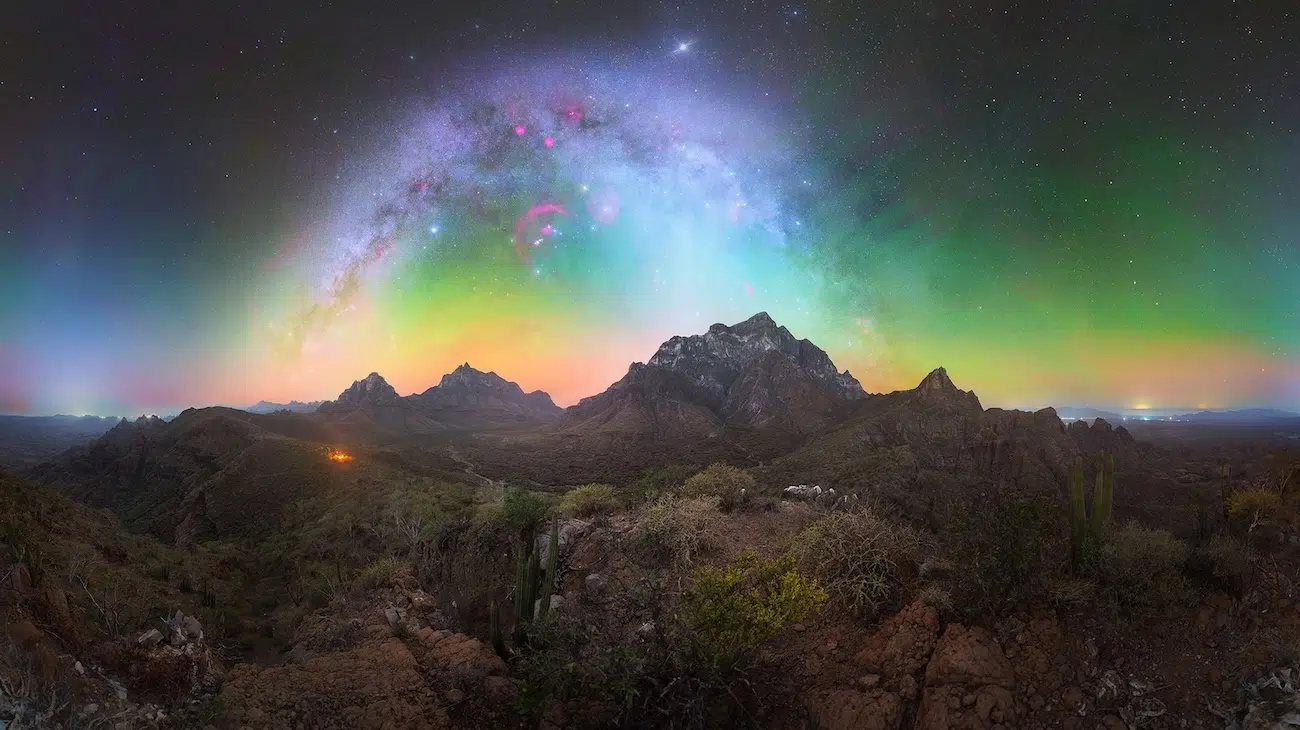
“Standing on the Shoulders of Giants” by Nacho Peláez
“This photograph was captured in the heart of the Sierra La Giganta, in Baja California Sur, following a two-day expedition from the small village of San Juan Londo. The final approach required an ascent of more than 800 meters by mule along a long-forgotten section of the historic Camino Real, once used by vaqueros and their donkeys to transport goods between remote settlements. This path has remained largely untouched for nearly 80 years.”
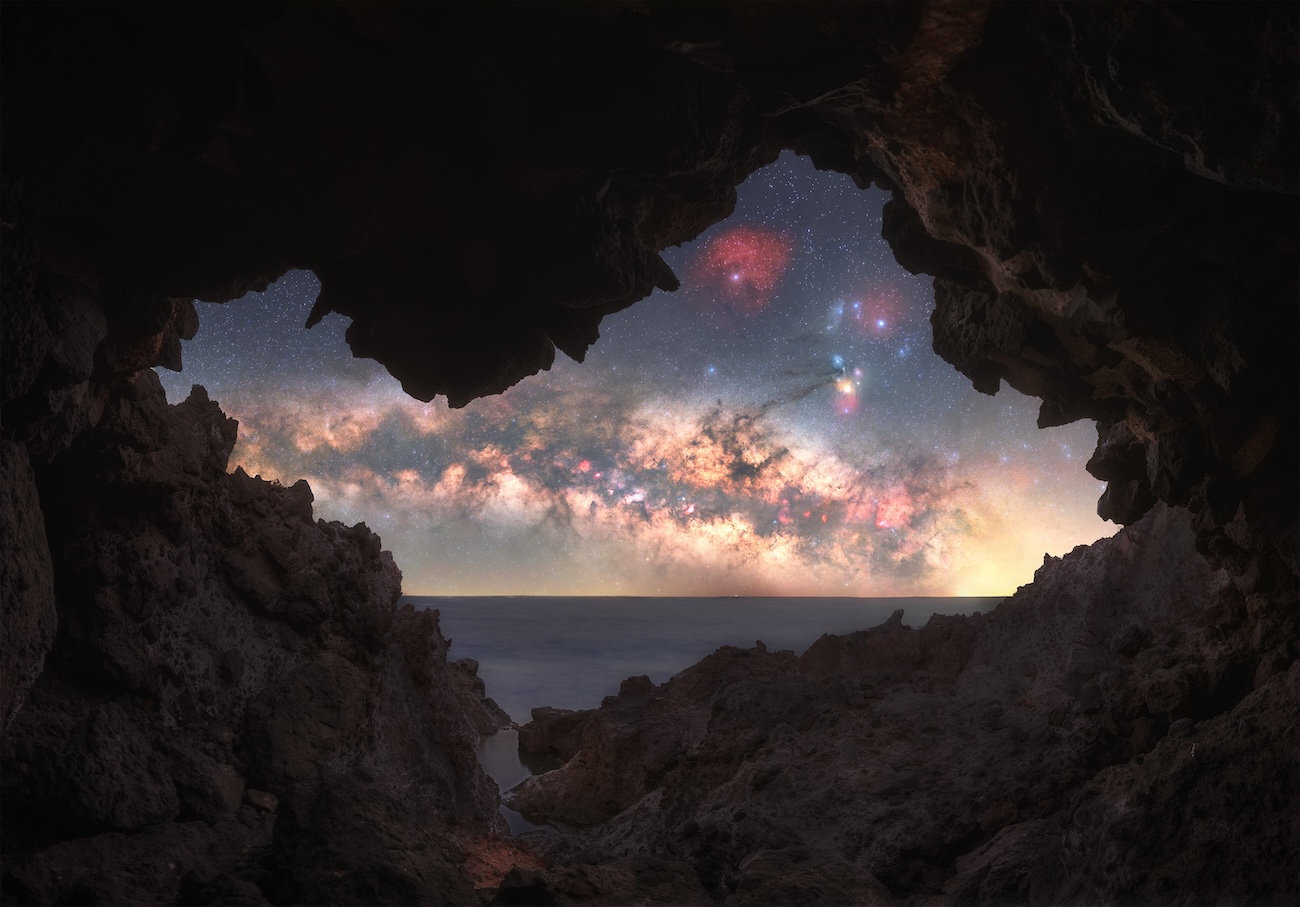
“Galaxy on the Rise” by Anastasia Gulova
“I’m always drawn to locations that feel unique and relatively undiscovered, and this cave was a perfect example. Although it was only a few minutes from the parking area, it took me nearly four hours of scouting to finally locate it.”
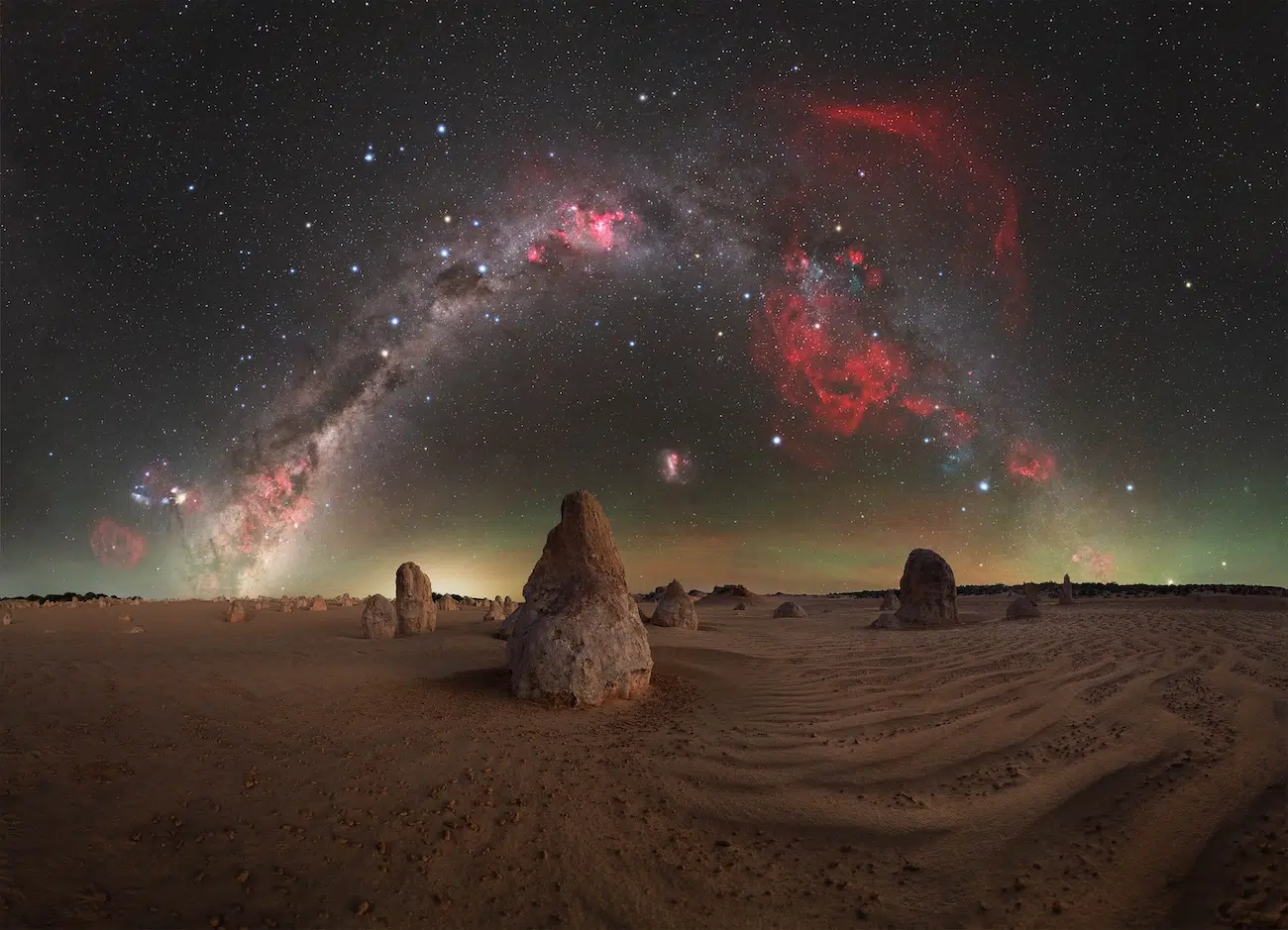
“Lost in the Ripples of Space and Time” by Leonel Padrón
“There’s something uniquely powerful about a calm, windless night in the Pinnacles Desert, a place that never fails to remind me how fortunate we are to have such pristine dark skies so close to home, just a short drive away. As the sun sets beyond the Indian Ocean, a profound stillness settles over Nambung, transforming the landscape into an almost otherworldly scene and drawing me back here time and time again.”
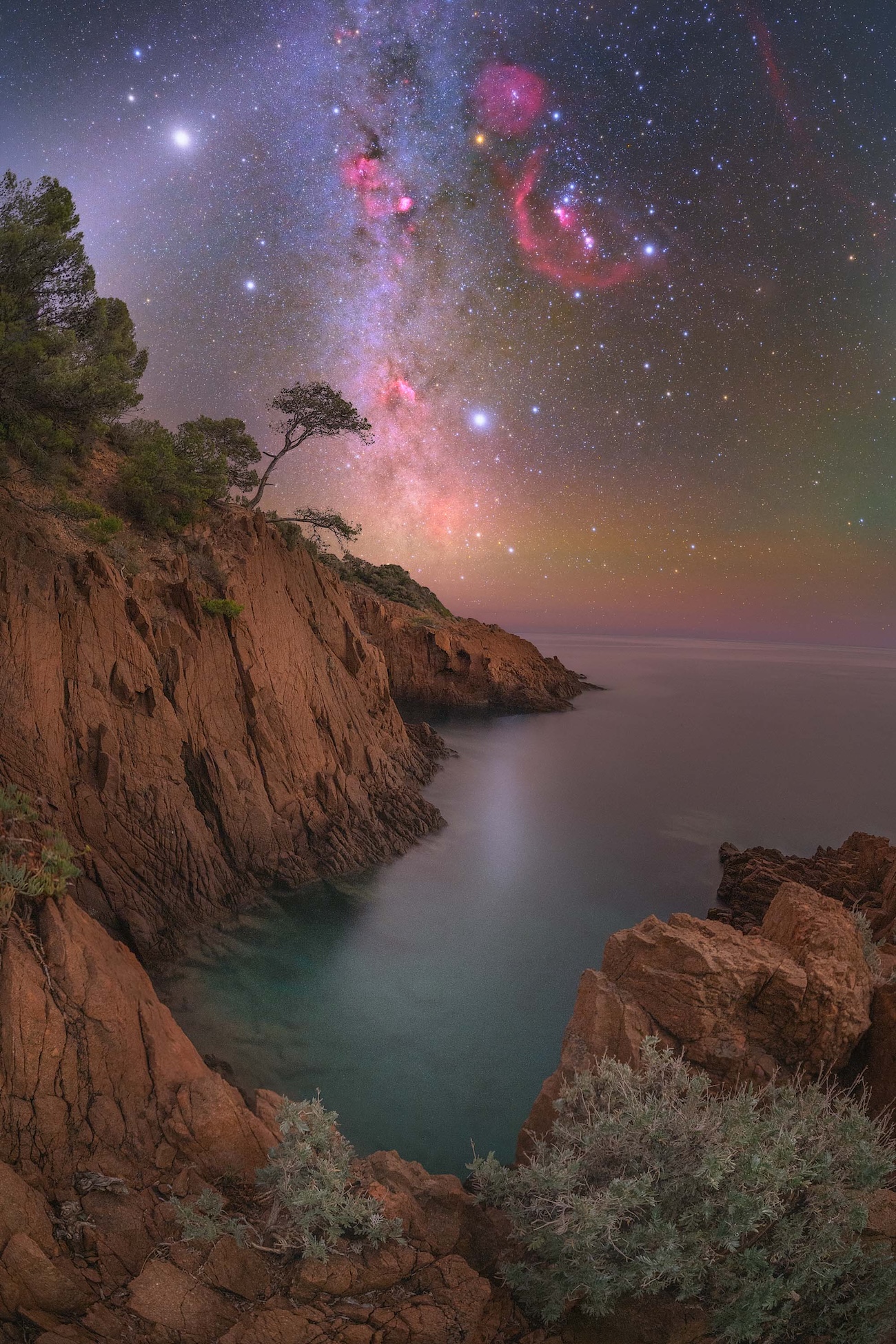
“Celestial Light Over Sea Cliffs” by Anthony Lopez
“The night sky takes on a distinctly different character during this time of year, especially with the arrival of the winter constellations. The tones feel cooler, the air sharper, and Orion rises prominently above the horizon, becoming the centerpiece of the scene. It’s a season that brings a quiet, almost meditative atmosphere to nightscape photography.”
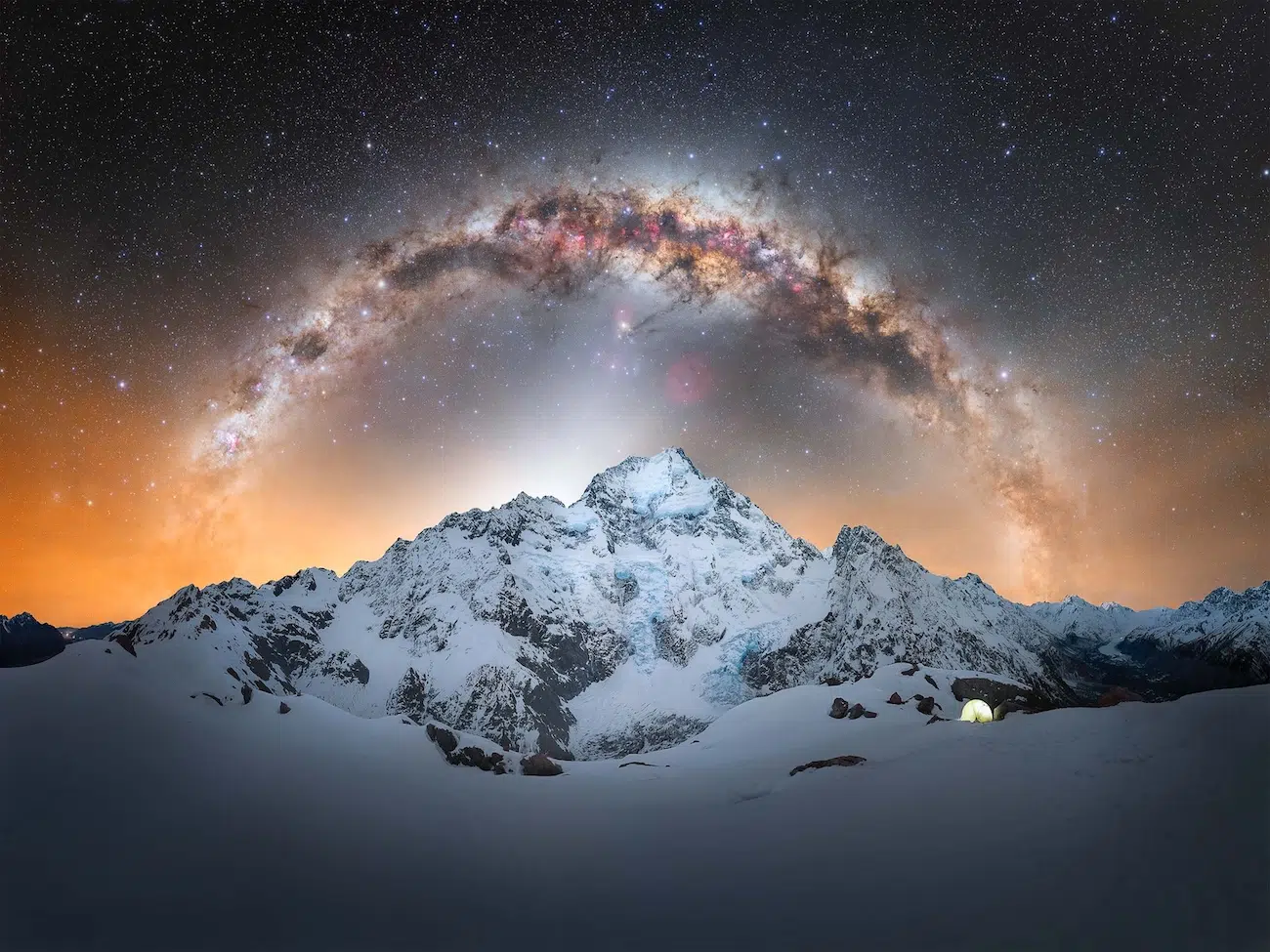
“Aoraki Mt Cook” by Owain Scullion
“My goal with astrophotography has always been to combine my passion for mountains, adventure, and the landscapes of New Zealand. Capturing the Milky Way arch above Aoraki / Mount Cook, the central peak of the national park, became one of the most demanding challenges I had set for myself.”