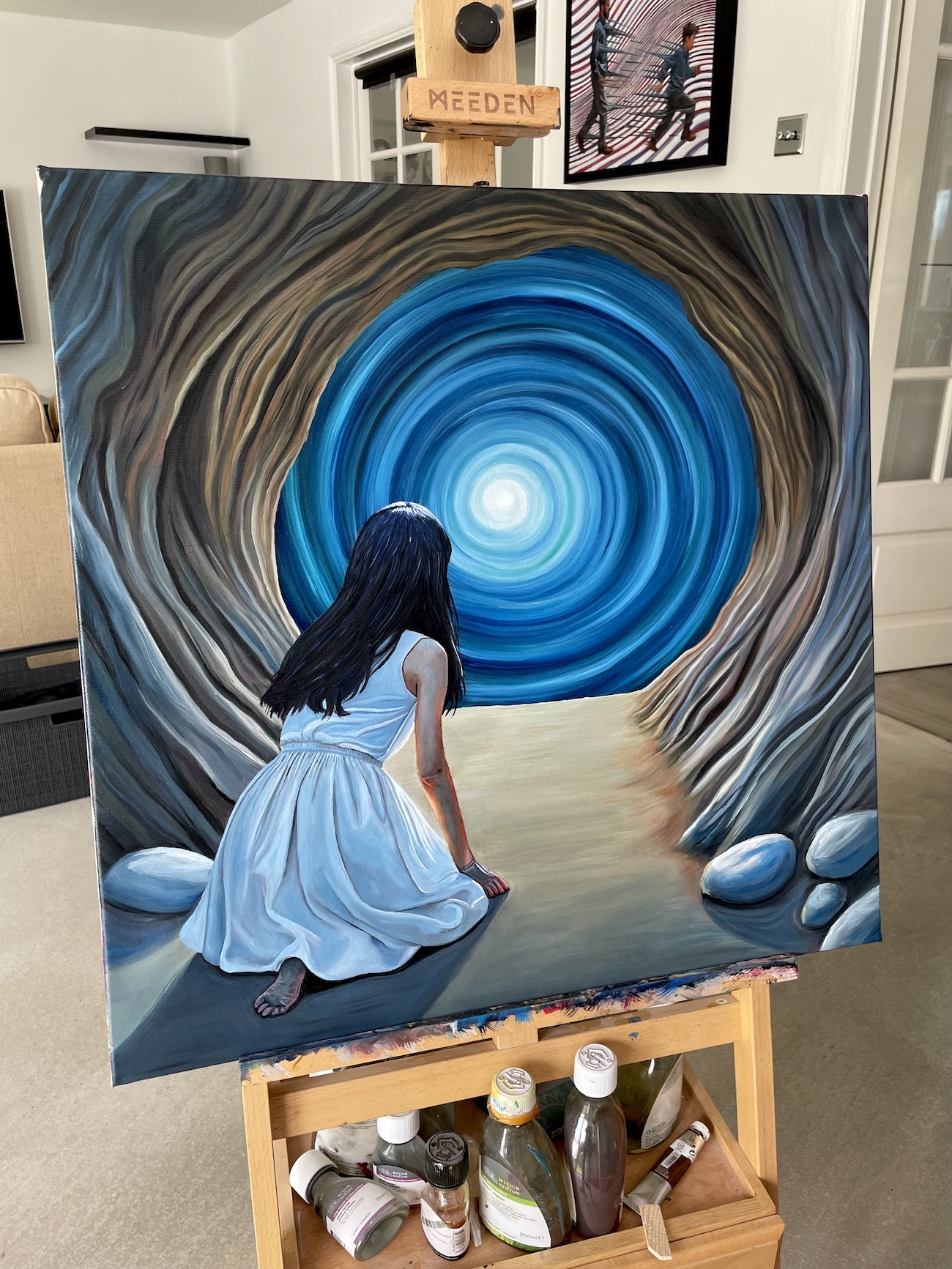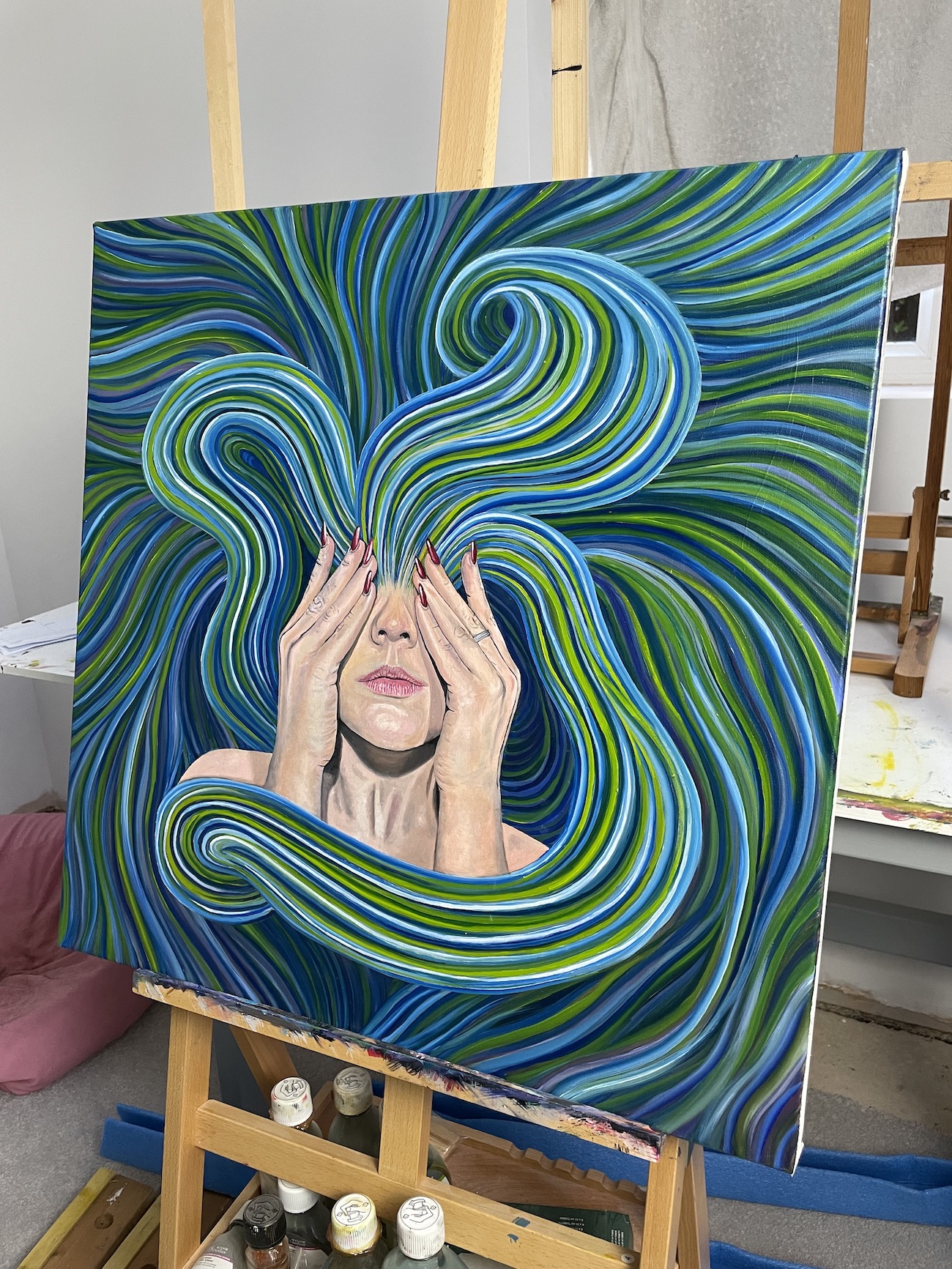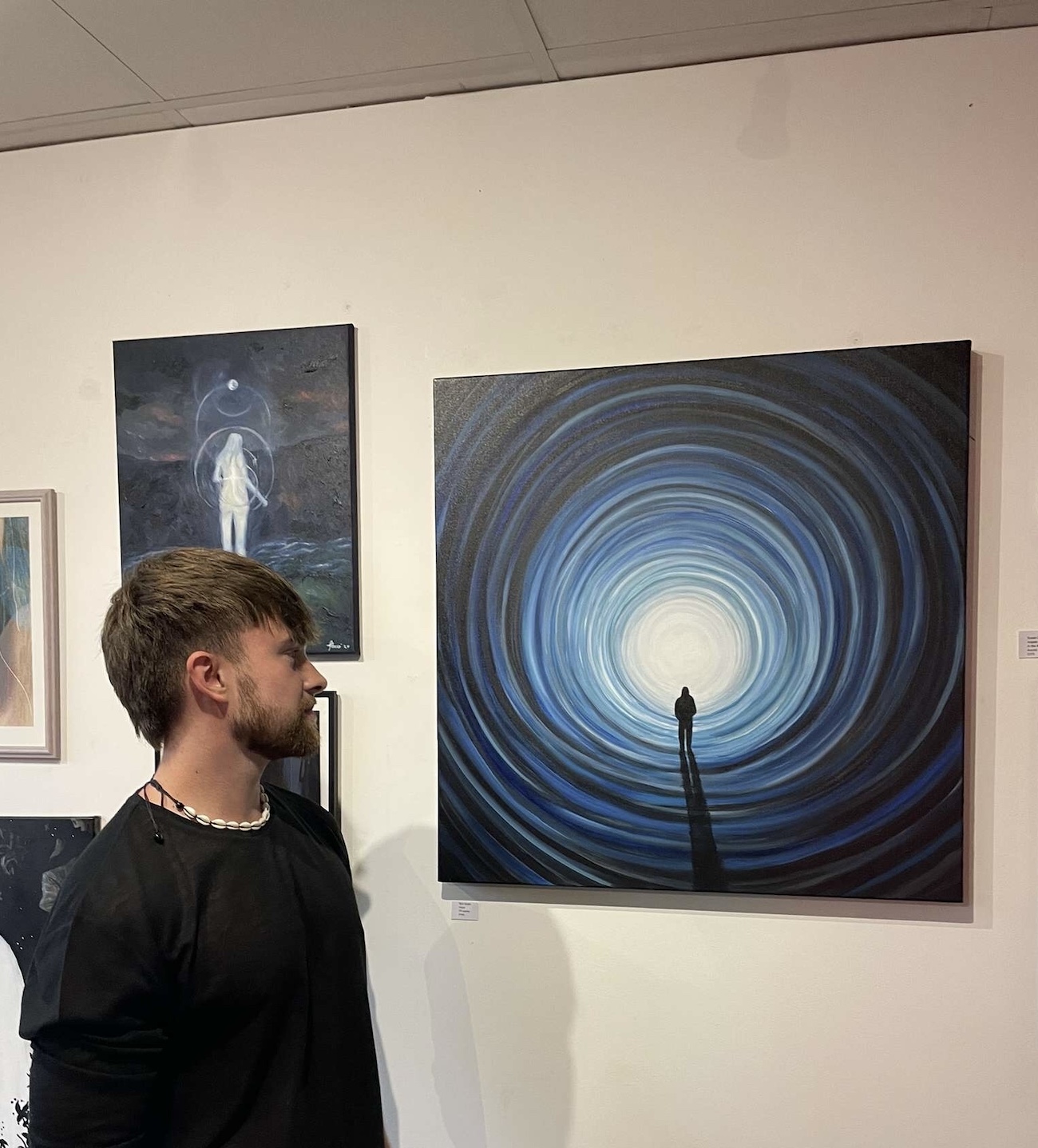

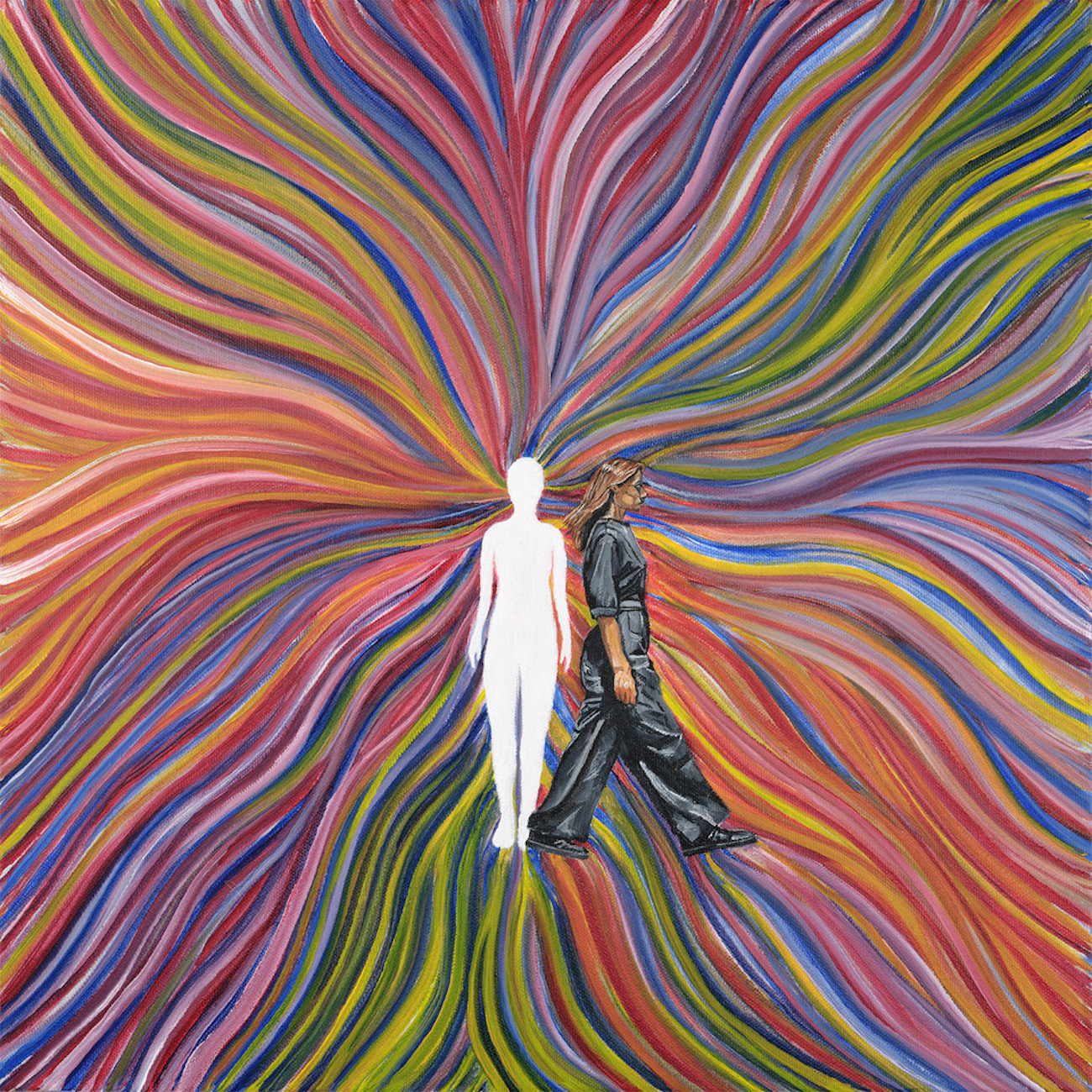
Self-taught painter Tom D. Smith creates expressive oil paintings that translate emotion into color, movement, and form. As a result, his compositions emphasize energy and sensation, and they feel both immediate and reflective of shared human experience.
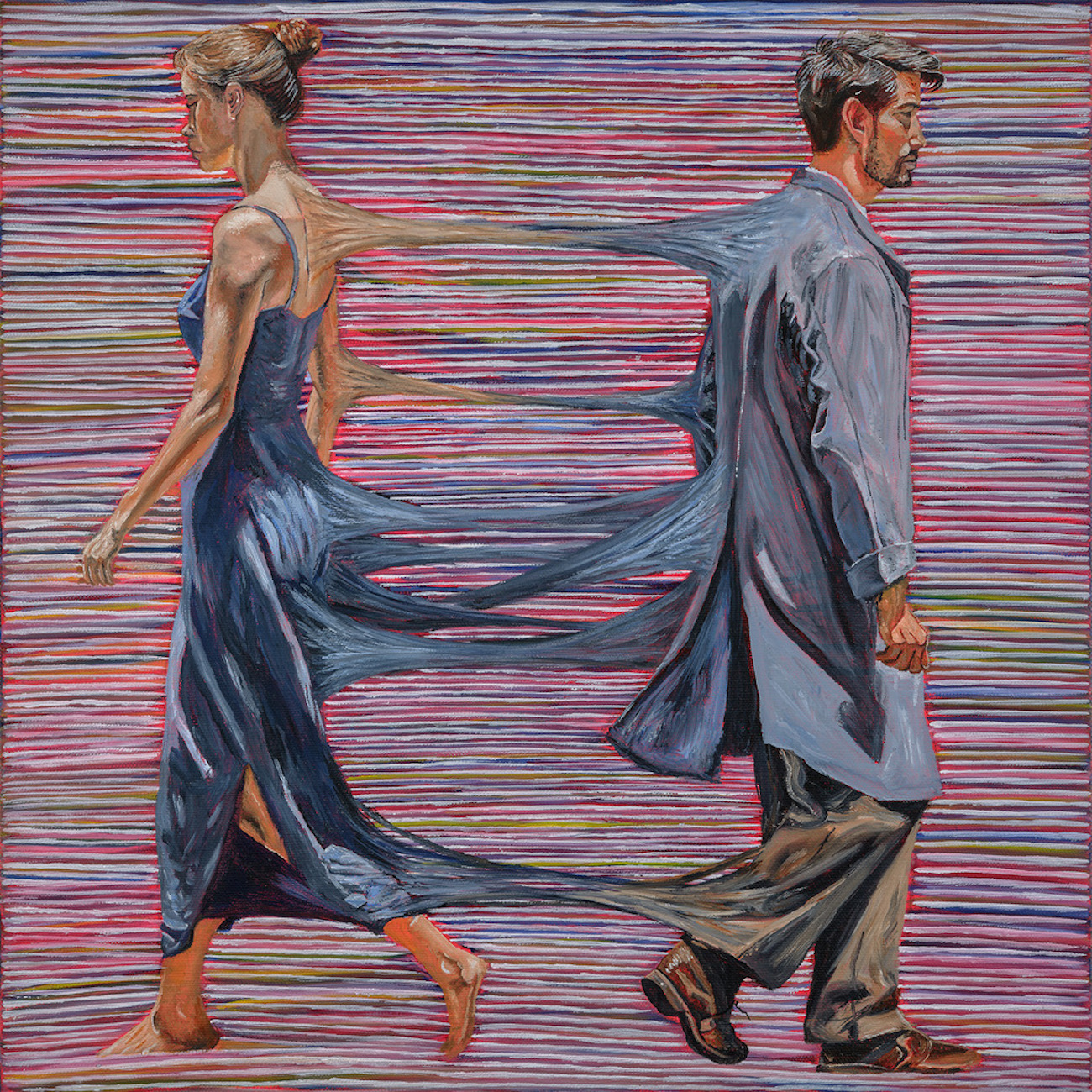
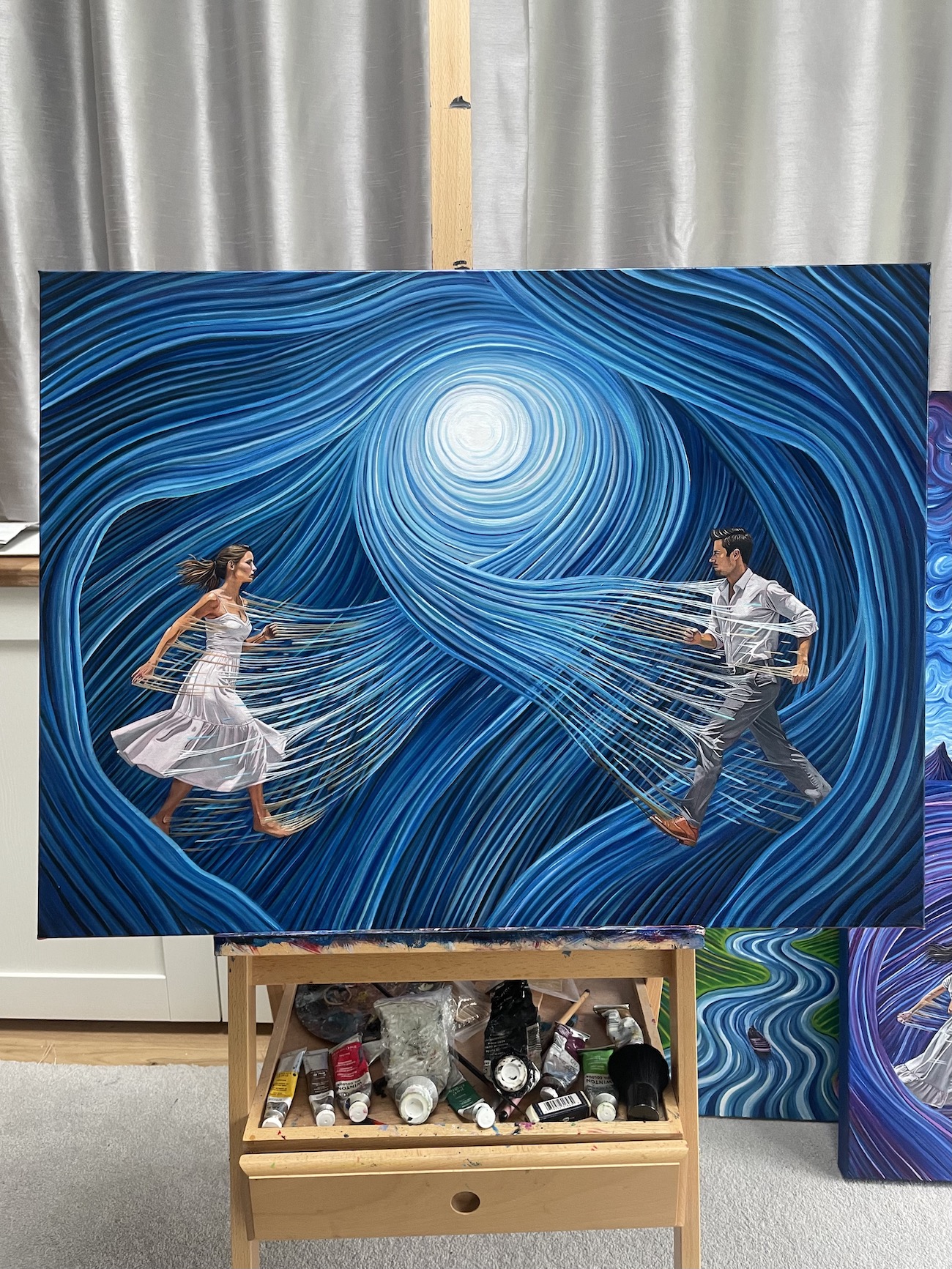
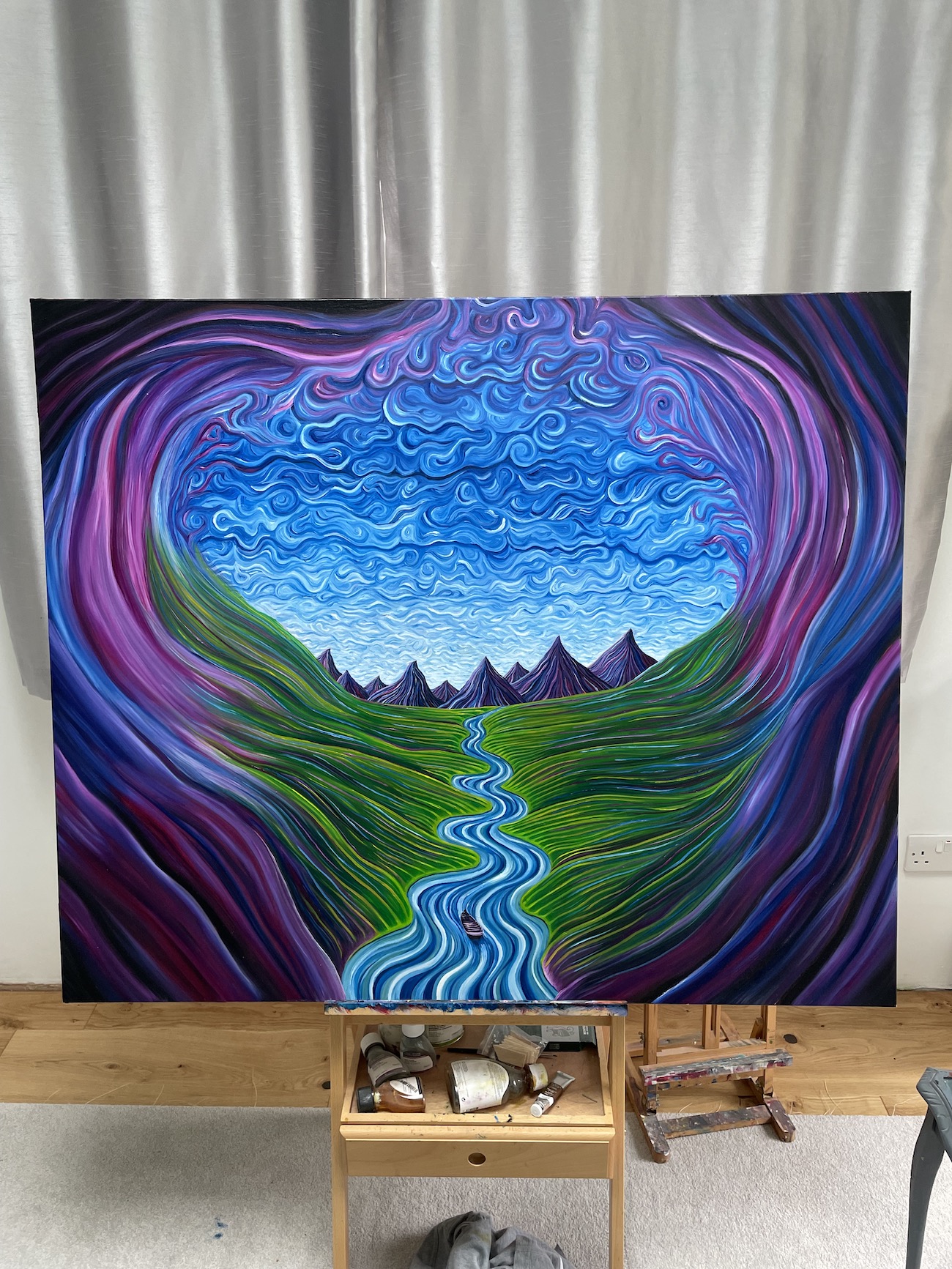
Beginning with an internal concept or feeling, Smith develops his paintings through a process of visualization and refinement. “I have to be able to visualize this intangible thing as something physical,” he tells My Modern Met, noting that this process can take months. This careful translation of emotion into visual language is evident in his use of saturated color and continuous brushwork, which together suggest movement, transformation, and exchange.
Working primarily in oil, Smith takes advantage of the medium’s slow drying time to build soft transitions and layered surfaces. The resulting compositions often appear fluid, with edges that blur and merge rather than define fixed boundaries. This material quality reinforces recurring themes within his work, particularly the idea of connection. Figures frequently overlap or blend into one another, suggesting emotional and psychological bonds, while broader compositions reflect relationships between individuals, the self, and the surrounding world.
As a self-taught artist, Smith approaches painting through experimentation and iterative learning. His process balances structure with intuition, allowing compositions to evolve as he works. This openness extends to how he considers audience engagement, as his paintings are intended to resonate within personal spaces while maintaining the integrity of his own expression. At the same time, digital platforms have expanded his reach significantly, enabling his work to connect with a global audience.
My Modern Met had the opportunity to speak to Smith about his process and evolving practice. Scroll down to read our exclusive interview.
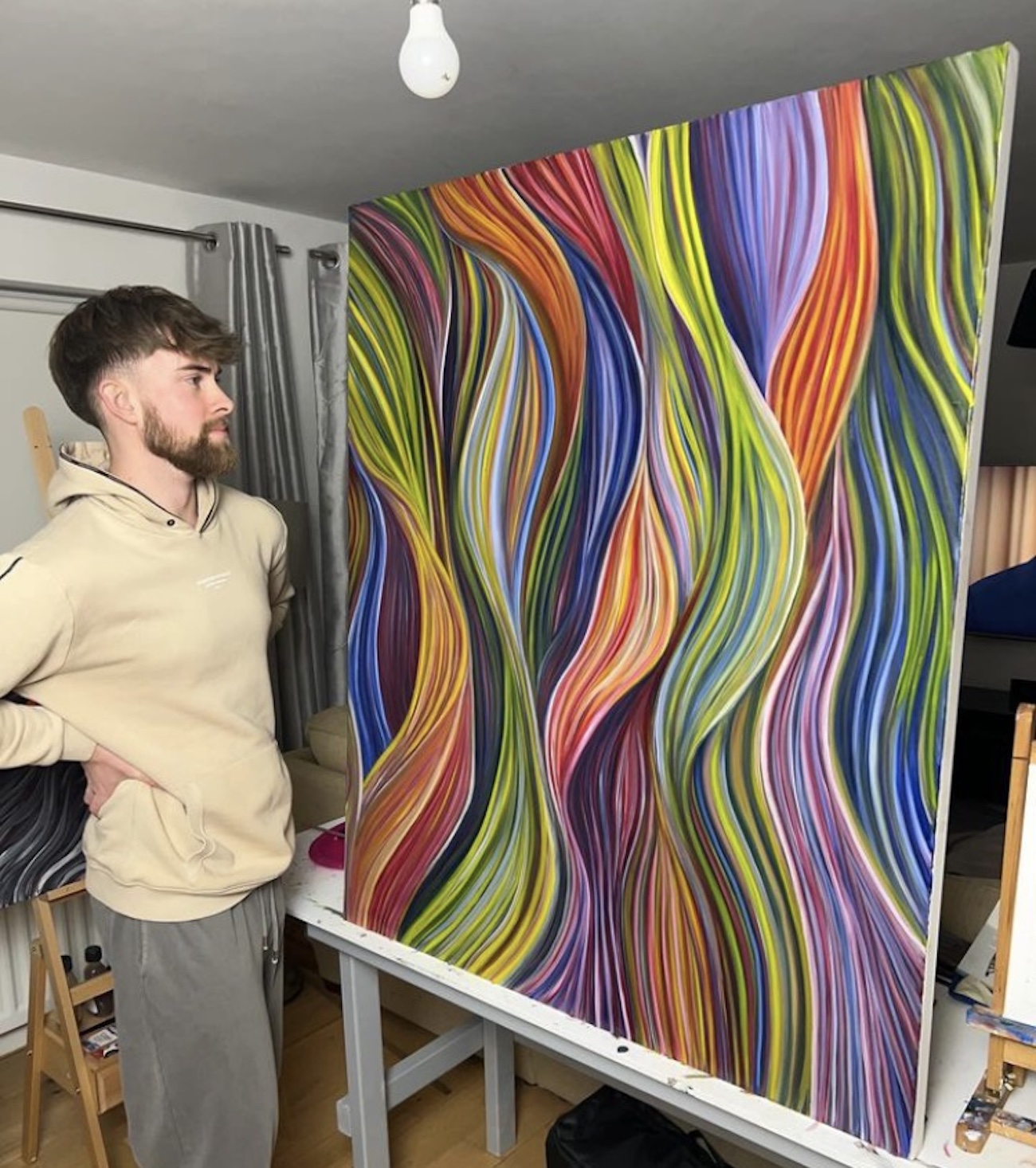
Your work emphasizes capturing energy and emotion through color. How do you translate something intangible like a feeling into a specific palette or composition?
I have to be able to visualize this intangible thing as something physical, which isn’t always easy to do. I can have a concept in mind or human experience I want to capture and it can take months thinking of the best way of doing this. For me, using vibrant and bold colors conveys energy well. I combine this with fluid brushstrokes which represent the continuous flow and conservation of energy. The colors I use evoke different emotions in the viewer and help with the storytelling aspect of my work. I think imagination is key in terms of the composition.
As a self-taught artist, how has your learning process shaped the way you approach experimentation and risk in your work?
I think being self-taught has helped me massively. It’s allowed me to work freely without any constraints and ultimately learn through personal failures and successes, over and over again. I’ll try new things that will work and then some that don’t. Each time I take these experiences with me to improve my craft. The more risks I take, the more ways I’m finding to paint and create new things.
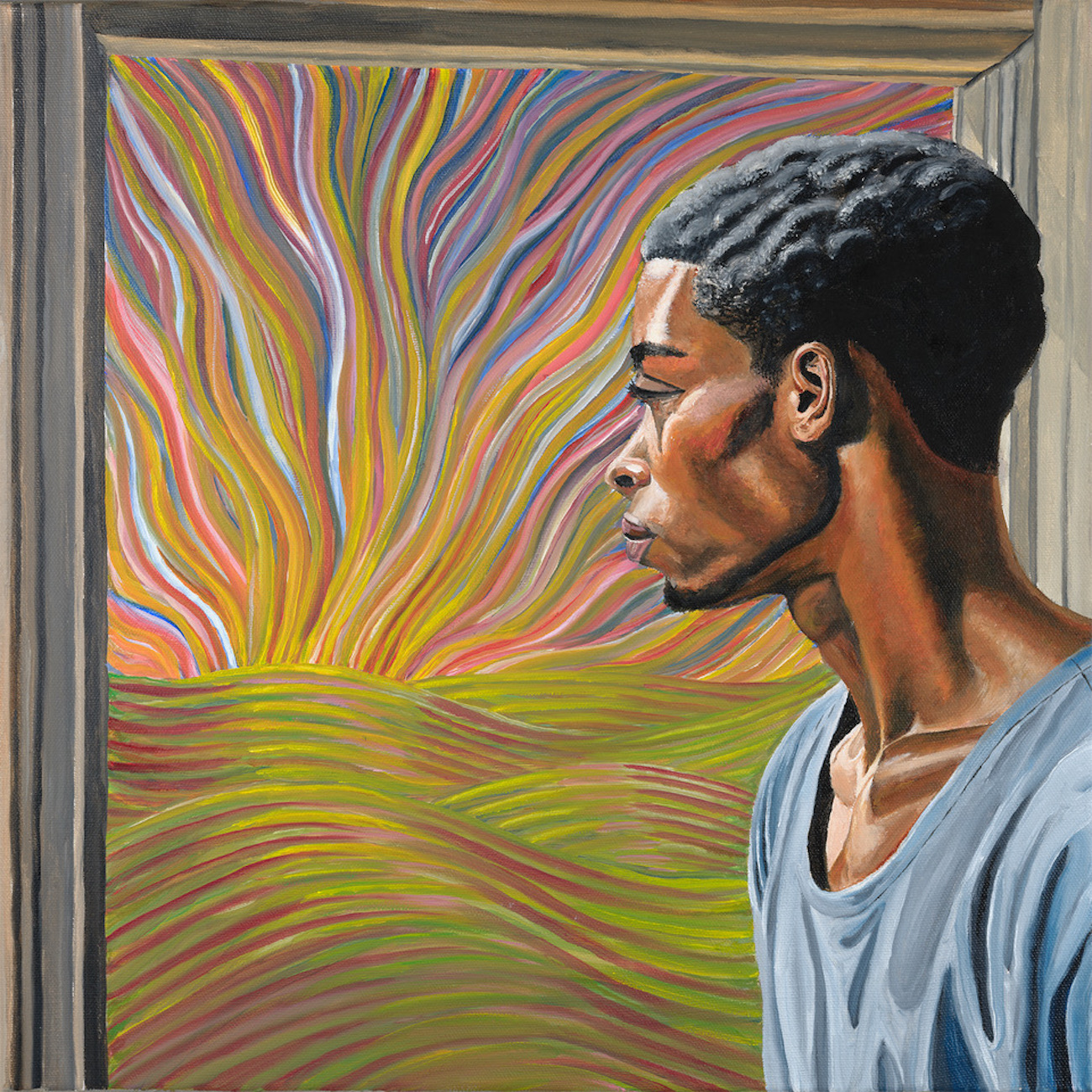
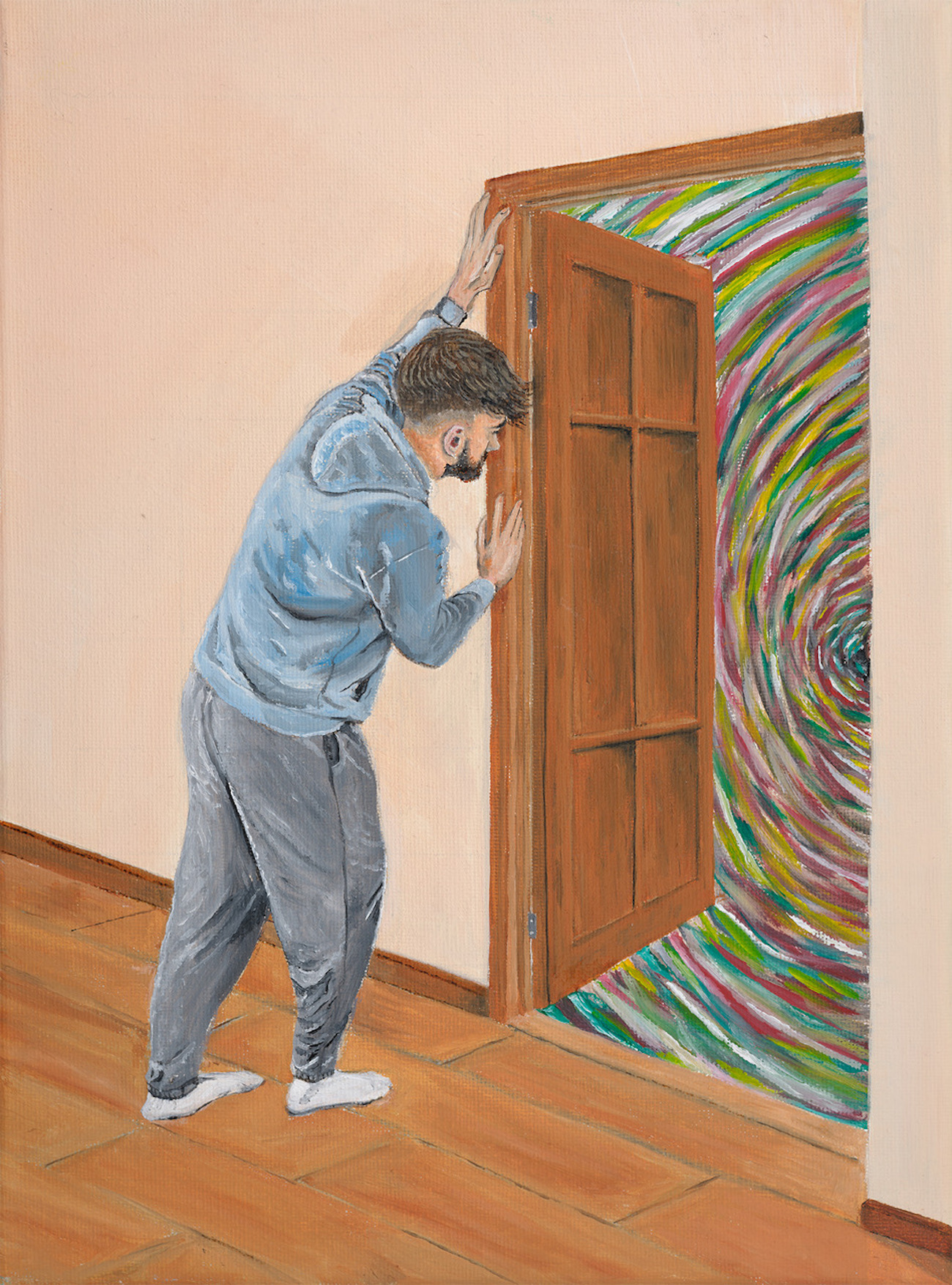
Many of your paintings feel very immediate and expressive. Do you plan your pieces in advance, or do they evolve more intuitively as you paint?
A mixture really. Often I’ll come up with an idea or experience that I really want to express or to resonate with people and I’ll create sketches of it but this changes a lot as I go along. There’s always elements that evolve intuitively as I paint. One of the things I like most about being able to paint is the freedom and expression of it, so I never like to follow an exact plan. When I paint like this, I see it as the energy flowing in me, flows through my brush, onto the canvas.
Can you talk about the role of oil paint in your practice? What does that medium allow you to do that others might not?
The blending, the slow drying, and the thinning of the paints all allow me to achieve that fluid movement in my work. It also allows me to experiment easily. I love the way oils move and the feeling I get when I can move the paint smoothly across the canvas.
Your work is described as bringing “joy” and “character” into people’s spaces. How do you balance personal expression with the awareness that your work will live in someone else’s home?
It’s not always easy as my experience isn’t always someone else’s. So I have to put myself in their shoes, think about what they can connect with and find a way of combing this with what I want to paint and what people want in their home. I can’t lose the essence of my expression but I want people that view my work to be seen.
How has selling prints and original works online (through platforms like your shop) influenced the way you think about audience and accessibility?
I’m so grateful that modern artists have access to the internet and are able to sell online. In the first three months of 2026 from Instagram I reached over 10 million views from people around the world. I couldn’t have done this without social media. It’s allowed me to expand my audience and the use of technology has made my work accessible to people all around the globe.
Are there recurring themes or emotions that you find yourself returning to, even subconsciously, across different pieces?
Connections is the main one. Connections to each other, to yourself, and to the planet. To me, the most important thing in people’s lives are their relationships. We need to nurture the relationship with ourselves and with the people close to us.
What does your studio process look like from start to finish, do you work on multiple pieces at once, or focus intensely on one?
This changes depending on what I’m currently working on. I won’t have more than two pieces on the go at once. As I use oils I need to wait for layers to dry and this can sometimes leave me with some extra time which allows me to focus my attention on another piece.
How do you know when a painting is finished, especially when working in a loose or expressive style?
It’s easier to know if I go into it with more of a plan and a destination in my mind. I can’t always see an immediate finish when I’m painting loosely and with more expression, but I usually know when I’m done when I get there. Very rarely do I look at my work and think I need to keep on adding more after thinking I’m done.
Looking ahead, how do you see your work evolving—are there new techniques, subjects, or scales you’re interested in exploring?
Definitely. I always want to try different things and explore new ideas. Through experimentation I find new ways of creating and stumble upon new ideas. I’m sure as I grow and experience new things in the world first hand, this will impact my work too. My style and work will grow with me.