
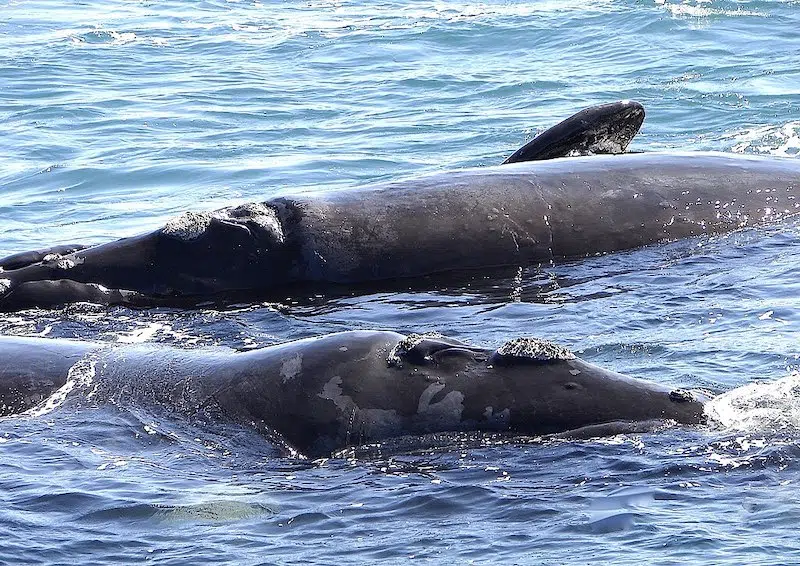
Southern Right Whales near Hermanus in South Africa. (Photo: Olga Ernst via Wikimedia Commons, CC BY-SA 4.0)
After centuries of commercial whaling pushed them to the brink of extinction, the population of southern right whales has slowly begun to recover. However, new research suggests that climate change may now be affecting that progress. Scientists have discovered that warming oceans are associated with a decline in the number of calves born to these massive marine mammals.
Southern right whales reproduce slowly under normal conditions, with females historically giving birth every three years. Recently, however, researchers have observed longer gaps between births. In some cases, mothers are now having calves closer to every four years.
Scientists believe that change may be tied to warming waters in the Antarctic Ocean, where the whales spend much of their time feeding. Southern right whales rely heavily on krill-like crustaceans that thrive in cold, nutrient-rich waters. As ocean temperatures rise and sea-ice patterns shift, krill populations can change as well. When food becomes harder to find, female whales may struggle to build the energy reserves needed for pregnancy and nursing.
Researchers identified the pattern by studying decades of whale observations along Australian coastlines. By tracking individual whales that return to the same calving grounds year after year, scientists were able to monitor long-term birth trends. Over time, the data revealed that the interval between calves has gradually increased.
Although southern right whales are still recovering from the era of industrial whaling, slower reproduction could make that recovery more difficult. When species reproduce less frequently, population growth slows—even if adult whales survive. The findings highlight how climate change is influencing ocean ecosystems in complex ways. Even species that have rebounded from past threats may face new challenges as their environment continues to shift.
Scientists studying long-term whale populations found that female southern right whales are having calves less often, possibly due to changes in krill availability linked to climate change.
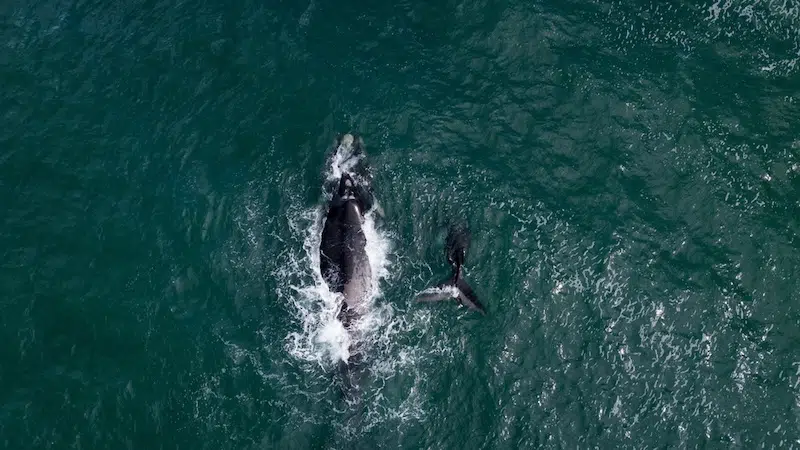
Although the species has rebounded in many regions, researchers warn that slower reproduction cycles could make future population recovery more difficult.

Sources: Southern Right Whales Are Having Fewer Calves; Scientists Say a Warming Ocean Is to Blame, Southern right whales are having fewer calves: What this says about ocean health, Declining birth rates in southern right whales alarm researchers in new study
Related Articles:
Swiss Glacier Collapse Highlights Urgent Reality of Climate Change
UN Report Reveals Glaciers Are Melting at a Record Rate, Affecting Livelihood of Billions Worldwide
Long-Extinct Dire Wolf Is Successfully Brought Back to Life by Biotech Company
20 Stunning Photos of Wildlife and Endangered Animals Will Benefit Conservation Efforts