
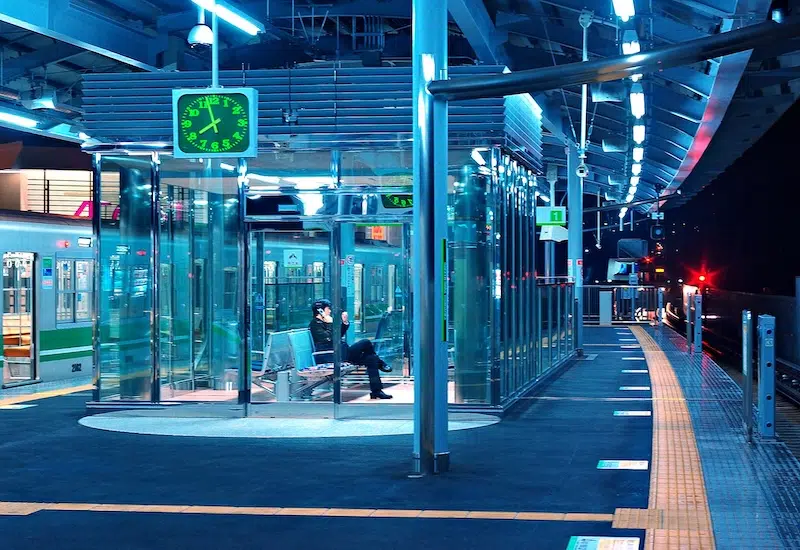
At select train stations across Japan, commuters encounter a cool blue glow near the platform’s edge. The light feels soft but unmistakable. Officials installed these blue LED lamps, often at platform ends, to create a calmer atmosphere and with the hope of preventing suicide.
The idea comes from color psychology. Researchers have linked blue tones to reduced agitation and increased feelings of calm. Transit authorities adopted the lights in hopes that a cooler ambience could help curb impulsive behavior in high-stress spaces. Compared to structural renovations, crews can install the LEDs quickly and at lower cost. The efficiency makes them an appealing option for rail operators seeking visible action.
In an observational study conducted by researchers from University of North Texas (USA), The University of Tokyo (Japan), and Syracuse University (USA), it’s noted that there are certain design choices that have proven effective in decreasing suicide on train platforms. One such modification is the installation of physical barriers. In their particular study, however, they looked at the suicide rates on train platforms before and after the installation of blue LED lights. In their research, they say, “Our regression analysis shows that the introduction of blue lights resulted in a 84% decrease in the number of suicides.” As for the installation of blue LED lamps instead of physical barriers, they conclude : “As blue lights are easier and less expensive to install than platform screen doors, they can be a cost-effective method for suicide prevention.”
Since this study, other researchers have taken a look at other factors and variables. One paper discusses whether effective suicide prevention methods at one station cause greater suicide at stations without these improvements installed. The results found that “it did not result in a systematic increase in the number of suicides at the neighboring stations.” Researchers also now suggest that the effects of blue LED lamps vary by location and time of day. The lights appear most effective at night only within the areas they illuminate.
The blue LED lights do not replace larger safety measures; however, they highlight a growing belief that design shapes behavior. By adjusting light and atmosphere, transit systems are attempting to make everyday spaces feel steadier and more controlled.
Some Japanese train stations have blue LED “suicide prevention lights” installed to create a calming atmosphere.
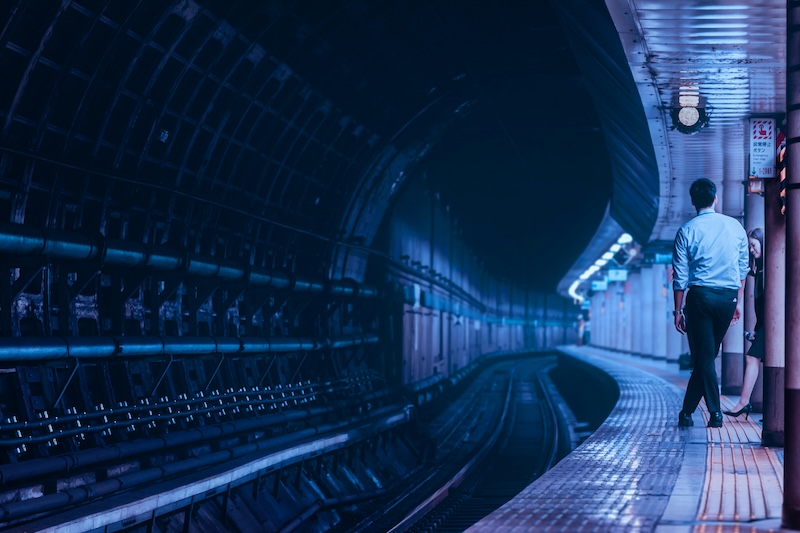

Researchers found that “the introduction of blue lights resulted in a 84% decrease in the number of suicides.”
View this post on Instagram
Sources: Does the installation of blue lights on train platforms prevent suicide? A before-and-after observational study from Japan; Reconsidering the effects of blue-light installation for prevention of railway suicides; How blue light affects your eyes, sleep, and health; Does the installation of blue Lights on train platforms shift suicide to another station?: Evidence from Japan; Why Japanese Train Stations Just Feel Better; Blue lighting accelerates post-stress relaxation: Results of a preliminary study; The Color Blue: Meaning and Color Psychology
Related Articles:
Vintage Japanese Matchbox Labels Masterfully Blend Cultural Identity With Commerce
Watch a Japanese Olympic Skier Glide Backward Over the Finish Line and Still Win His Event
Learn How Japanese Educators Use the Ancient Abacus To Strengthen the Minds of Today
Powerful Suicide Prevention Campaign Challenges What Suicidal Looks Like