

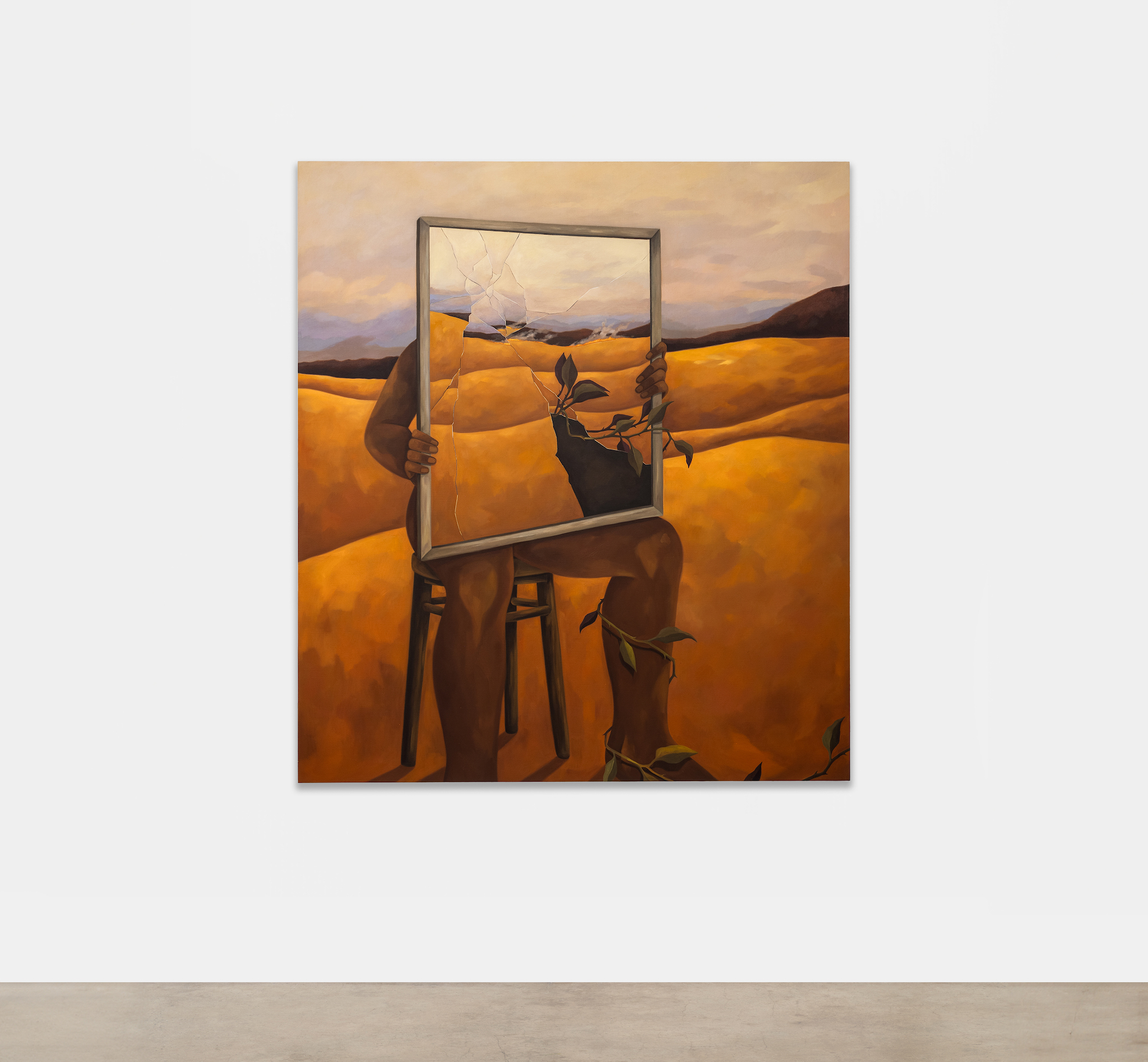
‘Resilienca I,’ 2025, oil on linen.
If nothing else, literature, myths, folklore, and art history have taught us that the female body and the Earth itself are often thematically compatible. In her latest solo exhibition, De Tierra y Susurros, Hilda Palafox continues this line of inquiry, but through a distinctly Latin American lens.
Now open at Sean Kelly Gallery in New York, the show gathers several paintings and sculptural reliefs that consider femininity and its relationship to nature. Many works stage otherworldly encounters between women and vast desert landscapes, in which organic and feminine forms intertwine. Palafox’s color palettes seamlessly complement these visuals, dousing each scene with warm, atmospheric tones that, though earthy, still retain a sense of magic. Taken altogether, the paintings prompt what the gallery describes as an “ecological awareness,” where women and their natural surroundings are fundamentally inseparable.
Aside from its ecofeminist scope, De Tierra y Susurros also leans into Latin American folklore, which insists upon a spiritual and historical connection between women and the earth. Presagio, for example, is suggestive of a sort of rupture, where the sacred and mundane collapse into one another. In this composition, two women tenderly face one another beside a broken fence, yellow butterflies floating around them. The inclusion of the wire fencing and its damaged edges signals how fragile our world is, and how the boundary around it can give way to something more mystical—and more rooted within the earth itself. After all, the exhibition’s title translates to “of soil and whispers.”
Palafox’s reliefs also tease at this idea. Carved from cantera stone, Portal III features a woman with an open mouth, from which a thorny stem emerges. Swirling around her like snakes are even more stems, their ends flowering with roses. As its title suggests, Portal III is equally representative of a threshold, one where the “human body becomes a metaphor for pollination, transformation, and consciousness,” per the gallery. Here, each flower offers a “passage between matter and spirit, the seen and unseen,” a secret moment that, as Palafox hints, may only be accessible to the mythologized woman.
“What I see in Hilda’s work is a matriarchal world where women are free to wander through the inner landscapes of their psyches—and where their strength grows in togetherness,” Zélika García, the founder of Zona Maco, recently told Galerie Magazine.
For Palafox, those themes would be nearly impossible to explore without her specific style. Having been trained as a graphic designer, the Mexico City–based artist relies upon bold, graphic shapes, recalling those used by such Mexican modernists as Juan O’Gorman, Diego Rivera, and Frida Kahlo.
“I like to think that my practice articulates a dialogue between the monumental legacy of muralism and Mexican modernism as well as the political and poetic potency of contemporary feminist practices,” Palafox remarked in Galerie. “Within this economy of visual resources, I find expressive power. Line functions as both structure and trace, color as breath and accent, and composition as a field of forces where balance coexists with instability.”
Hilda Palafox: De Tierra y Susurros is now on view at Sean Kelly Gallery through February 21, 2026.
In De Tierra y Susurros, now open at Sean Kelly Gallery, artist Hilda Palafox explores the female body through radical ecology.
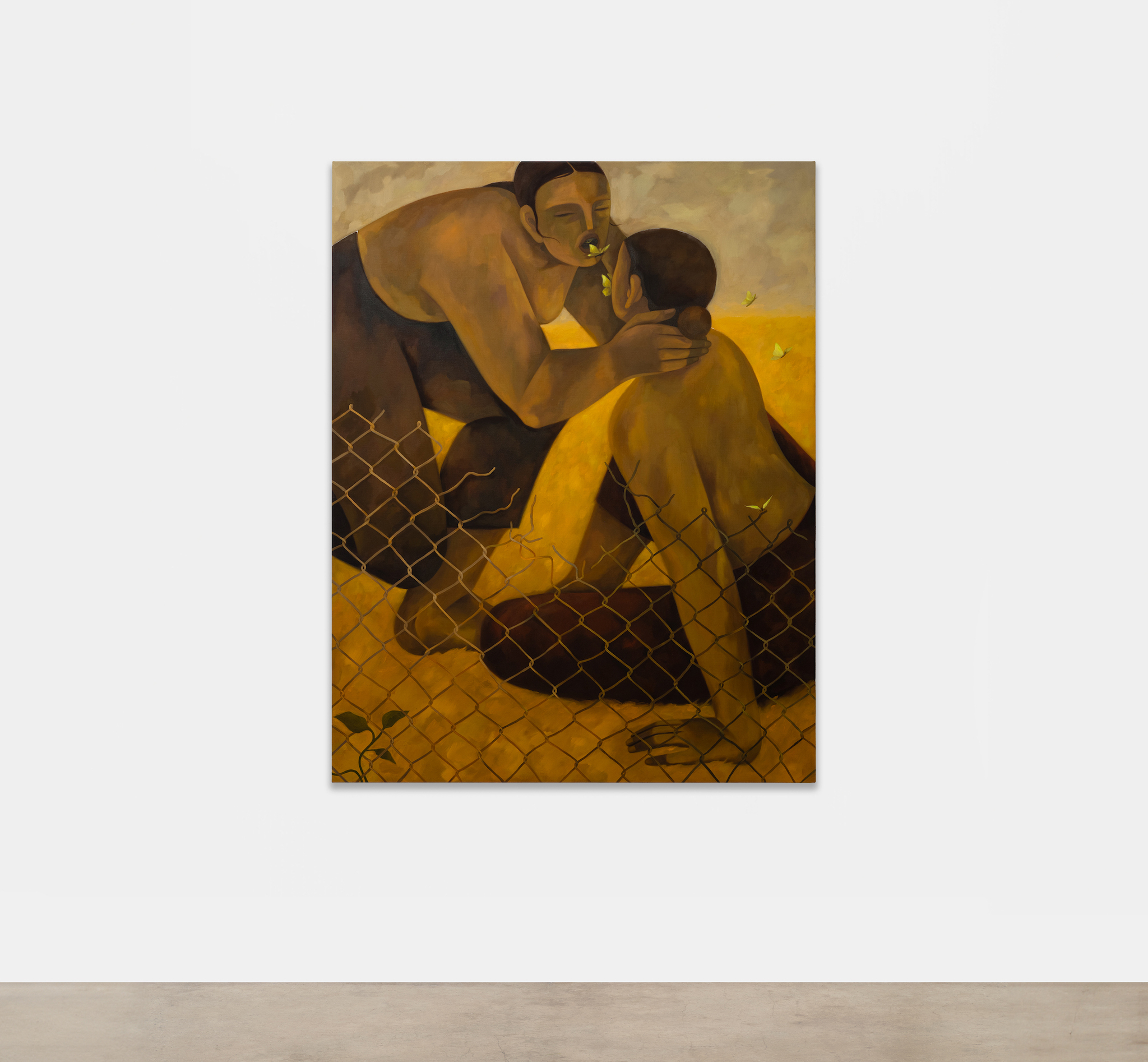
‘Presagio,’ 2025, oil on linen.
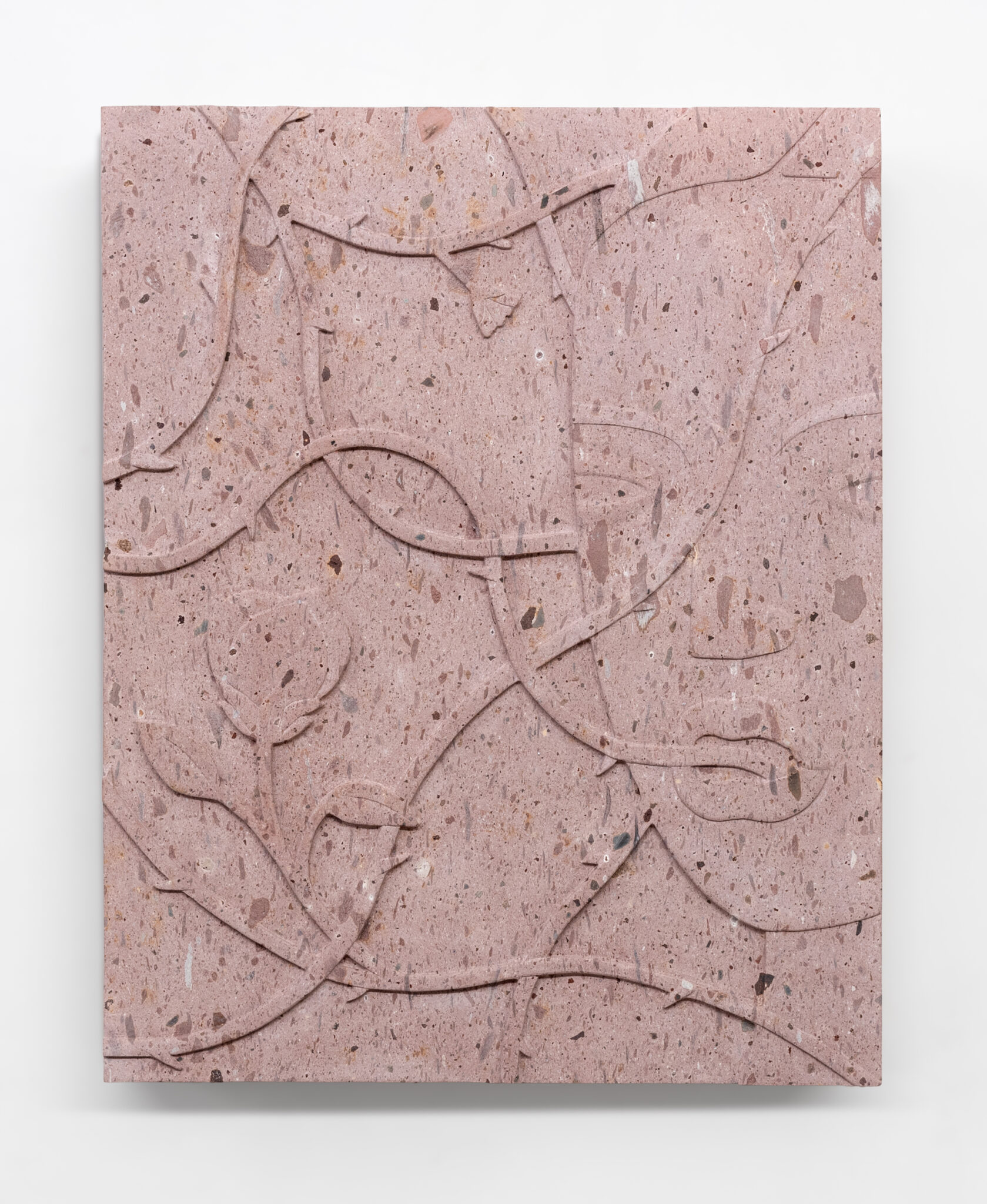
‘Portal III,’ 2025, cantera stone.
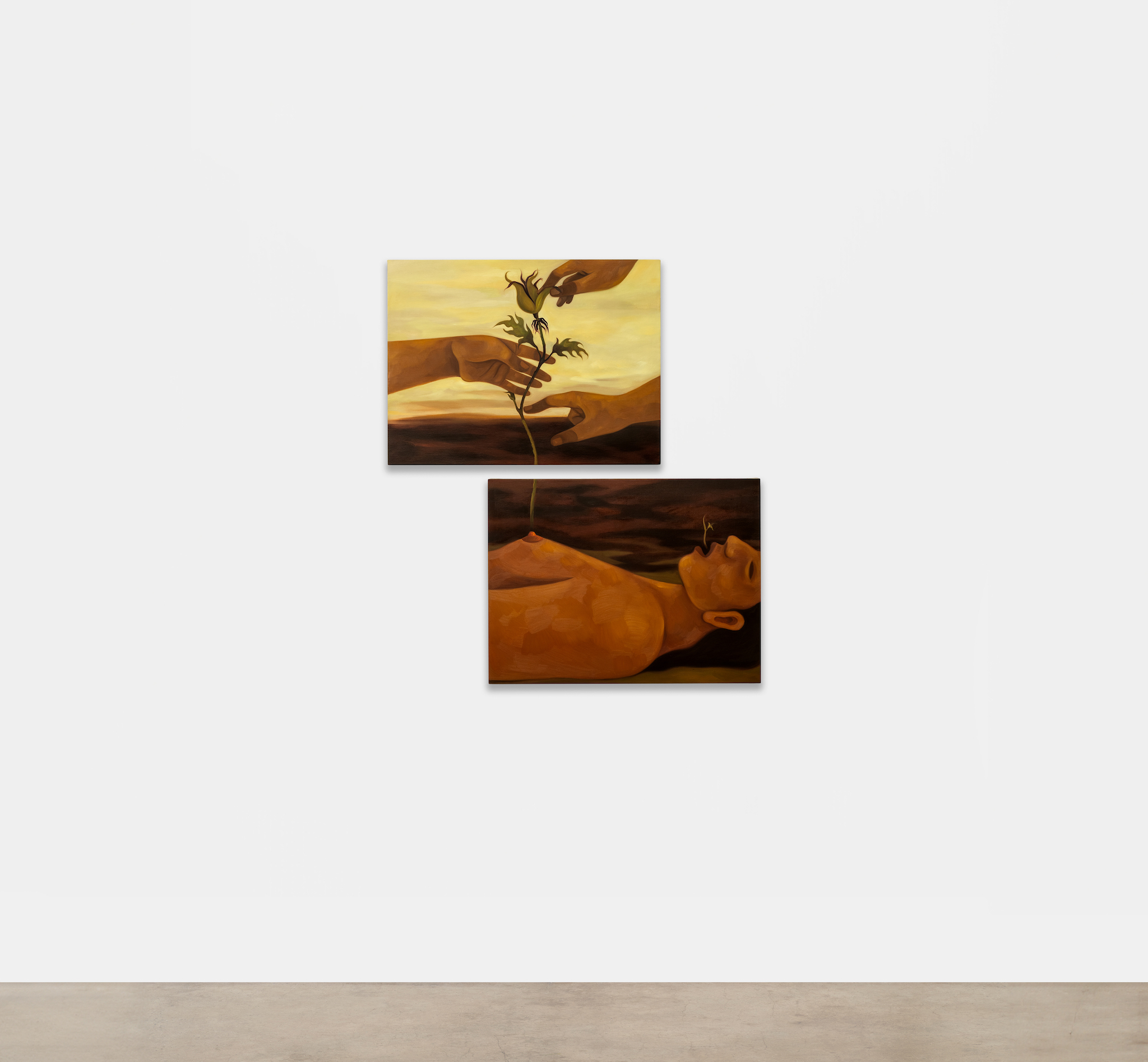
‘Resiliencia II,’ 2025, diptych oil on linen.
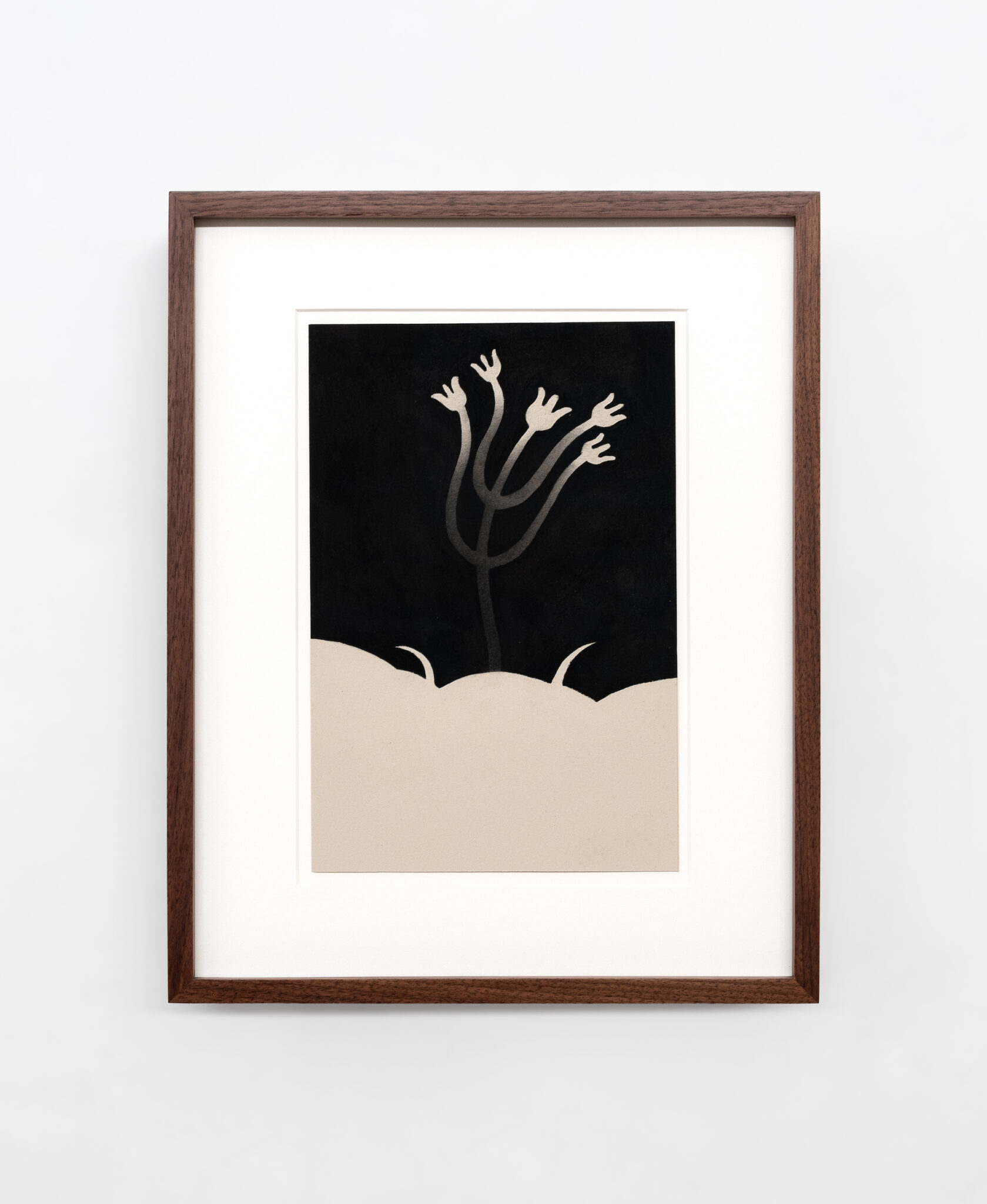
‘Paisaje I,’ 2025, acrylic and charcoal on paper.