
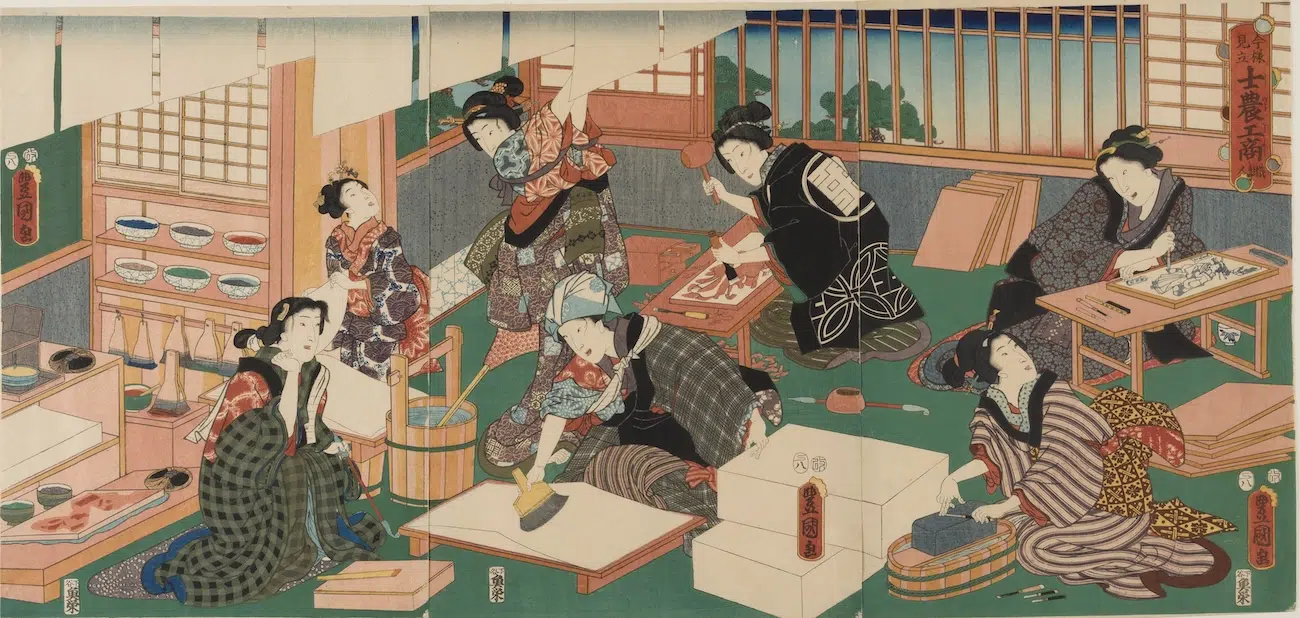
Utagawa Kunisada (Toyokuni III). Untitled (Japanese Women Making Woodcuts). 1857. Color woodblock print (nishiki-e). Each Sheet: 14 5/8 x 10 in. (37.2 x 25.4 cm). Full Object: 14 5/8 x 30 ¼ in. (37.2 x 76.8 cm). Hammer Museum, Los Angeles. UCLA Grunwald Center for the Graphic Arts, Hammer Museum. Purchase
Japan is known for its printmaking. Oftentimes, when we imagine its printed output, it is—or is inspired by—ukiyo-e, or “pictures of the floating world”: the defining artistic genre to come out of the country’s Edo period (1603–1868). Ukiyo-e offers us insight into the history and culture of the country at this time. Now, an exhibition at the Hammer Museum in Los Angeles is highlighting its collection of Japanese woodblock prints from the Grunwald Center for the Graphic Arts. Called Rising Sun, Falling Rain, the show is an in-depth look at the evolution of ukiyo-e printmaking and the shin-hanga movement, which revitalized traditional ukiyo-e in early 20th-century Japan.
The Edo period was characterized by significant cultural transformation. It emerged after the Sengoku period, during which civil wars and social upheaval occurred throughout the 15th and 16th centuries. The Edo period, by contrast, saw prolonged peace and stability, accompanied by urbanization and economic growth. A more prosperous urban population had the means and time to seek enjoyment via mass culture. This quest was known as searching for the floating world, where fashion, entertainment, and aesthetics meet.
From their inception, ukiyo-e prints centered on the urban life that many people sought in “licensed pleasure quarters” like kabuki theaters, teahouses, and brothels. Gradually, the subject matter expanded as culture shifted, driven by an increase in domestic travel, particularly to places like the Ise Grand Shrine and the summit of Mount Fuji. Government censorship and contact with Western art also had an impact on the themes in later ukiyo-e. Nature, literature, and folklore were popular subject matter.
Rising Sun, Falling Rain features over 80 prints curated from the Grunwald Center for the Graphic Arts, which is part of UCLA. In the expansive show, you’ll see how the genre developed and refined its technical and aesthetic qualities, and you’ll understand why ukiyo-e was, and continues to be, a cultural force in Japan and beyond.
After a recent trip to the Hammer Museum, Eugene Kim, co-founder and editor-in-chief of My Model Met, shares, “I saw these Japanese woodblock prints in person and knew instantly that we needed to share them on My Modern Met. There is so much beauty, history, and craftsmanship in these important works.”
Rising Sun, Falling Rain is now on view at the Hammer Museum until November 30, 2025.
An exhibition at the Hammer Museum in Los Angeles is highlighting its collection of Japanese woodblock prints from the Grunwald Center for the Graphic Arts.
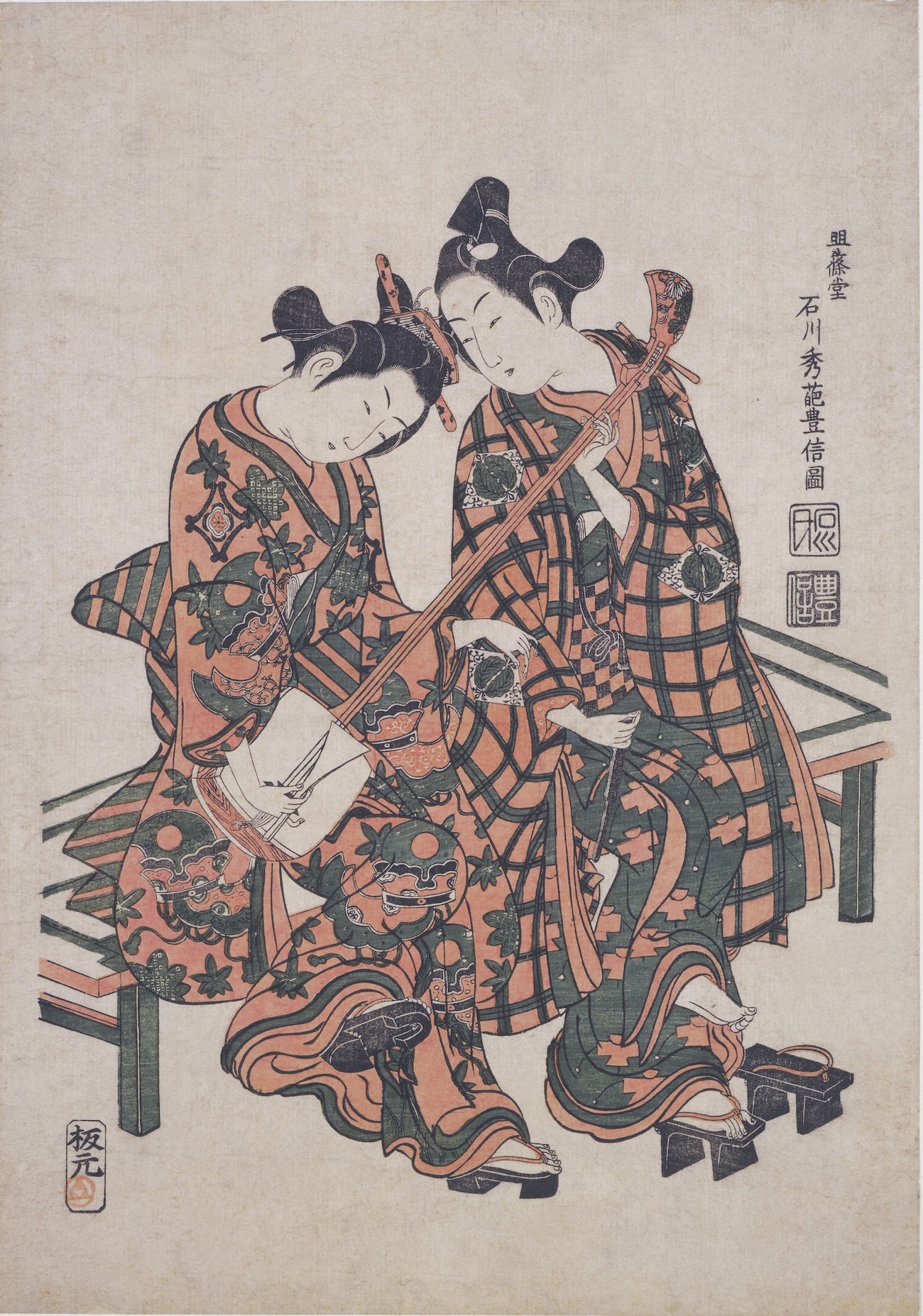
Ishikawa Toyonobu. Actors Onoe Kikugorō I and Nakamura Kiyosaburō I Playing a Samisen Together. Ca. 1749-1752. Woodblock print (benizuri-e); ink and limited color on paper. Sheet: 17 3/8 x 12 3/16 in. (44.1 x 31 cm). Hammer Museum, Los Angeles. UCLA Grunwald Center for the Graphic Arts, Hammer Museum. Purchase
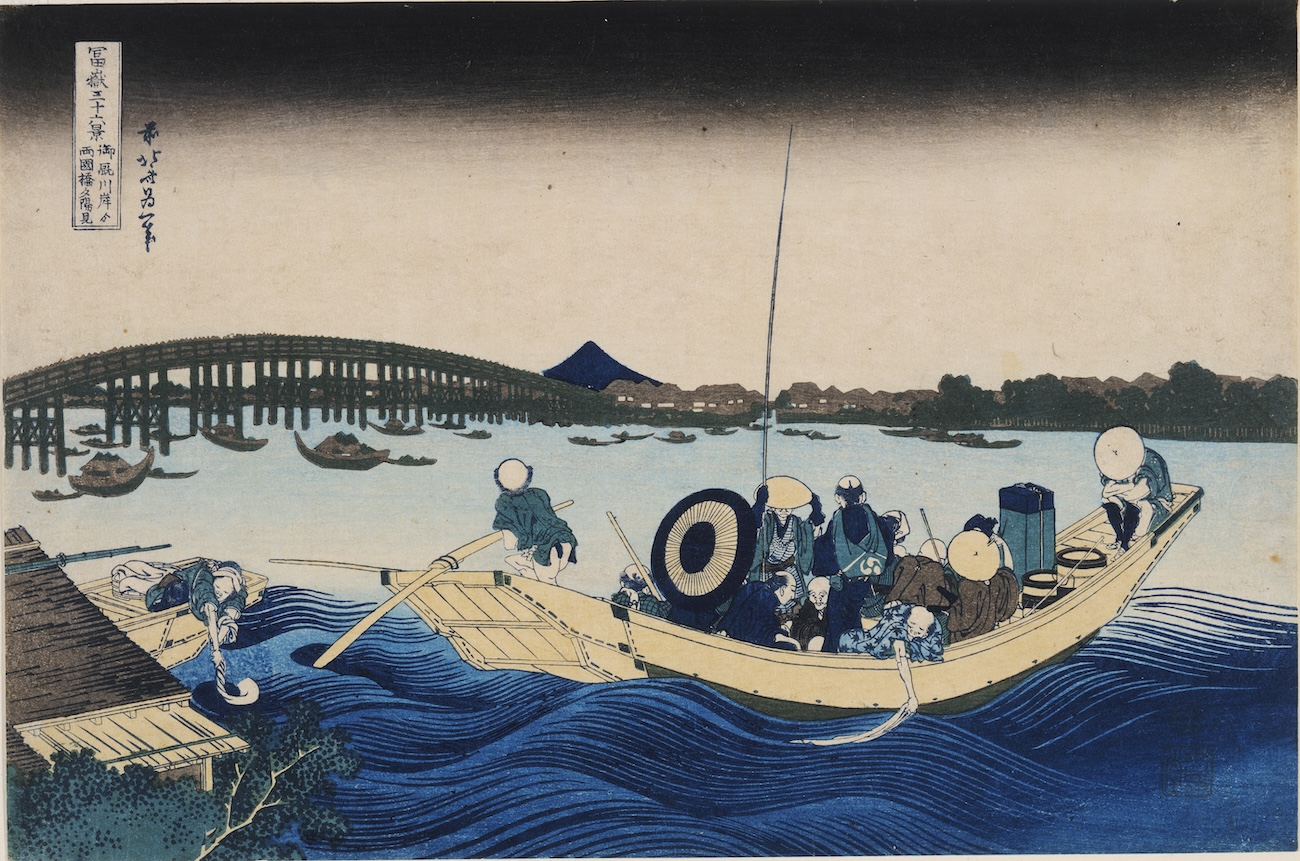
Katsushika Hokusai. Viewing Sunset over Ryōgoku Bridge from the Onmaya Embankment, from the series Thirty-Six Views of Mount Fuji. 1831-1833. Color woodblock print (nishiki-e). Sheet: 9 7/8 x 14 7/8 in. (25.1 x 37.8 cm). Hammer Museum, Los Angeles. UCLA Grunwald Center for the Graphic Arts, Hammer Museum. Purchased from the Frank Lloyd Wright Collection, 1965
The show is called Rising Sun, Falling Rain.
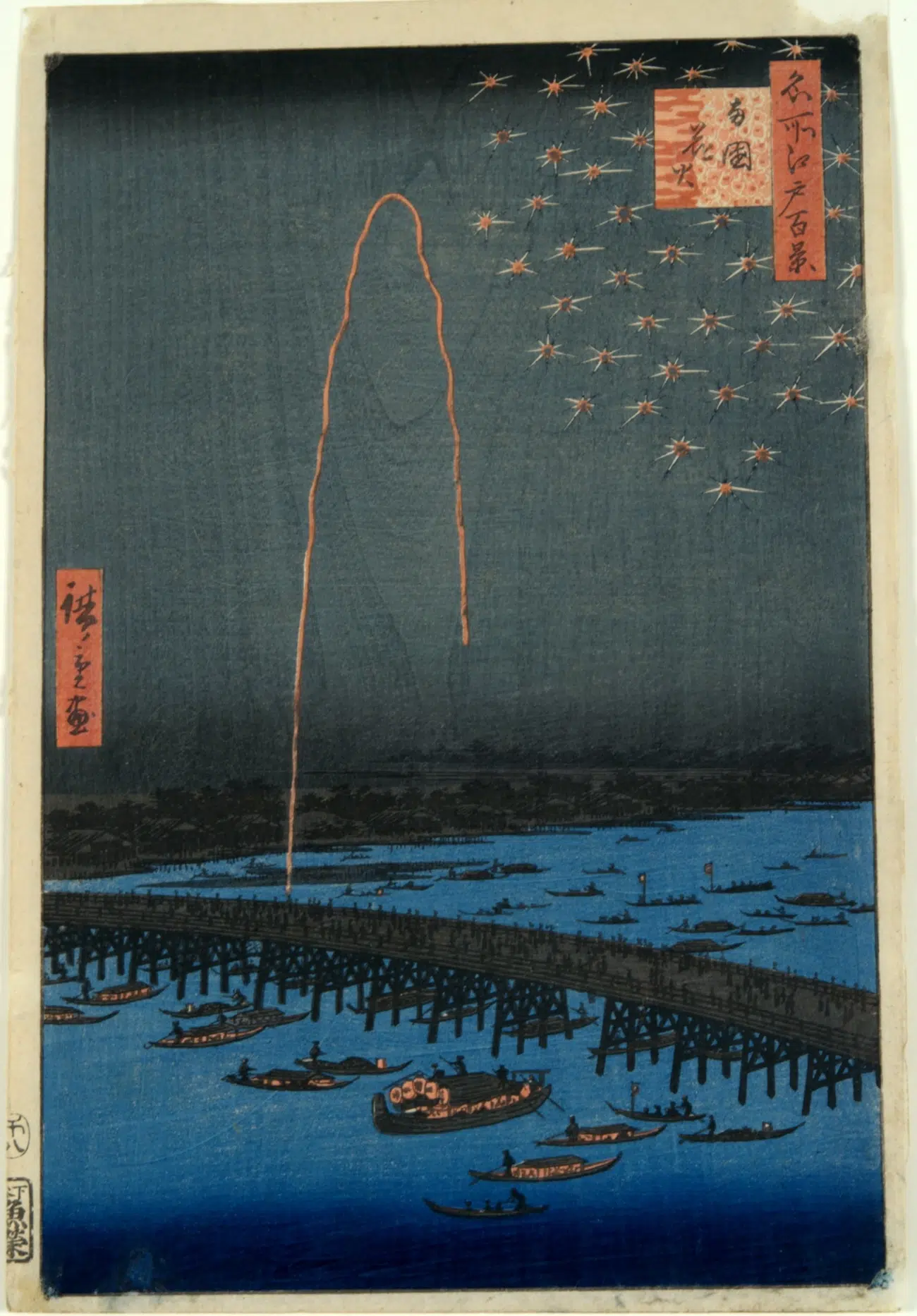
Utagawa Hiroshige. Fireworks at Ryōgoku Bridge, Number 98. 1858. Color woodblock print (nishiki-e). Sheet: 14 1/16 x 13 ¼ in. (35.7 x 33.7 cm). Hammer Museum, Los Angeles. UCLA Grunwald Center for the Graphic Arts, Hammer Museum. Purchased from the Frank Lloyd Wright Collection, 1965
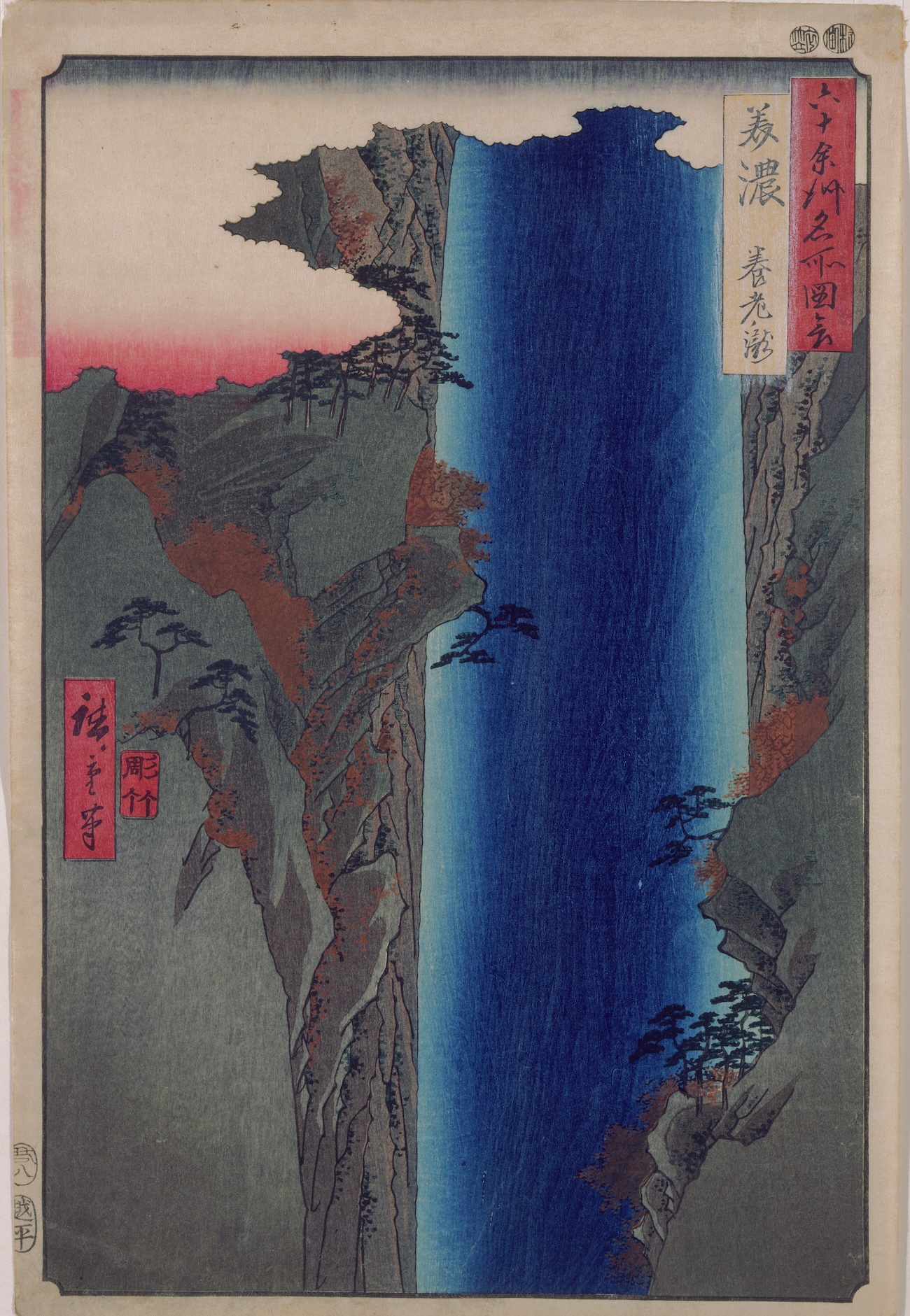
Utagawa Hiroshige,”Yoro Waterfall in Mino Province, Number 23,” 1853–58. Color woodblock print. Sheet: 14 3/8 × 9 3/4 in. (36.5 × 24.8 cm). Hammer Museum, Los Angeles. UCLA Grunwald Center for the Graphic Arts, Hammer Museum. Purchased from the Frank Lloyd Wright Collection, 1965
Featuring over 80 prints, the exhibition is an in-depth look at the evolution of ukiyo-e printmaking and the shin-hanga movement.
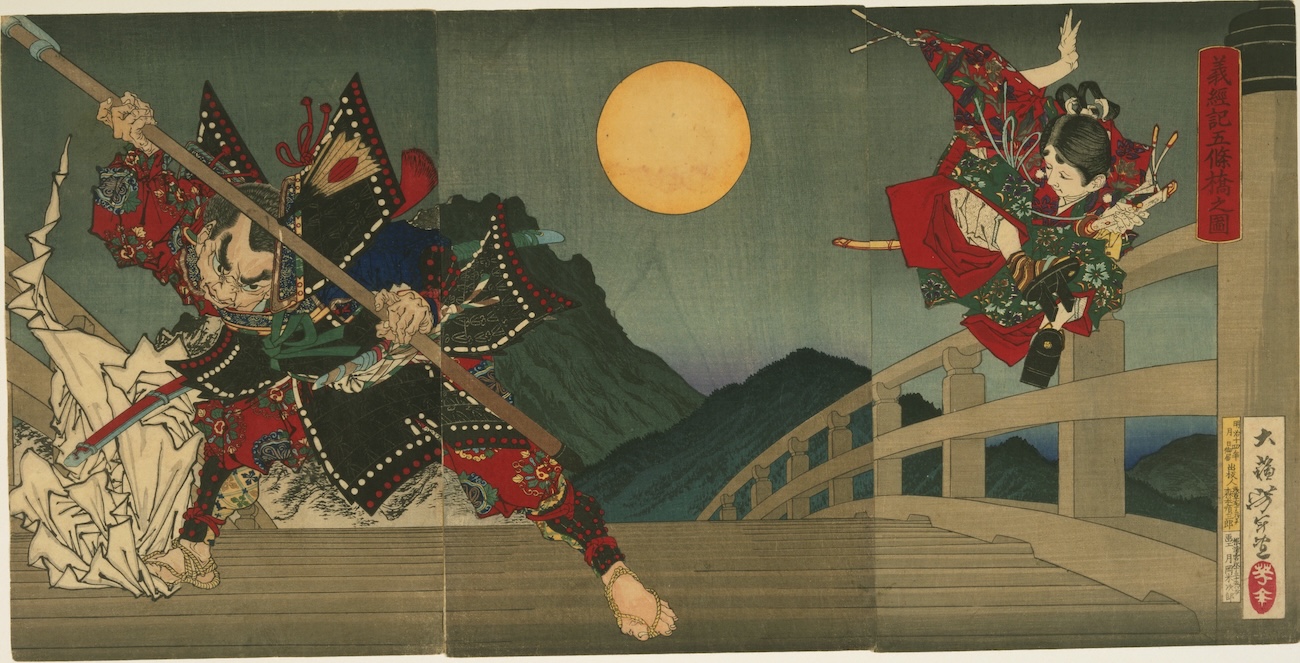
Tsukioka Yoshitoshi. Gojō Bridge: An Episode from the Life of Yoshitsune. 1881. Color woodblock triptych. Sheet: 14 x 27 ¾ in. (35.6 x 70.5 cm). Hammer Museum, Los Angeles. UCLA Grunwald Center for the Graphic Arts, Hammer Museum. The Eugene L. and Davida R. Trope Collection
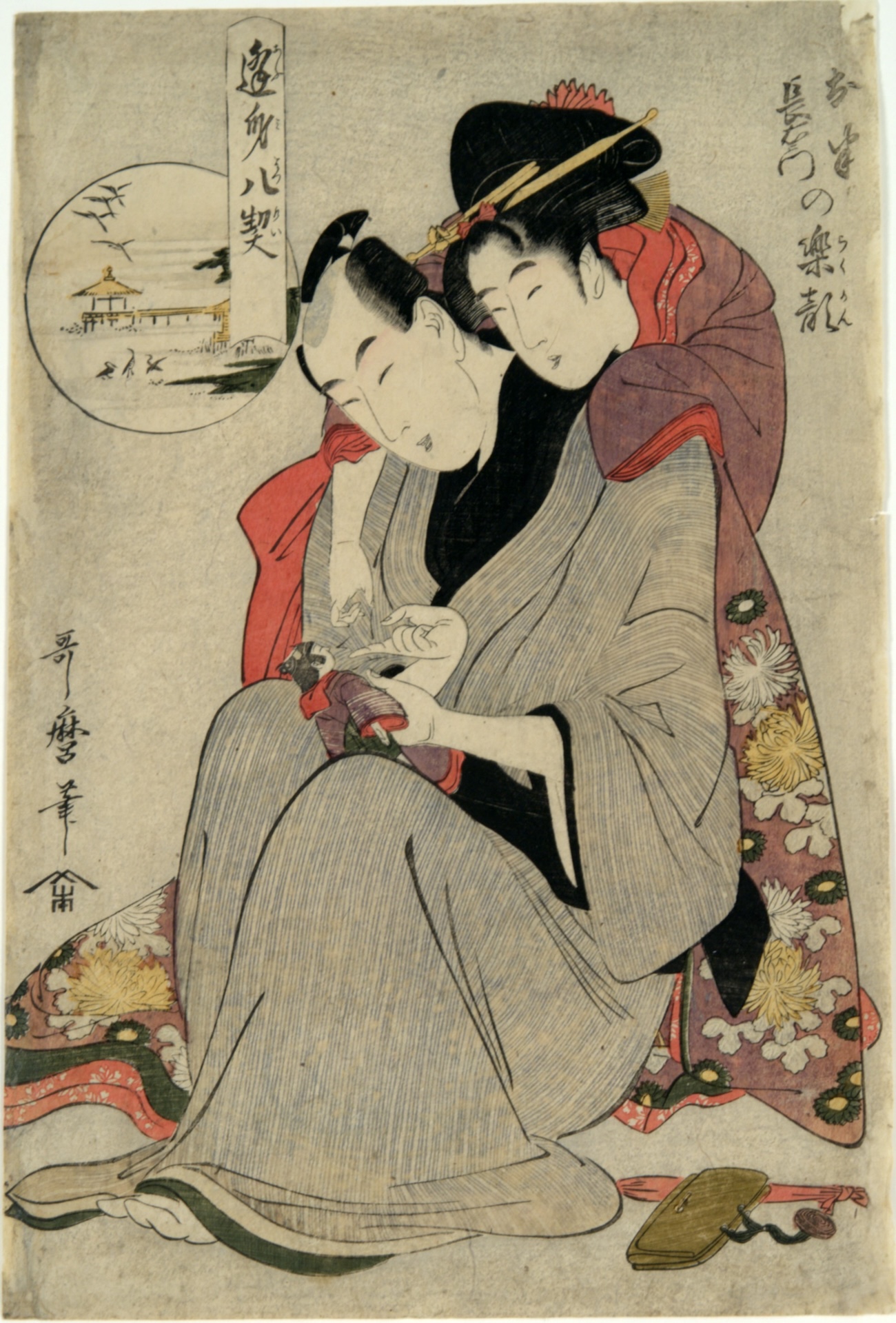
Kitagawa Utamaro. The Happy Faces of Ohan and Chōemon, from the series Eight Pledges at Lovers’ Meetings. Ca. 1798-1799. Color woodblock print (nishiki-e). Image: 14 15/16 x 9 15/16 in. (38 x 25.3 cm). Hammer Museum, Los Angeles. UCLA Grunwald Center for the Graphic Arts, Hammer Museum. Purchased from the Frank Lloyd Wright Collection, 1965
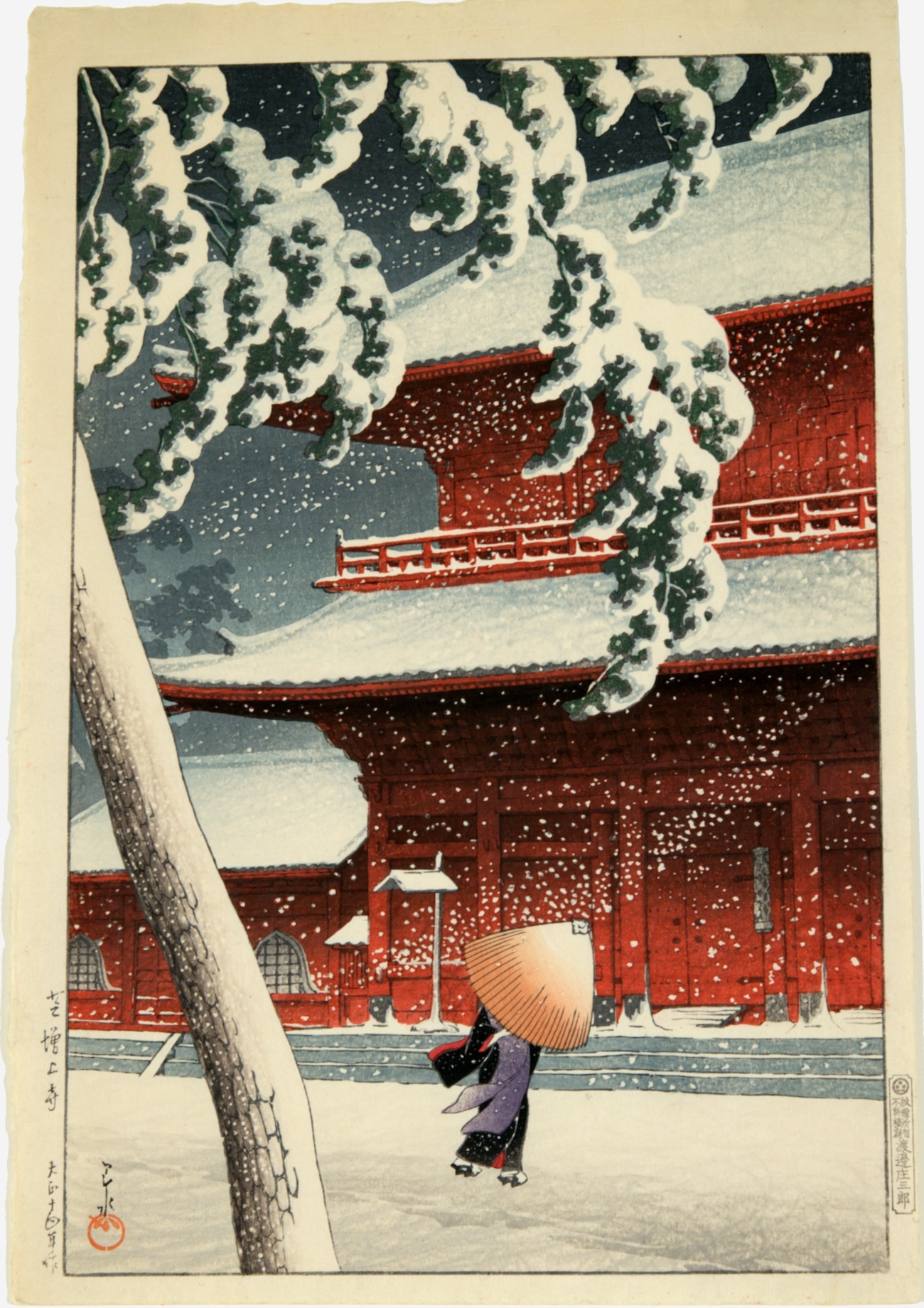
Hasui Kawase. The Temple Zōjōji, Shiba, from the series Twenty Views of Tokyo. 1925. Color woodblock print (nishiki-e). Sheet: 15 ¼ x 10 3/8 in. (38.7 x 26.4 cm). Hammer Museum, Los Angeles. UCLA Grunwald Center for the Graphic Arts, Hammer Museum. The Eugene L. and Davida R. Trop Collection
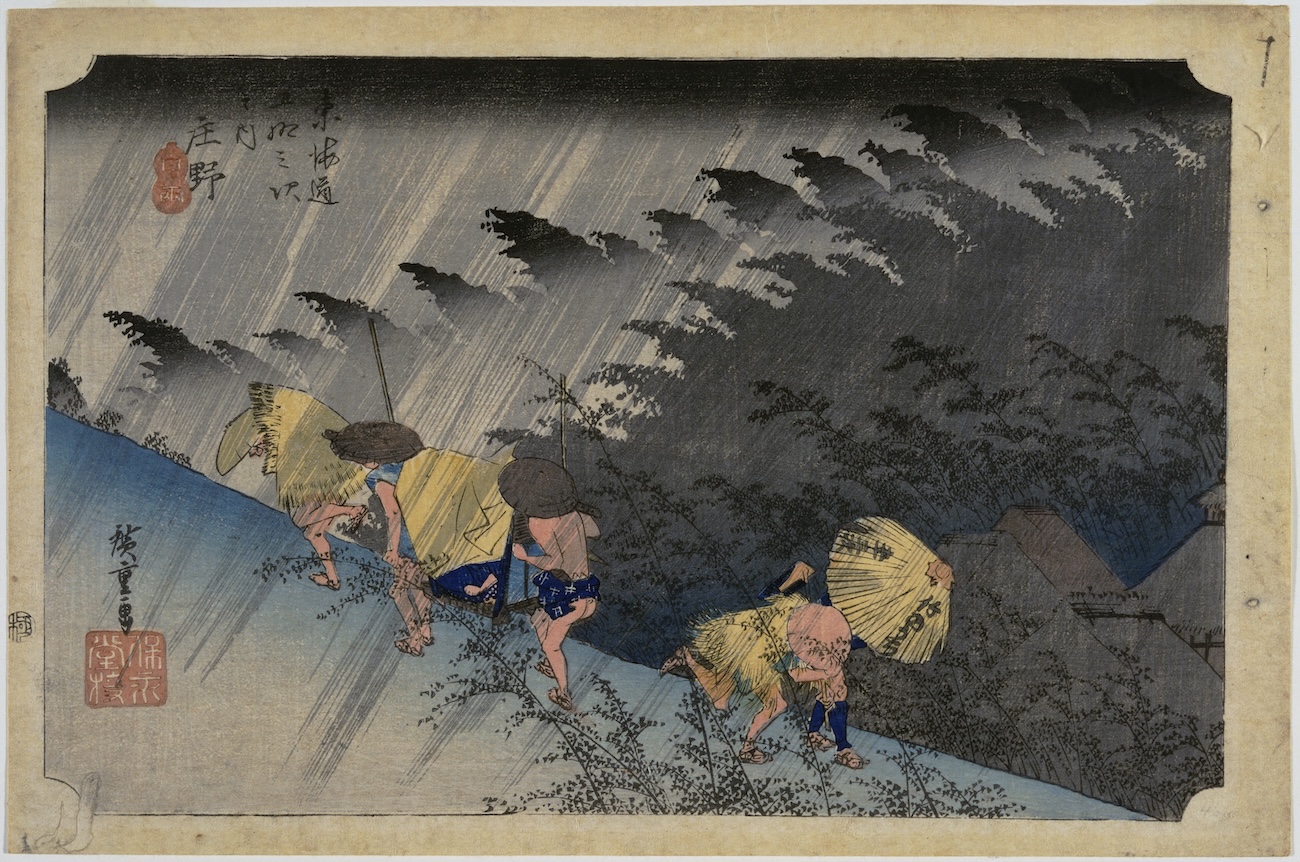
Utagawa Hiroshige. Shōno: Driving Rain, from the series Fifty-Three Stations of the Tōkaidō, Number 46. Ca. 1833-1836. Color woodblock print (nishiki-e). Sheet: 9 15/16 x 14 7/8 in. (25.3 x 37.8 cm). Hammer Museum, Los Angeles. UCLA Grunwald Center for the Graphic Arts, Hammer Museum. Purchased from the Frank Lloyd Wright Collection, 1965