

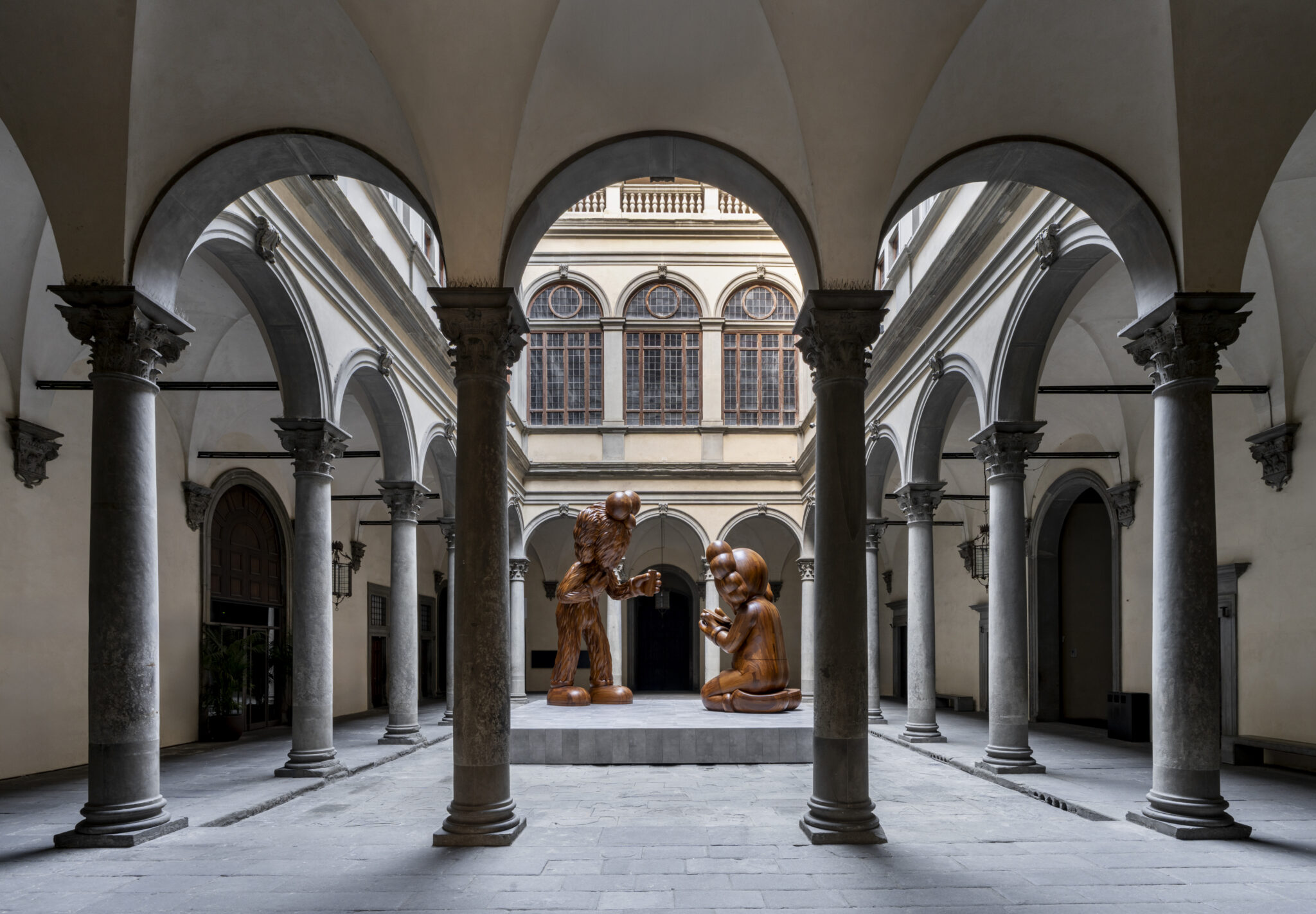
“The Message,” 2025, on view at the Palazzo Strozzi in Florence. (Photo: Ela Bialkowska / OKNO Studio)
Contrary to expectation, world-renowned artist and designer KAWS doesn’t just find inspiration in pop culture—at least, that much is made clear in his latest project. This time, the artist looks backward, wandering all the way back to the Renaissance to mine its iconography for contemporary meaning. The result is The Message, a monumental installation that was recently unveiled at the Fondazione Palazzo Strozzi in Florence.
Framed by the museum’s Renaissance courtyard and its classical architecture, The Message reimagines The Annunciation, Fra Angelico’s 15th-century masterpiece. The inspiring fresco depicts the archangel Gabriel visiting the Virgin Mary, who greets him while sitting inside on a wooden chair.
For his own 21st century rendition, KAWS also stages what appears to be a divine encounter, mirroring Gabriel and Mary’s poses through his own iconic characters, BFF and Companion. At first glance, it looks like the pair are engaged in a heartfelt conversation, BFF standing and imploring, and Companion seated and reflective, much like Angelico’s composition. Look closer, however, and it becomes clear that these wooden statues are in fact deeply isolated from one another.
KAWS isn’t subtle when diagnosing the source of that isolation. The mobile phone is at the heart of The Message, remixing what exactly constitutes divinity, alienation, and communication in our modern age. With this in mind, BFF suddenly transforms from a cordial friend to a confrontational figure, seemingly demanding that Companion glance up at what BFF is presenting him on his phone. Companion, in turn, remains glued to his own phone, his head bowed and fingers poised to continue swiping across his screen. In this arrangement, technology—not an archangel—is positioned as a divine object and messenger, one that can bridge the gap between the sacred and the profane.
Whether or not that gap is actually bridged is, of course, a whole other matter. In The Annunciation, Virgin Mary accepts Gabriel, meeting him with an equally attentive gaze. In The Message, however, that possibility simply doesn’t emerge: Companion has no interest in tearing himself away from his phone. And, even if he did, he wouldn’t meet the eyes of a friend—he would meet the glow of a screen. Today, the digital world may be a privileged mode of socialization; but, as KAWS suggests, it may not be an ideal one.
“The Message is a work that I imagined in dialogue with one of the fathers of the Renaissance,” KAWS explains. “It’s about communicating, it’s about people, what’s said and what’s lost. I feel it’s a contemporary interpretation of a very old idea.”
The Message is part of a new exhibition dedicated to the work of Fra Angelico, now on view at the Palazzo Strozzi through January 25, 2026.
For his latest project at the Palazzo Strozzi in Florence, KAWS reimagined Fra Angelico’s 15th-century fresco The Annunciation.
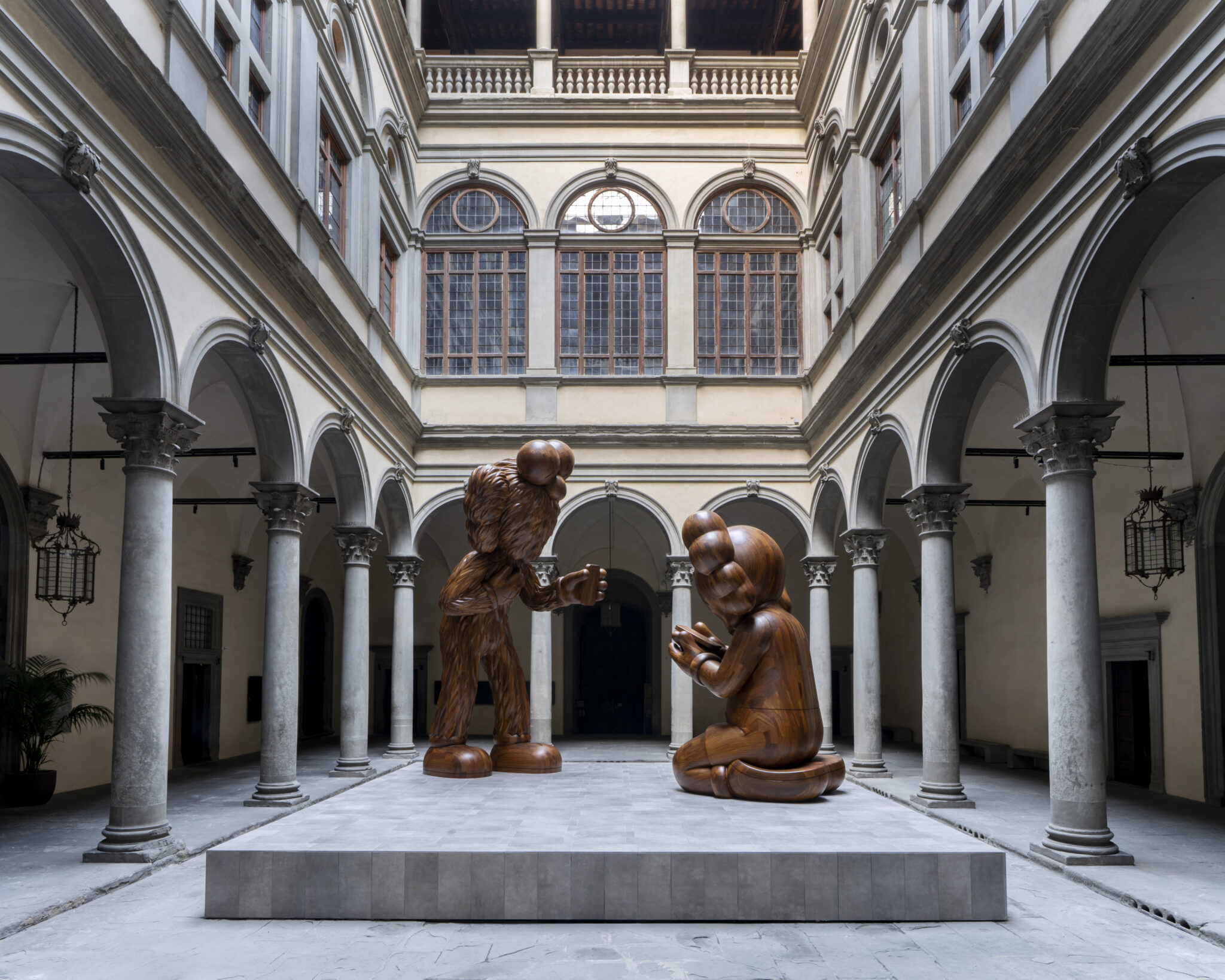
“The Message,” 2025, on view at the Palazzo Strozzi in Florence. (Photo: Ela Bialkowska / OKNO Studio)
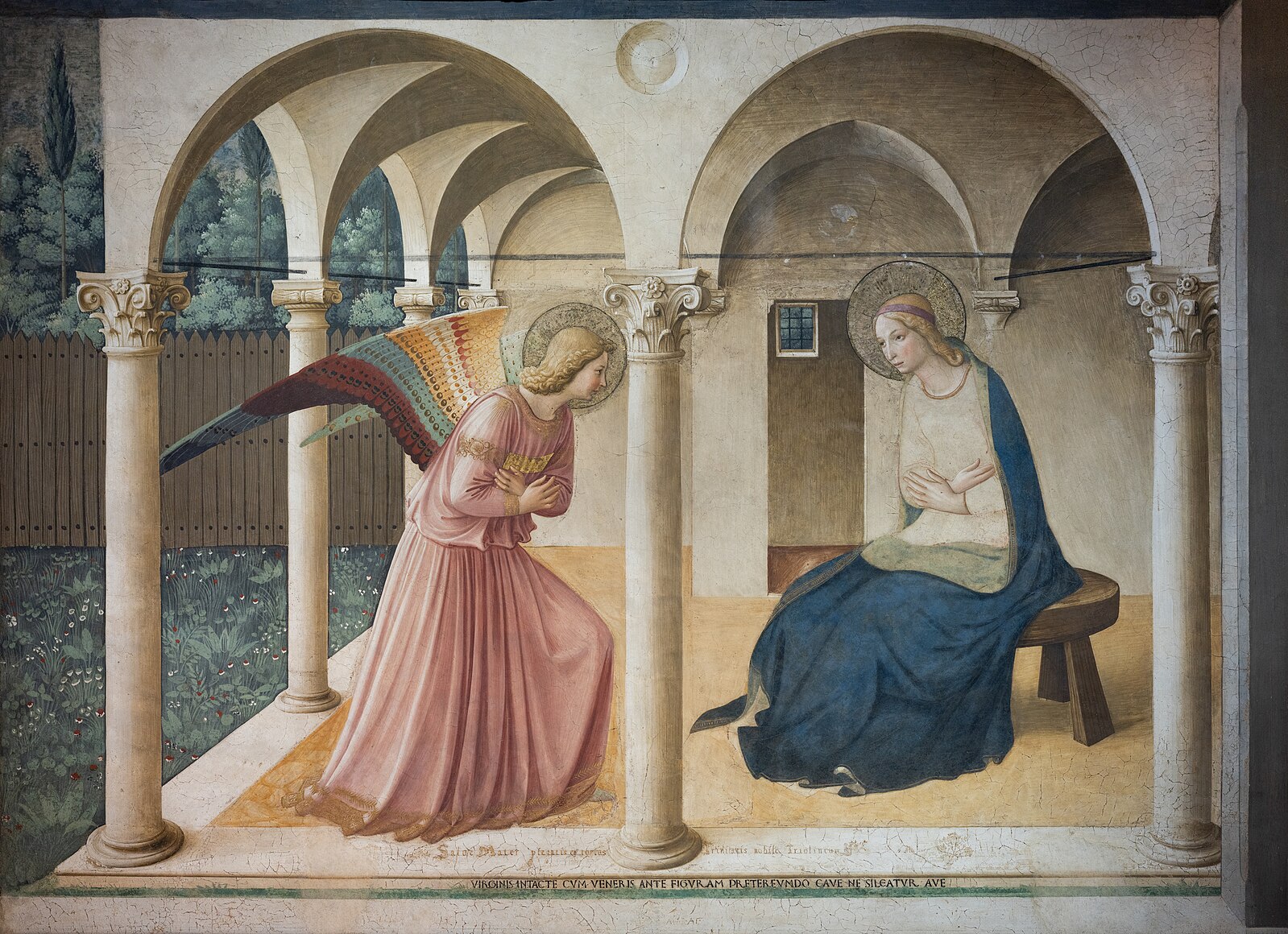
Fra Angelico, “The Annunciation,” ca. 1440–1445, fresco. (Photo: Gleb Simonov via Wikimedia Commons, Public domain)

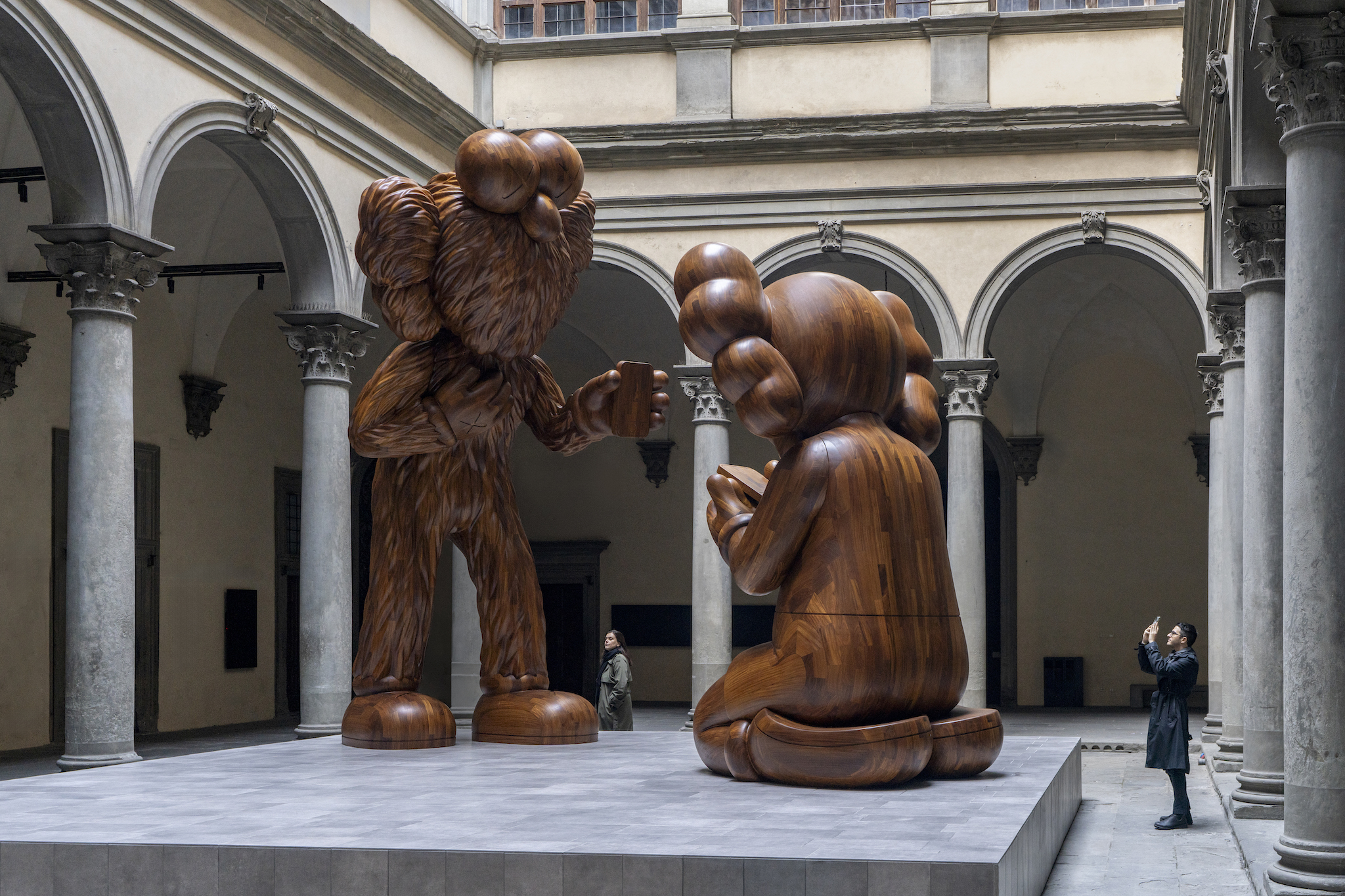
“The Message,” 2025, on view at the Palazzo Strozzi in Florence. (Photo: Ela Bialkowska / OKNO Studio)
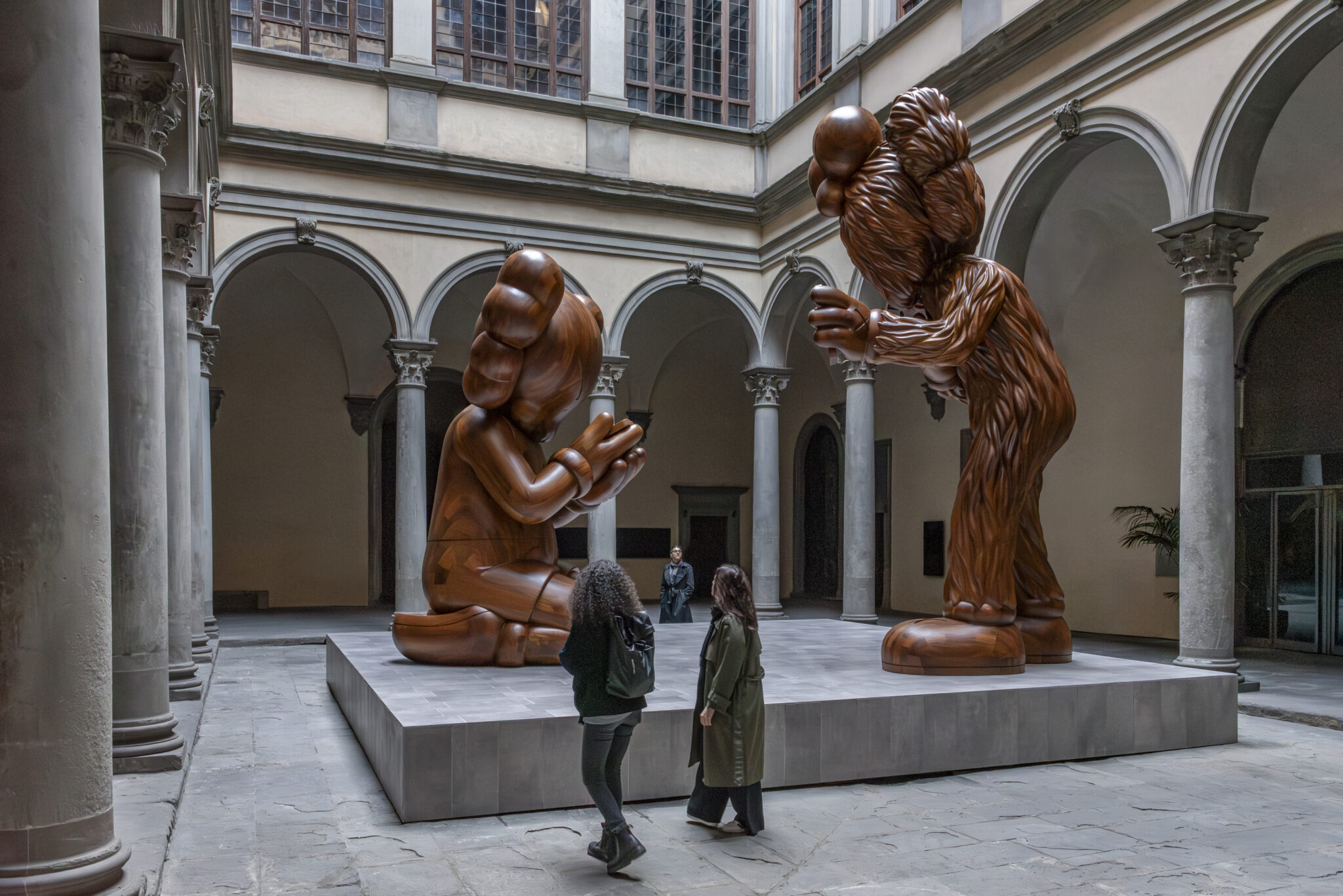
“The Message,” 2025, on view at the Palazzo Strozzi in Florence. (Photo: Ela Bialkowska / OKNO Studio)
The installation questions how technology has impacted our methods of communication, and how mobile phones, like angels, can be seen as divine messengers.
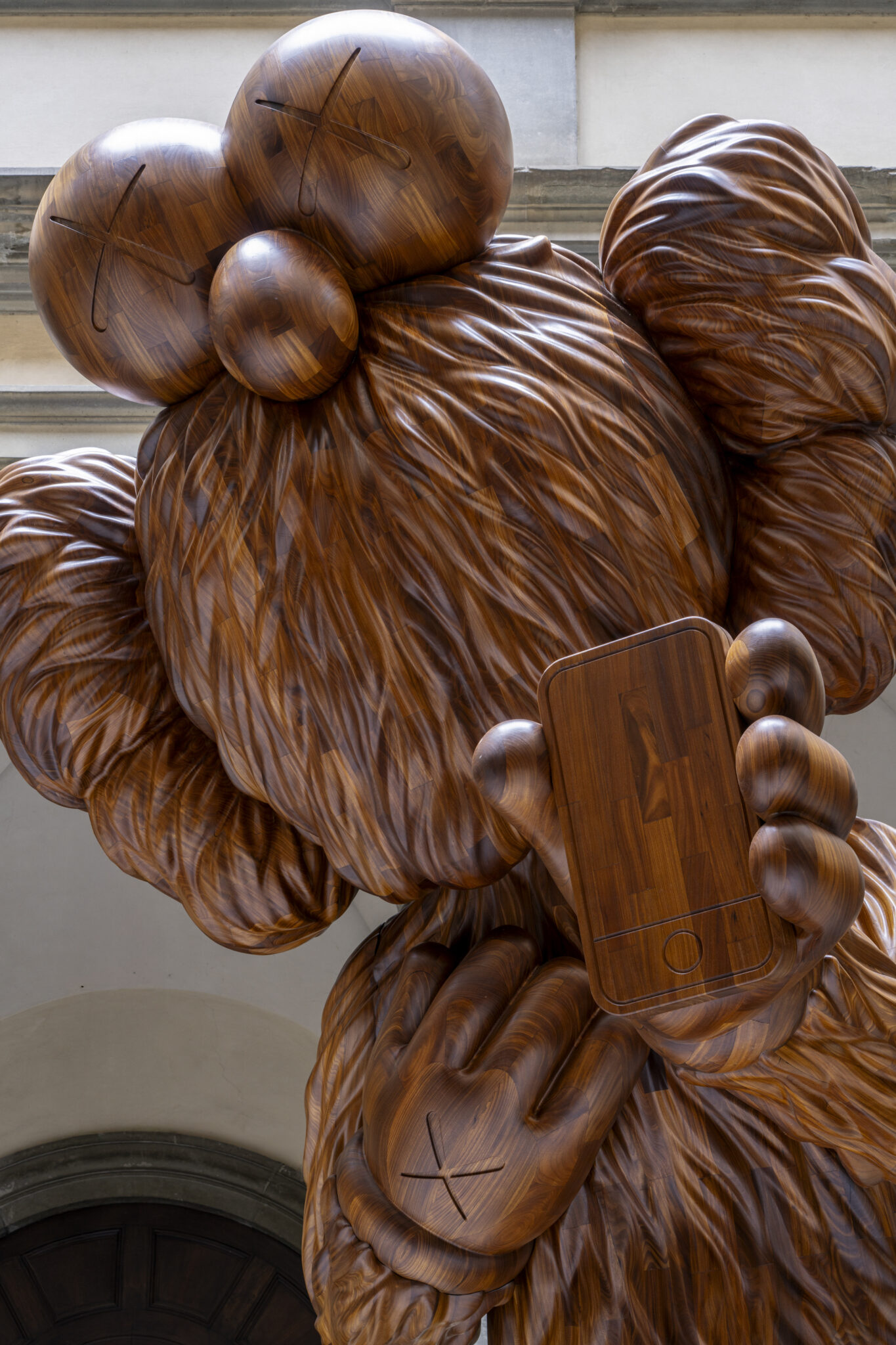
“The Message,” 2025, on view at the Palazzo Strozzi in Florence. (Photo: Ela Bialkowska / OKNO Studio)
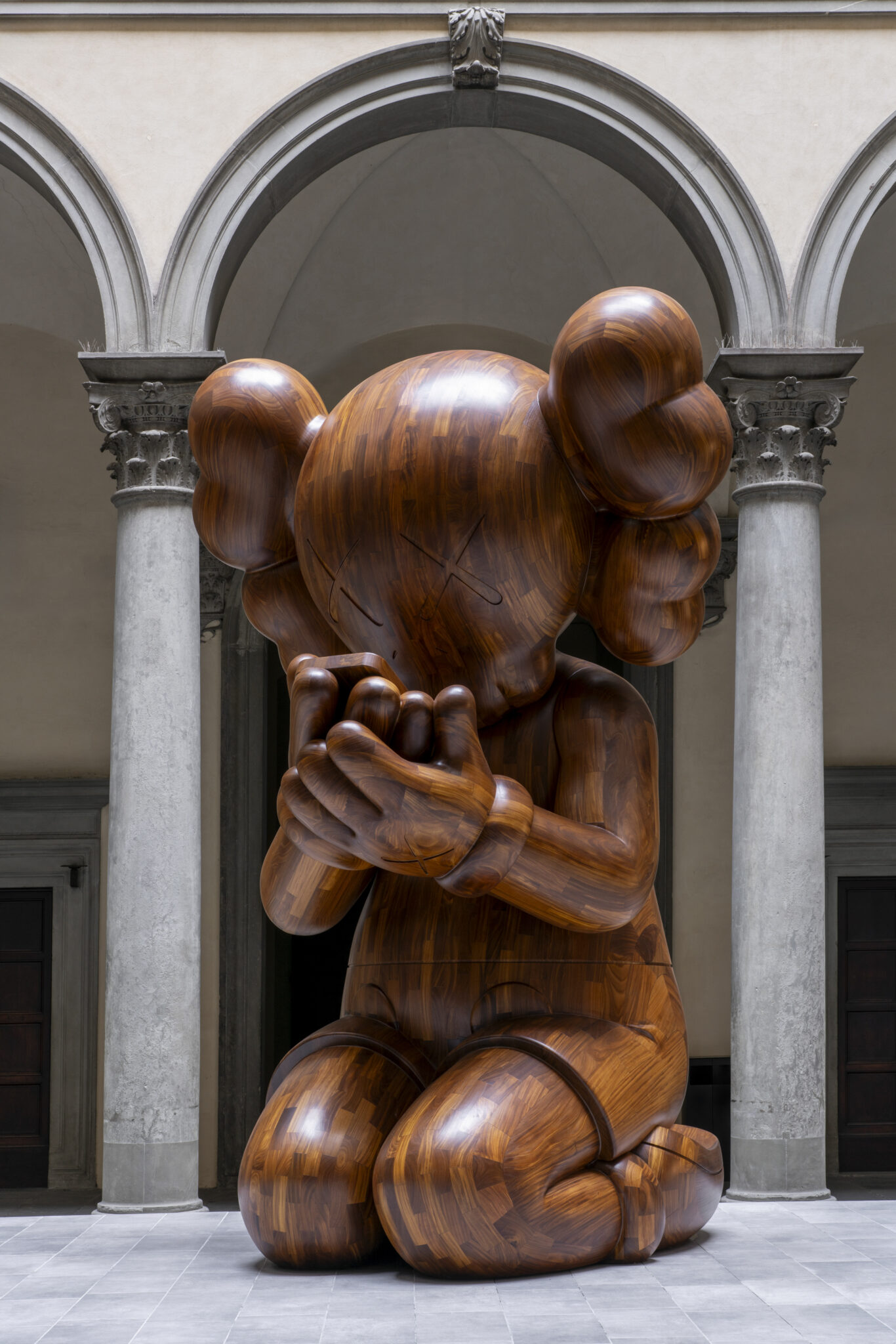
“The Message,” 2025, on view at the Palazzo Strozzi in Florence. (Photo: Ela Bialkowska / OKNO Studio)
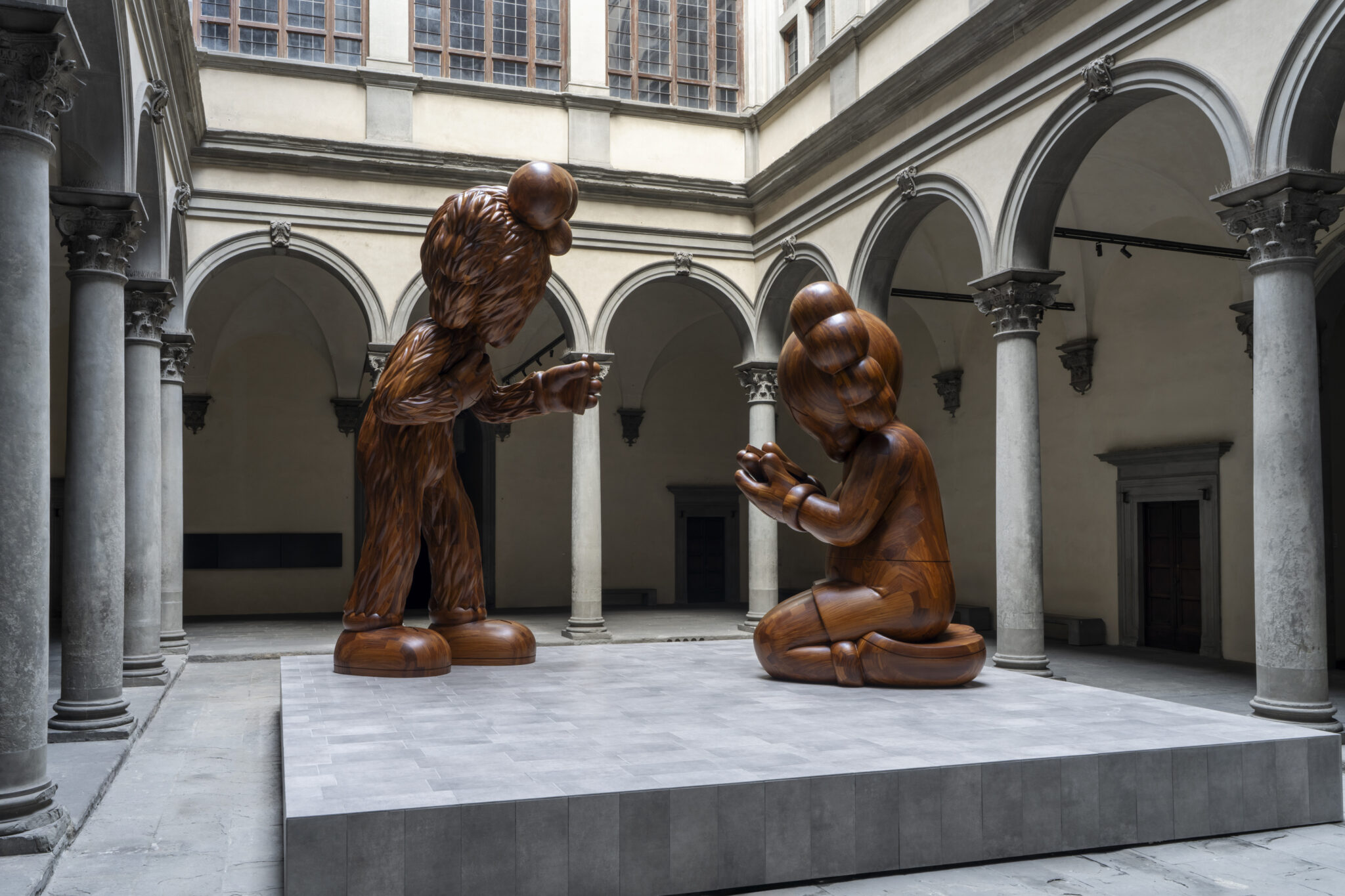
“The Message,” 2025, on view at the Palazzo Strozzi in Florence. (Photo: Ela Bialkowska / OKNO Studio)