

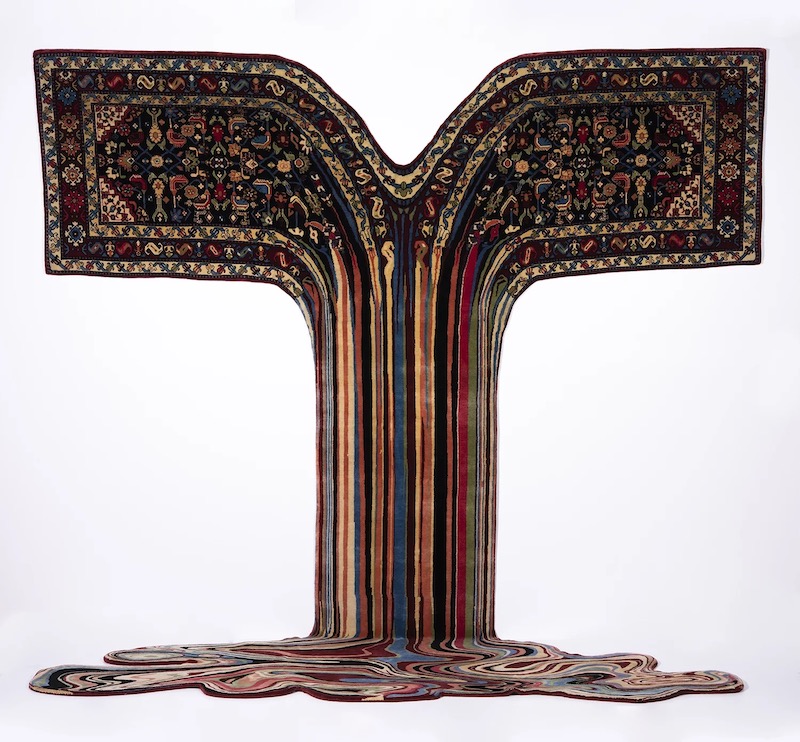
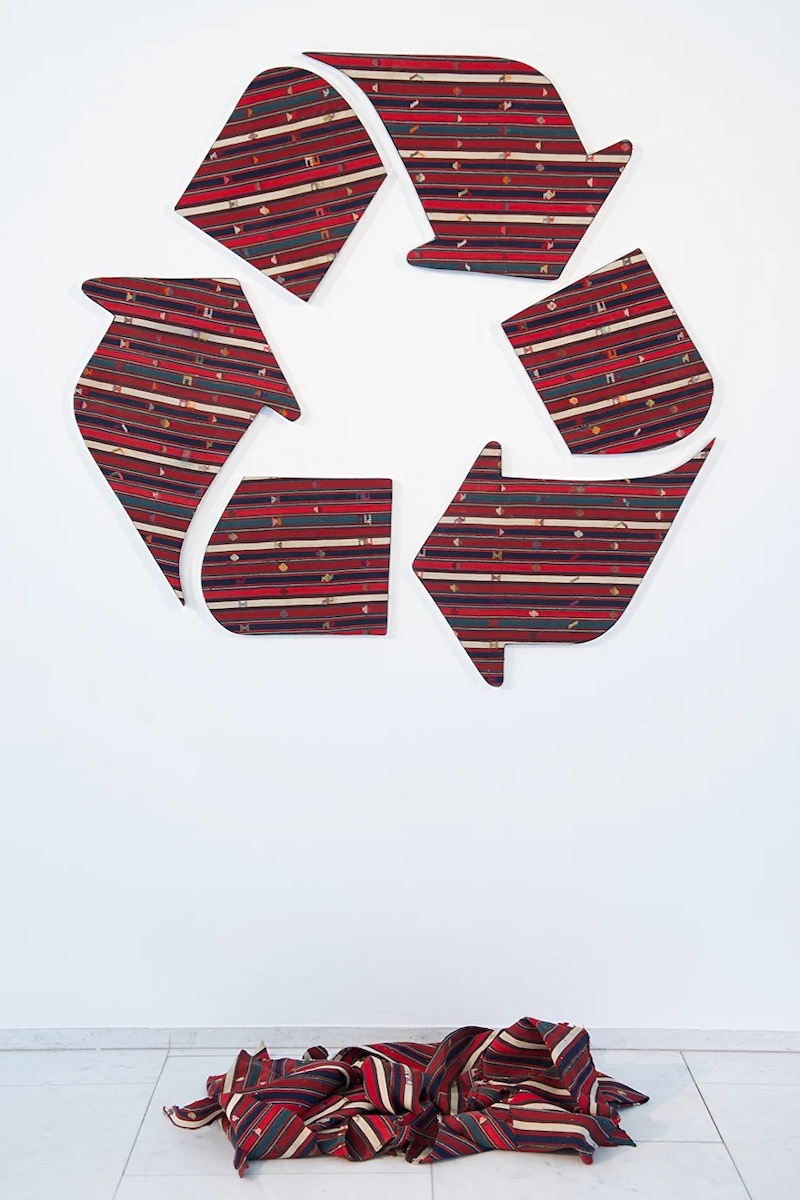
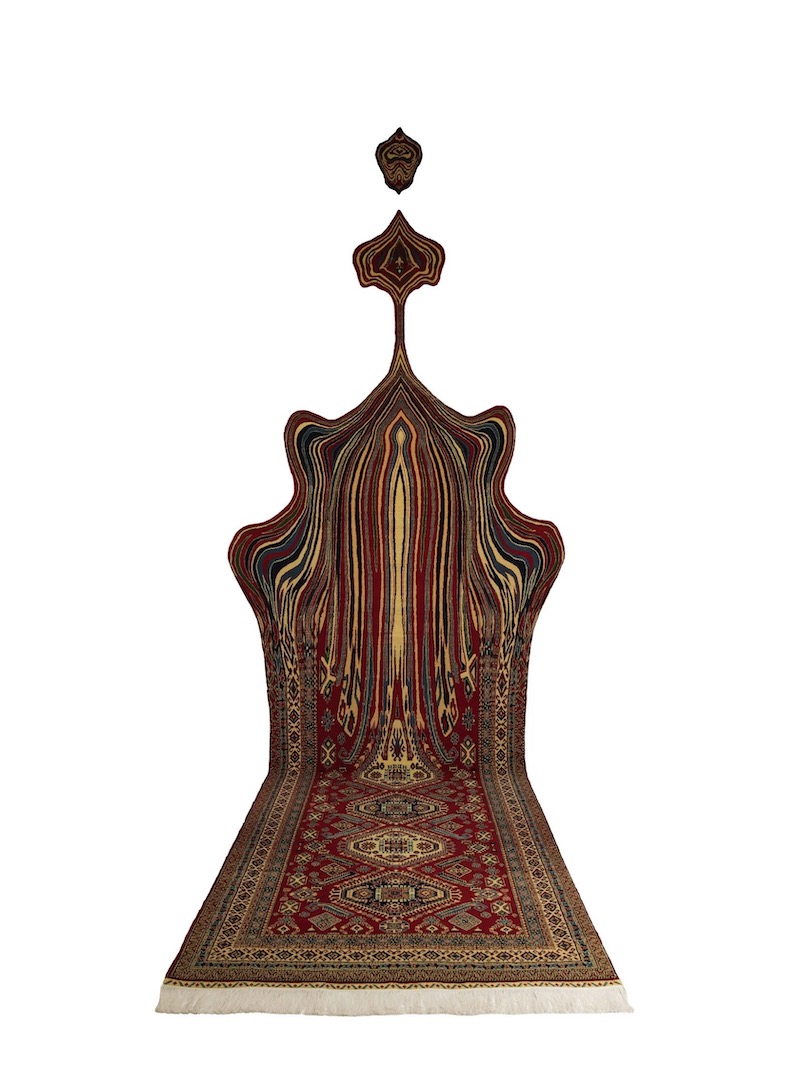
For Azerbaijani artist Faig Ahmed, a carpet can be more than a woven rectangle, square, or circle. Instead, it can exceed those traditional confines and seep onto the ground, gathering in viscous puddles; it can explode into layers upon layers of tufted thread; it can be interrupted with glitches and cascade like a wave; and it can even be shaped into a recycling sign. No matter their form, it’s clear that Ahmed’s carpets are as innovative as they are ambitious.
Above all, though, Ahmed’s practice is reflective of his own culture. Azerbaijan boasts a rich history when it comes to its traditional carpets, which, in 2010, were proclaimed a “Masterpiece of Intangible Heritage” by UNESCO. Aside from decorating homes, these carpets are also woven for medical purposes, wedding ceremonies, the birth of a child, mourning rituals, and prayer, while the act of weaving itself is also deeply embedded within communal life and customs. In fact, Baku, the country’s capital, even houses the Azerbaijan National Carpet Museum, where some carpets date back to the 17th century. This indelible legacy is exactly what informs Ahmed, who then reimagines it through the exquisite carpets for which he’s become known.
In the past year alone, Ahmed has showcased countless rugs in galleries and museums around the world. In January 2025, for example, Sapar Contemporary in New York hosted The Knot, its third solo exhibition with the artist. Appropriately, Black Knot served as the exhibition’s focal point, depicting a traditional wool and silk carpet that, at its half-way point, transforms into a massive knot. Unlike the rest of the carpet, this knot is entirely black, a stark contrast to the vibrant colors and patterns above it. The knot’s monumental scale seems to weigh down the rest of the carpet, suggesting a sort of tension between traditional and contemporary manifestations of craft, labor, and history. That battle between past and present is, unsurprisingly, another animating force behind Ahmed’s work.
Last year, at the Maraya Art Center in Sharjah, UAE, Ahmed delved even deeper, considering the relationship between neuroscience and art. The exhibition, titled Consciousness in Flux, featured an assortment of carpets, including his 2024 piece Shirvanshah. The title bears an ancient flavor, referring to Shirvan, a historic area in Azerbaijan that was home to such renowned poets as Nizami Ganjavi in the 12th century. The carpet itself is inspired by traditional patterns found within the region, although, much like Black Knot, the composition quickly dissolves around its half-way point. Here, the pattern appears to melt and shed small drops across the wall, which, despite the interruption, create a poetic sense of continuity.
“Interestingly, even with computer technology and modern abstract images, my carpets are produced the same way as a few thousand years ago,” Ahmed said in an interview with Metal Magazine. “The carpet is a language, a traditional local language.”
To learn more about the artist, visit Faig Ahmed’s website.
For years, Faig Ahmed has transformed traditional Azerbaijani carpets into innovative forms, including viscous puddles and giant knots.
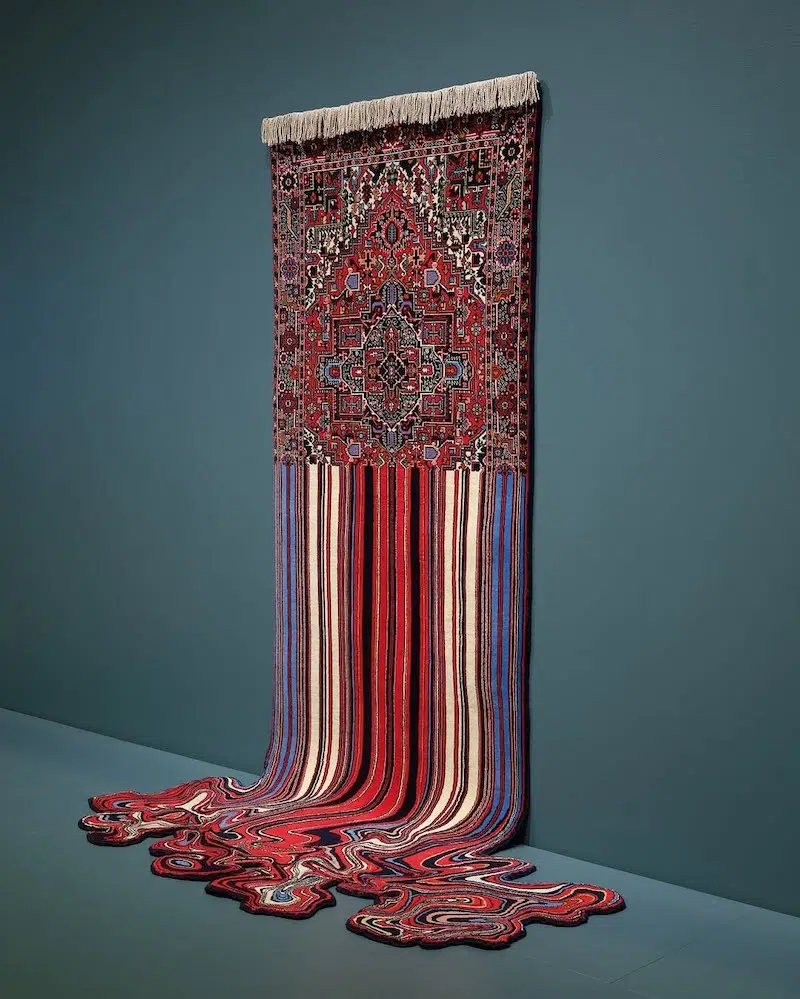
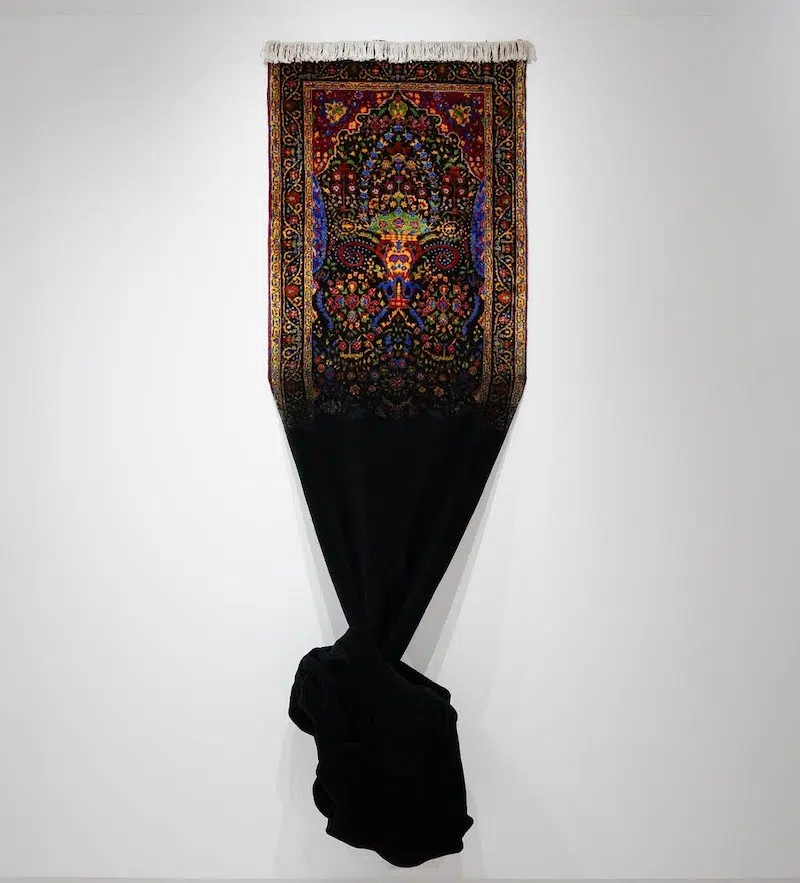
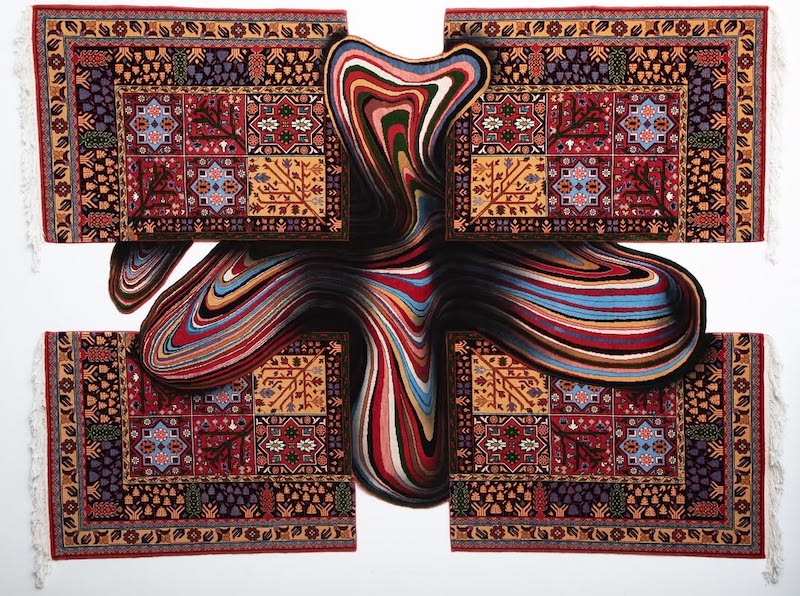
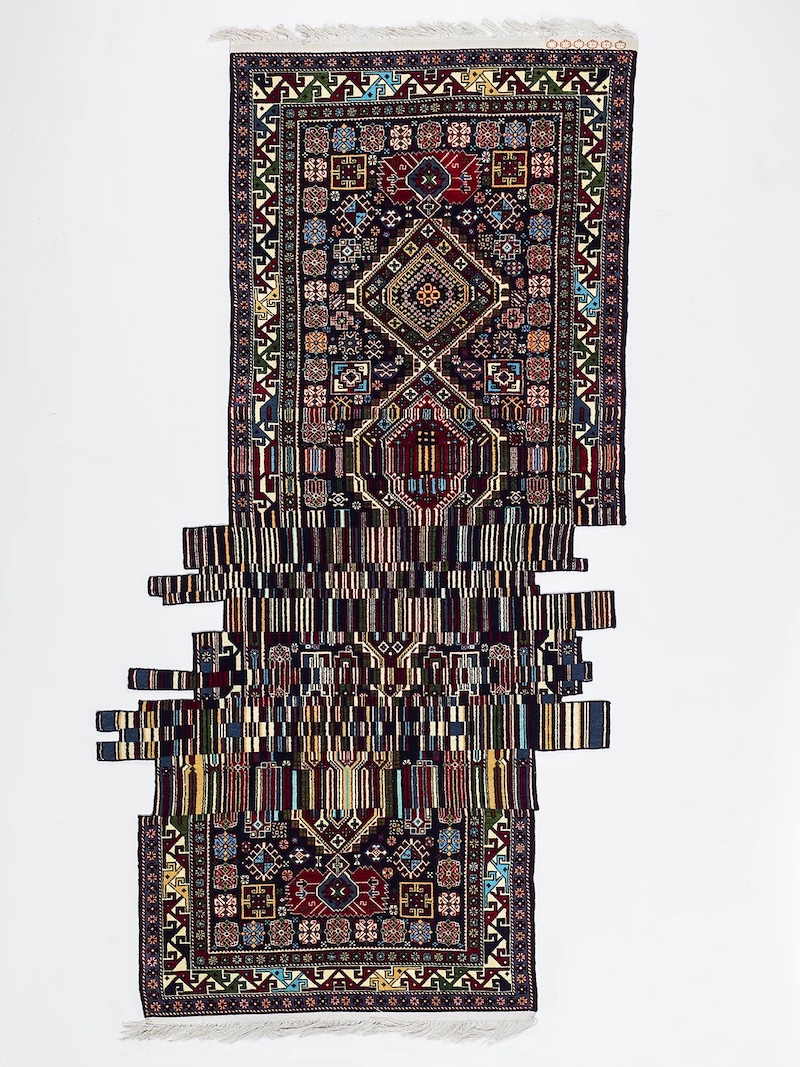

Ahmed primarily finds inspiration in Azerbaijan’s carpet weaving techniques, which were deemed a “Masterpiece of Intangible Heritage” by UNESCO in 2010.
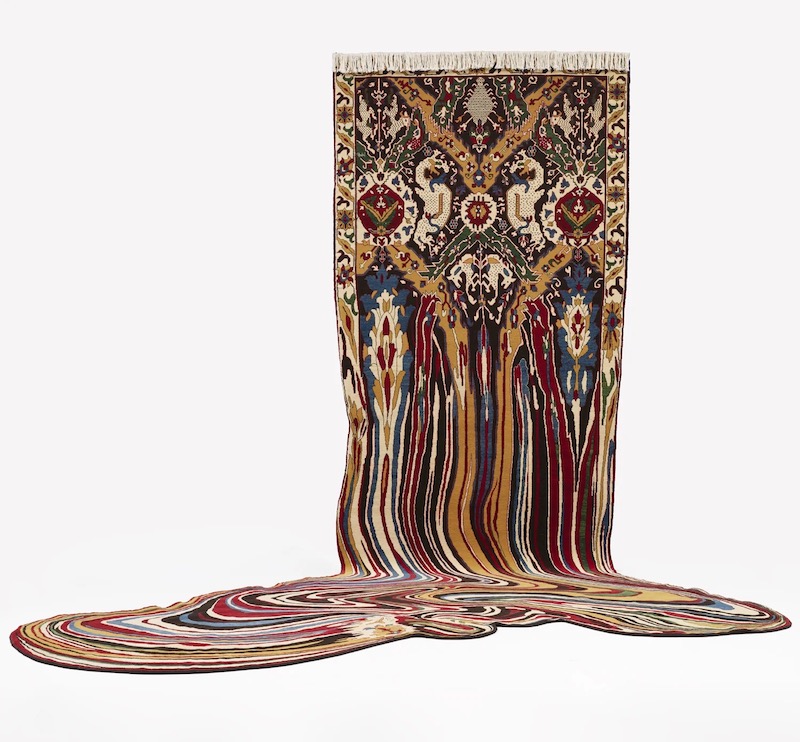
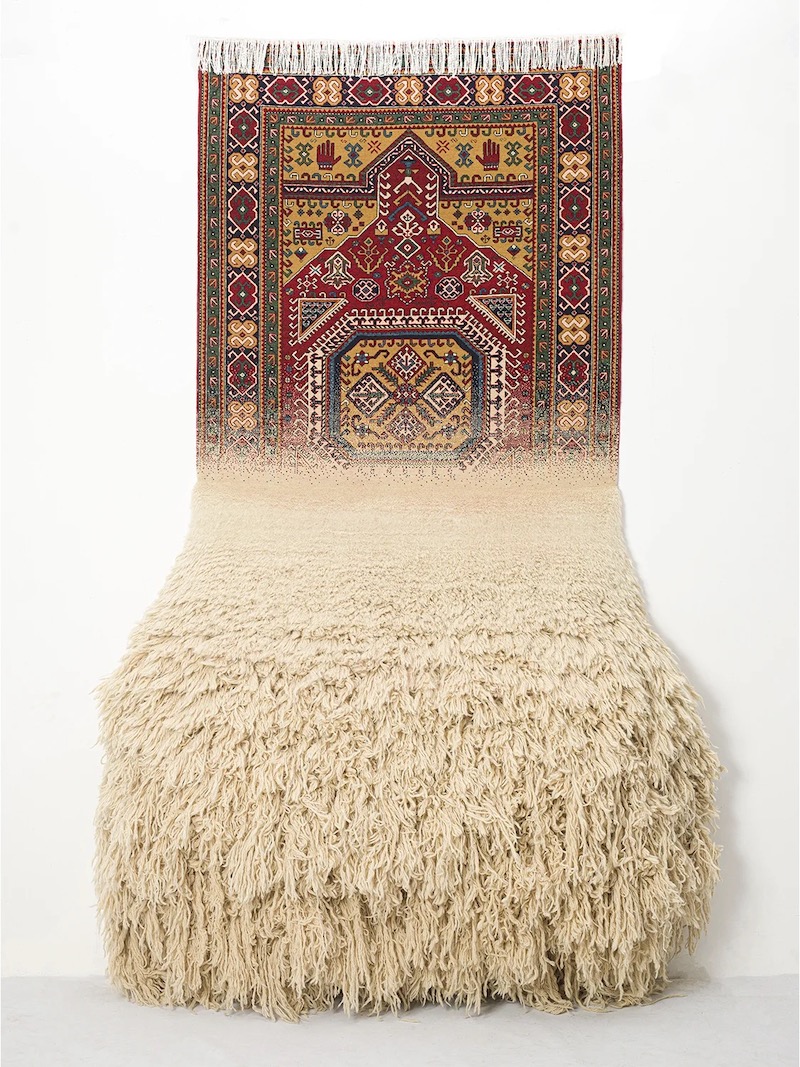
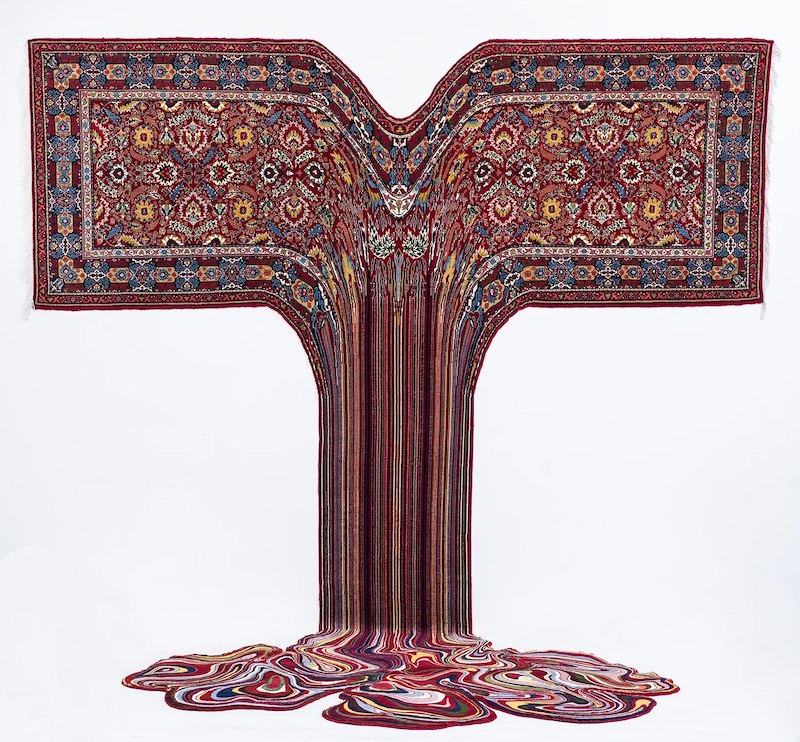
Faig Ahmed: Website | Instagram
Sources: Traditional art of Azerbaijani carpet weaving in the Republic of Azerbaijan; Azerbaijan National Carpet Museum; Faig Ahmed: Behind the Iron Carpet
My Modern Met granted permission to feature photos by Faig Ahmed.
Related Articles:
Gallery Artworks Reimagined as Surreal Carpet Art Melting Off the Wall Onto the Floor
Colorful Asymmetrical Rugs Capture the Beauty of Arizona’s Unique Topography [Interview]
Artist Uses Thousands of Dots To Create Intricate and Textural Paintings of Ornamental Rugs