
South African artist James Cook’s sculptures weren’t always grounded in abstraction. Before he began creating the fragmented, dreamy sculptures for which he’s become known, he mostly stayed within the lines. At first, this was an attractive option for him: there was a “technical challenge” implicit in “capturing the human form with precision,” the artist tells My Modern Met, yet he often felt that the final results remained “static.”
“I wanted my work to provoke more than admiration for detail,” Cook says. “I wanted it to stir deeper feelings and invite active engagement.”
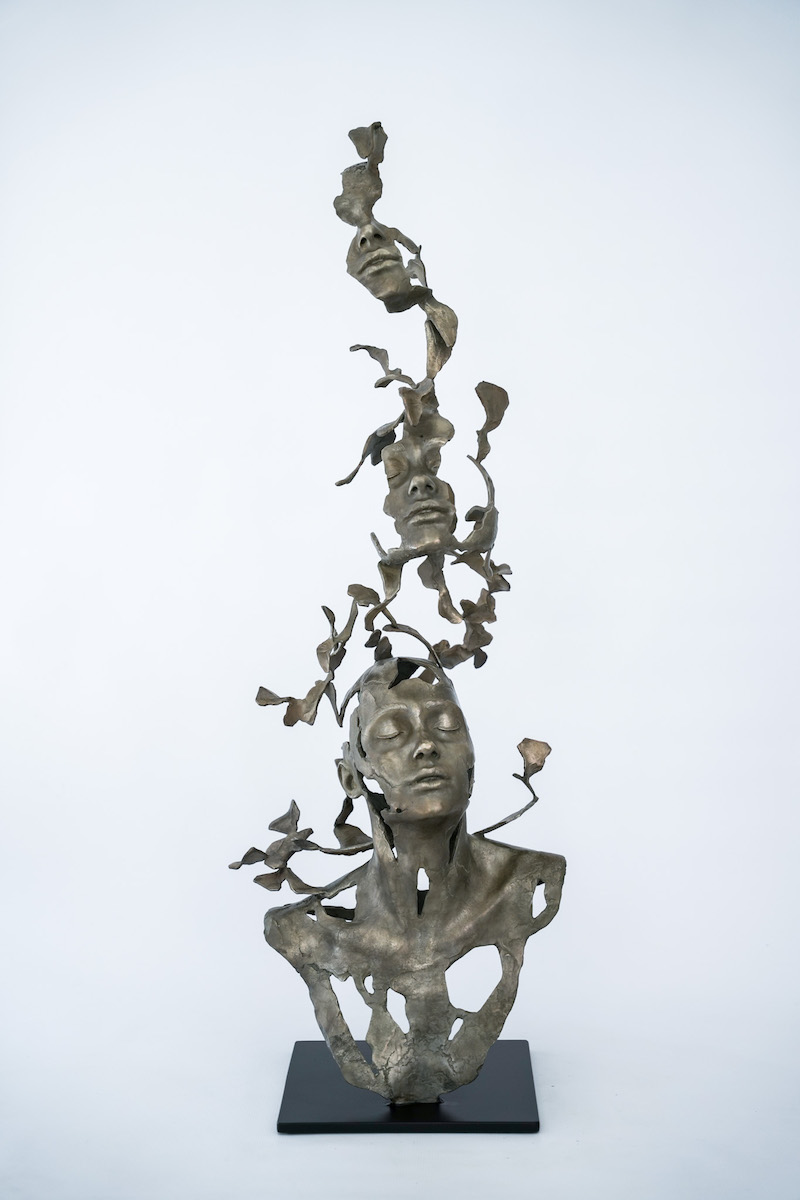
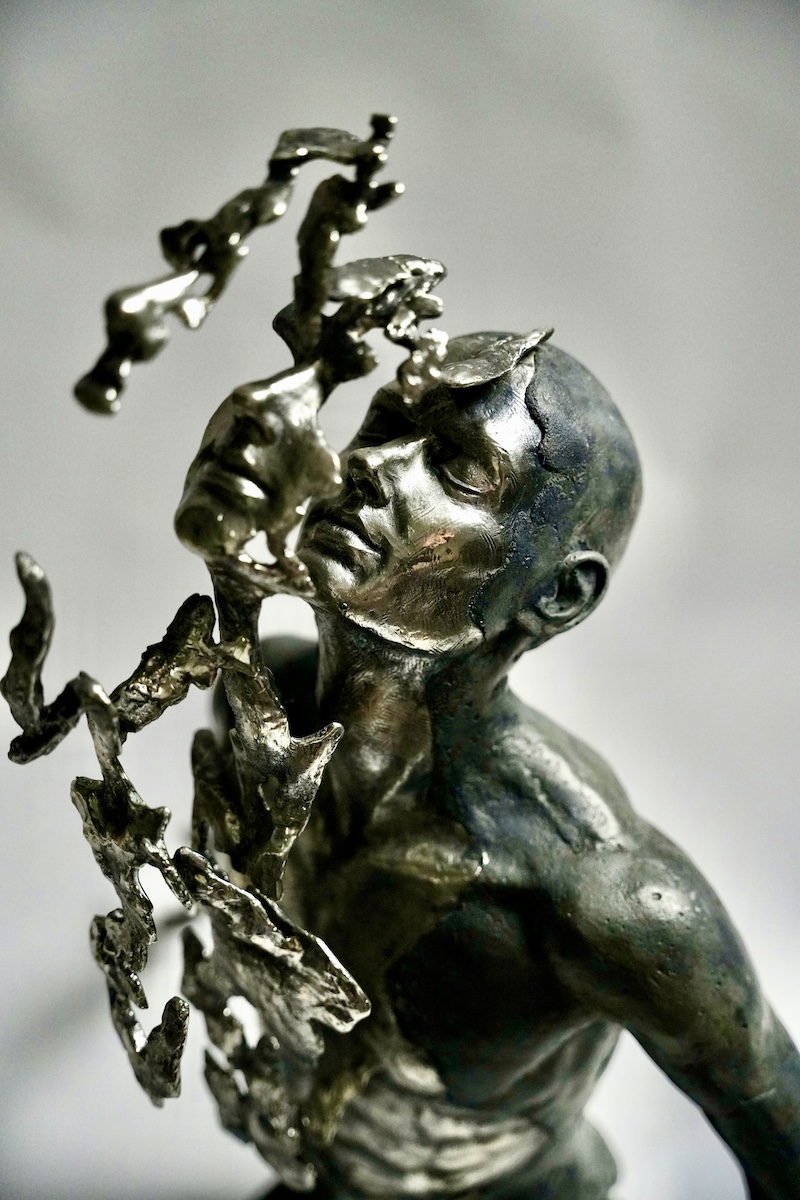
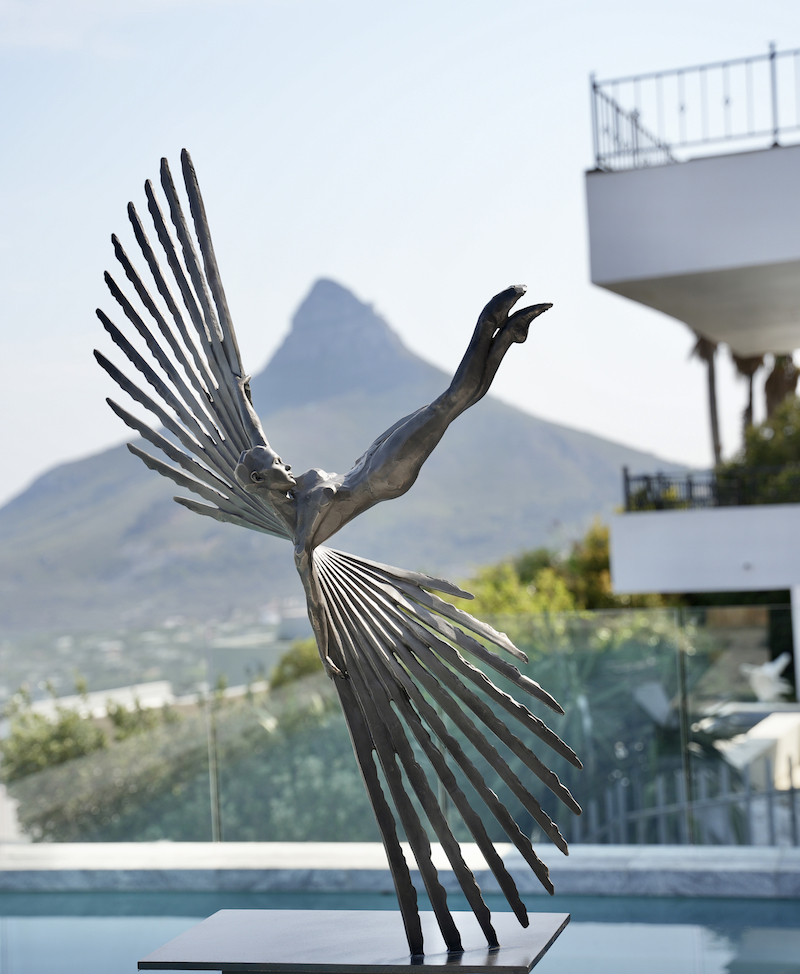
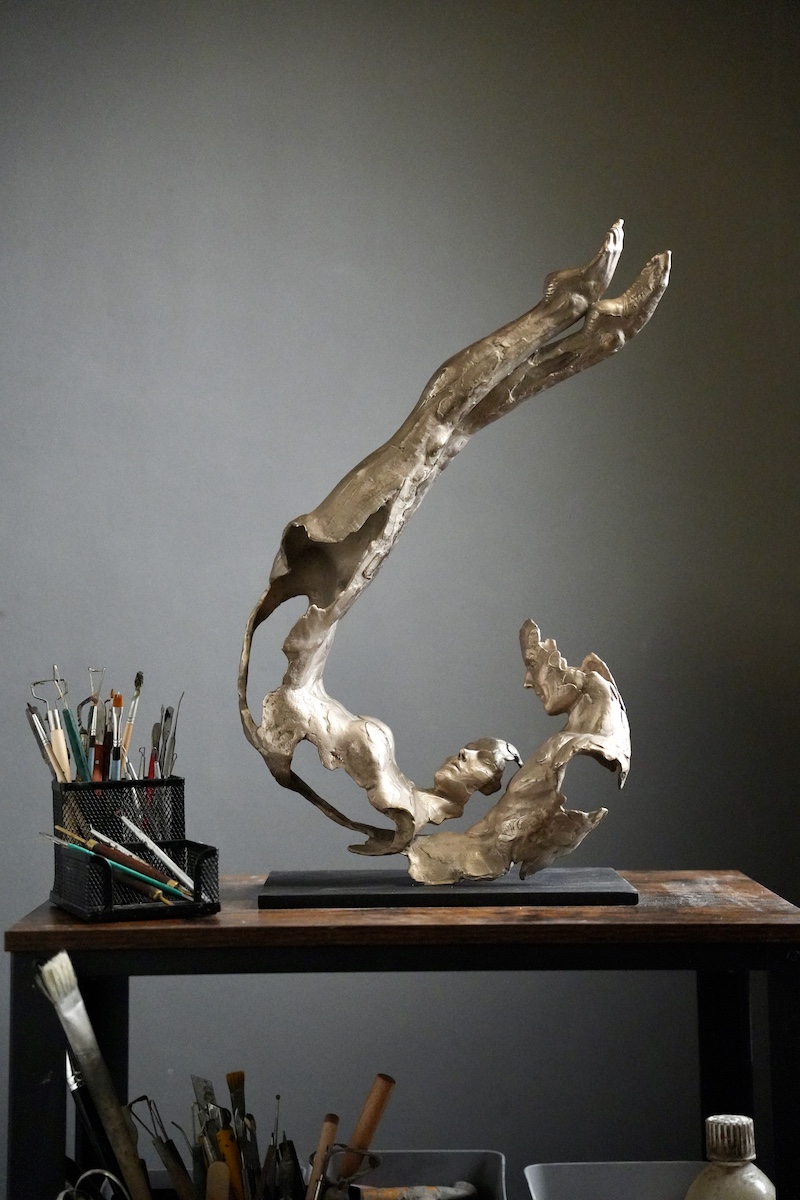
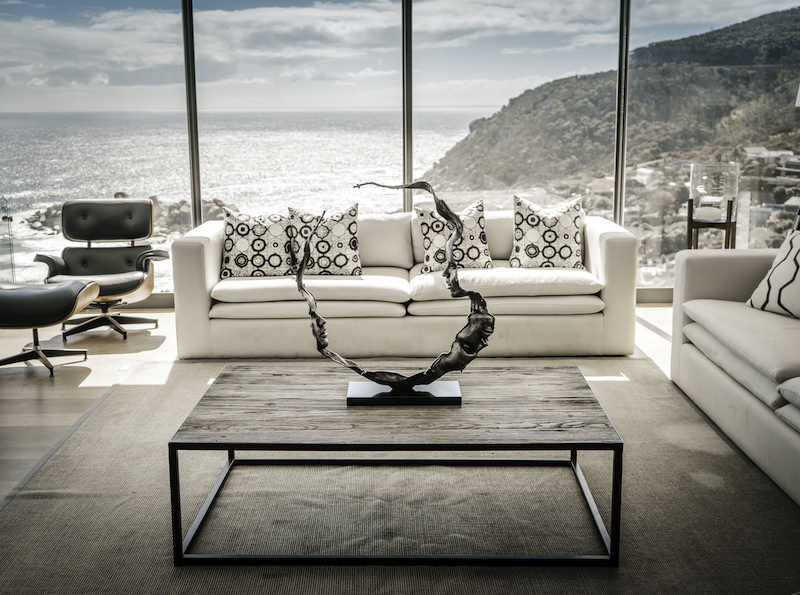
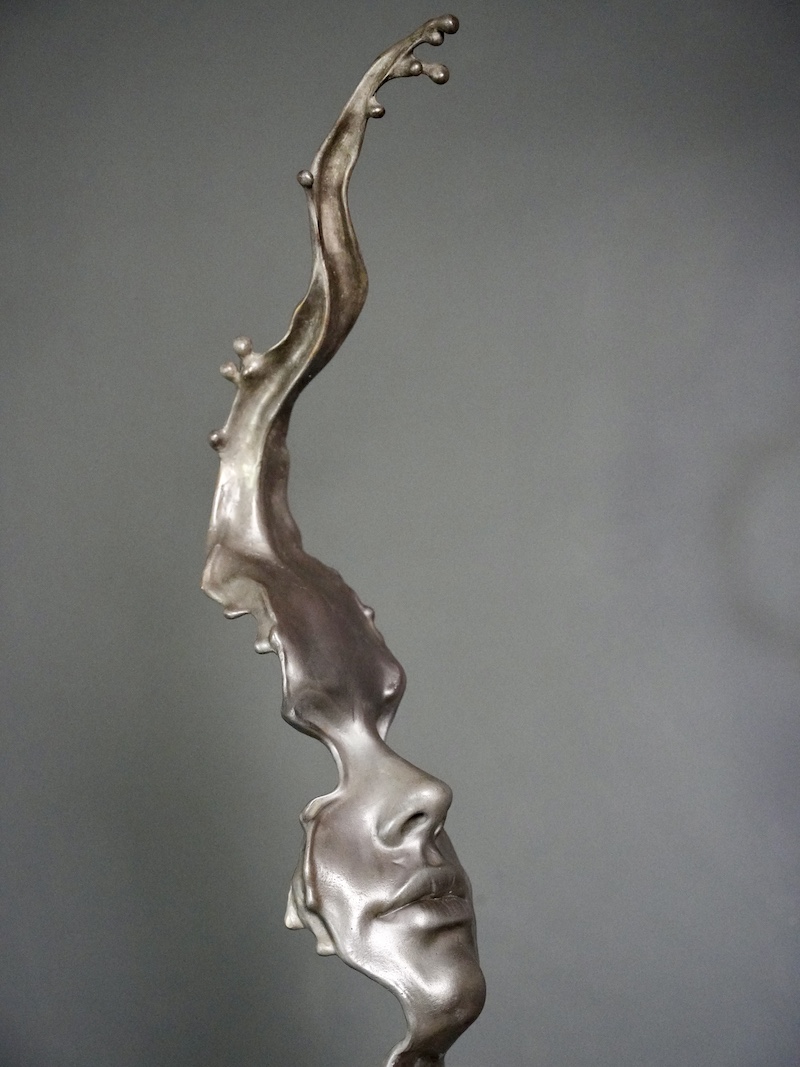
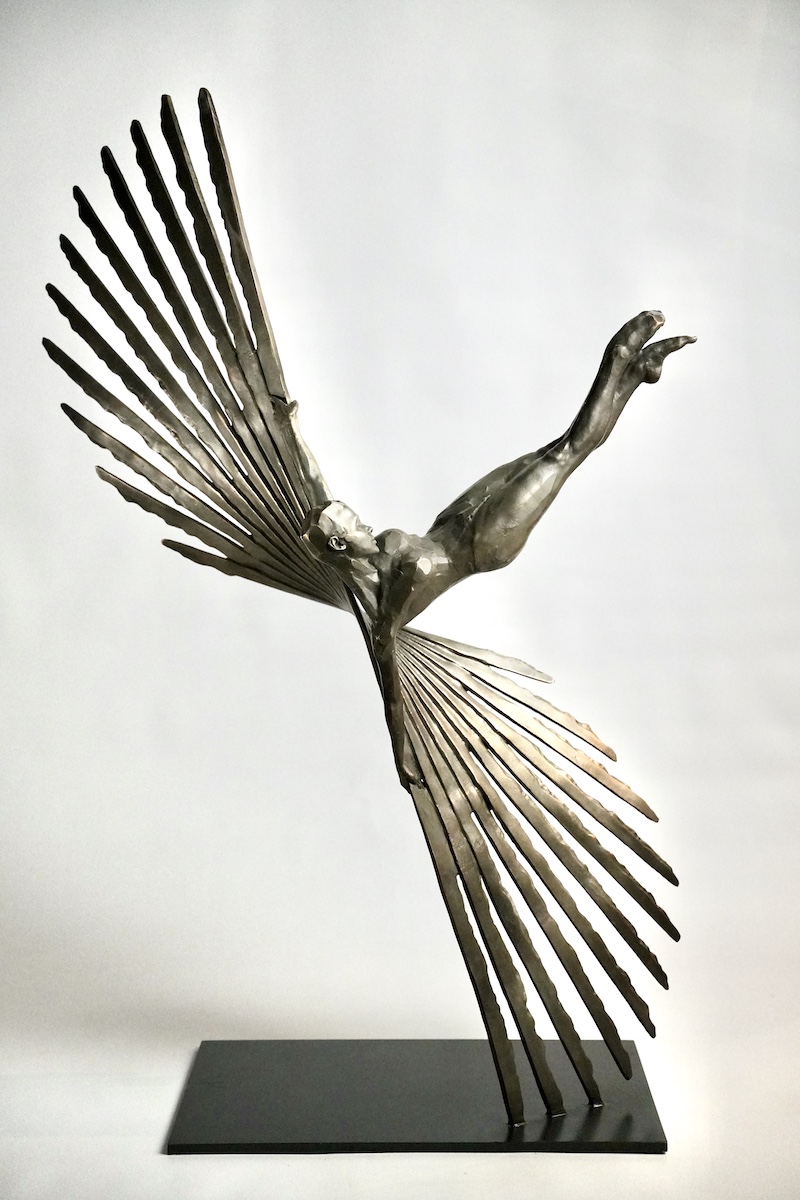
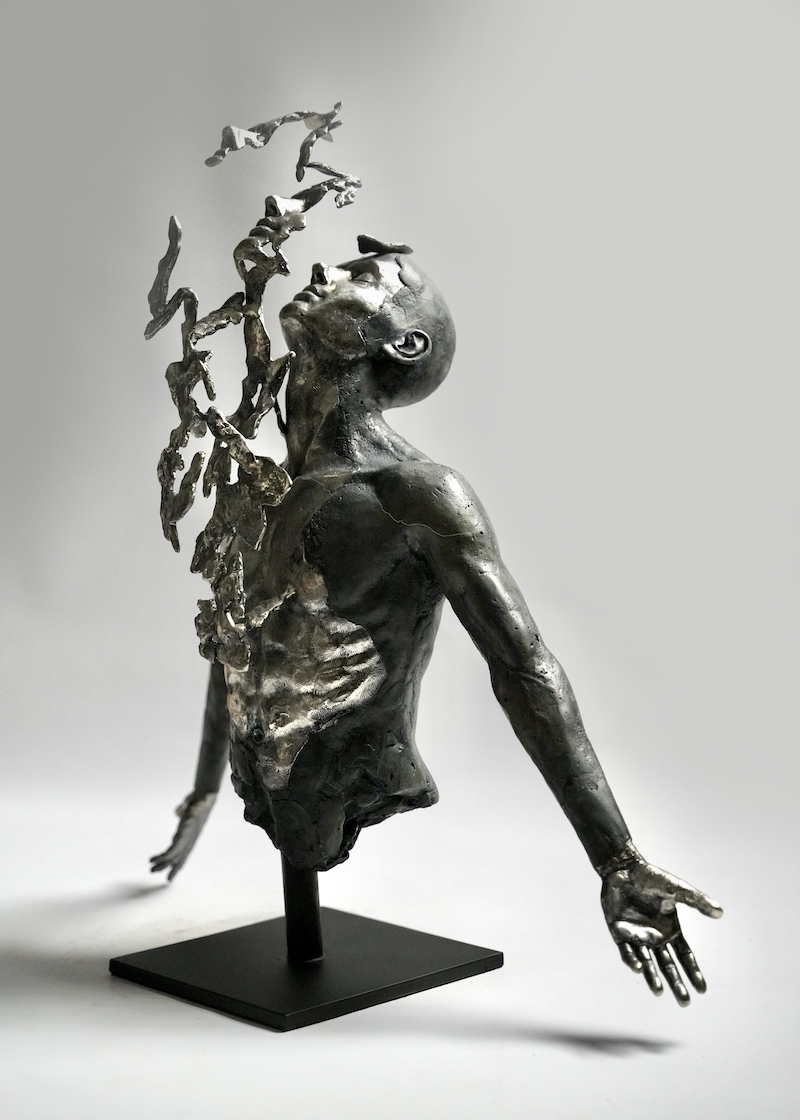
Abstraction offered just that, and the artist began the shift toward sculptures that were “more dynamic and open to interpretation.” Now, Cook’s portfolio spans everything from a woman soaring through the air with a pointed pair of wings to a visceral portrait of a man whose body is splintering apart, each piece carefully floating into the air above him. Another sculpture takes the form of a liquid ring, where faces are interspersed throughout the shimmering metal as if gliding through water. All these works provoke reflection, forcing us to discern where bodies, faces, and fragments begin and end. But Cook believes that one sculpture in particular inspires different readings.
“The Space Between Us depicts two figures in an intimate embrace, but there’s a gap between them,” Cook explains. “The sculpture aims to highlight the tension, longing, and energy that exists in the space between two people when they are forced to be apart but look forward to reuniting.”
Others, however, see the sculpture through a negative lens, where the “gap between the figures represents emotional distance despite physical closeness.” That The Space Between Us can generate such opposing interpretations is only further proof of its emotional charge.
“I want people to be drawn in by the visual beauty and technical craft but also to feel compelled to linger, unraveling the layers of meaning,” the artist concludes.
My Modern Met had the chance to speak with James Cook about his creative process, his shift from realism to abstraction, and his artistic inspirations. Read on for our exclusive interview with the sculptor.

What first compelled you about bronze as your primary artistic medium?
I created my first sculpture out of solid clay with a wooden armature inside. However, when the clay dried around the armature, it cracked and was destroyed. I started searching for a more permanent medium.
Bronze captivated me because of its timelessness and versatility. Its durability allows sculptures to endure for centuries, carrying a sense of permanence that resonates with my aim to create lasting, meaningful work. The material’s ability to capture fine details while also supporting bold, experimental forms aligns with my approach, blending technical precision with creative freedom. The patination process, where chemicals and heat transform the bronze’s surface, adds another layer of depth, letting me play with color and texture.
What is the process of creating one of your bronze sculptures?
The bronze casting process is intricate and labor-intensive, starting with a steel and wire armature coated in expanding foam, which I carve to form the sculpture’s core shapes. I then layer wax-based modeling clay over the foam and refine the forms. A silicon mold is applied to capture all the detail, supported by a fiberglass and resin shell for structural integrity. Molten wax is painted into the silicon mold to create a replica, which is cleaned and fitted with a gating system to eventually facilitate the flow of molten bronze.
This wax model is encased in a ceramic shell through repeated dipping in liquid slurry and sand. The wax is burned out of the ceramic shell, leaving a cavity which is a perfect negative of the wax sculpture. Molten bronze is poured into the ceramic shell and allowed to cool. The ceramic is broken away, and the bronze pieces are welded together, with weld marks removed during the “fettling” process to restore texture.
For some works, I combine bronze with cement, a process that required over a year of experimentation to perfect. Finally, patination uses chemicals and heat to achieve the desired color and finish.
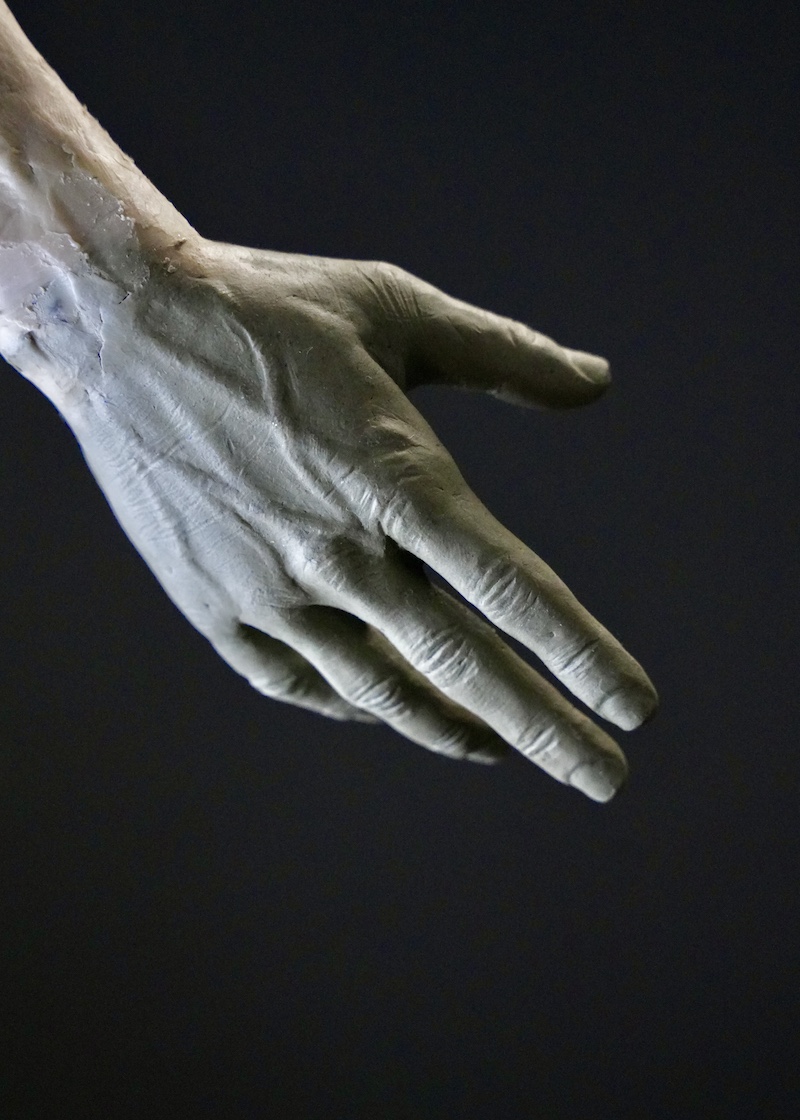
What visual aesthetic do you find yourself gravitating toward throughout your work?
My work gravitates toward a dynamic interplay of realism and abstraction, blending organic and geometric forms with a focus on texture and fragmentation. I aim for sculptures that are visually striking yet intellectually engaging, inviting viewers to explore layers of meaning. The human form is central, as I find its beauty and complexity endlessly compelling.
By incorporating abstraction and fragmented elements, I create pieces that challenge the viewer to fill in the gaps themselves which makes the work more engaging. This aesthetic balances technical skill with modern, thought-provoking compositions.

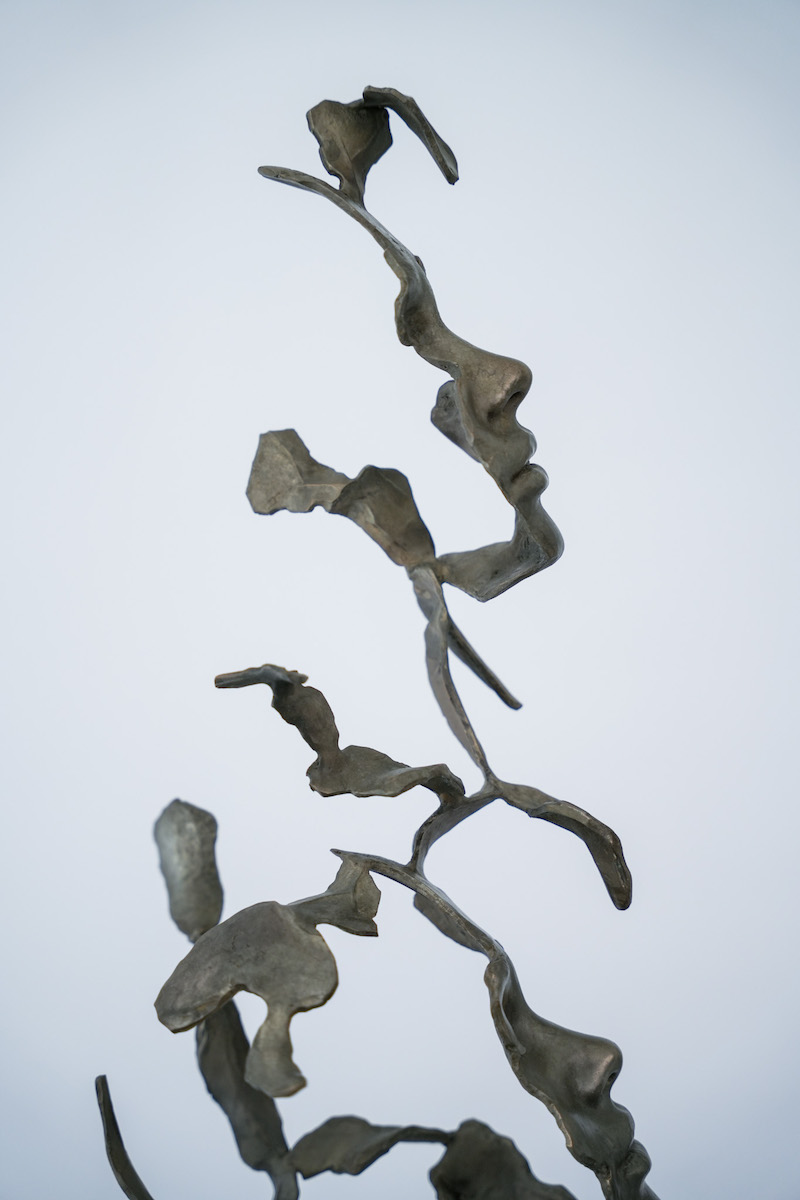
You’ve said that Greek mythology serves as a major source of inspiration for you. Why is that, and how do you incorporate that theme in your sculptures?
Greek mythology fascinates me because it explores universal human experiences such as love, struggle, and transformation through stories that are both timeless and rich with symbolic depth.
These narratives allow me to tap into psychological and emotional themes that resonate with modern audiences. The stories within Greek mythology have stood the test of time and I find them fascinating.
I also associate sculpture with the ancient Greek world as this is where significant developments occurred with regards to sculpture as an art form.
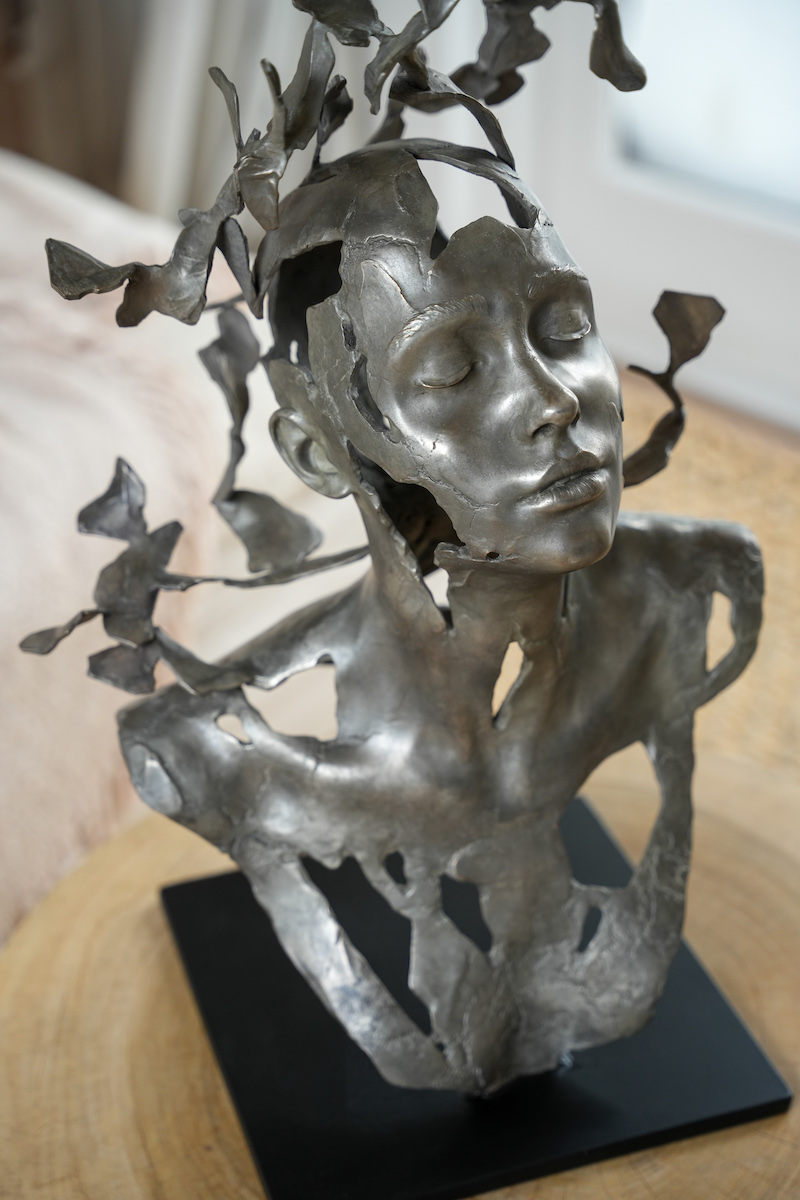

You once worked primarily in realism, but you’ve since moved more into abstraction. What was the impetus behind that shift?
Initially, I focused on realism because I was drawn to the technical challenge of capturing the human form with precision. However, I found that hyper-realistic sculptures, while impressive, could feel static and limited in emotional depth. I wanted my work to provoke more than admiration for detail—I wanted it to stir deeper feelings and invite active engagement.
Experimenting with abstraction and fragmentation allowed me to break free from those constraints, creating sculptures that are more dynamic and open to interpretation. This shift let me explore complexity and invite viewers to work hard to understand the artworks, making the experience more personal and impactful.
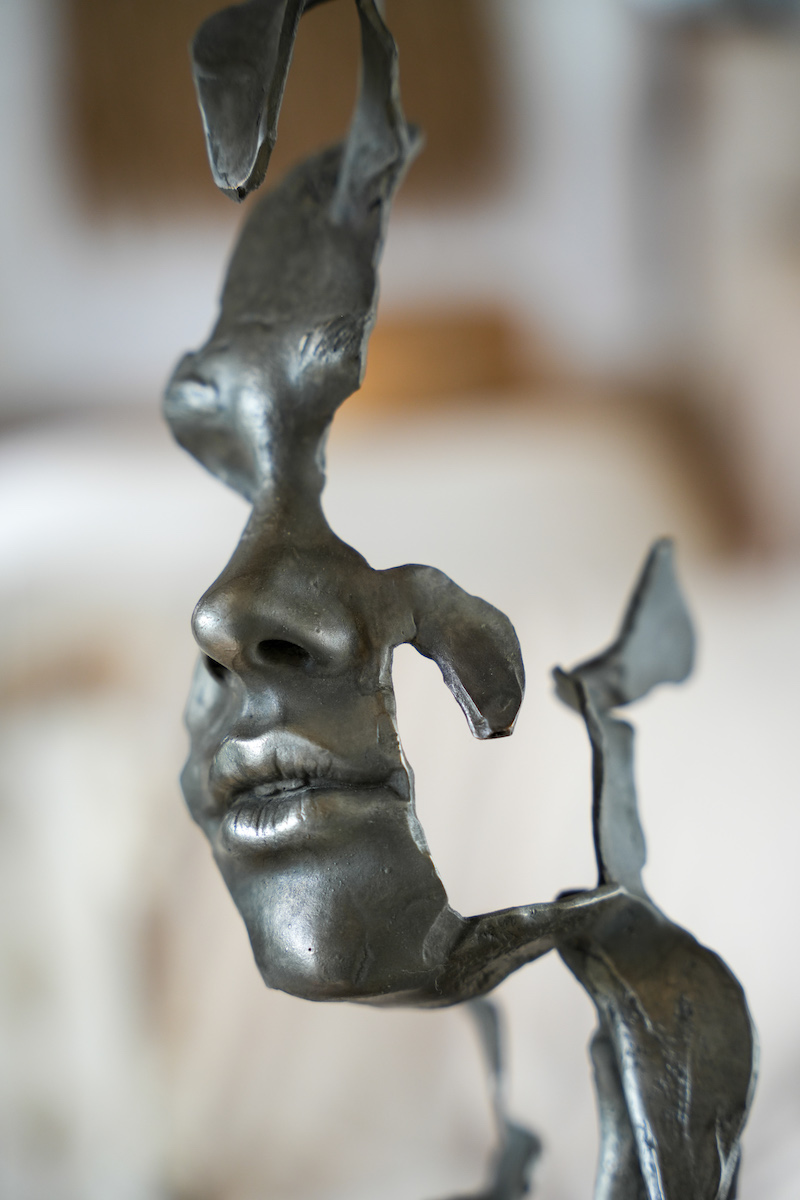
What do you hope people will take away from your work?
In a busy world where people are inundated with stimulus, I aim to create artworks that emerge out of the clutter and permanently lodge themselves in the minds of the viewer. I want people to be drawn in by the visual beauty and technical craft but also to feel compelled to linger, unraveling the layers of meaning.
My sculptures take around six months to complete on average so I find that the meaning behind each piece evolves as my state of mind and circumstances change. I share the thought process behind each work but I don’t want to be prescriptive about their meaning. I hope to create a space where viewers can engage with the work and project their own stories and meaning onto the sculpture.
As an example, The Space Between Us depicts two figures in an intimate embrace but there is a gap between the figures. I initially planned this artwork while on a solo trip around Europe. The sculpture aims to highlight the tension, longing and energy that exists in the space between two people when they are forced to be apart but look forward to reuniting. However, others have interpreted the piece in a more negative light where the gap between the figures represents emotional distance despite physical closeness.

Do you have any exciting projects coming up?
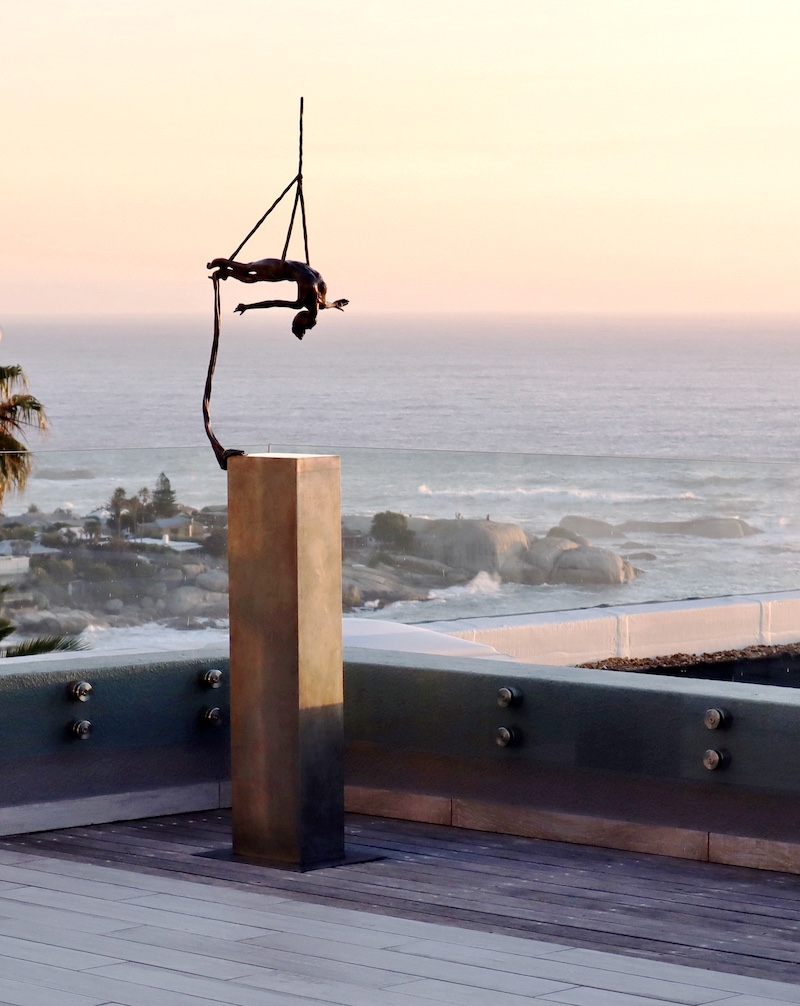
I typically don’t create a large series of similar works because I get bored with a concept when I know what the outcome will be. My artworks tend to be quite distinct, stand-alone pieces. I am constantly exploring new ideas for sculptures and I am currently designing a new piece that aims to truly capture movement in a static sculpture. The piece is inspired by my fiancée who is a professional ballet dancer. The composition I have in mind cannot be cast in bronze using traditional bronze casting techniques, so I am experimenting with different ways to bring my idea into the real world.
James Cook: Website | Instagram
My Modern Met granted permission to feature photos by James Cook.
Related Articles:
Symphony of Sounds Are Unleashed as Porcelain Bowls Float and Clang in Giant Basin Installation
Exquisite Wooden Sculptures Move Like Real-Life Computer Glitches
Surreal Sculptures of Women’s Faces Carved Into Labyrinths and Ruins