
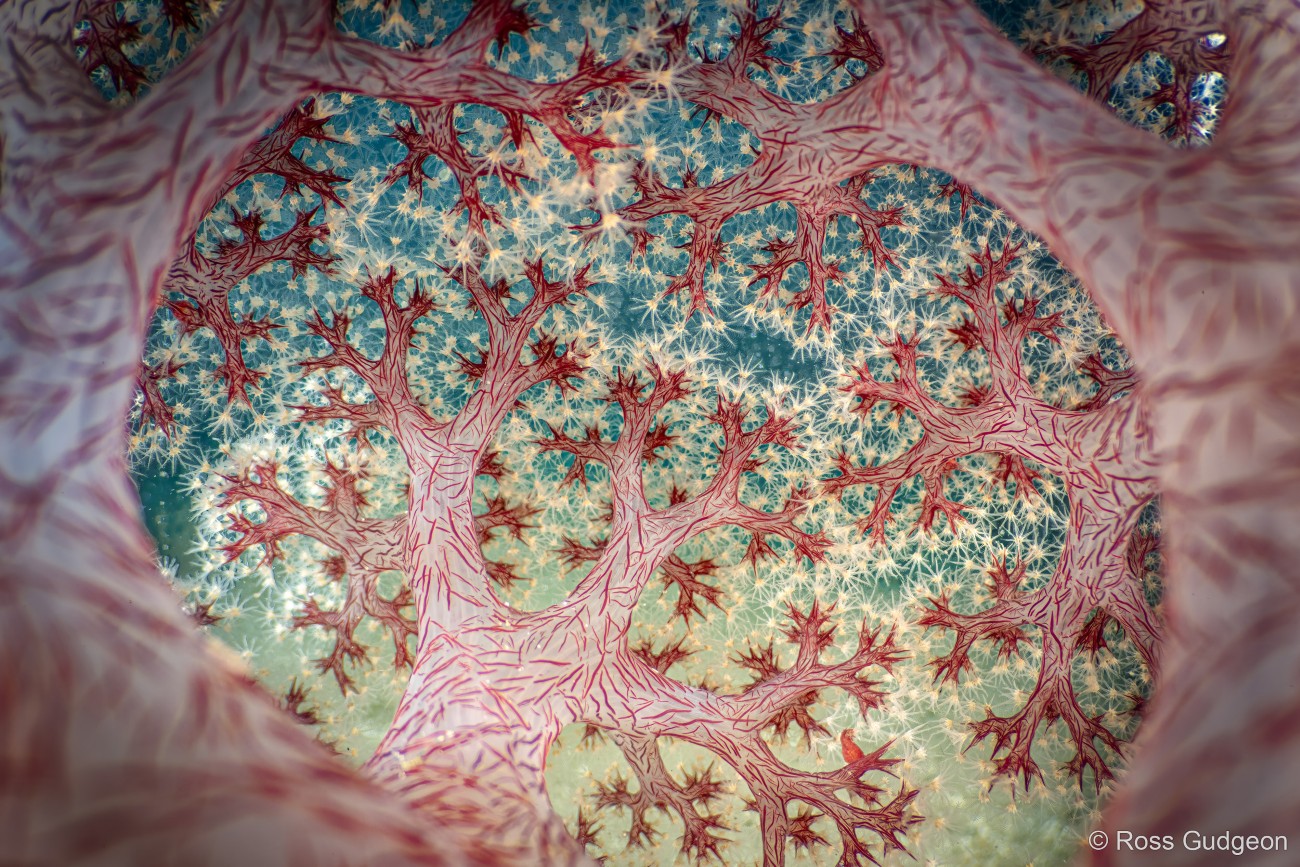
“Fractal Forest” by Ross Gudgeon. Overall Winner.
“Inside-out view of a cauliflower soft coral. Named for its characteristic appearance that resembles a cauliflower, with numerous small, rounded, bump-like polyps that give it a puffy texture. This unique perspective was made possible by the Nauticam EMWL, an underwater version of the probe or insect eye lens.”
A mindblowing view of cauliflower soft coral has won the 2025 Australian Geographic Nature Photographer of the Year contest. Western Australian photographer Ross Gudgeon captured the image in the waters of Lembeh Strait in Indonesia. The macro view of the coral, known for its puffy texture created by bump-like polyps, takes viewers into a psychedelic world few have the opportunity to see.
“Normally, dives [in Lembeh Strait] are full of weird and wonderful critters, but on this one, there was very little of interest to photograph,” Gudgeon recalls. “At one point, I found myself surrounded by many clumps of cauliflower soft coral, which, from the outside, aren’t terribly photogenic as they just look like lumps of red cauliflower. I carefully threaded the end of the extended macro wide lens through the branches of the soft coral so as not to damage them to take an image looking from the inside out.”
“The moral of my story is that beauty can be found anywhere,” he concludes.
In addition to the overall winner, prizes were handed out in 10 diverse categories, including the Junior winner, Isabella Rogers from South Australia, who won with her image of two galahs perched on a lamp post at dawn. Nearly 2,000 photos were entered into the competition, which celebrates the fauna and flora of Australia, New Zealand, Antarctica, and the New Guinea region.
In January, the People’s Choice winner will be announced, and in the meantime, people can view the extraordinary winners at the South Australia Museum. As the organizers of the contest, they are putting the winners on display in a special exhibit through February 1, 2026.
The South Australian Museum has announced the winners of the 2025 Australian Geographic Nature Photographer of the Year contest.
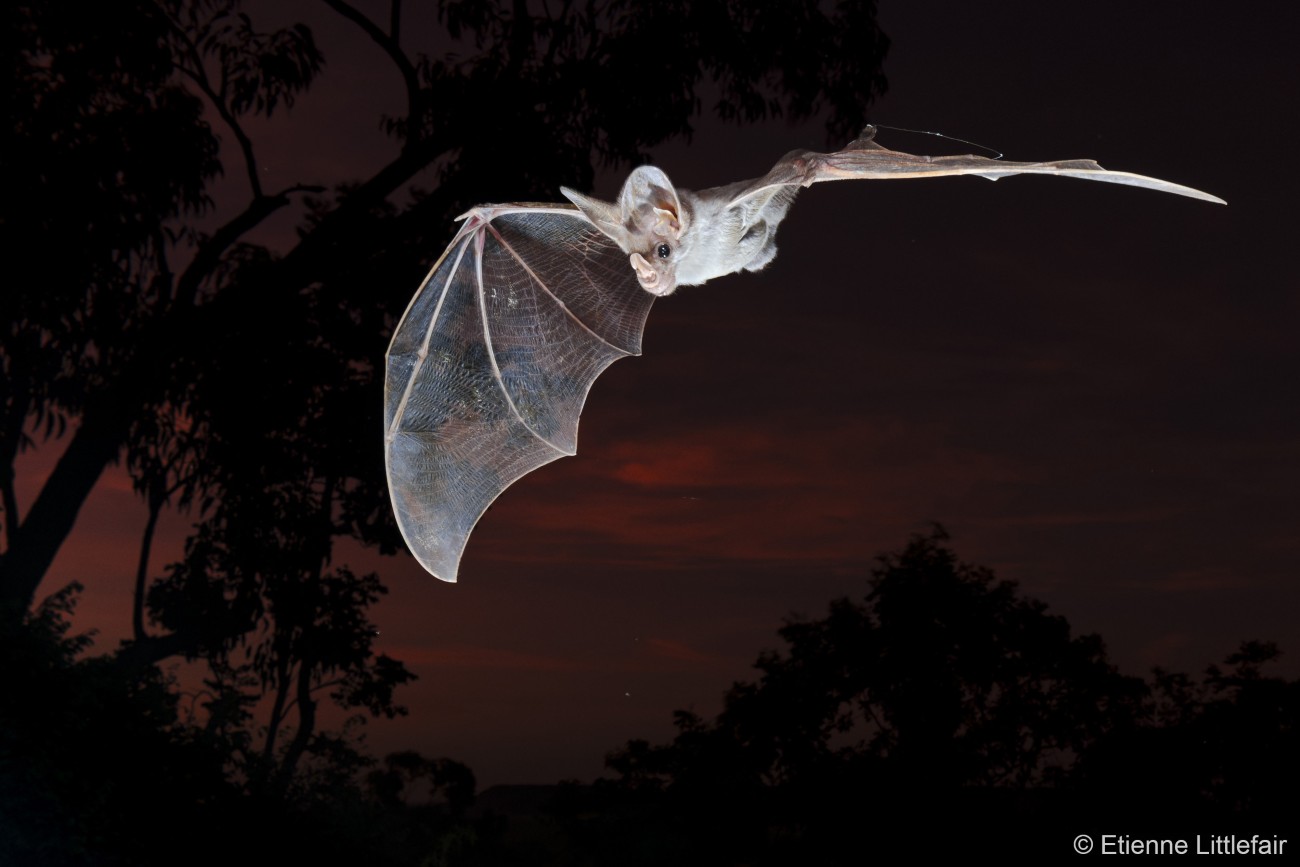
“Red Dawn” by Etienne Littlefair. Winner, Threatened Species.
“Ghost bats are rare and elusive, with strict roost requirements. After years studying these nocturnal predators with thermal optics, I’ve discovered a handful of regularly frequented locations in the escarpment surrounding my home. This image was captured on 1 January 2025 – an incredible way to usher in the New Year.”
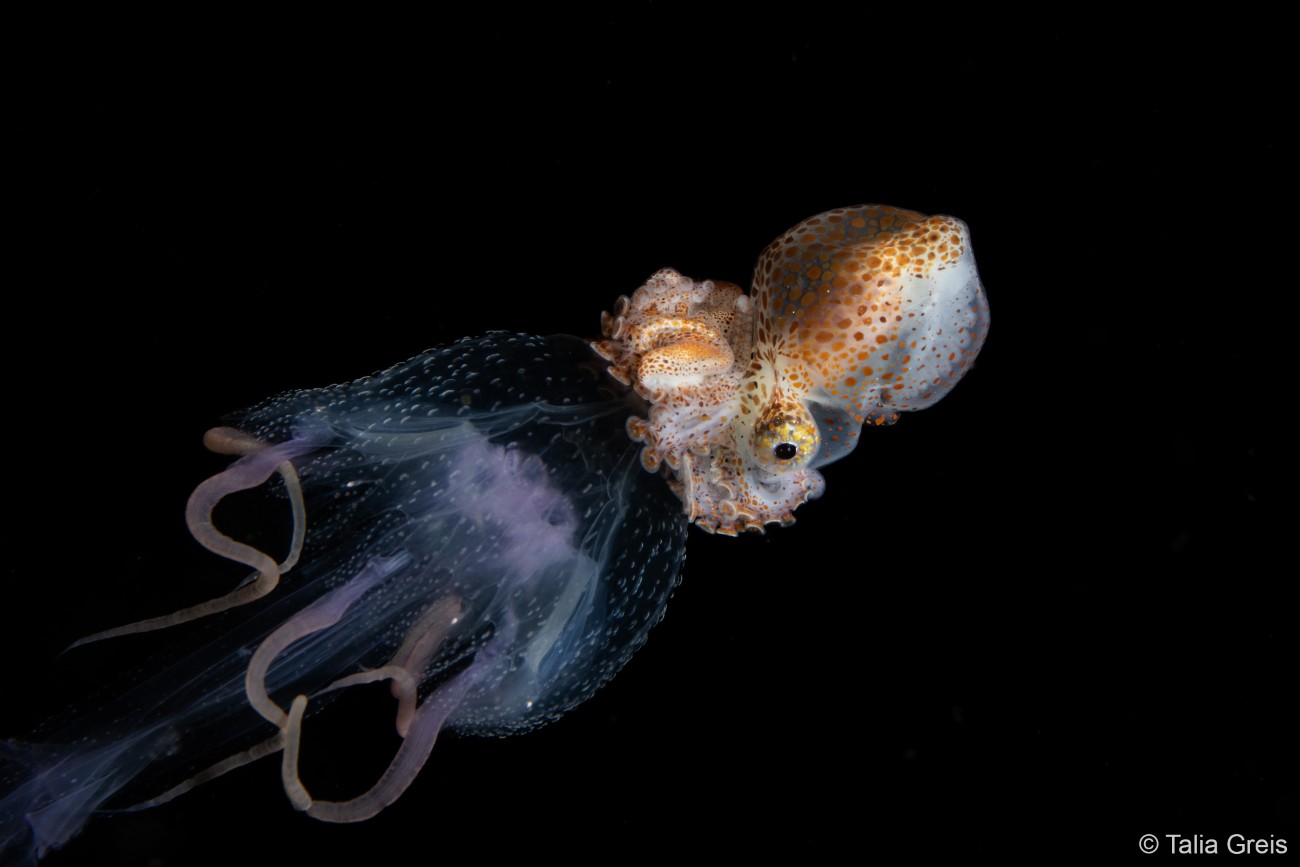
“Liftoff” by Talia Greis. Winner, Macro.
“Vertical migrations are some of the most remarkable in the world. Billions of animals hide in deep waters then travel to the surface at night to feed under the cover of darkness. This paper nautilus hitched a ride on a passing jellyfish – a truly unique and magical encounter on one of the world’s greatest vertical currents.”
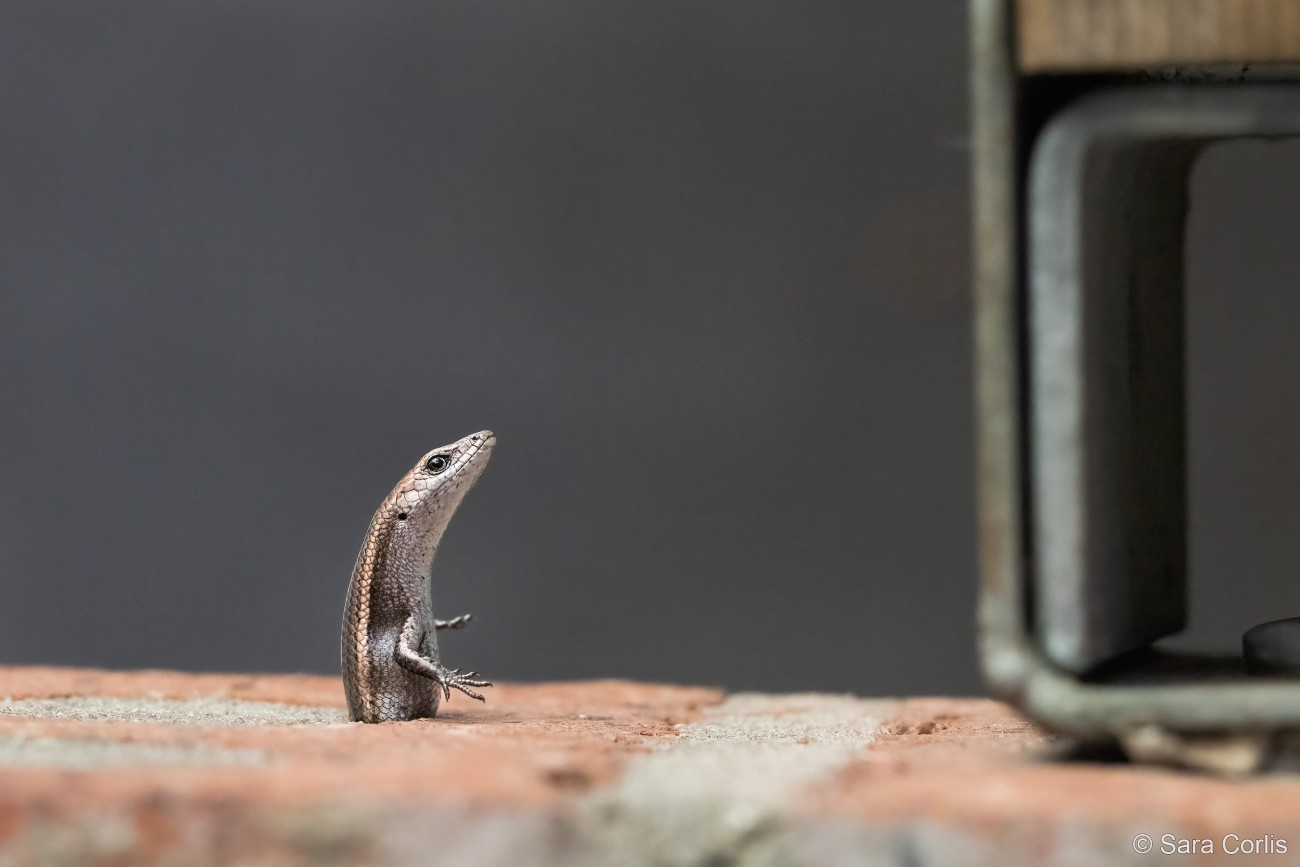
“Skink in a Tight Spot” by Sara Corlis. Winner, Our Impact.
“Discovered in a brick wall at home, a small garden skink was trapped in a hole. I felt helpless as the lizard thrashed its body from side to side in an attempt to escape. Thankfully, it was eventually able to get itself free.”
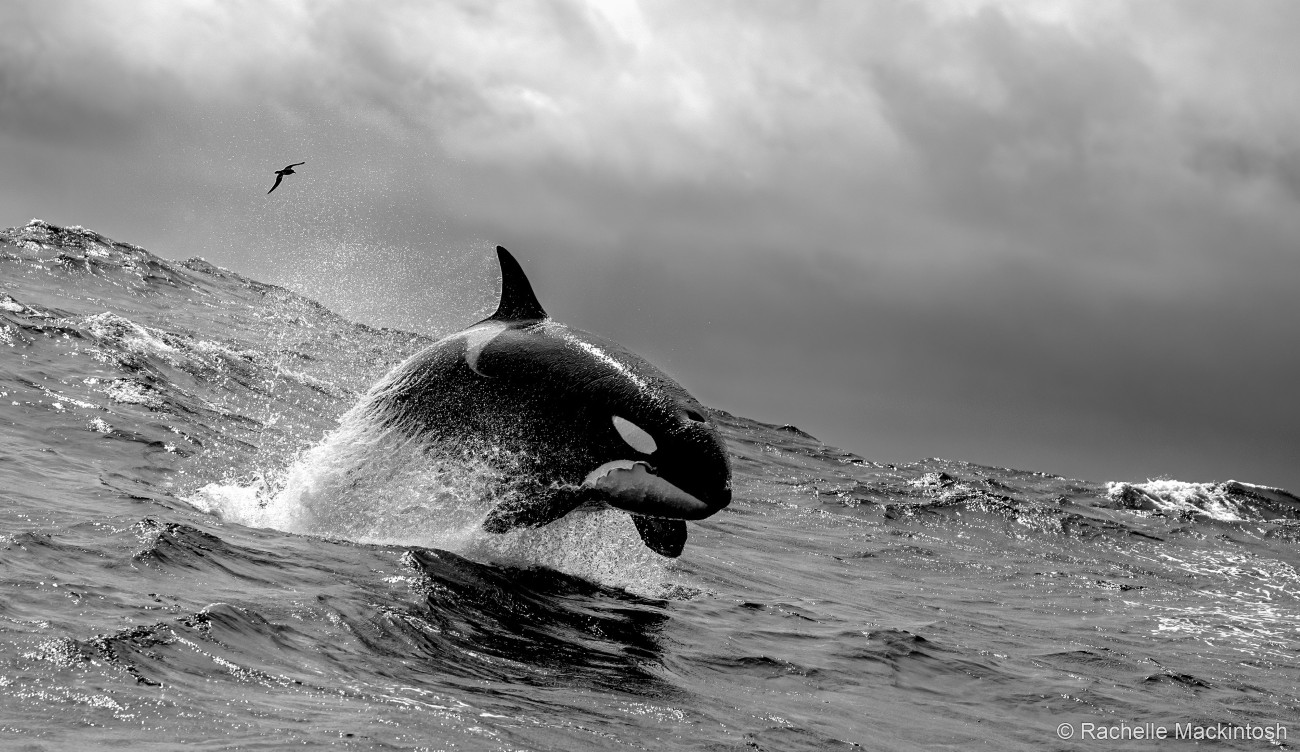
“Party Streamer” by Rachelle Mackintosh. Winner, Monochrome.
“Orca WA007 joyfully leaps out of the Bremer Canyon after devouring a Cuvier’s beaked whale, her prey’s intestines subtly hanging from her mouth like a festive decoration. Around 300 of these mammalhunting orcas have been recorded in this remote Southern Ocean hotspot, with unfolding research suggesting they may be their own ecotype.”
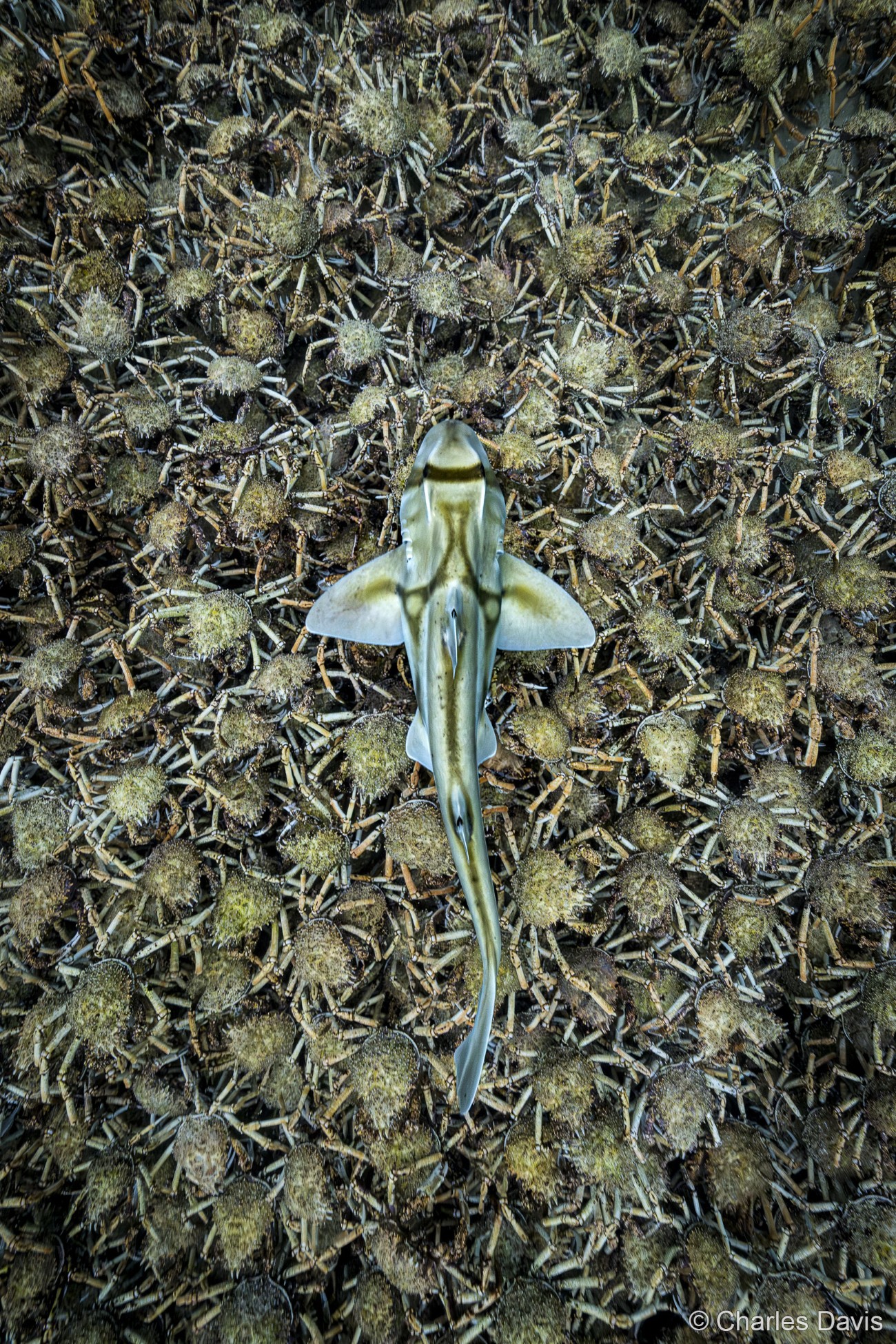
“PJ & Crabs” by Chalres Davis. Winner, Animals in Nature.
“Each year, on the full moon, tens of thousands of
spider crabs gather to shed their shells. At this time, they become soft and vulnerable to predation from sharks and large rays so they bunch up in epic numbers to protect themselves. This Port Jackson shark was cruising over the hoard.”
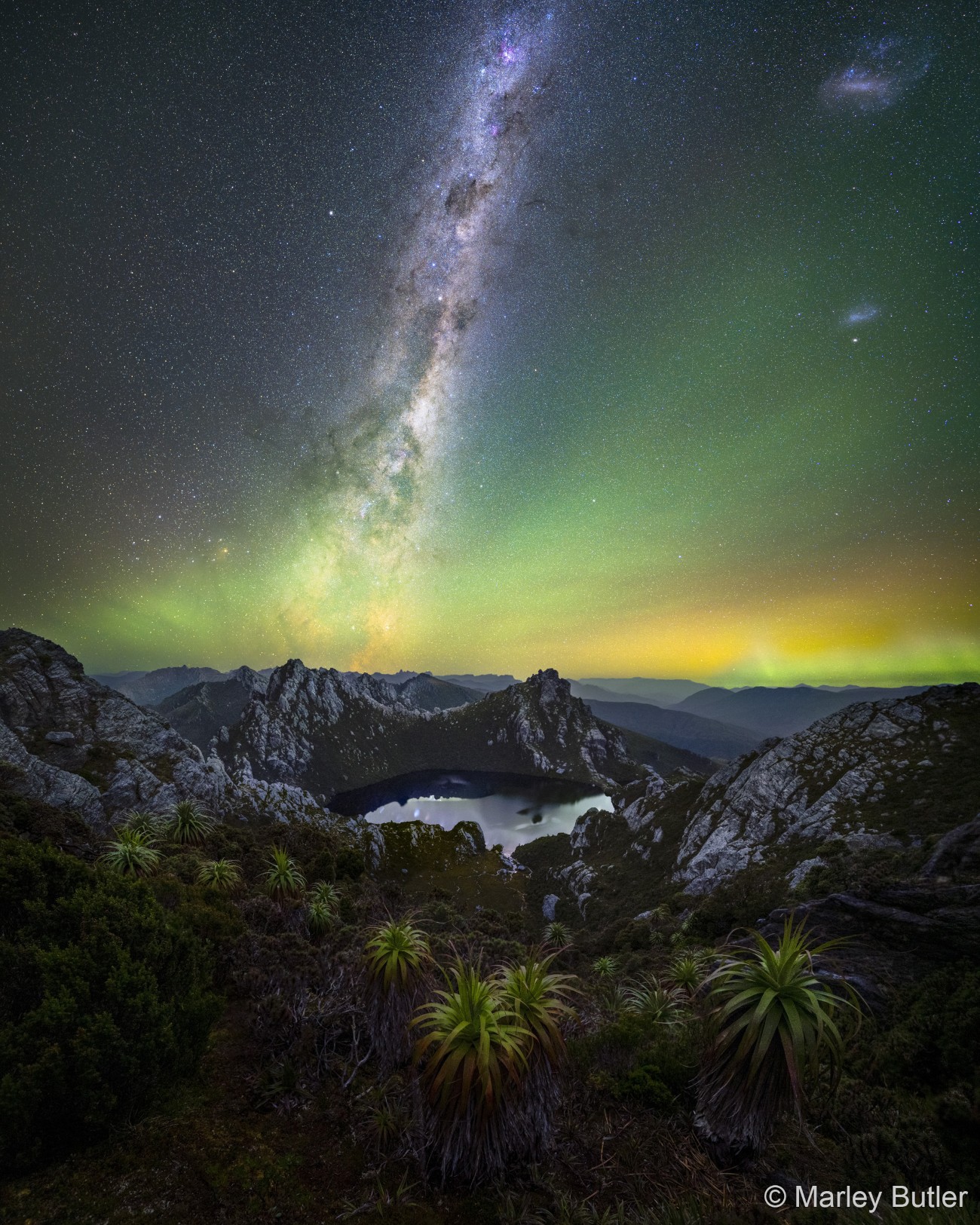
“Oberon Kenobi” by Marley Butler. Winner, Astrophotography.
“An amphitheatre of pandani watch on as the galactic core, swathed in airglow, rises over an alpine lake, nestled in a rugged Tassie mountain range. Lady Aurora dances under the Magellanic Clouds. This image was captured on a crisp night in one of Tasmania’s more rugged and majestic multi-day walks.”
Nearly 2,000 photos from photographers in 18 countries were entered into this year’s contest.
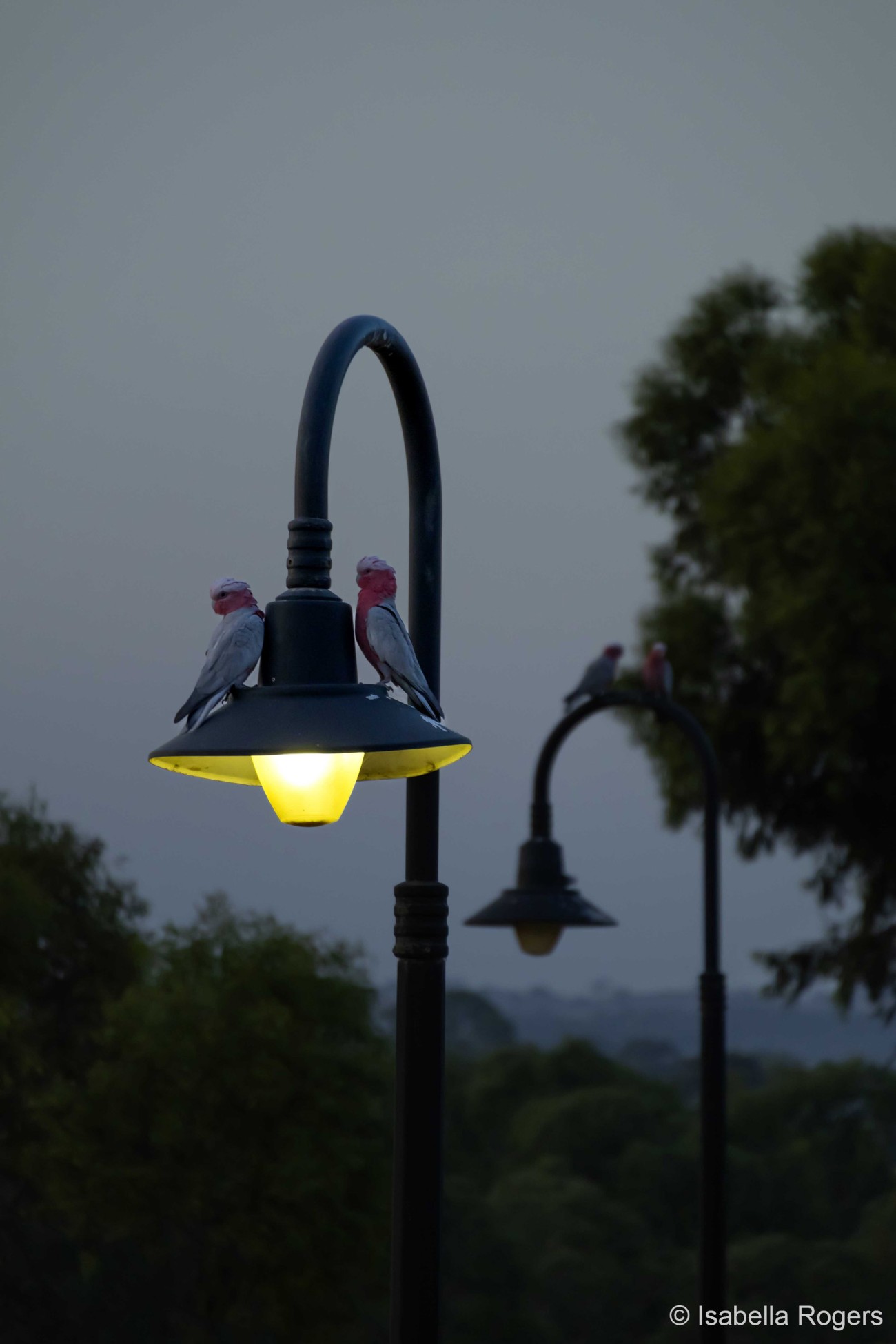
“Perched” by Isabella Rogers. Overall Junior Winner.
“I took this photo during a morning walk in Hewett, South Australia. As I was walking home, a little disappointed with the unsuccessful outcome of my shoot, I saw the two galahs. The light post being turned on in the early morning light helped my subject to stand out.”
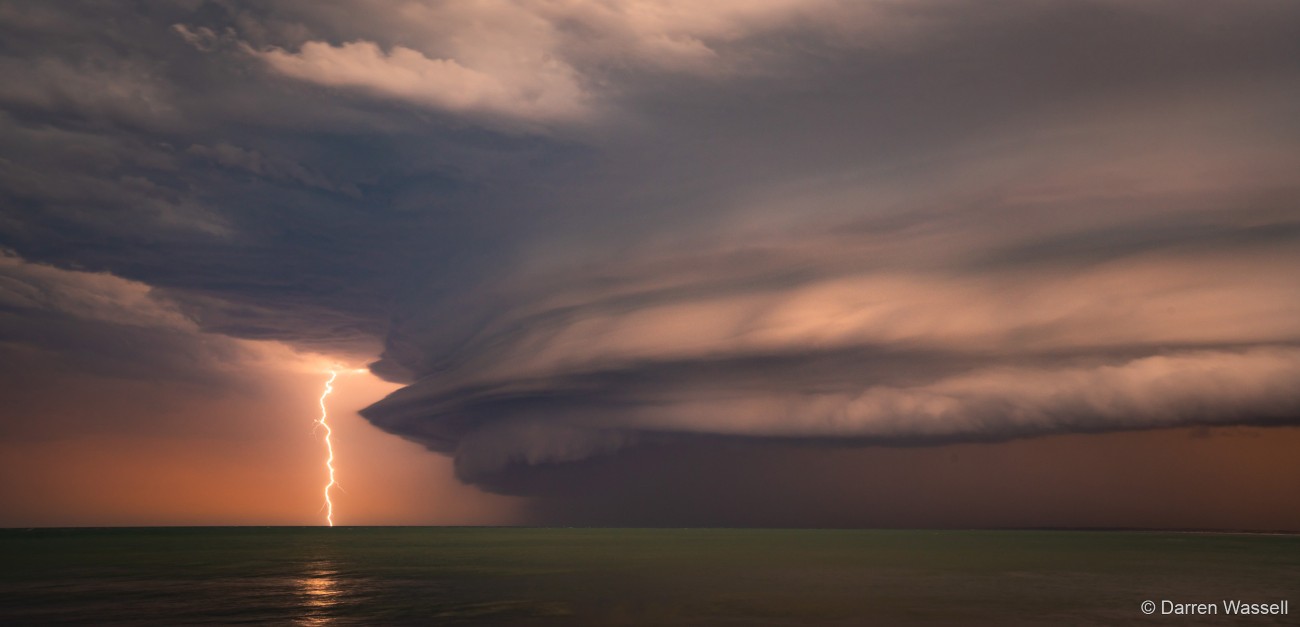
“The Beast” by Darren Wassell. Winner, Landscape.
“I love the raw power and beauty of storms. Watching this severe storm making its way to me, I was filled with excitement and anticipation. To capture the only CG (cloud-to-ground) bolt to come from this amazing shelf cloud was absolute bliss. Once again, thank you Mother Nature!”
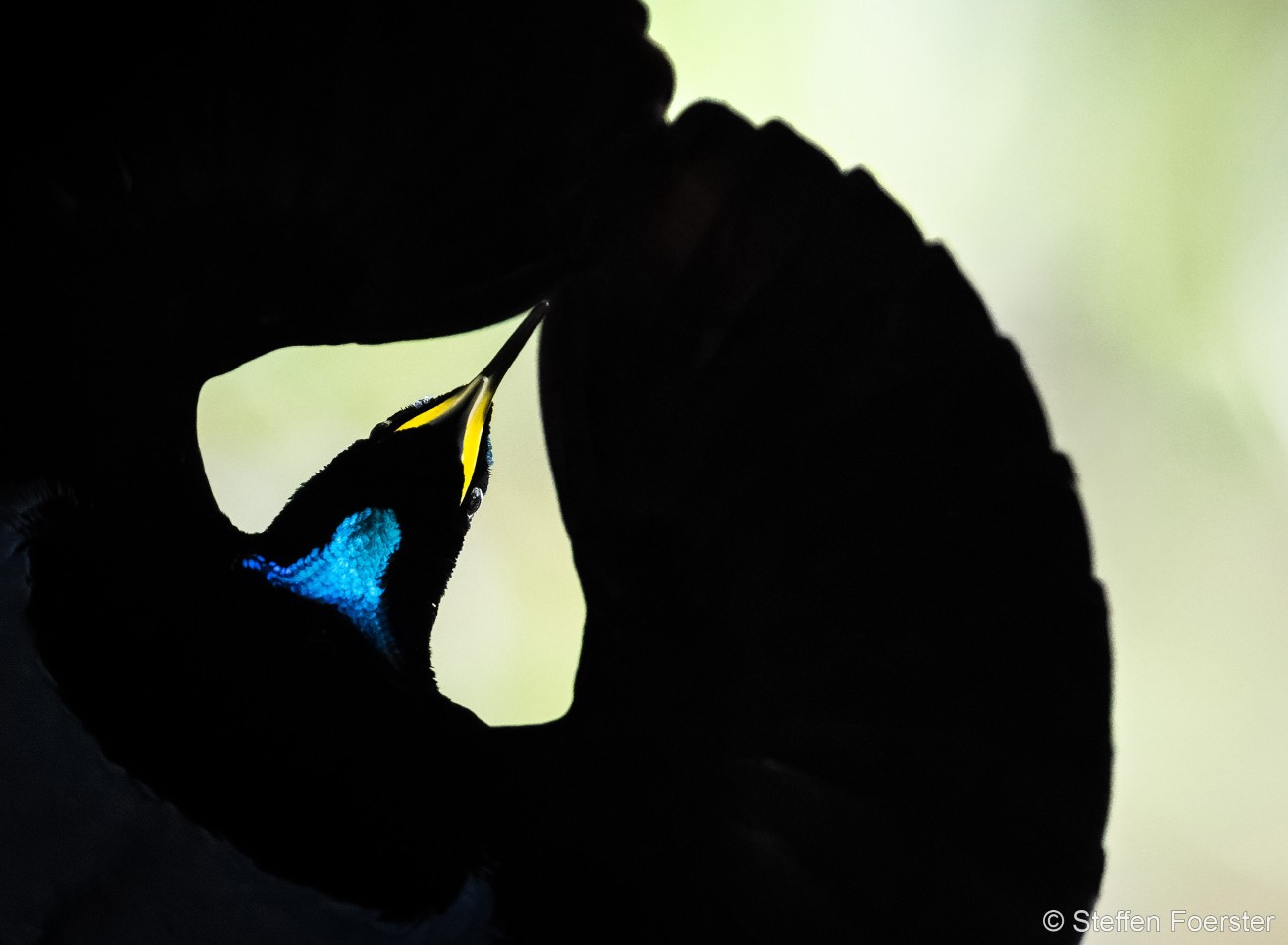
“At the Peak of His Game” by Steffen Foerster. Runner-Up, Threatened Species.
“To attract mates, male Victoria’s riflebirds perform striking courtship displays: wings raised to form an arc, they sway, shuffle and call to females from a perch deep in the rainforest. Endemic to northeastern Australia, this species is rapidly declining as climate change alters food availability and microclimates within their habitat.”
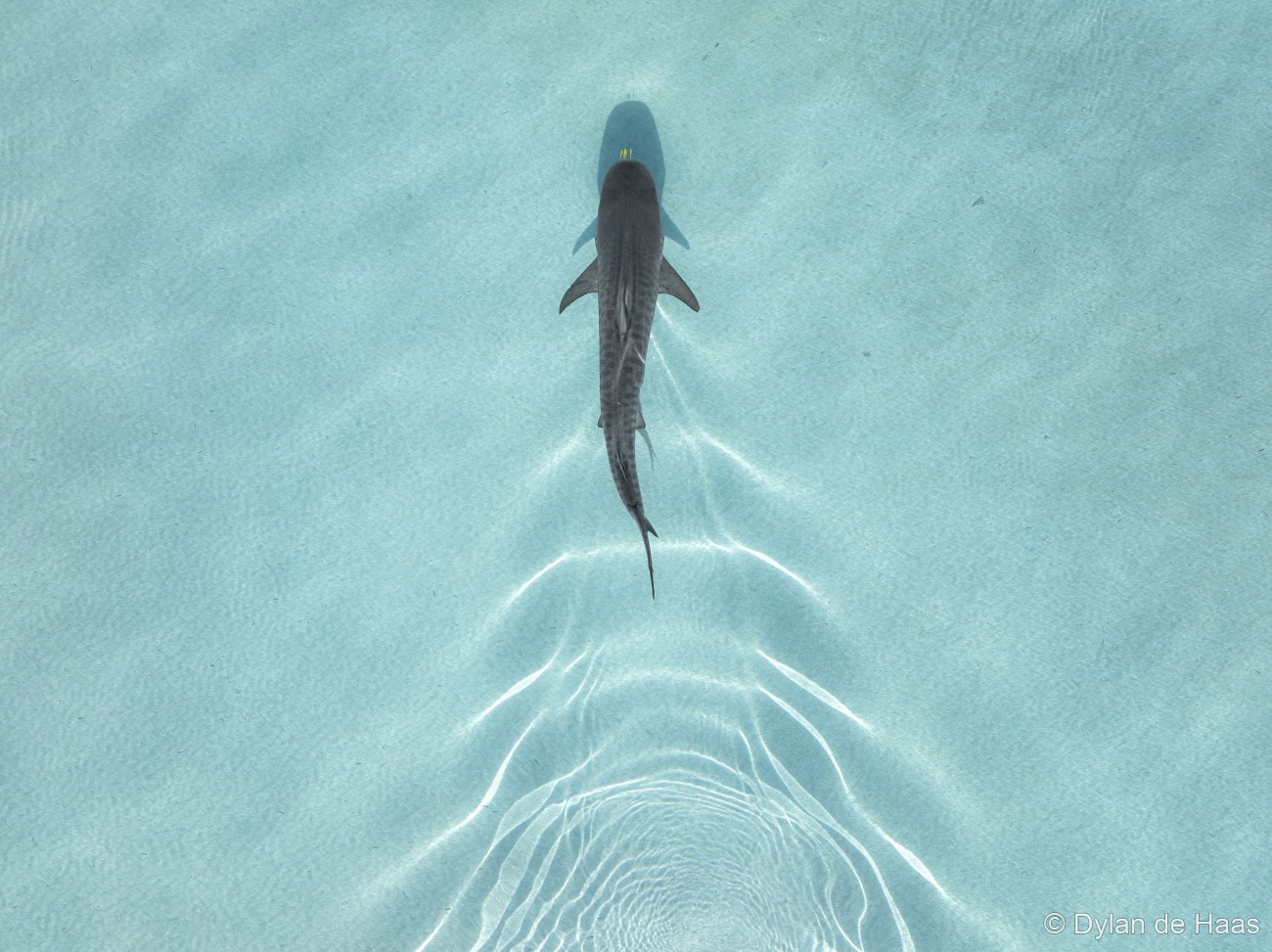
“Waves of Light” by Dylan de Hass. Runner-Up, Aerial.
“It was an exceptionally calm day in Shark Bay when I spotted a tiger shark gliding through the shallows. As its dorsal fin broke the surface, it trailed waves of light behind it. This rare moment felt like a visual metaphor for how a predator’s presence (or absence) ripples through the entire ecosystem.”
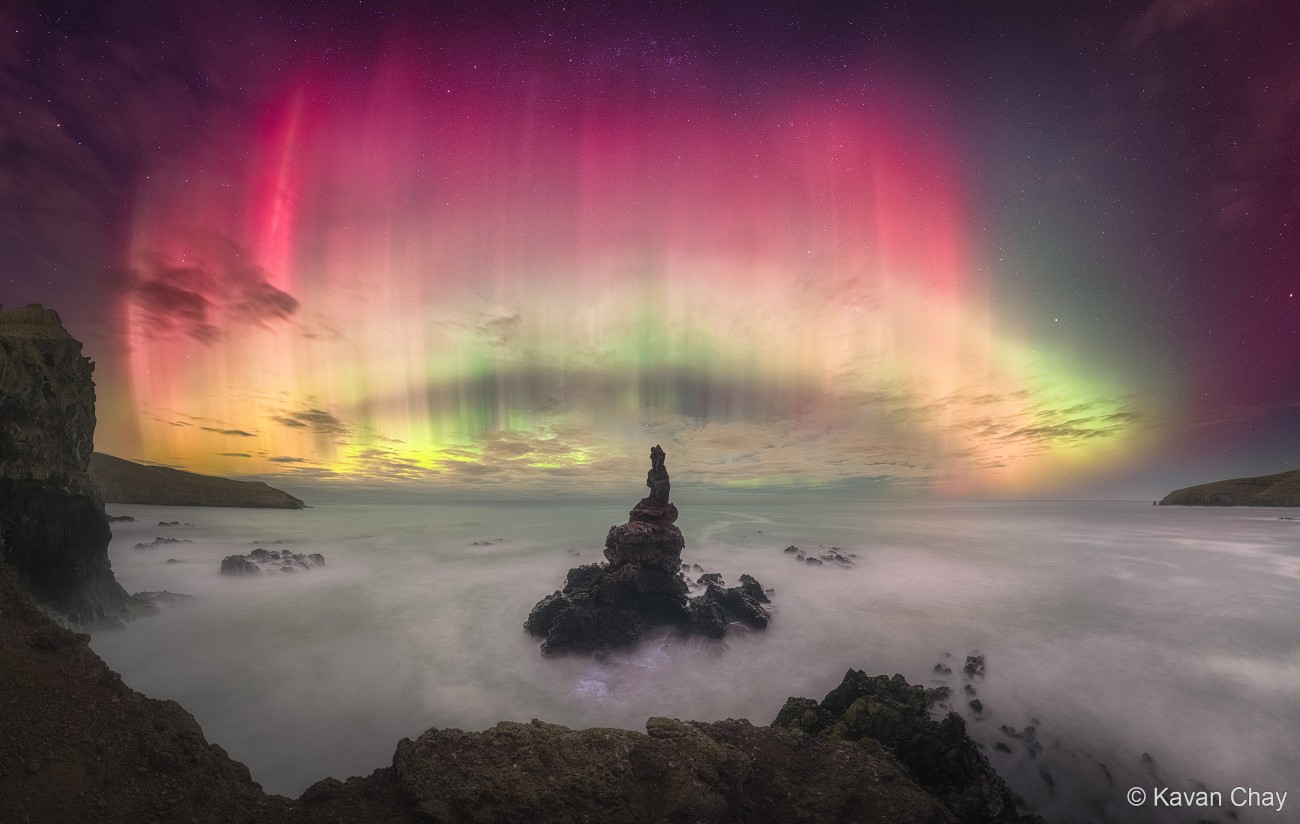
“Crown of Light” by Kavan Chay. Runner-Up, Astrophotography.
“The auroral display from this night was a global phenomenon, with many people getting their chance to witness it. I drove to these sea stacks just outside of Christchurch, hopeful that I’d get the Aurora Australis shot that I’d been searching for. I think I managed it with this.”
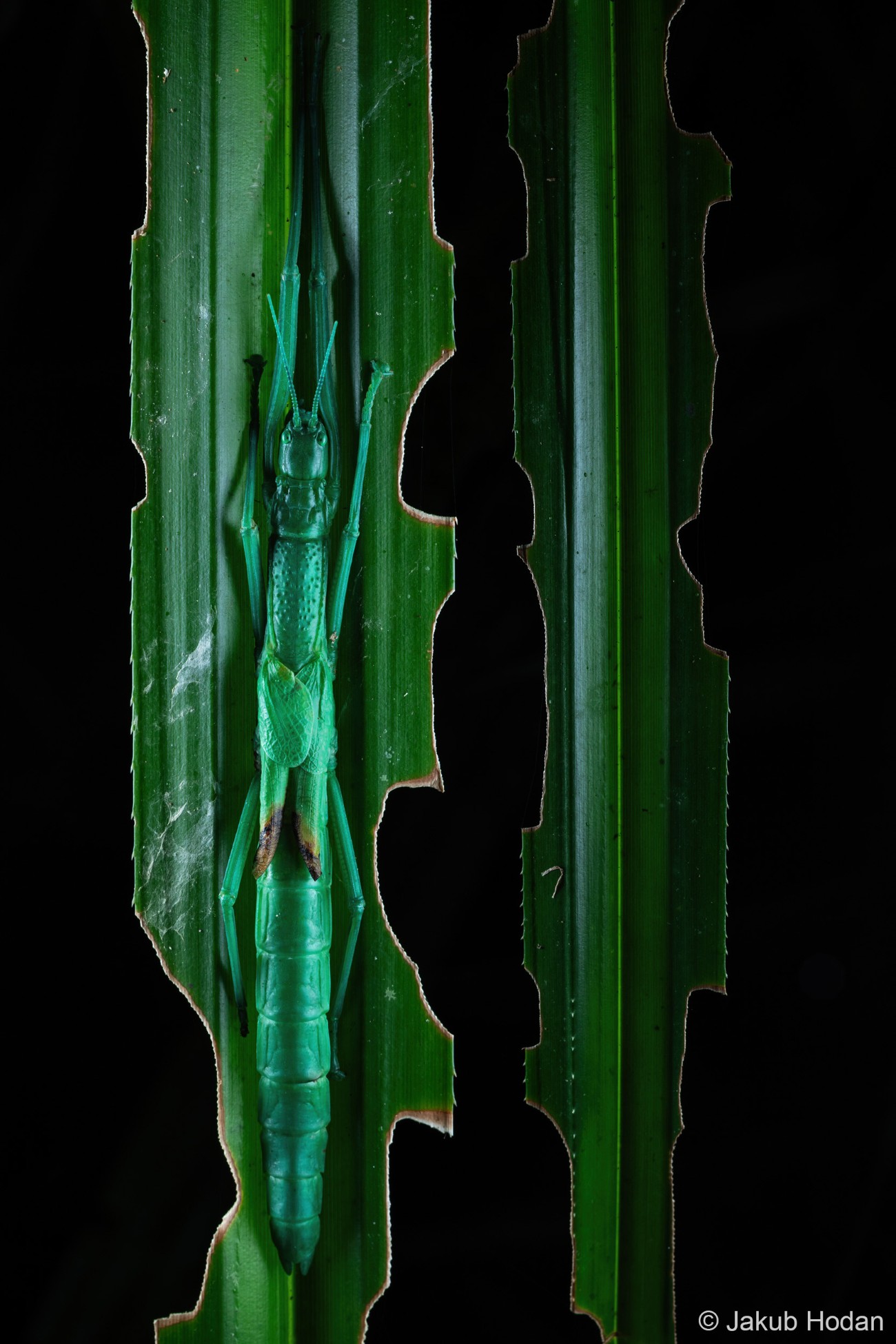
“Peppermint Stick Insect” by Jakub Hodáň. Runner-Up, Macro.
“Peppermint stick insects are great at camouflaging themselves. Wedged in the slide-shaped Pandanus, they can quickly escape into the denser centre and be hard to photograph. To make the photo more interesting, I used an in-body double exposure of the main subject (left) and the end part of the same leaf (right).”
The photos celebrate the fauna and flora of Australia, New Zealand, Antarctica, and the New Guinea region.
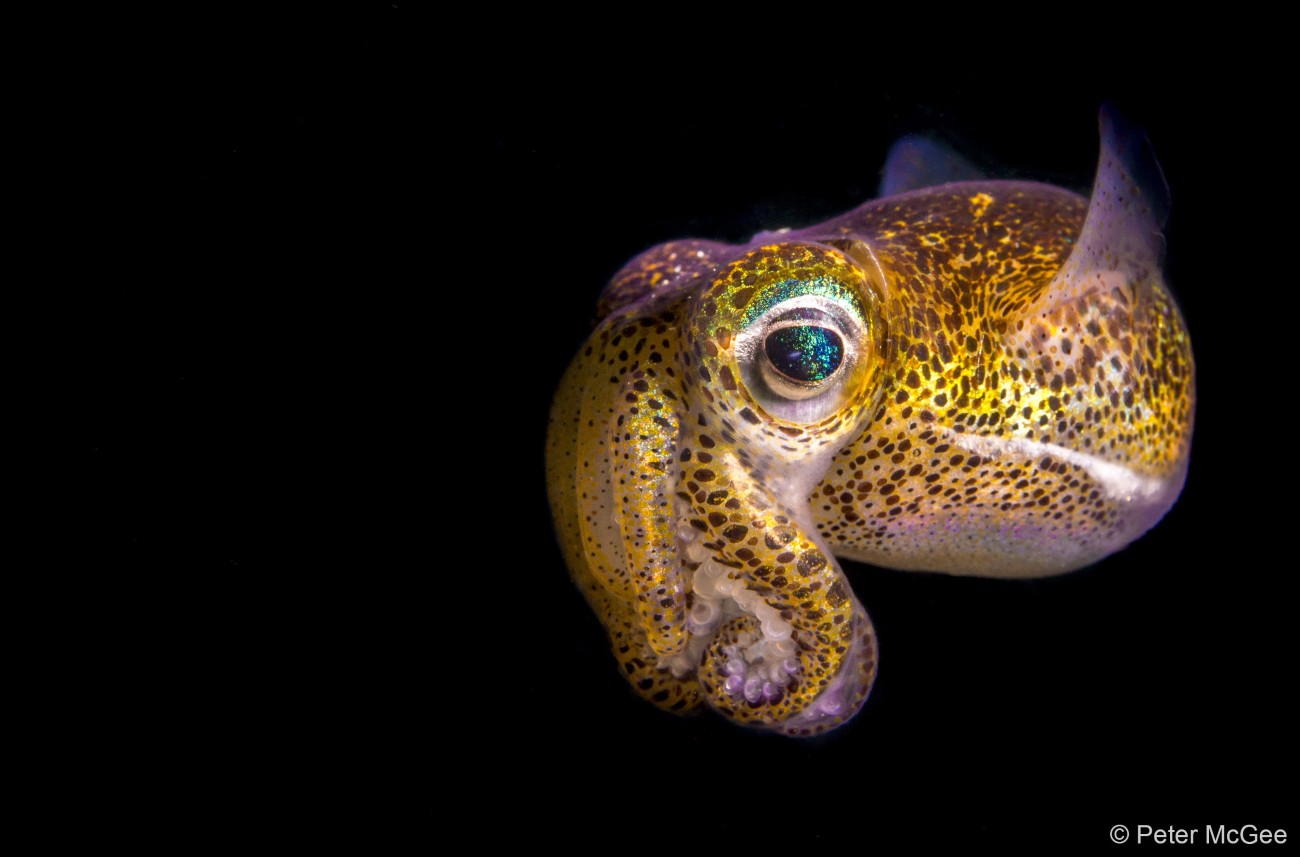
“Sydney Cephalopod Portraits: Priscilla” by Peter McGee. Winner, Portfolio.
“About the size of a dumpling, the southern dumpling or bobtail squid are treasured photography subjects. These nocturnal creatures emerge cloaked in vivid colours as if wearing shimmering eye makeup. Usually timid, they tend to hide when seen. This one however, affectionately named ‘Priscilla,’ happily lingered, posing for a photoshoot.”
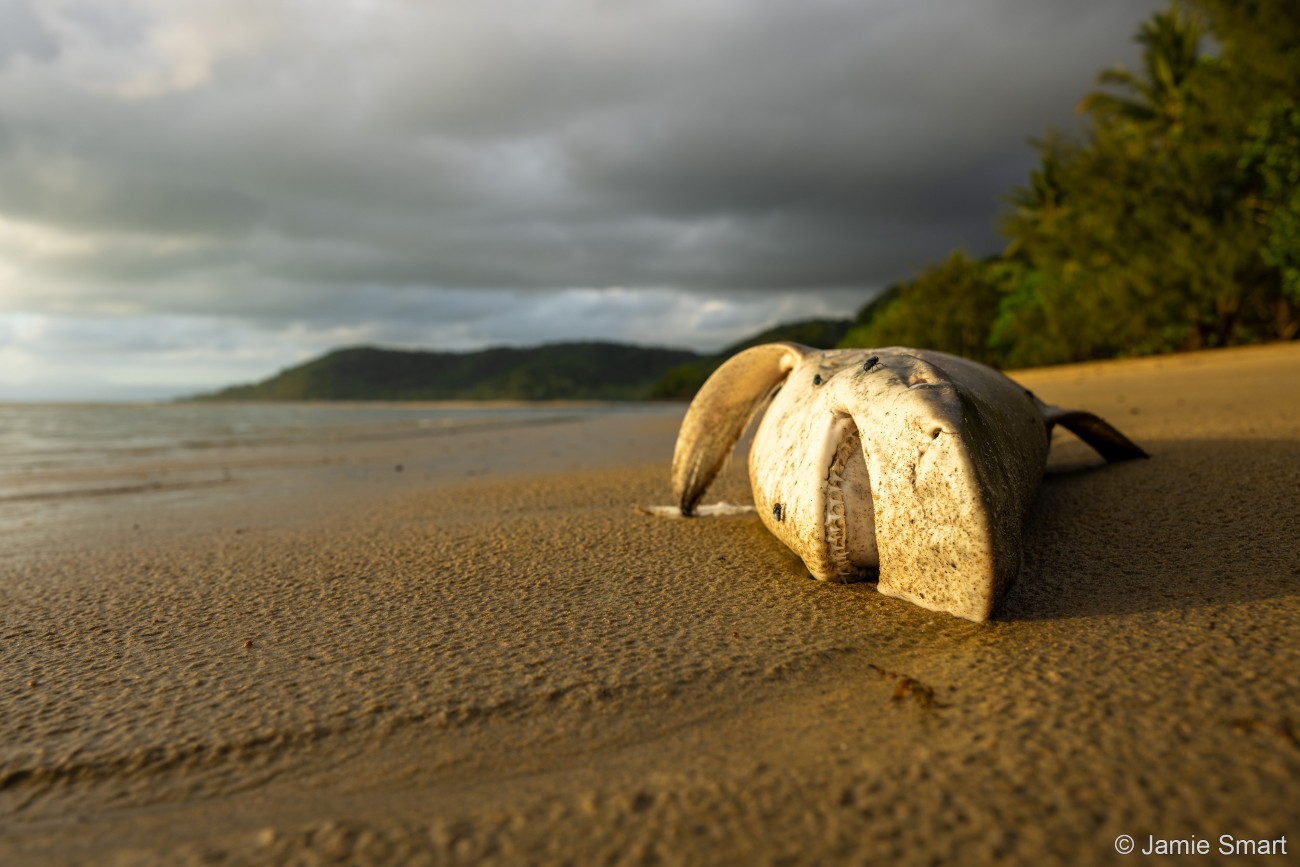
“Death in Paradise” by Jamie Smart.Junior Runner-Up.
“The devastating effects of illegal net fishing – this is a blacktip reef shark carcass washed up on a North Queensland beach. Sadly, one of a few I discovered very early one morning whilst walking on the beach with my camera.”
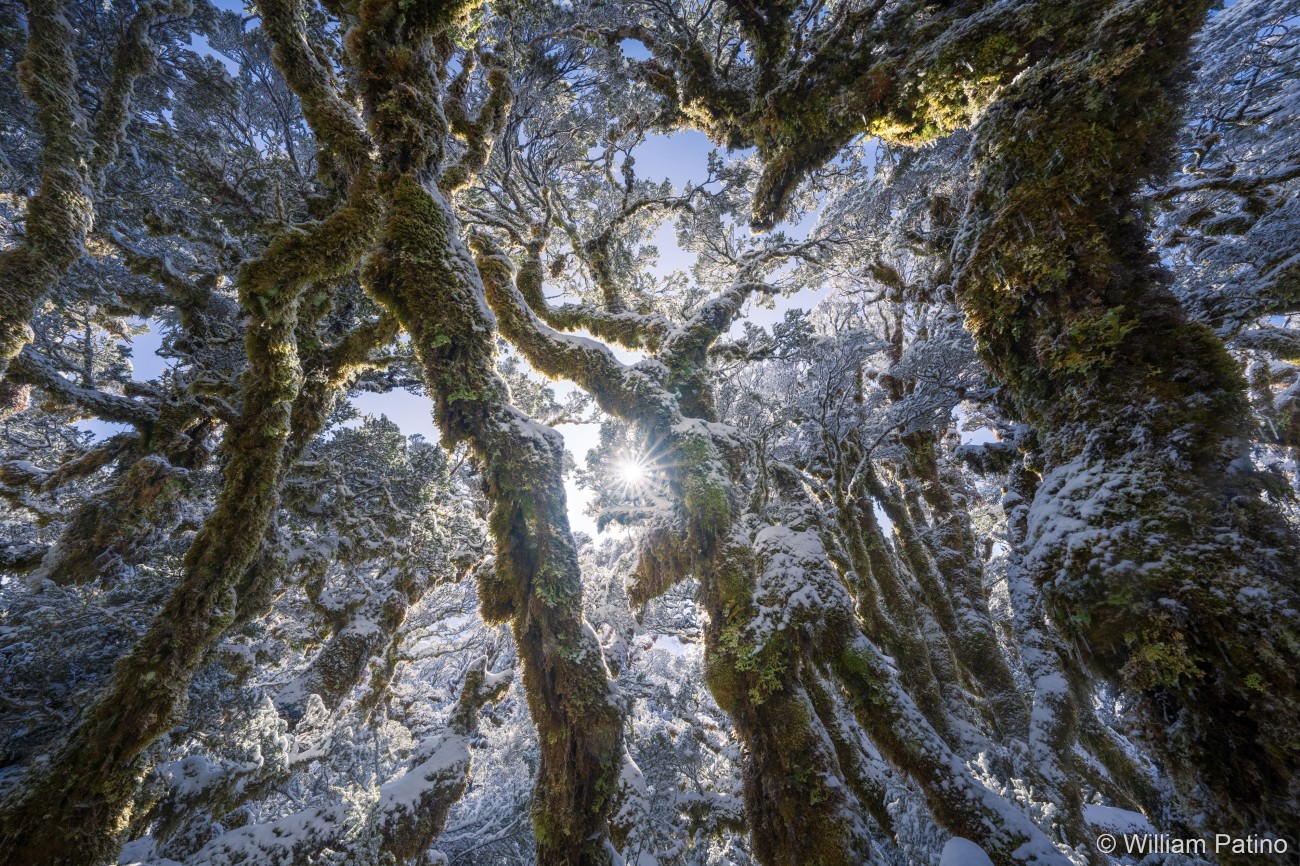
“Enchanted Forest” by William Patino. Runner-Up, Landscape.
“On a camping trip with my son, we came across this amazing section of silver beech that were stunted and beautifully sculpted by the elements. After several attempts, I was finally present when it snowed. Not long after dawn, the clouds departed, and the low angled sun added a hint of warmth to the fairytale scene.”
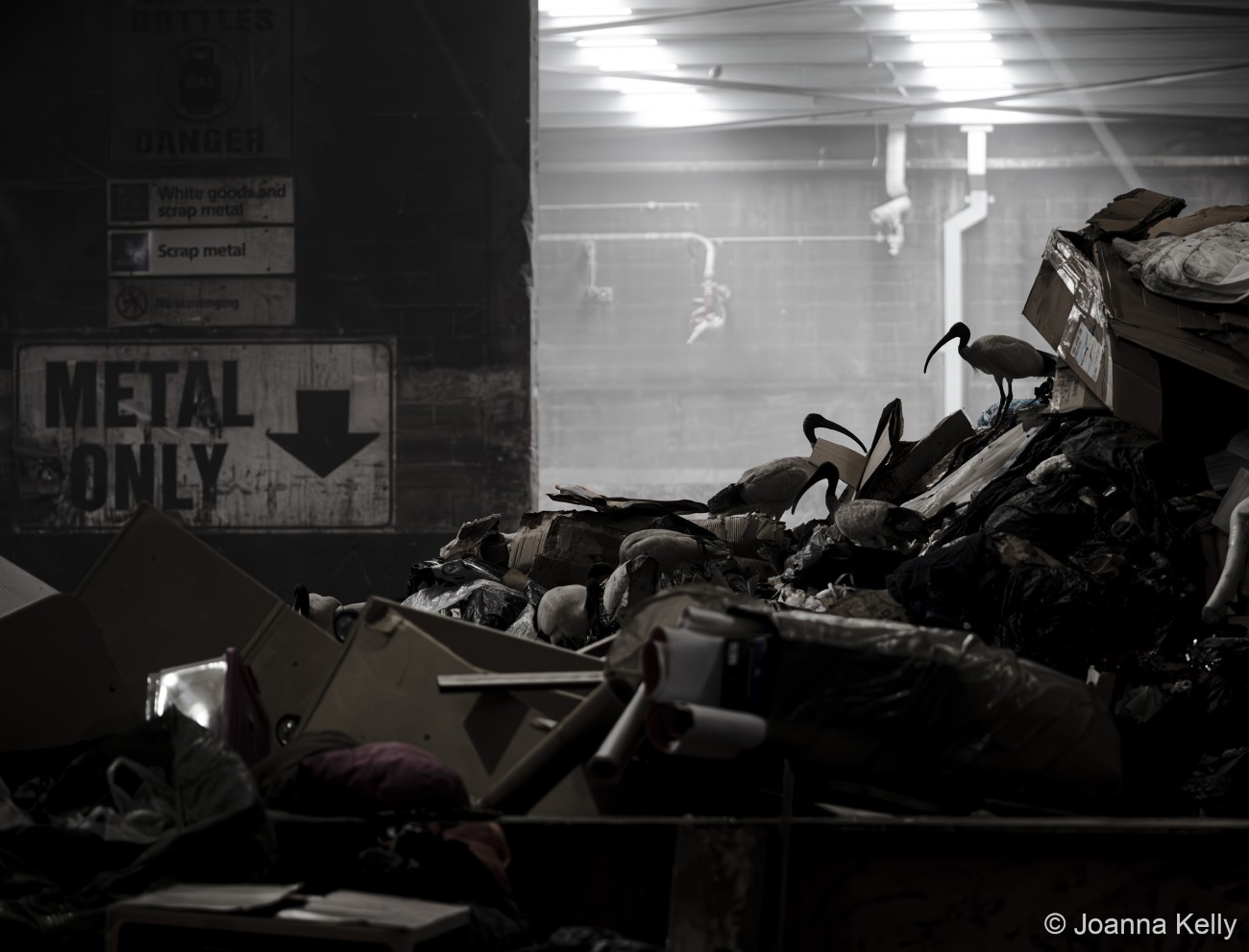
“Metal Only” by Joanna Kelly. Runner-Up, Our Impact.
“Choosing to live amongst the cacophony of machinery, odorous clouds and garbage, I was awestruck by how cinematic and majestic the Australian white ibis were in an alien environment. I was granted permission to go back to photograph them.”
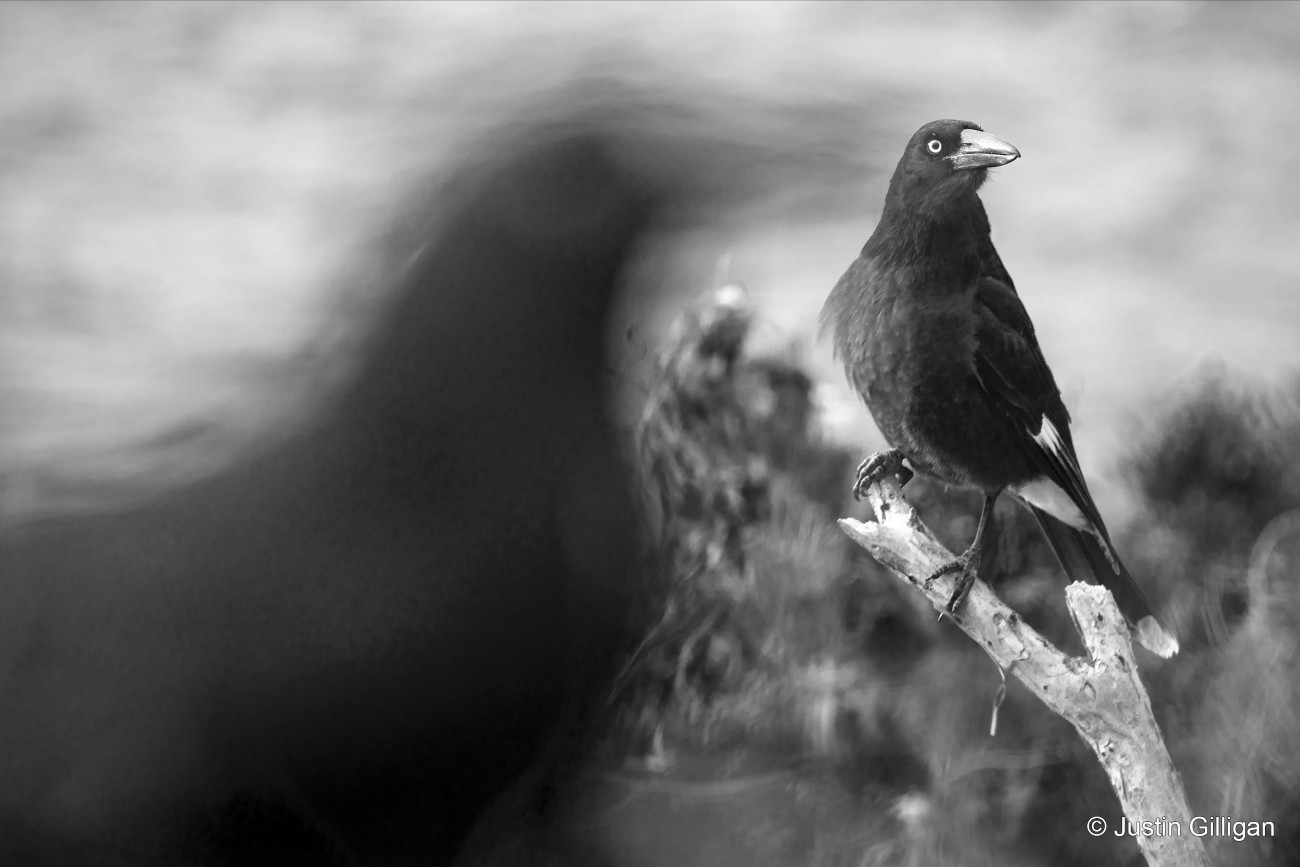
“Inquisitive Currawong” by Justin Gilligan. Runner-Up, Monochrome.
“The Lord Howe Currawong is a subspecies of the Pied Currawong. It is widespread and abundant in the island’s southern mountains and northern hills. They are often bold and inquisitive birds, that defend territories and readily adapt to the presence of humans and occupy human settlements.”
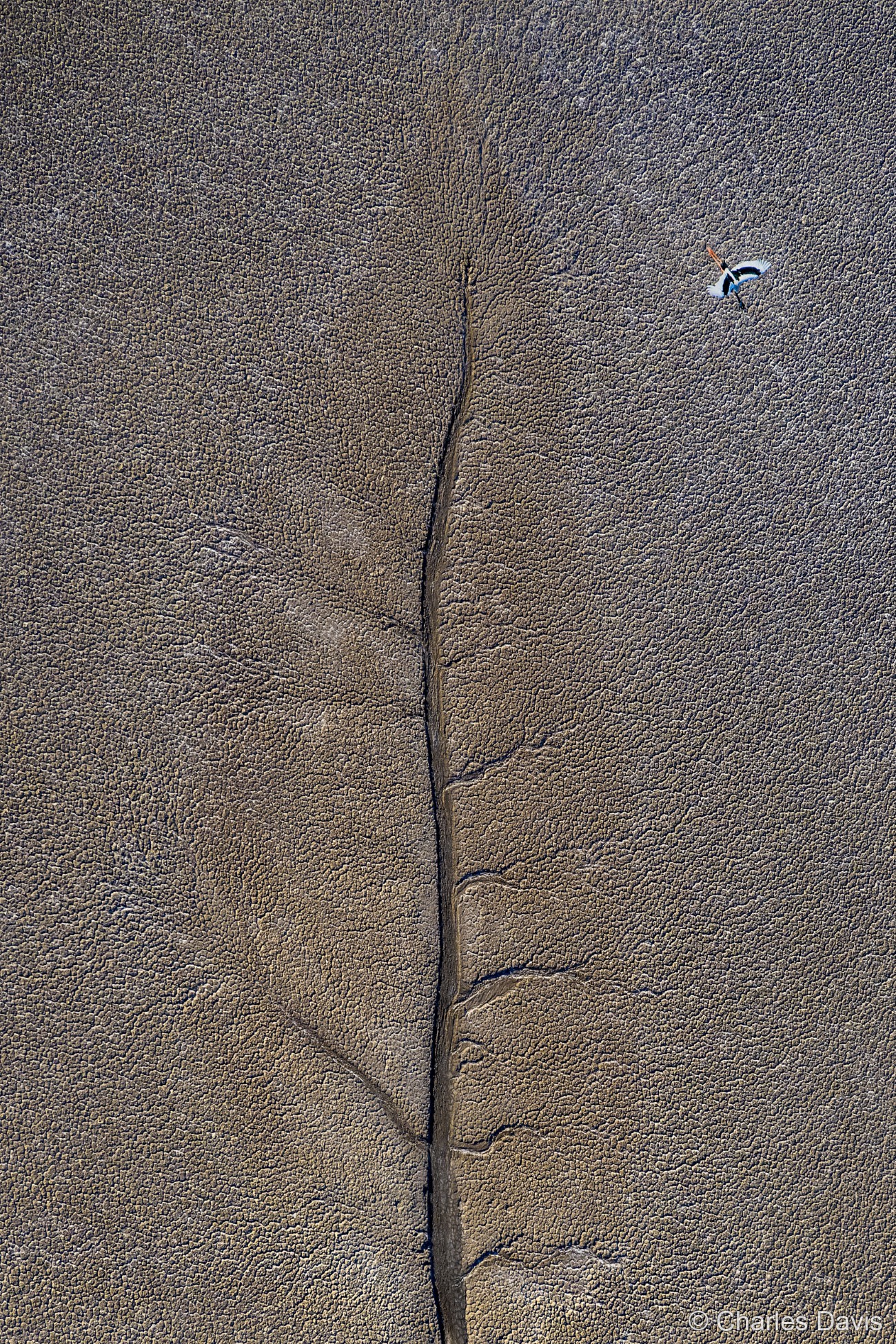
“Jabiru Leaf” by Charles Davis. Winner, Aerial.
“This is not a dead leaf; it is a result of massive tides retreating over mudflats. I thought of a dead tree and a bird as we flew over the flats in the chopper. As this black-necked stork flew towards the drainage, we banked hard just in time to capture them together.